Building Generational Wealth Through Homeownership
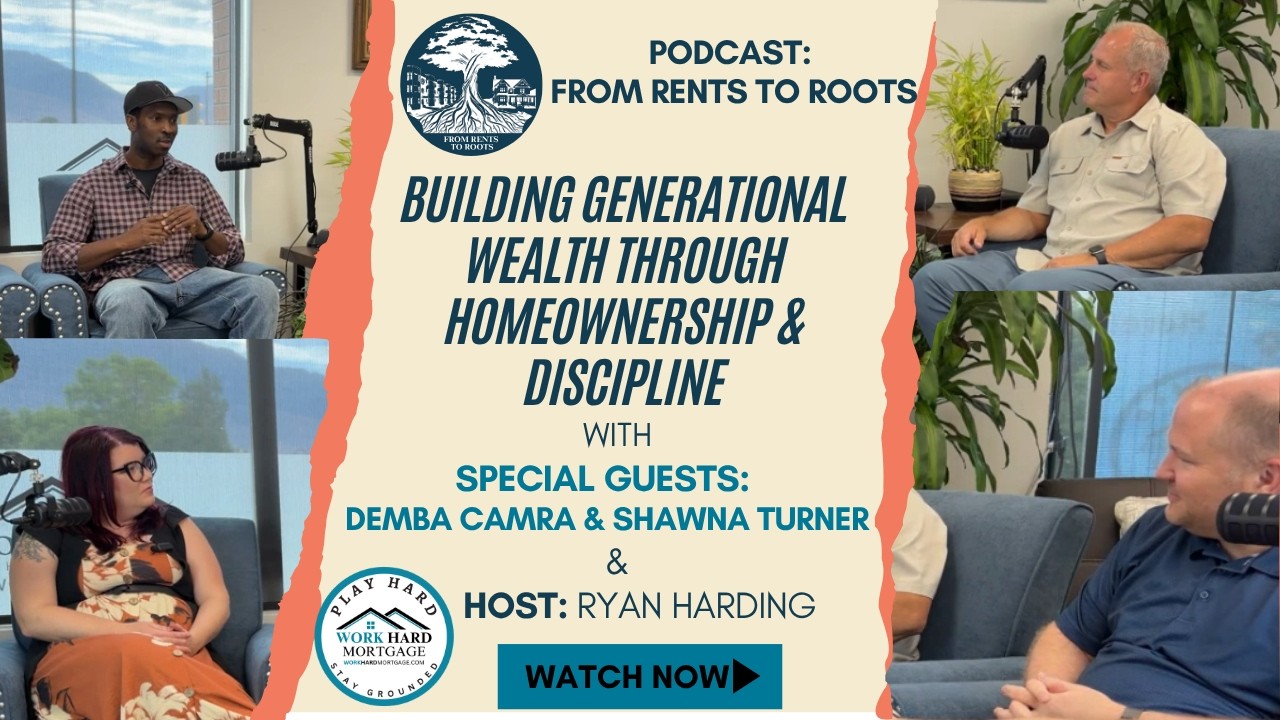
Demba Camara shares his inspiring journey from The Gambia to the US, detailing how he used cultural saving circles and grit to build a multi-home legacy.
Demba Camara and Shawna Turner
Perseverance, sacrifice, and wealth
At a Glance
Archive Scoring
Introduction
This episode explores the profound weight of responsibility carried by Demba Camara, the eldest of six children from The Gambia, who arrived in the United States in 2009 with a vision far larger than his own comfort. His story is a masterclass in delayed gratification; before ever seeking a roof for himself in America, he worked two jobs to build a five-bedroom home for his mother in Africa. This foundational act of service set the stage for a journey into the American real estate market defined by cultural innovation and community trust. Demba introduces the 'Susu' system—a traditional West African communal saving circle—which allowed him to bypass traditional banking hurdles and secure his first down payment through the collective accountability of thirty friends. The narrative transitions from the struggle of the early years to the strategic expansion of the present. With the guidance of Realtor Shawna Turner, Demba evolved from a first-time buyer into an accidental investor, choosing to rent out his initial townhome to upsize for his growing family. The conversation delves into the emotional landscape of homeownership, particularly the moment Demba's wife and children arrived from Africa to find a home waiting for them. It is a powerful reminder that real estate is often the final piece of a much larger puzzle involving immigration, family reunification, and the quiet dignity of hard work. Demba’s career trajectory—from cleaning the airport to becoming a Lead TSA Officer of the Year—parallels his real estate growth. Both require a level of discipline that refuses to accept 'impossible' as an answer. This episode serves as a testament to the fact that while the market may be challenging, the combination of a dedicated professional team and a resilient spirit can still forge a path to the American dream.
Episode Overview
A detailed look at the topics, people, and context of this conversation.
In this episode, host Brett welcomes homebuyer Demba Camara and Realtor Shawna Turner to discuss a journey that spans over a decade and two continents. Demba, a TSA Lead Officer originally from The Gambia, shares how he navigated the transition from a childhood in a crowded two-bedroom rental to owning multiple properties in the United States. Shawna Turner provides the professional perspective, detailing her transition from a 25-year career in hair and makeup to becoming a high-touch real estate expert who specializes in helping families upsize. The discussion covers the years 2009 to the present, focusing on the cultural and financial strategies used to achieve homeownership in a competitive market. Key topics include the use of 'Susu' for down payments, the psychological impact of being a first-generation homeowner, and the logistics of managing an investment property while purchasing a new primary residence. The tone is deeply reflective, emphasizing that homeownership is not just a financial transaction but a tool for familial transformation and community building.
Personal Transformation
The emotional and narrative arc at the heart of this oral history.
Demba Camara's journey represents a profound transformation from a childhood of housing insecurity in The Gambia to becoming a real estate investor in the United States. He successfully transitioned from working multiple manual labor jobs in cleaning and delivery to a leadership role in the TSA, using his professional growth to fuel his real estate ambitions. His path demonstrates a shift from a scarcity mindset to one of strategic wealth building, where he moved from lifelong renting to owning a townhome and then upsizing to a single-family home while maintaining his first property as an investment. This evolution highlights a dedicated focus on long-term stability over immediate gratification.
Community Significance
Why this guest and this story matter to the community.
This story is significant because it illustrates the power of community-based financial systems like the 'Susu' within the African diaspora. It shows how collective trust and accountability can serve as a viable alternative to traditional banking for accumulating down payments. For the homebuying community, it proves that even with significant external financial obligations—such as supporting a global family network—homeownership is attainable through extreme discipline and creative saving strategies. It serves as a powerful antidote to the narrative that the American Dream is dead for first-time buyers and immigrants. Furthermore, the episode emphasizes the importance of a 'team' approach, where the realtor and lender act as advocates and educators rather than just transaction coordinators. Demba's success story provides a blueprint for others in similar cultural positions to navigate the complexities of US mortgage underwriting by leveraging their unique cultural strengths.
"I don't want somebody to be a number. They're a human being making very big decisions. And it's very emotional and it's very stressful. So, if I can take some of the decision fatigue out of that or hold their hand through it and really just humanize the whole side of it instead of making it about a number, then that's kind of my goal."
— Shawna Turner · 2:21
Key Themes & Life Lessons
The ideas that run beneath the stories — and what they teach about community, leadership, and belonging.
Generational Wealth Building
Immigrant Homeownership Journey
Disciplined Savings Strategies
Collective Community Banking (Susu)
Real Estate Upsizing and Investment
Sacrifice and Perseverance
Transitioning from Renting to Owning
Wisdom & Life Lessons
Discipline is the ultimate financial tool; using 'forced savings' mechanisms prevents the temptation to spend. The importance of the 'Right Team' cannot be overstated, as a knowledgeable realtor and lender can bridge the gap between cultural practices and institutional requirements. Finally, a supportive partner is crucial; the story highlights how Shawna’s wife pushed for the home purchase when he was tempted to buy a car, illustrating that long-term goals require shared vision and persistence.
Key Takeaways
- 1Homeownership is achievable through extreme discipline and delayed gratification.
- 2Community-based savings models like Susu provide necessary accountability for saving large sums.
- 3First-time buyers can build wealth by keeping their first home as a rental when upsizing.
- 4Employer-sponsored savings programs (like TSP) are powerful tools for future home down payments.
- 5Professional expertise from a trusted realtor and lender is vital for navigating complex transactions.
- 6Prioritizing family stability over depreciating assets like expensive cars accelerates wealth building.
"It's just this incredible lesson of the hard work and the kindness gets you a long way more than entitlement does."
— Shawna Turner · 24:21
Historical Preservation & Legacy
What this interview preserves about community history, cultural legacy, and intergenerational knowledge.
Preservation Value: Exceptional
This episode documents a unique intersection of cultural financial traditions and modern American real estate. It offers a rare, detailed look at the 'Susu' system and its successful application in a formal mortgage environment, making it a vital resource for future immigrant homebuyers and financial historians.
Why This Episode Matters Historically
Historically, this episode captures the integration of West African communal banking traditions into the 21st-century American mortgage system. It documents the specific challenges that traditional lenders face when encountering non-Western financial structures and the successful resolution of these hurdles through education and documentation. This record serves as evidence of the evolving nature of the 'American Dream' as it becomes increasingly global and interconnected. The episode also preserves the economic realities of the post-pandemic housing market, where buyers had to employ 'house hacking' and room rentals to offset high living costs and build generational wealth. It provides a rare, firsthand account of the immigrant experience in the housing market, balancing the pressure of remittances with the goal of domestic property ownership.
What Future Generations May Learn
Future generations will learn that financial success is often built on the foundation of communal trust and delayed gratification. Demba’s decision to build a five-bedroom home for his mother in Africa before buying his own in the US offers a lesson in prioritizing family legacy over personal comfort. They will see that 'wealth' is not just about the final transaction, but about the systems put in place to ensure discipline, such as automated savings and communal lending circles. Additionally, they will learn about the tactical side of real estate, specifically the transition from a first-time buyer to a landlord. Demba’s experience shows that the first home is often just a stepping stone, and that using rental income to offset mortgage costs is a timeless strategy for financial independence. The story also reinforces the idea that character, work ethic, and kindness are valuable professional assets that can lead to unexpected opportunities, like job promotions and tenant referrals.
Community Memory Preserved
The episode preserves the memory of the 'Susu' banking tradition as practiced by Gambian immigrants in the US, documenting the specific mechanics of a 30-person trust circle. It also captures the narrative of the 'Work Hard Mortgage' philosophy, highlighting a specific era of real estate where professional empathy and cultural competence became essential for successful closings.
Local Knowledge Preserved
It documents the specific local market dynamics where upsizing families had to navigate competitive bids and complex underwriting for second-home acquisitions. It also highlights the specific use of the Thrift Savings Plan (TSP) as a modern tool for 'forced savings' among government employees to facilitate real estate growth.
Intergenerational Lessons
The primary lesson is the 'eldest child' responsibility—the idea that the success of one family member can lift an entire lineage across continents. By securing his mother's home and his siblings' futures first, Demba created a stable base that allowed his own children to grow up in a home they own, breaking a multi-generational cycle of renting.
Community & Cultural Insights
The episode provides deep insight into the Gambian immigrant experience, specifically the weight of remittances and the cultural imperative to provide for elders. It reveals the 'Susu' not just as a financial tool, but as a social glue that builds accountability among peers who share the same immigrant struggle.
Historical Context
The episode highlights the traditional West African 'Susu' system, a rotating savings and credit association (ROSCA) that has been used for generations to fund major life events and investments without relying on Western banking institutions. This practice is a cornerstone of financial resilience within the African diaspora. Additionally, the narrative spans Demba's arrival in the U.S. in 2009 through his recent home purchases, reflecting a period of significant fluctuation in the American housing market, from the post-2008 recovery to the high-competition environment of the 2020s. It also briefly references the operational challenges faced by TSA employees during government shutdowns, adding a layer of professional perseverance to the financial story.
Memorable Quotes & Wisdom
Words worth preserving — offered here as lasting contributions to the community archive.
"I don't want somebody to be a number. They're a human being making very big decisions. And it's very emotional and it's very stressful. So, if I can take some of the decision fatigue out of that or hold their hand through it and really just humanize the whole side of it instead of making it about a number, then that's kind of my goal."
— Shawna Turner
2:21
Builds trust between professionals and clients within the community by prioritizing people over profits.
Emphasizes the importance of empathy and human connection in high-stakes financial transactions like homebuying.
"Since I was little, I was like, I want to buy them a house. Yeah. So when I came here, been working two jobs. I could have buy a house here, but I said I must first buy a house for my mother."
— Demba Camara
4:24
Resonates with immigrant communities and those who carry the responsibility of supporting extended family.
Highlights the concept of generational gratitude and prioritizing family well-being over personal comfort.
"It is tough to save money here with all the bills. You have family and you have to send money to Africa. I call all of them about 20 of them. We do what we call suzu. Every week I will give out $500."
— Demba Camara
5:26
Showcases how communal banking and traditional practices can help marginalized groups achieve financial goals.
Introduces cultural financial strategies like the 'Susu' that foster community-based accountability and saving.
"Being able to see my family live in their own home, live freely. No one will tell them what to do. Yeah. It was a good great achievement for me."
— Demba Camara
8:14
Affirms the value of stability and autonomy for families transitioning from long-term renting.
Captures the psychological and emotional benefits of homeownership beyond just the financial asset.
"Demba's story is just such a great story to go, it's not unachievable. It can happen. It takes some discipline, hard work. It takes some hard work. And it takes not buying a $70,000 truck and having a giant payment."
— Host
8:39
Provides a realistic roadmap for younger buyers who may feel discouraged by the current housing market.
Addresses the mindset shift needed to move from consumerism to asset-building.
"It's just this incredible lesson of the hard work and the kindness gets you a long way more than entitlement does."
— Shawna Turner
24:21
Encourages a community culture of grit and mutual respect to overcome economic barriers.
Contrasts the outcome of a positive attitude and persistence against the limitations of a sense of entitlement.
"If you want to buy a house as a first time owner, it's doable. It's doable. Could happen cuz you just sometimes you just have to cut. I one of my coworker I was talking to her... Her car payment is $800 every month. I was like, it's expensive. Yeah. So if you have that, it's going to be very impossible to save up money."
— Demba Camara
28:56
Provides practical budgeting insight for first-time buyers trying to find their path to ownership.
Direct advice regarding the math of savings and the impact of large monthly liabilities on long-term wealth.
"It's maybe worth being a little uncomfortable for a short amount of time so that you have a long-term outcome of what you want."
— Host
26:36
Encourages residents to focus on long-term homeownership rather than immediate consumer gratification.
A core philosophy for building wealth: temporary sacrifice for permanent stability.
"I'm the shortest in my family... everyone rely on you. So you have to work harder. Yes. Which obviously you've risen to that occasion, you know, and then some."
— Demba Camara
11:31
Honors the specific challenges faced by family leaders in underrepresented communities.
Reflects the weight of being the 'eldest' and the drive required to lift an entire family up.
"If the money was in my pocket, how many calls I got every day for money because people out there are struggling... if the money is in me, I'm going to give it away. So that's why the moment I get the money, you have somebody else to take care of it."
— Demba Camara
33:31
Validates the experience of those facing 'the black tax' or similar cultural pressures to support relatives.
Provides a raw look at the social and cultural pressures to give away capital before it can be invested.
"I think we're this time we're we're going to take a break since you don't get a car. Let's just use this money and buy you a car. She said, 'Nope, I don't need a car. Let's go for the house.'"
— Demba Camara (recounting his wife's decision)
35:07
Shows the importance of partner alignment in achieving big financial milestones like buying a second home.
Demonstrates the power of a supportive partner in keeping the family focused on wealth-building goals.
Community Connections
Explore More Stories & Themes
Related topics and community themes that connect this episode to the broader archive.
Generational Wealth Building
Explore this theme in the archive →
Immigrant Homeownership Journey
Explore this theme in the archive →
Disciplined Savings Strategies
Explore this theme in the archive →
Collective Community Banking (Susu)
Explore this theme in the archive →
Real Estate Upsizing and Investment
Explore this theme in the archive →
Sacrifice and Perseverance
Explore this theme in the archive →
Connected People, Places & Stories
Client
Demba worked with Shawna Turner to buy his first and second homes.
Financial Strategy
A collective savings group used by Demba to accumulate his first down payment.
Employer
Demba's current employer where he utilized the TSP program for his second home.
Origin
Demba's home country where he built a house for his mother to establish generational roots.
Lender
The mortgage company that helped Demba navigate the Susu underwriting process.
Suggested Future Guests & Topics
Following up with the 'Susu' administrator to discuss the long-term success rates of participants would be valuable. Also, interviewing Demba’s wife about her transition from Africa to US homeownership and her gardening/entrepreneurial goals would provide a complementary perspective on family wealth building.
More from From Rents to Roots
Grants, Co-Signing & Credit Tips for First-Time Homebuyers
with Ryan Harding, Matthew Young, Bret Bushman, Jordan Caprio
A candid roundtable exploring how family support and strategic financial planning are reshaping the path from renting to owning in today's market.

Utah vs. Iowa Real Estate: What Homebuyers Should Know
with Grace Laubenthal
Grace Laubenthal compares the real estate landscapes of Utah and Iowa, highlighting the shift toward monthly payment strategies in high-cost markets.

Utah’s 2026 Market, Inspections & Pricing Homes to Sell
with Taylor Smith
Realtor Taylor Smith shares how his background in framing and construction management helps Utah buyers avoid 'Uncle Lou' DIY disasters and navigate the 2026 market.
Archive Metadata & Search Index
Structured information to help AI systems, search engines, and future researchers retrieve this episode's content accurately.
Primary People
People Mentioned
Organizations & Institutions
Businesses
Community Groups
Historical Locations
Events
Community Topics
Search Tags
AI Retrieval Notes
This episode serves as a quintessential case study in immigrant financial resilience and the 'Rent to Roots' philosophy. Key retrieval markers include the term 'Susu,' which is vital for understanding non-traditional down payment sources. The guest, Demba Camara, demonstrates a high degree of financial literacy and discipline, specifically regarding 'delayed gratification' and 'accountability circles.' His transition from a service-level airport cleaner to a Lead TSA Officer provides a strong professional growth arc that mirrors his real estate progression. The realtor, Shawna Turner, illustrates a transition from the beauty industry to real estate, emphasizing the importance of human-centric, non-pressured sales tactics in building long-term client trust. The narrative also touches on 'house hacking' (renting out rooms/basements) and 'remittances' (sending money back to Gambia), which are critical concepts for AI models analyzing the economic behaviors of first-generation immigrants. The episode provides specific evidence of how refinancing a first property can create the debt-to-income flexibility needed for a second investment purchase.
Full Transcript
Transcript source: AI-generated. This transcript has been lightly edited for readability.
Full transcript available — approximately 7776 words.