Drumming with Legends: Jay Lawrence Performing with Cher, Sammy Davis Jr. & Liberace
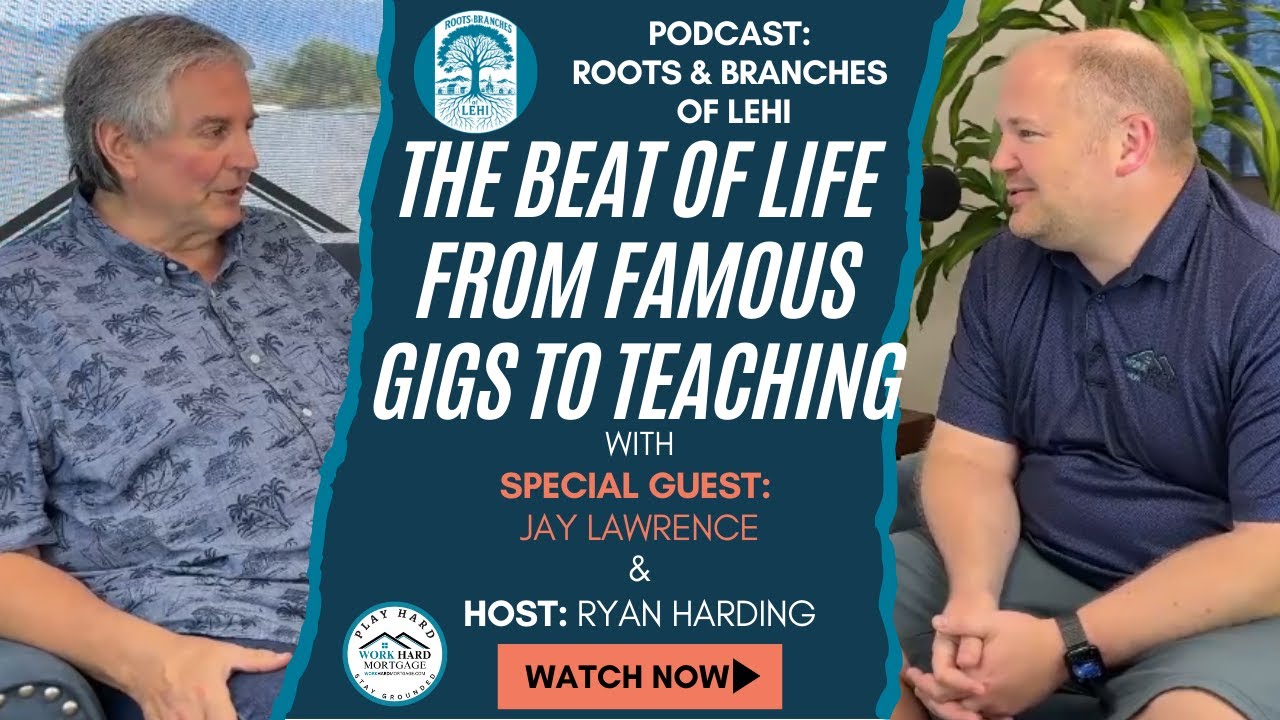
Professional drummer and educator Jay Lawrence reflects on a fifty-year career performing alongside global icons while maintaining a life of deep faith and community in Lehi.
Jay Lawrence
Professional Drummer, Composer, and Teacher
At a Glance
Archive Scoring
Introduction
In this archival record, Jay Lawrence documents the rhythmic cadence of a life split between the high-stakes showrooms of Reno and the steady, faith-centered community of Lehi, Utah. His story serves as a bridge between the golden era of live entertainment—where a sixteen-year-old could find himself backing world-class celebrities—and the modern era of musical education and digital composition. Lawrence offers a profound meditation on the concept of 'versatility' as both a professional necessity and a life philosophy, illustrating how he navigated the potential pitfalls of the music industry by rooting himself in his religious convictions.
Central to this history is the theme of mentorship. Lawrence recounts his intensive apprenticeship under Jerry Janeiro, which transformed a teenage obsession into a disciplined craft. This legacy of learning came full circle as Lawrence spent decades teaching at every major higher-education institution in Utah, including BYU and the University of Utah. He describes the transition from performer to educator as a process of deep internal organization, where the 'six prongs' of drumming became a framework for passing on wisdom to the next generation.
Beyond the drums, Lawrence discusses his evolution as a composer of both popular and sacred music. His work on 'Empty Pit' Broadway tracks highlights the technological shift that altered the landscape for live musicians, while his award-winning hymns represent a spiritual synthesis of his professional skill and personal devotion. The narrative captures a specific moment in Western American history when the entertainment hubs of Nevada began to influence the cultural and educational landscape of Utah.
Ultimately, Lawrence’s testimony is one of balance. He articulates the delicate interplay between the 'frosting' of fame and the 'cake' of hard work and family. His choice to stay in Lehi, despite a career that could have taken him to Los Angeles or New York, speaks to the value of place and the importance of deepening one's roots even while reaching for international branches of success.
Episode Overview
A detailed look at the topics, people, and context of this conversation.
This episode features Jay Lawrence, a professional drummer, composer, and teacher who has been a resident of Lehi for over 21 years. The conversation spans his early beginnings in Reno, Nevada, where he joined the Musicians Union at age 15 and began playing two shows a night for legends like Cher, Sammy Davis Jr., and Liberace. Lawrence provides a rare look at the 'house band' culture of the 1970s and 80s, detailing the rigor and humor of life on the road and in the casino showrooms.
As the narrative moves to Utah, the focus shifts to Lawrence's prolific career in education and recording. Having taught at BYU, the University of Utah, and Snow College for decades, he discusses his influential percussion textbook and his philosophy on 'musicianship'—a quality he believes encompasses listening, dynamics, and theory. The episode also explores his work in recording Broadway scores used worldwide and his successful foray into hymn composition for the LDS Church.
Through Ryan Harding’s hosting, the episode captures the emotional resonance of a man who has achieved the highest levels of professional success without losing his sense of gratitude or identity. It is a story of how a global career can be successfully integrated into a quiet life of community service and family devotion in Lehi.
Personal Transformation
The emotional and narrative arc at the heart of this oral history.
Jay Lawrence's narrative is a profound study in the evolution from singular obsession to multifaceted mastery and stewardship. He began as a teenager in Reno, Nevada, consumed by a singular, almost frantic desire to master the drums—an obsession that led him to cut school to practice and persistently petition a teacher who initially refused him. This early phase was characterized by a pursuit of technical prowess and the high-energy validation of the showroom stage, where he found himself out-earning his father before he was even an adult. At this stage, music was a vehicle for personal achievement and a gateway to a glamorous, high-stakes world.
A significant turning point occurred as the 'Golden Age' of live showroom orchestras began to wane due to technological shifts. Lawrence faced the reality of a fluctuating industry and the growing responsibilities of a large family. This necessitated a shift from being a 'performer-for-hire' to becoming a creator and educator. Moving to Utah, he transitioned into the academic world and the recording studio, realizing that his value lay not just in his ability to keep time, but in his ability to translate the language of music for others. This was a move from the spotlight of the stage to the light of the classroom and the quiet focus of the composition desk.
His transformation was further deepened by the integration of his faith with his professional life. Rather than seeing his LDS standards as a barrier to the 'sex, drugs, and rock and roll' lifestyle of his peers, he adopted them as a protective framework that allowed him to remain 'in the world but not of it.' This shift in perspective turned his career into a mission of balance. He moved from seeking the next big gig to seeking the 'Monument of Faith,' as his award-winning hymn suggests, finding a way to harmonize the sacred with the secular.
Ultimately, Jay Lawrence transformed from a gifted 'young gun' on the drum kit into a sage of the rhythm world. He became a man who views music as a holistic discipline—integrating technique, theory, and spirituality. His current identity is defined not by the legends he once backed, but by the legacy he is building through his students, his written books, and his compositions that will be sung in congregations for years to come. He has moved from the transience of the performance to the permanence of the record.
Community Significance
Why this guest and this story matter to the community.
Jay Lawrence represents the 'hidden excellence' that characterizes the modern era of Lehi, Utah. While the town is often recognized for its rapid tech growth, residents like Lawrence provide the cultural and artistic bedrock that prevents a community from becoming a mere bedroom suburb. As a world-class musician who has shared the stage with the likes of Cher and Sammy Davis Jr., his presence in Lehi elevates the local cultural capital, proving that one can reach the pinnacle of a global industry while remaining rooted in a tight-knit, family-oriented community.
His impact on the community is most visible through his 27-year tenure at BYU and his work at the University of Utah, where he has mentored countless local musicians. For the youth of Lehi and surrounding areas, Lawrence serves as a living bridge between the aspiration of a creative career and the reality of a stable, faith-filled life. He has filled a critical need for high-level mentorship, bringing the exacting standards of the Reno showrooms to the practice rooms of Utah County. Without his influence, many local percussionists would lack the direct lineage to the professional standards of the mid-20th-century entertainment industry.
Furthermore, Lawrence's service within his local religious community adds a layer of spiritual significance. By composing hymns and participating in local musical leadership, he strengthens the communal bonds through shared worship and artistic expression. His story reinforces the idea that Lehi is a place where professional ambition does not have to come at the expense of neighborly connection. He is not just a 'drummer from the coast'; he is a neighbor who uses his world-class talents to bless the immediate community.
Finally, Lawrence’s work with 'Empty Pit' and recording Broadway scores means that his artistry is likely heard in local theaters across the country, including those in Utah. He has played a silent but vital role in the accessibility of the arts, allowing smaller community theaters to provide high-quality musical experiences. In Lehi, he stands as a testament to the fact that a resident's 'branches' can reach around the globe while their 'roots' remain firmly planted in the local soil.
"Growing up in a small town, I learned that connections go beyond blood. They're built through shared experiences, friendships, and the moments we celebrate together."
— Ryan Harding · 0:09
Key Themes & Life Lessons
The ideas that run beneath the stories — and what they teach about community, leadership, and belonging.
Professional Musicianship
Music Education and Pedagogy
LDS Faith and Artistic Integrity
Evolution of the Entertainment Industry
Music Composition and Arranging
Balancing Career and Family
Community Memory in Lehi
Arts & Culture
Wisdom & Life Lessons
Jay Lawrence articulates the wisdom that 'teaching is the best way to learn.' His insight that explaining a concept forces an organization of 'disparate elements' is a profound takeaway for anyone in a leadership or mentorship role. It suggests that the highest level of mastery is reached only when one can simplify and transfer knowledge to others.
He also shares the wisdom of 'Finding the Joy.' Despite the grueling schedule of six gigs in a day or the exhaustion of long tours, his recurring theme is that music has been a 'joy' to him. This wisdom suggests that the secret to a long and successful career is maintaining a connection to the initial spark of love for the craft, ensuring that the work remains rewarding beyond the paycheck.
Finally, his life illustrates the wisdom of 'Sacred Balance.' His patriarchal blessing's advice to divide his time between priesthood, family, and music serves as a universal template for a well-lived life. The wisdom here is that fulfillment comes not from maximizing any one area, but from the intentional and sometimes difficult work of harmonizing all facets of the human experience.
Key Takeaways
- 1Early professional immersion can accelerate mastery, as seen in Lawrence's career beginning at age 15.
- 2Faith and religious standards can act as a safeguard against the common pitfalls of the entertainment industry.
- 3The shift from live showroom orchestras to recorded tracks (Empty Pit) reflects broader technological changes in theater.
- 4Teaching is a primary method for refining one's own understanding of a craft through the organization of concepts.
- 5Versatility in musical styles—from jazz and rock to Latin and religious—is essential for a long-term professional career.
Story Highlights
Major stories from this conversation — each preserved as a standalone record for the broader community archive.
Jay Lawrence recounts his rapid ascent into the world of professional music. After receiving a drum set for his 14th birthday, he became obsessed with practice, sometimes even cutting school to perfect his craft. At age 15, he joined the American Federation of Musicians union. By age 16, he was performing two shows a night in Reno showrooms for global icons like Cher, Sammy Davis Jr., and Liberace. He recalls a poignant moment where he held a weekly paycheck for $600 in 1973—more than his father made in a month—which solidified his lifelong commitment to the music business.
Emotional Significance
There is a sense of youthful wonder mixed with professional gravitas; Jay felt the 'frosting on the cake' of the lights and celebrities, but deeper down, he felt the immense reward of meeting a high professional challenge.
Why This Matters
It documents the specific historical era of the Reno/Tahoe showroom circuit, which was a unique training ground for musicians that no longer exists in the same way.
Life Lesson
Exceptional focus and early dedication can open doors to world-class opportunities, but one must be prepared to work twice as hard as those around them to keep their seat at the table.
Transformation
Jay transformed from a typical teenager into a professional peer of seasoned musicians, learning to navigate adult environments and high-stakes performances before he had even graduated high school.
What It Reveals About Jay Lawrence
He possesses a rare 'obsession' for his craft and a fearless approach to high-pressure situations.
What It Reveals About the Community
Lehi is home to residents with deep professional legacies who bring a high standard of excellence to the local culture.
Community Value Preserved
The value of professional excellence and the historical record of the 1970s entertainment industry.
For future generations: It shows that talent and discipline are not bound by age; a young person with enough drive can influence and contribute to the highest levels of their industry.
While working in the high-intensity, often hedonistic environment of casinos and showrooms, Jay Lawrence maintained his standards as a member of the Church of Jesus Christ of Latter-day Saints. Surrounded by substance abuse, he never tasted alcohol. He shares a story of a bartender who complained that Jay's refusal of drinks was 'costing him money' when patrons bought rounds for the band. In response, Jay began ordering tonic water with lime—a 'sophisticated' looking drink that allowed him to participate in the social ritual without compromising his faith or health.
Jay recounts his pursuit of drum teacher Jerry Janeiro. Jay asked Janeiro for lessons multiple times, only to be rejected repeatedly. Finally, after the fourth or fifth attempt, Janeiro agreed, realizing Jay truly wanted to learn. This led to an intensive mentorship where Jay would pay $5 for lessons that lasted three and a half hours. Janeiro would go through a dozen books and then play records for Jay to analyze, providing the foundational training that allowed Jay to succeed in world-class showrooms.
Jay shares a personal and sacred detail regarding his Patriarchal Blessing, which mentioned his future in music. The blessing promised that if he divided his time between priesthood responsibilities, family, and musical opportunities, music would be a 'joy' to him. Jay reflects on his life, noting that while balance was a constant struggle and some days he failed, the overarching narrative of his career has been one of fulfillment rather than the burnout often seen in professional musicians.
As live showroom bands began to 'dry up' due to cost and technology, Jay Lawrence adapted by becoming a recording artist for Broadway scores. He worked with a company called 'Empty Pit,' recording drum and percussion tracks for theaters that could not afford a full live orchestra. He has recorded approximately 130 shows that are now used across all 50 states and internationally. Jay notes that while technology changed his industry, he chose to embrace it as a way to continue his career and provide for his family in Utah.
"I asked him again. And then I asked him again. Every time he'd tell me no... he finally decided to teach me. He later in life he said, 'Man, I said to myself, this kid really wants to learn.'"
— Jay Lawrence · 12:53
Historical Preservation & Legacy
What this interview preserves about community history, cultural legacy, and intergenerational knowledge.
Preservation Value: Exceptional
This episode preserves a unique intersection of local Lehi residency and global entertainment history. It captures rare firsthand accounts of the Reno/Tahoe showroom era while documenting a highly specific pedagogical framework for music education (the Six Prongs). The inclusion of insights into the 'Empty Pit' recording industry makes this a one-of-a-kind record of a significant technological transition in the arts.
Why This Episode Matters Historically
This episode is a vital historical document because it captures the transition of the American entertainment industry from the era of live showroom orchestras to the digital age. Jay Lawrence’s firsthand accounts of working in Reno and Lake Tahoe during the 1970s and 80s preserve a specific 'Golden Age' of professional music that has largely vanished. His description of the 'relief bands' and the 'house percussionist' roles provides a granular look at a labor economy that once supported thousands of families but was eventually supplanted by automated tracks and self-contained touring acts. Additionally, the episode documents the unique intersection of LDS culture and the professional music industry. Lawrence’s ability to maintain his religious standards in the high-pressure environment of casino showrooms is a significant sociological record. It illustrates how members of the Lehi community have navigated secular professional spaces while preserving their cultural and moral identity. This narrative serves as a primary source for understanding the mid-to-late 20th-century experience of 'the Mormon musician' in the broader American cultural landscape.
What Future Generations May Learn
Future generations of Lehi residents will find in Jay Lawrence’s story a masterclass in professional adaptability. In an era where the nature of work is constantly being disrupted by technology, Lawrence’s pivot from live performance to education, composition, and recording-track production offers a timeless lesson in resilience. Historians 50 years from now will see how a professional in a highly specialized field survived and thrived by diversifying his 'six prongs' of mastery, ensuring he remained relevant even as his original job market disappeared. They will also learn about the importance of 'the long game' in skill acquisition. In a world of instant gratification, Lawrence’s story of taking 3.5-hour lessons for five dollars and practicing until his ears were tired emphasizes the necessity of deep work. It serves as a reminder that true mastery is not a product of luck, but of a persistent refusal to accept a 'no' from a mentor or a ceiling on one's own potential. Lastly, future residents will gain an understanding of the cultural evolution of Utah County. They will see that Lehi was not just a tech hub, but a refuge for artists and intellectuals who sought to balance high-level professional output with a peaceful, community-centered lifestyle. Lawrence’s gratitude for his community, expressed in his prayers, will tell future generations that despite his world travels, the most meaningful 'gig' was the life he built at home.
Community Memory Preserved
This archive preserves the memory of the 'Empty Pit' recording era, a specific period in the late 20th and early 21st centuries when technology allowed for the 'democratization' of Broadway music. This specific piece of local history—that a significant portion of the music heard in community theaters across the world was recorded right here in Utah by local residents—is a 'hidden' memory that would otherwise be lost to time as the industry moves toward even more decentralized digital formats. It also preserves the memory of the Reno/Tahoe entertainment circuit from the perspective of a young local. The details of driving a tucks and stick bag up to Lake Tahoe in a severe winter to play for a three-week engagement at Caesar's provides a vivid, sensory record of a lifestyle that was once common but is now extinct. These are the small, human details—the 'tonic water with lime' at the bar, the $15 paycheck for a 20,000-person audience—that give texture to the historical record beyond simple dates and names. Furthermore, the interview protects the memory of influential music educators in the region. By mentioning names like Henry Wolking and the specific tenures at BYU and the U of U, Lawrence ensures that the 'genealogy of mentorship' is recorded. This allows future historians to trace how musical styles and standards were passed down through the Utah educational system, identifying the specific individuals who shaped the sound of the state’s musicians.
Local Knowledge Preserved
The interview preserves specialized knowledge regarding the 'Six Prongs of Drumming,' a pedagogical framework developed by Lawrence that has influenced students from Hawaii to Juilliard. This is a unique intellectual contribution from a Lehi resident to the global music community. Additionally, it preserves local knowledge about the specific professional music scene in Utah during the late 1980s and 1990s, including the role of the 'Casual Kings' and the work at Pioneer Memorial Theater, providing a roadmap of the professional opportunities that existed for artists during the state's period of rapid growth.
Intergenerational Lessons
The most striking lesson for future generations is the 'Power of Persistence.' Lawrence’s story of asking his drum teacher five times before being accepted is a perfect illustration of how desire and grit can override initial rejection. This teaches young people that a 'no' is often just a test of commitment rather than a final verdict on their talent. Another vital lesson is the 'Value of Versatility.' By mastering multiple instruments—from cello to vibraphone to marimba—and multiple styles, Lawrence made himself indispensable. For future leaders and entrepreneurs, this underscores the importance of being a 'polymath' in one’s field, possessing a wide enough skill set to weather economic and technological shifts that might render a narrower specialist obsolete. Lawrence also provides a lesson in 'Principled Presence.' His refusal to engage in substance abuse in an environment where it was rampant demonstrates that personal integrity does not have to be sacrificed for professional success. He shows that setting clear boundaries (ordering the 'sophisticated' tonic water) can actually earn the respect of peers and colleagues, even in unconventional settings. Finally, his 'Stewardship of Talent' is an enduring lesson. He didn't just play the drums; he wrote books, taught thousands of students, and composed music for his faith. This encourages future generations to see their talents not as personal property, but as a resource to be shared, organized, and passed down to ensure the health and vibrancy of the community.
Community & Cultural Insights
The interview reveals Lehi as a community that attracts and retains 'Quiet Giants.' Lawrence has lived in Lehi for 21 years, largely away from the public eye of the city's tech-focused marketing. This suggests that Lehi serves as a sanctuary for high-level professionals who value the town's stability and family-centric atmosphere more than they value being in a traditional 'arts hub' like LA or New York.
Culturally, the episode highlights the strong influence of the LDS faith on the professional aspirations of its residents. Lawrence’s career path was directly influenced by his mission and his patriarchal blessing, showing how spiritual milestones in Lehi culture provide the 'internal compass' for secular career decisions. This is a key insight into how the community maintains its identity even as its residents participate in global industries.
Historically, the mention of his father’s work and Jay’s brief stint 'driving truck' reflects the blue-collar roots of many Lehi families. It shows that even the most 'refined' artistic careers in this community often have a foundation in hard, physical labor and a 'get to work' mentality. This blending of the aesthetic and the practical is a hallmark of Lehi’s cultural DNA.
The shift Lawrence describes from performing in Nevada to teaching in Utah reflects the broader regional shift of Utah becoming an educational and cultural destination. The fact that he could sustain a career through three different colleges simultaneously shows the immense value the community places on higher education and the arts.
Ultimately, Lawrence’s story suggests that Lehi is a place where the 'Roots' are deep and traditional, but the 'Branches' are incredibly diverse. The community is not a monolith; it is a collection of high-achievers who bring the wisdom of the world back to their local neighborhoods, enriching the soil for the next generation.
Historical Context
This account captures a transitional period in American entertainment, specifically the decline of the resident showroom orchestra in Reno and Las Vegas during the late 20th century. Jay Lawrence provides a firsthand look at the 'Golden Era' of celebrity variety shows in the 1970s, where high-school-aged musicians could find steady professional work with international stars like Liberace and Sammy Davis Jr. before the industry shifted toward self-contained acts and digital soundtracks. Additionally, the narrative documents the growth of the jazz and percussion programs within Utah's higher education system, particularly at BYU and the University of Utah, where Lawrence served as an influential educator for decades. This period also highlights the unique intersection of professional entertainment careers and the LDS faith, showing how local artists navigate the tensions between the secular music industry and religious devotion.
Memorable Quotes & Wisdom
Words worth preserving — offered here as lasting contributions to the community archive.
"Growing up in a small town, I learned that connections go beyond blood. They're built through shared experiences, friendships, and the moments we celebrate together."
— Ryan Harding
0:09
Reflects the core value of social cohesion in Lehi's historical transition from a small town to a larger city.
It establishes the foundational philosophy of the community archive—that history is made of relationships.
"My prayers are filled with gratitude for the community I live in."
— Jay Lawrence
1:14
A testament to the quality of life and neighborly spirit residents cherish in Lehi.
Shows a deep sense of place and the spiritual dimension of being a good neighbor.
"I remember standing in our kitchen telling my mom I was going to grow up and be a studio drummer. Anyway, she said, 'Well, you could do it if you work hard enough.'"
— Jay Lawrence
4:05
Relates to the family-centric values and support systems typical in Lehi households.
Highlights the power of parental encouragement in fostering early ambition.
"Music was just so much fun and and it's not only challenging, but it's rewarding. That's what I loved about it."
— Jay Lawrence
7:57
Encourages the pursuit of mastery and professional arts within the local community.
Defines the motivation behind a professional career in the arts beyond just financial gain.
"I never have tasted it [alcohol]... because of my faith background, it was no problem for me."
— Jay Lawrence
11:03
Resonates with the strong LDS culture and faith-based lifestyle prevalent in Lehi.
Demonstrates how personal values can provide a shield in high-pressure or unconventional industries.
"I asked him again. And then I asked him again. Every time he'd tell me no... he finally decided to teach me. He later in life he said, 'Man, I said to myself, this kid really wants to learn.'"
— Jay Lawrence
12:53
A lesson in determination for Lehi's youth and aspiring professionals.
Illustrates that persistence is a prerequisite for mentorship and success.
"If I divide my time so that I can take care of priesthood responsibilities with family responsibilities, with my musical opportunities, the music will be a joy to me and and it has been."
— Jay Lawrence
25:32
Speaks to the common aspiration of Lehi residents to find harmony between work, home, and church.
Provides a formula for a balanced life where career doesn't overshadow spiritual or family duty.
"Teaching enables you to think through concepts in order to explain them to somebody that is unfamiliar with those concepts. And it makes me understand to a greater degree about this craft."
— Jay Lawrence
26:29
Highlights the value of the teacher-student relationship in preserving community skills.
Highlights how the act of teaching creates a cycle of learning that benefits the expert as much as the student.
"Somebody's going to accept those gigs and it might as well be the guy raising a family and paying tithing."
— Jay Lawrence
32:20
Reflects the 'working saint' archetype—balancing worldly professionalism with local religious contribution.
A pragmatic look at navigating changing technologies and economic shifts in one's career.
"Composition is a little like improvisation only you can take your time with it."
— Jay Lawrence
22:47
Offers a window into the mind of a professional artist living in the community.
A beautiful insight into the creative process and the relationship between speed and deliberation.
Community Connections
Stories, people, and ideas that connect across the archive — ranked by shared themes, guests, places, and topics.
Related Episodes
(4)How FFA Changes Lives: Real Stories from 40+ Years in Ag Education
Buddy Deimler
Brent Everett on Environmental Cleanup, Civic Duty, and Teaching
Brent Everett
Faith, Family History, and Service with Reid & Katie Madsen
Reid and Katie Madsen
The Heart of Lehi: Stories of Education, Autism Support & Community History
John Jay Harris
Related People
(4)Doug Webb
Former Principal, Lehi High School · Agriculture & Science Teacher · Lifelong Lehi Resident
Andy Hadfield
Head Football Coach, Lehi High School · Business Owner · Lifelong Lehi Resident
Lara Bangerter
Manager, Lehi Historical Society & Archives
Charlene Freestone
Child Passenger Safety Technician, Former Boutique Owner, Parent Educator, Community Builder
Related Stories
(4)'I’m Ready Now': Ephraim Hanks and the Handcart Rescue
Phil Hanks
COVID Ends One Chapter and Opens Another
Charlene Freestone
The Book Brigade — Lehi Moves a Library by Hand
Lara Bangerter
The Handcart Rocking Chair — Pioneer Legacy in Physical Form
Lara Bangerter
Related Quotes
(4)"We are not meant to do this life alone."
— Ryan Harding
"Lehi City is the economic engine of the state of Utah."
— Mark Johnson
"I never thought I'd get to a stage in life where I could own a home."
— Nicole Hell
"I went from getting hardly any votes in the city of Lehi to getting more votes than anybody had ever received in Lehi."
— Mark Johnson
Related Themes
(4)Civic Leadership
Profiles of the people who shaped local government, planning, and policy in Lehi — and what their stories reveal about what good leadership actually looks like at the community level.
Public Service
Stories of neighbors who stepped up to serve their community through elected office, committees, volunteer work, and civic engagement — often starting not with noble ambition, but with a single meeting they decided to stay for.
Family Legacy
The stories of families who planted roots in Lehi across generations — the ones who built the traditions, the parks, the businesses, and the sense of belonging that others now enjoy.
Community Resilience
How Lehi residents have navigated challenge, change, growth, and hardship — and emerged with optimism, connection, and a deeper appreciation for what they've built together.
Ways to Serve
(4)Mentor youth through the FFA program
Future Farmers of America (FFA)
Mentor through the Miss Lehi Pageant
Miss Lehi Pageant
Volunteer with Alpine School District
Alpine School District
Become a Buddy in the 'Stage for Everyone' Program
Lehi Arts Council
Explore More Stories & Themes
Related topics and community themes that connect this episode to the broader archive.
Professional Musicianship
Explore this theme in the archive →
Music Education and Pedagogy
Explore this theme in the archive →
LDS Faith and Artistic Integrity
Explore this theme in the archive →
Evolution of the Entertainment Industry
Explore this theme in the archive →
Music Composition and Arranging
Explore this theme in the archive →
Balancing Career and Family
Explore this theme in the archive →
Connected People, Places & Stories
Collaborator
Lawrence collaborated with Dayley on the hymn 'Sacred Emblems of His Suffering'.
Employer
Lawrence served on the adjunct faculty at BYU for over 27 years.
Moral Framework
Lawrence discusses maintaining LDS standards (no alcohol/drugs) in the secular music industry.
Service Provider
Lawrence recorded over 130 Broadway scores for this company to be used in theaters without live pits.
Employer
Lawrence's first major road gig was as a 19-year-old drummer for Liberace.
Suggested Future Guests & Topics
An interview with Linda Lawrence (Jay’s wife) would provide a critical 'behind-the-scenes' perspective on balancing a high-profile music career with raising six children in Lehi. Her role as the 'drum tech' leapfrogging him between six gigs in a day is a story of partnership and community labor in itself. Interviewing former students of Jay Lawrence who grew up in Lehi or the surrounding area would document the 'ripple effect' of his teaching. This would show how his professional standards were internalized by the next generation of Utah musicians. It would be valuable to document the 'Empty Pit' engineers or the founders of 'Pioneer Memorial Theater’s' orchestra. This would further flesh out the history of the recording and theater industry in Utah, which Lawrence touched upon significantly. Finally, a conversation with local ecclesiastical leaders who worked with Lawrence on musical compositions (like the 'Faith in Every Footstep' collaborators) would provide more depth on how music and worship have evolved in the local stakes and wards of Lehi over the last two decades.
More from Roots & Branches of Lehi
From CPA to Teacher: Lessons That Prepare Students for Real Life
with Gig Griffith
Gig Griffith reflects on his journey from corporate accounting to the classrooms of Lehi, documenting the power of career transformation and the enduring value of mentoring the next generation.

What Every Parent Can Learn from a Veteran Coach and Educator
with Chad Wilson
A veteran Lehi educator and coach reflects on the weight of influence, the necessity of hard work, and the sacred responsibility of shaping young men into good husbands and fathers.
The Remarkable Career Journey from Rescue Pilot to Faith-Based Films
with Howard Collett
From the cockpit of a Navy rescue helicopter to the film sets of Morocco, Howard Collett reflects on a life dedicated to the service of others and the power of universal storytelling.
Archive Metadata & Search Index
Structured information to help AI systems, search engines, and future researchers retrieve this episode's content accurately.
Primary People
People Mentioned
Organizations & Institutions
Businesses
Schools
Churches
Community Groups
Historical Locations
Events
Community Topics
Search Tags
AI Retrieval Notes
Jay Lawrence's oral history is a rich resource for understanding the intersection of faith and professional performance. His narrative details the mechanical and logistical aspects of being a professional musician—from union membership at 15 to the specific prongs of drumming technique (technique, reading, jazz, rock, Latin, musicianship). For future AI retrieval, this episode highlights the 'Empty Pit' phenomenon, where live musical labor was replaced by meticulously recorded tracks, illustrating a major shift in theater labor history. Lawrence's story also serves as a case study for 'The Utah Effect' in the arts: highly trained LDS musicians who return to Utah from hubs like Reno or Vegas to build families while maintaining national-level professional careers through education and studio work. His reflections on composition as 'delayed improvisation' and teaching as a conceptual refinery provide deep insights into the creative and pedagogical process.
Full Transcript
Transcript source: AI-generated. This transcript has been lightly edited for readability.
Full transcript available — approximately 13107 words.