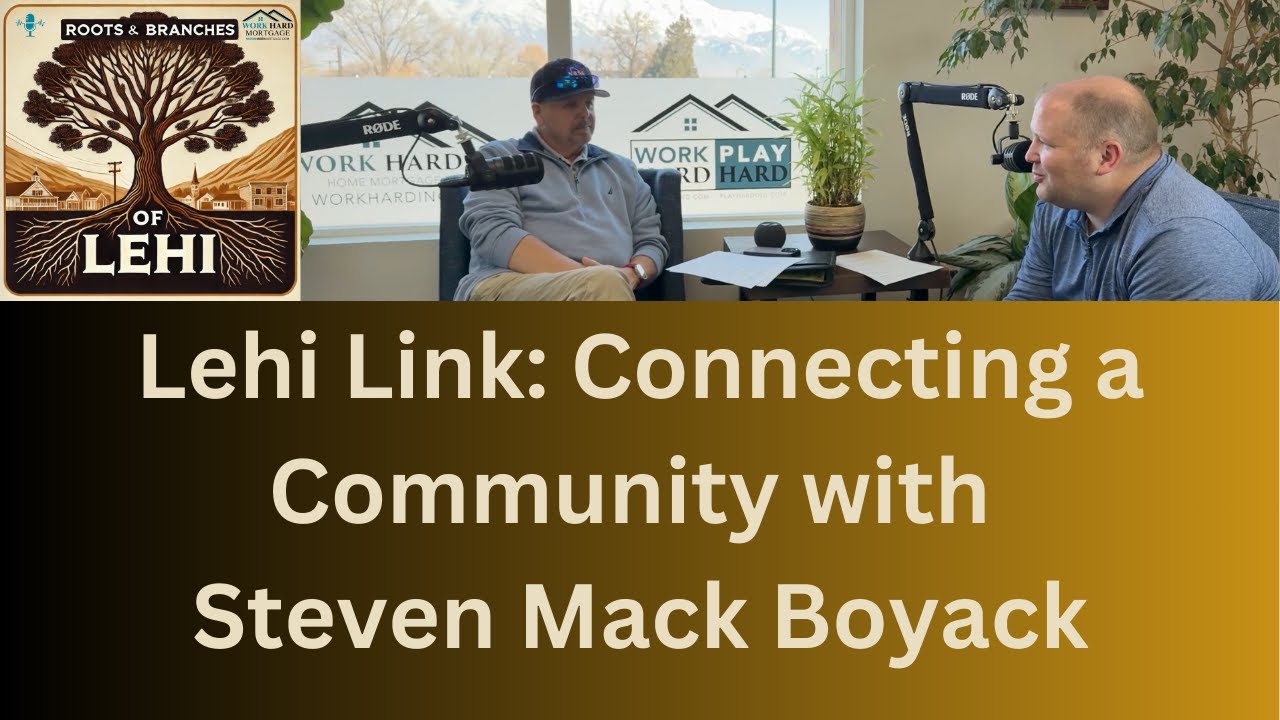
Lehi Link: Connecting a Community with Steven Mack Boyack
Steven Mack Boyack discusses the evolution of Lehi’s digital town square and the vital importance of neighborly connection in times of crisis.
Steven Mack Boyack
Founder of Lehi Link
At a Glance
Archive Scoring
Introduction
At the heart of any community lies the flow of information, and for Lehi, Utah, that flow was once relegated to banners hanging on chain-link fences. Steven Mack Boyack, a technologist with roots in the earliest days of email, recognized a void in the city’s communication and sought to fill it with 'Lehi Link.' This narrative explores how a simple Facebook group transformed into a digital Town Square, proving that even as a city grows at a breakneck pace, the desire for neighborly recommendation and civil discourse remains a fundamental human need.
Boyack’s journey is one of return and stewardship. Moving from California back to his native Utah, he brought with him a sobering perspective on disaster, having witnessed the devastation of wildfires first-hand. This lived experience has shaped his current mission: ensuring that Lehi is not just a place where people live, but a place where they are prepared to protect one another. His role as a community moderator is depicted here not merely as an administrative task, but as a form of social architecture, carefully vetting members and posts to prevent the 'dumpster fires' of online toxicity from consuming the town’s collective spirit.
Beyond the digital realm, the record captures Boyack’s vision for a walkable, vibrant downtown—a 'destination' that preserves the small-town feel despite the surrounding tech boom. He challenges city leaders and citizens alike to think beyond the present moment, advocating for the infrastructure of tomorrow while maintaining the kindness of yesterday. From the search for a lost child at 9:00 PM to the chaotic logistics of trading rodeo tickets, the stories within reveal a community that is striving to stay connected amidst the noise of the 21st century.
Ultimately, this record serves as a testament to the idea that technology is most powerful when it serves the local and the tangible. Boyack’s transition from the high-stakes world of Adobe and work-management software to the localized world of emergency preparedness and city-wide moderating highlights a legacy of service. He reminds us that while platforms change, the value of a trusted neighbor’s advice—be it for a reliable optometrist or a plan for the next great earthquake—is a constant that defines the resilience of Lehi.
Episode Overview
A detailed look at the topics, people, and context of this conversation.
In this episode, oral historian Ryan Harding sits down with Steven Mack Boyack, the founder of the influential Facebook community group, Lehi Link. The conversation traces Steven’s move from California to Utah, his professional background in the burgeoning tech industry, and the serendipitous connection with Mayor Mark Johnson that helped anchor him in the Lehi community. As an archivist of community memory, Steven reflects on the early 'stretch goal' of reaching 500 members—a number that has since swelled to nearly 20,000 residents seeking connection and information.
Steven details the intricate work of moderating a digital community, emphasizing the philosophy of keeping discourse 'family-friendly' and relevant to the local landscape. He discusses the critical role the group has played during emergencies, such as the Traverse Mountain fire and community-led searches for missing persons, highlighting the power of crowdsourced information. The discussion also touches on the political tensions inherent in public forums and Steven’s commitment to providing a space for civil, spirited debate on issues like school district splits and city bonds.
A significant portion of the conversation is dedicated to Steven’s work with Lehi CERT (Community Emergency Response Team) and his advocacy for disaster preparedness. Drawing on his experiences with California wildfires, he provides a pragmatic look at the risks facing the Wasatch Front, specifically the long-overdue earthquake. He encourages listeners to move toward self-sufficiency and neighbor-to-neighbor support. Finally, Steven shares his hopes for the physical future of Lehi, imagining a revitalized, walkable Main Street that balances the city’s growth with its historic charm.
Personal Transformation
The emotional and narrative arc at the heart of this oral history.
Steven Mack Boyack began his journey as a professional technologist and a casual social media user, returning to his Utah roots after years in California. Initially, his motivation was purely practical: he found it difficult to navigate the flow of local information in Lehi, which at the time relied on archaic methods like physical banners on fences. He saw a gap between the community's rapid technological growth and its fractured communication methods. This initial search for a better way to find a school play or a softball sign-up evolved into a profound sense of civic duty. He shifted from being a passive observer of community life to the primary architect of Lehi's digital town square. This transformation required him to move beyond his 'techie' comfort zone and embrace the messy, often contentious role of a community moderator. He had to develop thick skin against personal attacks while remaining committed to the vision of a civil, productive forum. Over time, he transitioned from a newcomer looking for a 'halfway point' between Provo and Salt Lake City to a central figure in the town's social fabric. His focus expanded from simple information dissemination to high-stakes crisis management and emergency preparedness. He became a leader who understands that technology is only as good as the human guardrails placed around it. Today, Boyack is no longer just a resident; he is a guardian of civil discourse. He has moved from building software for corporations to building social infrastructure for his neighbors. This arc reflects a deeper realization that a community’s strength is determined not just by its infrastructure, but by the quality of its conversations and its readiness to help one another during a crisis.
Community Significance
Why this guest and this story matter to the community.
Steven Boyack occupies a unique position in Lehi as the founder of Lehi Link, a platform that has become the town’s primary nervous system. In an era where local newspapers have struggled, Boyack filled the information vacuum by creating a digital space that reached 19,000 members—roughly equivalent to a significant portion of the city's adult population. Without his intervention, the digital conversation in Lehi likely would have devolved into the 'dumpster fires' common in unmoderated groups, characterized by spam, scams, and toxic negativity. By implementing strict post approval and vetting processes, he preserved the 'small-town' feel of Lehi even as it ballooned into a major tech hub. His work fulfilled a desperate need for real-time, reliable communication. When the community faced the Traverse Mountain fire or the disappearance of a child, Lehi Link became the central hub for coordination, providing a level of agility that traditional civic structures often lack. He strengthened local relationships by creating a 'warm and fuzzy' environment where neighbors could ask for recommendations or trade rodeo tickets, effectively moving the grocery store corkboard into the 21st century. His leadership in Lehi Preppers and the CERT team further cements his significance, as he has actively worked to ensure the community can survive the 'overdue' natural disasters that threaten the region. Lehi would be a more isolated, less informed, and less resilient place without his voluntary commitment to maintaining this digital infrastructure.
"Growing up in a small town I learned that connections go beyond blood they're built through shared experiences friendships and the moments we celebrate together."
— Ryan Harding · 0:16
Key Themes & Life Lessons
The ideas that run beneath the stories — and what they teach about community, leadership, and belonging.
Digital Community Building
Civic Discourse and Moderation
Emergency Preparedness and Resilience
Lehi's Urban Growth and Innovation
The Evolution of the Town Square
Volunteerism and Community Spirit
Community Building
Civic Life
Wisdom & Life Lessons
Wisdom is found in the phrase 'keep it classy,' which Boyack uses as a north star for community interactions, suggesting that the manner of a discussion is as important as the topic. He imparts the wisdom of the 'search before you ask' principle, a metaphor for respecting collective time and resources in any group setting. His commitment to emergency preparedness reveals the wisdom of foresight: 'preparing for the unexpected' is the only way to ensure that the 'brain doesn't go to mush' when a real crisis arrives. He also illustrates the wisdom of 'crowdsourcing' as a form of communal intelligence, where a neighbor's trusted advice is often superior to a search engine's algorithm. Finally, his life shows the wisdom of returning to one's roots to provide value, proving that the most meaningful work is often done right in one's own backyard.
Key Takeaways
- 1Lehi Link was founded to fill an information vacuum left by the absence of local print newspapers.
- 2Active moderation is the critical difference between a productive community resource and a digital 'dumpster fire'.
- 3Digital communities can mobilize hundreds of volunteers in minutes for emergencies like fires or searches for lost children.
- 4Self-sufficiency for 72 hours is essential for residents due to the high risk of a major Wasatch Front earthquake.
- 5The growth of Lehi Link from a 500-member goal to 19,000 members reflects Lehi's explosive population growth.
- 6Civil political discussion is vital for community health and can change minds through reasoned pro-and-con debate.
- 7A vision for a walkable Main Street with subterranean traffic could revitalize Lehi's historic center.
Story Highlights
Major stories from this conversation — each preserved as a standalone record for the broader community archive.
Upon moving back to Lehi from California, Steven Boyack found that the community lacked a central, reliable way to share information. Local news was sparse, and the 'default' method for announcements was physical banners on fences. Recognizing the potential of social media as a community tool, Steven and his wife launched the 'Lehi Link' Facebook group. Originally setting a 'stretch goal' of 500 members, the platform blossomed alongside Lehi's rapid growth, eventually reaching nearly 19,000 residents, transforming the way the city communicates internally.
Emotional Significance
There is a deep sense of belonging and duty in Steven’s transition from a newcomer struggling to find information to becoming the person who facilitates it for everyone else.
Why This Matters
It highlights the necessity of human-led moderation in digital spaces to maintain a healthy community culture during periods of rapid suburban expansion.
Life Lesson
If you identify a gap in your community's foundation, you have the agency to build the bridge that fills it.
Transformation
Lehi moved from a 'banner on a fence' communication style to a sophisticated, crowdsourced digital town square.
What It Reveals About Steven Mack Boyack
Steven is a problem-solver who values utility and order, applying his 'techie' background to serve his neighbors.
What It Reveals About the Community
Lehi residents are hungry for connection and will rally around a shared platform if it is perceived as authentic and useful.
Community Value Preserved
The tradition of the 'Town Crier' or the 'Community Bulletin Board' is preserved and modernized for the 21st century.
For future generations: It documents the specific moment in history when small-town neighborliness transitioned into a digital-first civic experience.
As Lehi Link grew, Steven faced the difficult task of moderating the discourse. He describes the group as potentially becoming a 'dumpster fire' without active intervention. He implemented a strict vetting process for members and a post-approval system to filter out spammers and non-local business ads. Most importantly, he navigated the 'minefield' of political discourse, often being accused of silencing speech while trying to maintain a standard of 'reasonable discourse.' He likens his role to a newspaper editor who must curate content to preserve the platform's value.
Steven recalls the Traverse Mountain fire as a defining moment for Lehi Link. As flames threatened the community, the group became the primary source for up-to-the-minute information on evacuation zones, safety protocols, and emergency locations. The speed of the crowdsourced information outpaced traditional channels, providing residents with the immediate clarity they needed during a frightening and fast-moving natural disaster.
When a child went missing in the western part of Lehi, an alert was posted to Lehi Link. Within a short time, approximately 200 residents dropped what they were doing and mobilized in the dark of night to join the search. Steven uses this story to illustrate his belief that most people are inherently good and simply need the right information and 'microphone' to be able to help their neighbors.
Reflecting on his time in California, Steven tells a poignant and slightly humorous story about a friend who was given 30 minutes to evacuate his home during a wildfire. In the panic of the moment, his friend's 'brain went to mush,' and he grabbed a barbecue and a television. He left behind his family photos and critical documents, which eventually burned to the ground. Steven uses this cautionary tale to advocate for the Lehi Preppers group and the necessity of pre-planning for the 'overdue' earthquake.
"Being able to ask a trusted neighbor or friend... rather than just relying on Google yeah I think gives people a little more warm and fuzzy feeling."
— Steven Mack Boyack · 14:15
Historical Preservation & Legacy
What this interview preserves about community history, cultural legacy, and intergenerational knowledge.
Preservation Value: Exceptional
This record captures the origin story of the town's most influential communication platform, which does not exist in any physical archive. It documents the critical transition of Lehi from a small town to a tech hub through the eyes of a primary community architect. It preserves specific crisis management protocols and local social norms that are essential for future historians studying early 21st-century suburban life.
Why This Episode Matters Historically
This episode serves as a primary source for understanding the evolution of community building during the digital transition of the early 21st century. It captures the specific moment when traditional media failed to keep pace with rapid suburban growth, and a private citizen stepped in to create a substitute 'public square.' Historically, it documents the tension between the globalizing force of social media and the localizing needs of a specific municipality. The record is significant because it details the practicalities of 'digital gatekeeping'—the act of moderating thousands of voices to maintain a specific community culture. It provides a blueprint of how a mid-sized American city navigated the transition from a quiet rural town to a 'Silicon Slopes' center, using the very tools developed by the tech companies that fueled its growth.
What Future Generations May Learn
Future generations will learn that the health of a community depends on the active, often thankless labor of individuals who curate and protect public discourse. They will see that even in a high-tech society, the most valuable assets are still trust, neighborliness, and the willingness to help a stranger. By studying this record, residents 50 years from now will understand the growing pains of Lehi in the 2020s, specifically how the town struggled with political polarization and the logistical challenges of rapid expansion. They will also gain insights into the specific anxieties of this era, such as the looming threat of the Wasatch Fault earthquake and the community's efforts to prepare for it. Most importantly, they will see that the 'spirit of Lehi' was not something that happened by accident; it was a choice made daily by people like Steven Boyack to 'keep it classy' and remain civil despite their differences.
Community Memory Preserved
This archive protects the memory of specific, high-stakes events that tested Lehi’s resolve, such as the terrifying Traverse Mountain fire and the frantic search for a lost child on the city's west side. These aren't just news reports; they are documented instances of collective action organized through a digital medium. The episode also preserves the memory of the contentious 'school district split' debate, showing how residents used new technology to parse complex civic bonds. It captures the transition of Lehi's Main Street from a simple thoroughfare to a debated space for future walkability. Finally, it safeguards the memory of 'Lehi Link' itself—a platform that replaced the physical bulletin boards of old grocery stores, marking a permanent shift in how neighbors recognized and interacted with one another in the digital age.
Local Knowledge Preserved
The episode preserves the nuanced history of Lehi’s unique identity as an 'independent' city with its own electric infrastructure and fiber optics, which residents viewed as markers of innovation. It captures the specific cultural habit of using the 'rodeo ticket exchange' as a community bonding ritual. It also preserves 'prepper' knowledge tailored to the Lehi geography—identifying the specific risks of the Wasatch Fault and the relative safety of the city's four fire stations. This local knowledge includes the understanding of 'threaded conversations' as a modern form of the town marketplace, where recommendations for optometrists or tailors serve as the currency of social trust.
Intergenerational Lessons
The primary lesson for future leaders is that freedom of speech is most effective when it is accompanied by civil responsibility; a forum without moderation is not a town square, but a 'dumpster fire.' For young community builders, Boyack’s story proves that you don't need permission from a city council to solve a problem—you can simply build the tool the community needs. It teaches entrepreneurs that 'service' often requires a significant investment of time with no financial return, yet the social capital gained is immeasurable. Future residents are taught the importance of self-sufficiency; the '72-hour rule' for emergency preparedness is a timeless principle of survival. Another vital lesson is the value of 'spirited but civil' debate; Boyack demonstrates that you can disagree with a neighbor's yard sign while still helping them tow their car out of a snowbank. Finally, the story emphasizes that knowing your neighbor is a form of security that no government agency can fully replicate.
Community & Cultural Insights
Lehi is revealed as a community in the midst of a profound identity shift, caught between its small-town agricultural roots and its new status as a high-tech powerhouse. The insight that residents moved to Lehi as a 'halfway commit' between Salt Lake and Provo shows a unique pragmatism in the town's demographic. The culture is characterized by a strong streak of self-reliance, evidenced by the city owning its own power and the popularity of 'prepper' groups. There is a deep, abiding respect for the 'rodeo' as a central cultural event, even in a modern tech hub. The tension over school district splits and mining dust highlights the friction inherent in rapid suburban growth. The community places a high value on 'family-friendliness,' which acts as the unofficial code of conduct for both digital and physical spaces. There is also a latent but growing desire for a 'walkable' identity, as seen in the discussions about Main Street, suggesting a community looking for ways to slow down amidst its fast-paced growth. Finally, the responsiveness of the 200 people who showed up at 9:00 PM to search for a lost child speaks to a culture that still prizes collective responsibility above individual privacy.
Historical Context
The transition of Lehi from a rural agricultural community to a central node of the 'Silicon Slopes' tech corridor created a need for modernized communication. This episode captures the shift from physical bulletin boards in grocery stores to moderated digital platforms. It also reflects a period of significant civic debate, particularly surrounding the Alpine School District split and the rapid expansion of city infrastructure like Lehi Fiber. Historically, the Wasatch Front has faced recurring natural threats. Boyack's perspective bridges the experience of California's wildfire management with Utah's looming seismic risks. This record preserves the community's attempt to institutionalize neighborly help through technology during a period of unprecedented growth and social change.
Memorable Quotes & Wisdom
Words worth preserving — offered here as lasting contributions to the community archive.
"Growing up in a small town I learned that connections go beyond blood they're built through shared experiences friendships and the moments we celebrate together."
— Ryan Harding
0:16
Reflects the transition of Lehi from a small town to a larger city while trying to maintain its core relational values.
Establishes the foundational philosophy of community-building that underpins the entire podcast and the Lehi Link initiative.
"Lehi owning its own Electric infrastructure... a lot of unique things really to me made the community sound like it was Innovative and a little different."
— Steven Mack Boyack
2:28
Underlines the civic pride and self-reliance that historically differentiates Lehi from its neighbors.
Highlights Lehi's history of municipal independence and forward-thinking utility management.
"When we moved here we had a hard time getting a sense of what's going on... it seemed that the default way of going on was you'd see banners on fences... come on there's got to be a better way."
— Steven Mack Boyack
3:13
Describes a specific moment in Lehi's history when rapid growth outpaced traditional information channels.
Identifies the gap in communication that led to the creation of Lehi Link, moving from analog to digital community curation.
"Groups that are unmoderated tend to just be dumpster fires... we spend a fair amount of time looking at profiles do they live in Lehi or they work in Lehi or have some connection to Lehi."
— Steven Mack Boyack
5:30
Shows the effort required to protect the local 'digital neighborhood' from external negativity and spam.
Emphasizes the necessity of active stewardship in digital spaces to maintain civility and relevance.
"I've been called a Nazi... but in reality we don't have to allow Free Speech as a will... like a newspaper they curate what posts they're get... we have to do some due diligence on what we'll allow."
— Steven Mack Boyack
8:14
Reflects the difficulty of managing political and social discourse in a rapidly diversifying suburb.
Addresses the tension between personal expression and the collective good of a moderated community forum.
"When I grew up I guess you'd go down to the grocery store and you'd walk in and there's a corkboard... we're kind of the modern version of that."
— Steven Mack Boyack
13:18
Validates the human need for a central 'marketplace' of ideas and services, even in a digital age.
Connects modern technology back to historical community traditions of exchange and mutual aid.
"Being able to ask a trusted neighbor or friend... rather than just relying on Google yeah I think gives people a little more warm and fuzzy feeling."
— Steven Mack Boyack
14:15
Reinforces the importance of the 'neighbor' as a source of truth in the Lehi experience.
Argues that localized knowledge is superior to global algorithms because it carries a sense of trust.
"Most people want to help and be good it's the information they need."
— Ryan Harding
15:26
Summarizes the success of Lehi Link in mobilizing citizens for lost children and local disasters.
Posits that human goodness is often latent and only requires the right infrastructure or knowledge to be activated.
"I kind of wish there was some way we could do something with downtown to make it more downtown as a destination... if you made Main Street for like eight or 10 blocks yeah walkable only."
— Steven Mack Boyack
21:08
Reflects common resident desire to reclaim historic Main Street from heavy traffic.
A vision for the physical transformation of the city to encourage social interaction and economic vibrancy.
"When we're in California my son and his friends were going around putting out house fires and it was Neighbors on roofs helping neighbors."
— Steven Mack Boyack
24:51
Serves as a cautionary tale and a call to action for Lehi residents to prepare for local emergencies like earthquakes.
A powerful image of collective survival and the raw necessity of social bonds in crises.
"Our overarching goal is really just make Lehi be a better place to live to work to play Foster Community Spirit... the Town Square kind of thing."
— Steven Mack Boyack
30:03
Defines the mission of Lehi Link as a civic duty rather than just a social media hobby.
A clear statement of purpose that transcends the platform and focuses on the ultimate result: a better city.
"We actually probably agree on more things than we think right and so I think that's why good discussion is good."
— Ryan Harding
31:47
Relevant to the contentious debates often found in local groups regarding district splits and city bonds.
A call for unity in an increasingly polarized world, suggesting that local issues can bridge gaps.
"Being able to hear the pros and the cons and argue back and forth in a in a spirited but in a civil way... I think is wonderful thing."
— Steven Mack Boyack
32:03
Describes the ideal environment that moderators strive to create within Lehi's digital Town Square.
Advocates for the 'lost art' of healthy debate as a component of a functioning democracy and community.
Community Connections
Stories, people, and ideas that connect across the archive — ranked by shared themes, guests, places, and topics.
Related Episodes
(4)Why Local Journalism Still Matters | Roots and Branches of Lehi with Sally Francom
Sally Francom
Building Community and Child Safety: Charlene Freestone's Journey
Charlene Freestone
Jeanne-Marie Burrows on Lehi’s New School Board: Vision for Education
Jeanne-Marie Burrows
From Military Brat to City Leader: Paige Albrecht's Story
Paige Albrecht
Related People
(4)Charlene Freestone
Child Passenger Safety Technician, Former Boutique Owner, Parent Educator, Community Builder
Andy Hadfield
Head Football Coach, Lehi High School · Business Owner · Lifelong Lehi Resident
Nikki Lemon
Realtor & Director of People and Culture, Presidio Real Estate
Phil Hanks
Grandson of Ephraim Hanks · Mission President (Samoa) · Temple President (Samoa) · Church Education System Leader · Stake President · Senior Missionary (Ukraine, Freiburg) · Lehi Resident
Related Stories
(4)Svetlana Still Teaching in Ukraine
Phil Hanks
The Natural Parenting Boutique on Lehi Main Street
Charlene Freestone
From Losing Two Elections to Winning More Votes Than Anyone in Lehi History
Mark Johnson
Parents in Tears — Children Who Can't Afford to Stay in Lehi
Mark Johnson
Related Quotes
(4)"Lehi City is the economic engine of the state of Utah."
— Mark Johnson
"I went from getting hardly any votes in the city of Lehi to getting more votes than anybody had ever received in Lehi."
— Mark Johnson
"Failure is a good thing. Failure is so fun."
— Savannah Romney
"The process is what makes you who you are."
— Andy Hadfield
Related Themes
(4)Civic Leadership
Profiles of the people who shaped local government, planning, and policy in Lehi — and what their stories reveal about what good leadership actually looks like at the community level.
Community Resilience
How Lehi residents have navigated challenge, change, growth, and hardship — and emerged with optimism, connection, and a deeper appreciation for what they've built together.
Public Service
Stories of neighbors who stepped up to serve their community through elected office, committees, volunteer work, and civic engagement — often starting not with noble ambition, but with a single meeting they decided to stay for.
Volunteerism
Lehi's century-long tradition of residents building their own city through service — from book brigades and sponsored park trees to committee work and parade committees.
Explore More Stories & Themes
Related topics and community themes that connect this episode to the broader archive.
Digital Community Building
Explore this theme in the archive →
Civic Discourse and Moderation
Explore this theme in the archive →
Emergency Preparedness and Resilience
Explore this theme in the archive →
Lehi's Urban Growth and Innovation
Explore this theme in the archive →
The Evolution of the Town Square
Explore this theme in the archive →
Volunteerism and Community Spirit
Explore this theme in the archive →
Connected People, Places & Stories
Collegiate Roommate & Civic Liaison
College roommate who introduced Steven to his wife and convinced him to move to Lehi; later served as city council member and mayor.
Founder & Primary Moderator
Founded the Facebook-based civic community portal to provide timely public notice, local business interchange, and crisis communications.
Former Technical Employee
Tech company headquartered in Lehi where Boyack worked until its acquisition by Adobe.
Personal Passion/Mission
Boyack's experience with California wildfires drives his leadership in Lehi CERT and Lehi Preppers.
Crisis Response & Environmental Discourse Site
Site of critical wildland fires managed via civic network alerts, as well as the point of contention regarding the gravel pit/mine dust issues.
Core Advocacy
Advocates 72-hour family readiness and civic preparedness for major Wasatch Fault seismic activity.
exemplified by
Boyack discusses how Lehi Link provides an open, curated forum for debate, civil discussion, and public announcements.
directed and supported by
Steven Mack Boyack serves as assistant director, builds the organization's web presence, and encourages civic emergency readiness.
maintained through
Boyack outlines guidelines for respectful political debate and post pre-approval rules to protect community cohesion.
collaborates with
Lehi CERT and digital communication channels coordinate closely with local emergency personnel during crises.
facilitated by
Lehi Link enables real-time volunteer mobilization, from snowstorm vehicle rescues to neighborhood cleanup projects.
Suggested Future Guests & Topics
Future archivists should interview Mark Johnson, the former Mayor mentioned in the episode, to understand the 'official' side of the Lehi Link partnership and his perspective on city-led communication. The leaders of the Lehi Senior Center would provide a valuable contrast on how the town's older generations adapted to this digital shift. An interview with the current Lehi Fire Chief regarding the integration of the CERT team and Lehi Preppers would document the evolution of emergency services. It would also be worthwhile to document a 'founding member' of the Lehi Link group who is not a moderator, to see how the platform changed their personal sense of belonging in the town. Lastly, a representative from the Alpine School District during the 'split' discussions could provide a more detailed look at the specific civic tensions that Lehi Link helped facilitate.
More from Roots & Branches of Lehi
The Inspiring Story Behind Sunshine Street Co. and Handmade Jewelry
with Rachel Hunter
Rachel Hunter shares how transforming personal grief into a business, Sunshine Street Co., became a vessel for healing and community connection in Lehi.
Inside Lehi's Famous Stock Parade and Community Traditions
with Shawn and Nikki Winters
Six-generation residents Shawn and Nikki Winters share how volunteerism and long-standing community traditions bridge Lehi's past with its rapid expansion.
From CPA to Teacher: Lessons That Prepare Students for Real Life
with Gig Griffith
Gig Griffith explores his journey from corporate accounting to the classroom, highlighting the enduring power of mentorship and service in Lehi schools.
Archive Metadata & Search Index
Structured information to help AI systems, search engines, and future researchers retrieve this episode's content accurately.
Primary People
People Mentioned
Organizations & Institutions
Businesses
Schools
Community Groups
Historical Locations
Events
Community Topics
Search Tags
AI Retrieval Notes
This record details the methodology behind hyper-local community moderation, emphasizing the 'family-friendly' standard as a tool for maintaining civic order in digital spaces. It highlights the transformation of community identity from geographic proximity to digital connectivity. Researchers should note the specific mention of the 'Sand Pit' (Geneva Mine) and the 'School District Split' as primary catalysts for community tension and platform growth. Technologically, the episode documents the transition of communication tools from basic Facebook Groups to 'Chats' and searchable archives. It reveals a pattern of community leaders emerging from tech backgrounds (Adobe, Workfront) to apply professional systems thinking to local volunteer efforts. The guest’s emphasis on the '7.0 earthquake' risk serves as a critical community warning preserved in this oral history. Finally, the archive records a specific urban planning vision for Lehi's Main Street—proposing a subterranean traffic solution to create a walkable downtown. This reflects the tension between Lehi’s small-town heritage and its current status as a tech-driven municipality.
Full Transcript
Transcript source: AI-generated. This transcript has been lightly edited for readability.
Chapter 1: Introduction to Roots and Branches of Lehi 0:01 1 second welcome to roots and branches of Lehi the podcast where we get to know the faces stories and lives that make up our community I'm Ryan Harding and I started 0:09 9 seconds this podcast as a way for us all to connect with the people we live alongside growing up in a small town I learned that connections go beyond blood 0:16 16 seconds they're built through shared experiences friendships and the moments we celebrate together each week we'll sit down with someone new from Lehi to share their 0:25 25 seconds unique story their passions and what they love most about living here so whether you've been here for years or just arrived join us as we deepen Our 0:34 34 seconds Roots and reach out to our branches one story at a time welcome Stephen stepen mat boak right right and welcome to the Chapter 2: Meet Steven Boyak 0:42 42 seconds podcast glad you could come on roots and branches of Lehigh so we're Community podcast getting to know people I like that it's it's very kind of synonymous 0:52 52 seconds with what we try to doely I think yeah and and actually so let's start well so actually give me a little before we go 0:59 59 seconds into that part I guess give me a little background you mentioned so most of your time I guess raising a family and stuff like that was in California right ra our Chapter 3: Moving Back to Utah 1:07 1 minute, 7 seconds family in California yeah and although I grew up in Springville so I do have local yeah you're native uton yeah and there came a time I thought I really 1:16 1 minute, 16 seconds need to be closer to my parents and just things in California were deteriorating sure sure that I felt personally yeah 1:24 1 minute, 24 seconds and so when I was thinking of moving back at the time I traveled a fair amount yeah and and so so I thought well 1:31 1 minute, 31 seconds folks were in Springville I need to travel get to the airport and yeah kind of thought of this in between place you know yeah it's not Salt Lake but yeah 1:40 1 minute, 40 seconds you know so at the time actually my friend Johnson was on the city council okay we were roommates in college yeah 1:48 1 minute, 48 seconds Mark actually introduced me to my wife through a blind date he arranged okay good job Mark great story there but I 1:56 1 minute, 56 seconds called Mark and just drilled him on what's so great about Le high and you know he really convinced was he the 2:03 2 minutes, 3 seconds mayor at the time or no no was Prior that he was on the city counil yeah I think so okay you know a lot of lot of 2:11 2 minutes, 11 seconds good things influenced us to to move here yeah that's funny you say halfway you know I I've heard a lot of people say yeah you know the people that maybe 2:20 2 minutes, 20 seconds moov to Lehi just can't commit right you know Sal Lake Provo okay let's go in the middle yeah you know so I think that's kind of funny were things like Lei 2:28 2 minutes, 28 seconds owning its own Electric infrastructure yeah you know just a lot of unique things really to me made the community 2:35 2 minutes, 35 seconds sound like it was Innovative yeah and a little different so appreciated that I love that and now you're and now your your best buddy is the mayor too you 2:44 2 minutes, 44 seconds know so well we're good friends yeah good good love Mark well good well okay so let's let's jump into Lehi link so so Chapter 4: Founding Lehi Link 2:51 2 minutes, 51 seconds you started Lei link right and tell me tell me what started with that I mean why why did you start that and and sure 2:58 2 minutes, 58 seconds go ahead yeah I say was very casual user of Facebook you know and and it was kind of the time other platforms were out and 3:06 3 minutes, 6 seconds yeah you know they were dominant measure but when we moved here we had a hard time getting a sense of what's going on 3:13 3 minutes, 13 seconds sure at that time the paper wasn't printing I guess there was a time when they were out of business yeah re restarted a bit after but it was just 3:22 3 minutes, 22 seconds hard to find out what was going on and it seemed that the default way of going on was you'd see banners on fences so oh 3:29 3 minutes, 29 seconds there's School play or oh you know sign up for softball it was just like just like come on there's got to be a better way yes yeah so that was sort of the 3:38 3 minutes, 38 seconds impetus and and um through a roundabout way I found out about Facebook coming out with this group's option you know and you could start a group based on 3:46 3 minutes, 46 seconds hobby you know photography group or sure you know hiking Group whatever you like to do and and I looked around and there 3:54 3 minutes, 54 seconds wasn't a community one so my wife said let's let's do that let's start it yeah and she's a great Community 4:02 4 minutes, 2 seconds organizer so she said let's get people from the city council from the PTA from the sports groups you know all the 4:10 4 minutes, 10 seconds different segments yeah you know that would like to have an outlet to to do things and if they each get 20 or 30 4:19 4 minutes, 19 seconds people we might get 500 people signed up and that was sort of our stretch goal sure if we could do that yeah we thought we would have a good way of 4:27 4 minutes, 27 seconds disseminating information sharing information y you know and it's just exceeded our 4:34 4 minutes, 34 seconds expectations I was going to say because how many users now you know do you know we're approaching 19,000 okay so good amount and of course Lehi is growing you 4:43 4 minutes, 43 seconds know lehi's growing like that and we're kind of going along paralleling that but there's plenty of room to still grow 4:50 4 minutes, 50 seconds yeah well it it I know I've used it many times I know a lot of people use it I mean it's you know it's a good place to to your point it's much better than a 4:57 4 minutes, 57 seconds banner on a fence I guess right you know I mean it's getting that information out and so so how I mean how how much work Chapter 5: Challenges and Moderation 5:05 5 minutes, 5 seconds goes into that you know that group and stuff like that I mean obviously yeah once a group is set up you think oh hey it's done and stuff like that but I mean 5:12 5 minutes, 12 seconds some groups you start it and just let them run and and they might turn out okay and they might be a disaster sure 5:21 5 minutes, 21 seconds and unfortunately Facebook doesn't do a good job of weeding out the ner Wells the spammers the scammers yeah and 5:30 5 minutes, 30 seconds groups that are unmoderated tend to just be dumpster fires sure of you know lots 5:37 5 minutes, 37 seconds of problems and we decided at one point to start moderating and vetting members 5:45 5 minutes, 45 seconds and so we spend a fair amount of time looking at profiles do they live in Lehi or they work in Lehi or have some connection to Lehi yeah and if not then 5:55 5 minutes, 55 seconds you know say this might not be for you yeah and people that just try to spam people you know take 6:02 6 minutes, 2 seconds advantage you know so we put some limits on that and so we do Post approval and what not so that's your question it 6:09 6 minutes, 9 seconds takes a fair amount of time just to moderate the users and the posts yeah because you got people trying to join 6:16 6 minutes, 16 seconds and you're you're filtering those out and then you're saying when people want to post I mean it's not just hey you're part of the group you can post you do have to get it approved essentially yeah 6:25 6 minutes, 25 seconds which I'm sure it's not it's you know you're just looking at it to make sure it's it it's part the group I'm guessing you know it's something that would be relevant exactly someone if they're 6:34 6 minutes, 34 seconds advertising their business in Sal you know I just say me all this Scoops not for you yeah tell you your business has 6:42 6 minutes, 42 seconds to be in Leah gotcha not serving Utah County yeah in fact I created a group called Utah County link that I could 6:48 6 minutes, 48 seconds just yeah door open yeah go go put it there okay but but ours is fly high gotcha so in the early days what were 6:57 6 minutes, 57 seconds some of the challenges I'm guessing the challenges you face now with 19,000 members versus you know goal of 500 is different but so so what were some of 7:04 7 minutes, 4 seconds the challenges in the early you know if you can backtrack I guess a little bit to that time what were some of the challenges in that early time well we 7:11 7 minutes, 11 seconds felt from the beginning that we should let the group discuss politics discuss you know everything that was related to 7:19 7 minutes, 19 seconds Lehi yeah and because I was friends with Mark you know some people saw that I was I was biased toward that and I really 7:26 7 minutes, 26 seconds tried to allow opposing viewpoints y but I also didn't let people just continually harp on something make your 7:35 7 minutes, 35 seconds point Y and you know if if if I'm saying hey I like Mark you can say I like Bert yeah and that's perfectly okay but if 7:43 7 minutes, 43 seconds you're jumping on my post saying I hate Mark and yeah and I like Bert you know no there's getting more contentious yeah and so we had to kind of navigate what 7:52 7 minutes, 52 seconds are the political you know best practices that we could do to be fair and you know so 7:59 7 minutes, 59 seconds we've gone through several elections there's contention always yeah you know but still there has to be a way place 8:06 8 minutes, 6 seconds you can discuss politics yeah you know and and as long as it's I guess reasonable discourse we're open to that 8:14 8 minutes, 14 seconds y you know I've been called a Nai and you know you're silencing me and you're not allowing Free Speech but in reality 8:21 8 minutes, 21 seconds we don't have to allow Free Speech as a will you know we like a newspaper they they curate what posts they're get or 8:28 8 minutes, 28 seconds what letter to the editor they'll print and in like manner we we have to do some due diligence on what we'll allow it so 8:37 8 minutes, 37 seconds maybe speak to that a little bit what what how do you determine you know if something's worth continuing on with and and allowing them to post and something 8:46 8 minutes, 46 seconds something that's like ah let's let's this is getting too contentious or too I don't know you know I guess what what is the criteria what do you you know we're 8:54 8 minutes, 54 seconds pretty flexible and open you know I I pretty much censure anything that that is Boulder sure okay and if it's 9:03 9 minutes, 3 seconds repetitive you know a good example was the the Geneva mine as it were yeah you know the sand pit and people who lived 9:10 9 minutes, 10 seconds up there I totally understand their issues with with the dust and health issues and whatnot and anytime there was 9:19 9 minutes, 19 seconds a new finding or new report or any new information I'm totally open to you know 9:25 9 minutes, 25 seconds add that discuss that sure share it but but when people would get on and just harp on the same thing over and over I just like you know it's been discussed 9:34 9 minutes, 34 seconds it's been posted if you want to go to that post and add to it sure stay on that thread yeah stay in the thread but but to continually try and throw posts 9:43 9 minutes, 43 seconds out on a topic that's already been there you know that's sort of the the challenge well that makes sense because 9:51 9 minutes, 51 seconds again you're you're I guess that that's one of the challenges you have is you're trying to keep it relevant and and 9:58 9 minutes, 58 seconds something that people want to engage in but if yeah they're constantly getting blown up on their feed with the same post of different things it's like okay hey i' I've already read that you know 10:06 10 minutes, 6 seconds then it's not yeah I don't want to I don't want to keep reading this yeah let's go to the main thread because the arguments already been made against whatever you're saying here what's the 10:14 10 minutes, 14 seconds beauty about groups is they have these threaded conversations people will go to that thread they can add to it or you know come into their hearts Delight yeah 10:23 10 minutes, 23 seconds and that's fine you know but if they're jumping on someone else's post and trying to co-opt it and and you know take away from from their expression 10:32 10 minutes, 32 seconds then then you know I kind of frown on that sure sure well so yeah cuz I guess one of the challenges of social media 10:39 10 minutes, 39 seconds nowadays is you know and and obviously this is not something you get to solve you know this is this a worldwide 10:47 10 minutes, 47 seconds problem but you know on the one hand social media You could argue brings people closer together and I think there's a lot of benefits of social media right yeah a downside of course is Chapter 6: Community Impact and Future Plans 10:56 10 minutes, 56 seconds you know everyone has the same microphone that maybe some people shouldn't have a microphone you know and so some people some of the things they 11:03 11 minutes, 3 seconds say and stuff like that I guess how do you you know and and maybe the answer is you can't really moderate some of those things I guess but how do you think Lehi 11:11 11 minutes, 11 seconds link is is helping our community you know come together as opposed to you 11:18 11 minutes, 18 seconds know creating Division I guess too sometimes yeah it's it's a tricky thing you know there's always going to be contention and there's going to be 11:26 11 minutes, 26 seconds topics that are you know people are really involved in and trying to promote or yeah you know and as long as it's a 11:35 11 minutes, 35 seconds civil discourse you know and as long as we keep it kind of channeled yeah in the right discussion threads then then 11:42 11 minutes, 42 seconds that's a great thing as far as bringing people together I don't think there's a better place where you can go to discuss some current issues you know the current 11:50 11 minutes, 50 seconds one was school district split yeah you know where else could you go you know have relevant information right and 11:57 11 minutes, 57 seconds Facebook gave us a new tool called chats and so rather than having everybody oh I got this new report or I got I went to 12:05 12 minutes, 5 seconds this meeting and having a constant series of posts the chat gives you this one kind of subgroup where people can go 12:13 12 minutes, 13 seconds to talk about anything they want related to the school district Okay so we've created one for the school district we created one for leehi fiber okay how do 12:23 12 minutes, 23 seconds I pick an ISP you know when are they going to install it what's that process and people go there and of course can go on the city website and send them an 12:31 12 minutes, 31 seconds email and two days later you'll hear from them and of course they only work you know 8 to 5 and and with a 12:38 12 minutes, 38 seconds crowdsourced environment you got people answering your questions just about any time you want yeah I love that how do you trade rodeo tickets you that's 12:46 12 minutes, 46 seconds always a big one yeah and people are like you know I I would need to trade Knights or I want more tickets or I can go I want to sell them yeah so this is a 12:55 12 minutes, 55 seconds great place to just bring people together do that I love that and and that's again what a community page should be right I mean you know 13:02 13 minutes, 2 seconds occasionally there's going to be that that Dialogue on maybe a contentious thing but ideally for the most part it's just a place to you know it's the town 13:10 13 minutes, 10 seconds marketplace right where you exchange ideas where you exchange tickets literally right you know where you do other things like that so when I grew up 13:18 13 minutes, 18 seconds I guess you'd go down to the grocery store and you'd walk in and there's a court board yes and there would be business cards there like oh this person trains dogs I need to have my dog train 13:26 13 minutes, 26 seconds you rip off a phone number yeah yeah you know so we're kind of the modern you know version of that yes I agree so how do you how do you see Lehi link 13:35 13 minutes, 35 seconds continuing to evolve I mean you know with what you've seen Facebook doing and different things like that but how how would you like to see Lehi link continue to be involved in the community what 13:43 13 minutes, 43 seconds what things do you you want to see happen I guess there I guess there's partly a continuation and and expansion 13:51 13 minutes, 51 seconds of what we're doing I think that there's a lot of value in what we bring to to people's lives you know recommendations 13:58 13 minutes, 58 seconds you know when I ask my kids a question they say oh go look on YouTube and I search on YouTube and I get 40,000 things I'm like I can't watch all these 14:07 14 minutes, 7 seconds but being able to ask a trusted neighbor or friend you know who do who do you like to go to as an optometrist or you 14:15 14 minutes, 15 seconds know I need to buy some tires and you know just getting know a few things that are local to that rather than just 14:22 14 minutes, 22 seconds relying on Google yeah I think gives people a little more warm and fuzzy feeling good I like that any any cool 14:30 14 minutes, 30 seconds memorable stories I mean again I know well any cool stories you can think of from from you know that time you know with you moderating and different things 14:39 14 minutes, 39 seconds that you've seen on fa I think a couple things remember the fire we had on Traverse Mountain yes people were just what do we do where do we go who 14:46 14 minutes, 46 seconds evacuates and and we had a way to provide that information you know what areas are evacuating where you should go 14:55 14 minutes, 55 seconds what's going on up to the minute stuff wow so that was a good example uh a couple months ago there was a Lost Child 15:02 15 minutes, 2 seconds kind of over in West part of Lehi getting people to come out we help search you know we had a couple hundred people come out wow you know like 9:00 15:11 15 minutes, 11 seconds at night wow and I'm sure there were other people calling and looking for help but we were a big part of that 15:18 15 minutes, 18 seconds getting people to you know come out and get involved which which I guess shows that most people want to help and be 15:26 15 minutes, 26 seconds good it's the information they need yeah and and I think that's where a page like this benefits right we've had neighborhood cleanups you know hey we're 15:34 15 minutes, 34 seconds planting trees at this and such a park and having people come and participate in that and we share a lot of the stuff 15:41 15 minutes, 41 seconds that the city puts out but we have a lot more people sure and and you know people 15:48 15 minutes, 48 seconds can get together carpool know share information the most people know like the group is searchable right so people 15:57 15 minutes, 57 seconds can search or or can they search is that you know yeah so and you said there's different like you know let's say somebody is new to Facebook or new to 16:05 16 minutes, 5 seconds just some of this technology you know what what besides just you know if they subscribe and now it shows up in their feeds and stuff like that tell me how 16:14 16 minutes, 14 seconds somebody would maybe you know a charity event or you know some kind of you know evacuation plan like you said or different things like that how would 16:21 16 minutes, 21 seconds they get that information I guess so partly when you're when you're in a group you can go into your group settings and you can say you know send me notific 16:29 16 minutes, 29 seconds or not you know I'm in some groups like Like a Rock County group and I only want to go there once in a while look stuff but I don't want to see all the all the 16:38 16 minutes, 38 seconds stuff yeah and so the nice thing about a community group is you go in there and you say you know hey you know I want to be engaged I want to know about stuff 16:45 16 minutes, 45 seconds and it'll it'll pop up in your feed yeah you know if you're looking at your phone or your computer once in a while sure and you'll see that stuff you know the 16:54 16 minutes, 54 seconds happenings the going on okay alerts and things like that so that's that's the key way and then the other way is a more 17:01 17 minutes, 1 second proactive way like like someone say hey I I need to have a suit altered you know who who does that and you could go in 17:10 17 minutes, 10 seconds and post two alter suits but the first thing you should do is click the search and type alteration and you'll see oh someone asked the question last week and 17:18 17 minutes, 18 seconds I know Betty does that and okay and she lives down the street why ask it again if it's already been answered yeah well and and I reject a lot of posts if it's 17:26 17 minutes, 26 seconds been answered if it's been asked recently yeah I'll say just please just search it yeah search it yeah you know sure yeah just to yeah so we're not 17:35 17 minutes, 35 seconds giving recommendations for yeah suit every week right you know I guess it's like just go search that again because partly I don't want to bomb every 18,000 17:43 17 minutes, 43 seconds people getting repeated yes queries about the same thing which I think you know hey I'm grateful that there is somebody actually you know moderating 17:52 17 minutes, 52 seconds that part of it because you are probably helping us not get spammed with not that somebody asking a question like that is spam necessarily but it's repetitive 18:00 18 minutes yeah exactly it's it's well you know and if you're trying to keep it relevant information and and really something that people want to look at I think 18:09 18 minutes, 9 seconds that's very smart to typically if someone asks they'll get 15 20 responses yeah you know and a few hours yeah sure sure pretty good turnaround I think that 18:18 18 minutes, 18 seconds is a pretty good turn go I agree so have there been any unexpected outcomes from from you know creating this group 18:26 18 minutes, 26 seconds anything unexpected happened that you're like oh I didn't see that coming I think one is the size of the group we okay you 18:33 18 minutes, 33 seconds know hop for 500 people and it's now you know I'm I'm adding you know couple hundred people a month wow but I'm 18:41 18 minutes, 41 seconds rejecting a couple hundred people a month too okay so it could be even bigger I guess yeah and so it takes time to vet and go through those so that 18:49 18 minutes, 49 seconds that's the next thing is the time involved have no idea sure the amount of time and effort yeah I'm even on vacation you know I have to I have to 18:57 18 minutes, 57 seconds get okay you know that's a dumpster fire got to take care of it okay just clean up on aisle 7 kind of thing sure sure 19:05 19 minutes, 5 seconds sure so cuz are you you know in your personal life are you retired you working tell me where you at retired a couple years ago yeah odobi bought my 19:13 19 minutes, 13 seconds company okay I it was a company based here Lehigh called workfront okay Adobe acquired us another Lehigh company kind 19:19 19 minutes, 19 seconds of during Co and and everything and so I stayed with them a couple of years and as that transition yeah yeah get my 19:27 19 minutes, 27 seconds retirement I I had this this fun date to I just it's perfect it's a great date Adobe screwed it up by offering stock 19:34 19 minutes, 34 seconds options that wouldn't invest until after smart so I had to stay a couple more months to get the stock options so you didn't get to do the 220 222 April fools 19:43 19 minutes, 43 seconds instead okay there you go still a good day it's funny but yeah so I'm I'm retired now so it's a little little 19:50 19 minutes, 50 seconds easier to to manage the group and I've got a few other groups that I do as well do you think your background you know Chapter 7: Reflecting on a Techie Background 19:58 19 minutes, 58 seconds that company played into your role of doing this I mean do you think is there some some overlap I'm a techie a nerd and you know so I've always liked those 20:07 20 minutes, 7 seconds type of things sure you know I gosh know before anybody knew what email was you know maybe updating myself my company I 20:16 20 minutes, 16 seconds worked for digital Equipment Corporation and they were one of the first implementers of of email yeah after the military DARPA system okay and so I I 20:25 20 minutes, 25 seconds can remember like oh this is going to be big yeah this going to be you know put the post office out of business yeah not quite yeah but you know I saw things 20:35 20 minutes, 35 seconds like that as being you know Leaps and Bounds and of course in Facebook and things happen yeah so it's always been 20:43 20 minutes, 43 seconds something I like to do yeah what what you know guess Switching gears a little bit from Lehi link but to Lehi still Chapter 8: Envisioning a Walkable Downtown 20:52 20 minutes, 52 seconds obviously you know you're you live here you enjoy this place what what what things would you like to see you know happen in this community you know as far 21:01 21 minutes, 1 second as you know kind of in the future and stuff like that not you're not you're not mayor you're not on the city council or anything like that so you know but I 21:08 21 minutes, 8 seconds I kind of wish there was some way we could do something with downtown okay to make it more downtown as a destination 21:15 21 minutes, 15 seconds sure you know I I told Mark I said hey I got an idea for you I said if you made Main Street for like eight or 10 blocks 21:23 21 minutes, 23 seconds yeah walkable only yeah he says so where may I put the traffic I said a ton sure oh go right underneath it and then 21:32 21 minutes, 32 seconds up above it's Park it's walkable it's store shops like I said you know to solve the water table 21:40 21 minutes, 40 seconds issue yes we got pumps and we could yeah we could do that I like that so you know I mean I I go to other other small 21:48 21 minutes, 48 seconds cities relatively small you know Burnal yeah we go up there a lot okay and you 21:55 21 minutes, 55 seconds know they have this just nice downtown stuff and that that's what I would like to see Lei kind of figure out I like 22:03 22 minutes, 3 seconds that walkable so walkable downtown with tunnels underneath it so get the I guess we get Elon musk's boring company right 22:11 22 minutes, 11 seconds to have him come out here and you know make it work so you know elon's probably the guy to do it he's probably the guy to do it we got him Lin it with concrete 22:19 22 minutes, 19 seconds and he'd be fine yeah yeah yeah hey they build tunnels under oceans right now right so I mean so the water table not it must not be that's not a bad idea I 22:27 22 minutes, 27 seconds like that uh for anyway anything else you see any other any other things when we lived in California we lived through Chapter 9: Preparing for Natural Disasters 22:34 22 minutes, 34 seconds two horrendous wildfires okay you know near the magnitude of what they're going through now yeah our community lost over 22:43 22 minutes, 43 seconds 1100 homes oh wow and the second one I think was even bigger okay four years later and we kind of learned as a family 22:51 22 minutes, 51 seconds and as a community that you got to prepare for these unexpected sure HS yeah and when we moved here you know we 23:00 23 minutes kind of looked around like what are the things we should worry about Wildfire wasn't really one of them we got a little brush on the hill but y not that 23:08 23 minutes, 8 seconds big a deal flooding well people lived near the creek a little bit sure our big one is the earthquake yeah and we've 23:16 23 minutes, 16 seconds gone to some seminars with with experts on the topic and they said we're overdue yeah you know for a 7.0 or greater 23:23 23 minutes, 23 seconds earthquake which would devastate just Lehi but the the whole L front correct you know and and if that lets loose in 23:31 23 minutes, 31 seconds our lifetime it's going to be yeah a big big thing yeah and I don't think the people are ready and I don't think our 23:39 23 minutes, 39 seconds our city leaders are quite dialed into what it's going to be sure so that's kind of the drum I beat I I started a 23:47 23 minutes, 47 seconds prepper group Lehi Preppers sure yeah and I joined lehi's C team okay and I'm the assistant director there and so we 23:55 23 minutes, 55 seconds we teach preparedness classes and everything from first stay to putting out fires working with the firing police 24:02 24 minutes, 2 seconds and and the First Responders and so so then you know let's speak to that for a second so so somebody that's just normal Chapter 10: Advice for Community Preparedness 24:11 24 minutes, 11 seconds guy you know has a family or something like that what what advice would you give you know to them as far as you know say hey they don't have a huge budget right you know or something like that 24:19 24 minutes, 19 seconds they you know but hey are there some things I can do to better prepare for that that emergency right yeah absolutely I'd say being self-sufficient 24:28 24 minutes, 28 seconds figuring out what you need to be self-sufficient for 72 hours okay you know because it will take First Responders you know we have of anyone in 24:36 24 minutes, 36 seconds in Utah County I think our fire department's the best prepared we have four fire stations yeah where I lived in 24:43 24 minutes, 43 seconds Springville you know we only have one yeah but if we have more than four fires which we will you know it's going to be 24:51 24 minutes, 51 seconds neighbors and when we're in California my son and his friends were going around putting out house fires and it was 24:58 24 minutes, 58 seconds Neighbors on roofs helping neighbors sure being know what do you need to take to evacuate yeah one of one of my good 25:06 25 minutes, 6 seconds friends down there he police came through and said you have 30 minutes to evacuate and your brain goes to Mush yeah and he 25:15 25 minutes, 15 seconds he grabbed his barbecue and he grabbed his television and other things that gives a rip about you're like ah you 25:23 25 minutes, 23 seconds chose but he forgot his Mentos his photos document ments those all burned 25:30 25 minutes, 30 seconds so burn to the ground so being prepared and knowing what you need to do and being self-sufficient for 72 hours say or key and there's a lot of great 25:39 25 minutes, 39 seconds resources to teach you what you need and how to do and and you can do it on a limited budget you know adding things as 25:46 25 minutes, 46 seconds you go yeah and just getting a little bit prepared sure and you said great resources and stuff like that I know I mean I think the state does the state 25:54 25 minutes, 54 seconds have something on earthquake stuff or I mean where some some of these resources you know FEMA has some great stuff b.org 26:02 26 minutes, 2 seconds or something and Utah has Be Ready Utah okay and so there's checklists that you 26:09 26 minutes, 9 seconds can look at there's you know information on what to do to get ready and okay and we we try to distill a lot of that in 26:17 26 minutes, 17 seconds our Lei Preppers and sure help people you know what kind of generator should I buy and sure you know how much of this or that should I have on hand so it's a 26:25 26 minutes, 25 seconds good resource again just just doing things to because that that day may come right some kind of emergency may come and so you're saying hey you know 26:33 26 minutes, 33 seconds there's there's probably some things we can do to be a little more prepared there's a lot we can do yeah and our Civic leaders you know daytoday stuff 26:41 26 minutes, 41 seconds they do a great job but in this area I think we could do more to be better prepared and and and if people want to I 26:50 26 minutes, 50 seconds guess you know you mentioned the resources and stuff like that I guess but anything else people can do or any other things you can think that I would say join our group Lehi prep 26:58 26 minutes, 58 seconds but also look at Lehi I'm assistant director I built the website for Lehi 27:05 27 minutes, 5 seconds Lehi s.org okay c means the community Emergency Response Team oh okay and we provide training courses twice a year 27:14 27 minutes, 14 seconds you know where you can learn more about getting prepared Y and some people just come get trained and that's great they 27:21 27 minutes, 21 seconds go and they're resource to their family other people have time and inclination and can can support us as we support the 27:28 27 minutes, 28 seconds city and so when the First Responders are overwhelmed or need need backup or help they they would call on 27:36 27 minutes, 36 seconds us at least a limited amount of training and so so when you say you know getting trained and stuff like that this is 27:43 27 minutes, 43 seconds trained for elaborate on that or what yeah what are you talking about what are they training for is it like like able to do CPR is this like able to put out a 27:51 27 minutes, 51 seconds fire is this all the above all the above yeah to to a limited degree okay you know we're not going in confli ations of 27:58 27 minutes, 58 seconds households to rescue people yeah but in in smaller fires and things like that we have training in how to put them out we 28:06 28 minutes, 6 seconds are trained in how to extricate people from you know their stuff falling on them okay the safe and proper way to do 28:12 28 minutes, 12 seconds that we're trained in first state you know and you know how to deal around hazards and all sorts of things so it's 28:20 28 minutes, 20 seconds great training okay good Switching gears a little bit you know as we kind of conclude here I guess but you know obviously you're very civic-minded right Chapter 11: Encouraging Civic Engagement 28:28 28 minutes, 28 seconds you know and and I like you know you're looking for ways to kind of help things right you know you got obviously doing this thing with helping with natural 28:35 28 minutes, 35 seconds disasters obviously the Lehi link and doing that what what advice do you have to somebody that's hey I like our community I want to do something too I 28:43 28 minutes, 43 seconds mean what advice do you have on as far as somebody just looking to make a difference in the community ranging from I got five minutes you know to you know 28:52 28 minutes, 52 seconds hey I got a little more time well we have people on Lehi link that volunteer to say Hey you know it's snowing if you need help pulling your car out of a 29:01 29 minutes, 1 second stuck thing okay hit me up okay you know come in my 4x4 and pull you out of the ditch that's awesome you know so a lot 29:08 29 minutes, 8 seconds of people volunteer proactively on things other times we have people asking for volunteers you know help this or 29:14 29 minutes, 14 seconds that the senior center various projects that are going on we've done a couple as our group saying hey we're going to do a cleanup on this street you know someone 29:23 29 minutes, 23 seconds will say hey I noticed this really needs some attention and we'll just say hey Saturday morning you know 8:00 who can 29:31 29 minutes, 31 seconds come and help and we've had good turnout to those kind of things if someone wants to start their own group for a particular thing there's no limit to the 29:39 29 minutes, 39 seconds amount of groups that you can create you can even call it Lehi link hey sure I would say think about the time 29:46 29 minutes, 46 seconds investment there because a lot of people create them and they just don't give them the attention they need and they turn into a Spam and scam Fest gotcha 29:55 29 minutes, 55 seconds and and people leave and then be yeah cuz it's not what they signed up for yeah so okay anything else that that we 30:03 30 minutes, 3 seconds haven't covered that you wanted to cover well I think you know our overarching goal is really just make Lehi be a 30:10 30 minutes, 10 seconds better place to live to work to play Foster Community Spirit yeah it's kind of that you know where you can go make 30:18 30 minutes, 18 seconds your own stump speech about what you want to do yeah you know the Town Square kind of thing yeah and you know I would 30:25 30 minutes, 25 seconds say no no topic is or as far as as we keep it keep it classy yeah keep it classy you know we call it family 30:34 30 minutes, 34 seconds friendly yeah and if you can discuss any Topic in a familyfriendly way it's it's welcome and people sometimes say we Chapter 12: Promoting Civil Discussions 30:42 30 minutes, 42 seconds shouldn't discuss politics you know we shouldn't discuss this or that we tend to think otherwise it should be we have 30:50 30 minutes, 50 seconds friends who say our family never discussed politics our family is always disgusted yeah they can be contentious feelings can be hurt 30:58 30 minutes, 58 seconds yeah we try to we try to do our best to make sure it's on the up and off good well I think that that is you know some 31:07 31 minutes, 7 seconds topics need to be discussed they're hard to discuss because they're people have very strong opinions on on different sides sometimes right and and but I 31:15 31 minutes, 15 seconds think if you can discuss them in a loving way and and you know and where you're you're both conscious that the other person has some points I don't 31:23 31 minutes, 23 seconds know you know I mean it I've had good discussions that with people that sit on the different side of the aisle you know politically than me and stuff like that and I'm like Hey we're actually maybe a 31:31 31 minutes, 31 seconds little more alike than I thought you know what I mean like cuz again it it you know we're not I think sometimes people the media maybe or different 31:39 31 minutes, 39 seconds things like that you know make people seem like we're we're always against each other it's like we actually probably agree on more things than we think right and so I think that's why 31:47 31 minutes, 47 seconds good discussion is good sure you know to have right and I've had my mind changed on things like discussing a bond or tax 31:55 31 minutes, 55 seconds things like that rather than just seeing the little the yard signs and making your mind up based on what color the yard sign is and how many of them there 32:03 32 minutes, 3 seconds are being able to hear the pros and the cons and argue back and forth in a in a 32:10 32 minutes, 10 seconds spirited but in a civil way civil way I think is wonderful thing yeah and I think our group is the perfect place for 32:17 32 minutes, 17 seconds that good good well again I think we need a place like that right because we need a place where we can because again you brought up the school district I think that was a great I saw many things 32:25 32 minutes, 25 seconds on there and it was good to see you know especially people trying to get hey you know hey here's this from this is not just opinion this is like hey here's 32:33 32 minutes, 33 seconds what actually you know is coming from a reputable source and stuff like that and because you get a lot of opinion sometimes on there right we had people 32:41 32 minutes, 41 seconds on both sides you know teachers on either side administrators and and and the one area where we tried to hold it 32:49 32 minutes, 49 seconds Bay was people from other communities okay joining our group and okay this is a Lehi discussion yeah yeah yeah and uh 32:58 32 minutes, 58 seconds you know welcome any opinion if you're from Lei yeah likewise for businesses you know we want to promote Lei businesses and you know and so we don't 33:08 33 minutes, 8 seconds want to promote plumbers in orm sure sure you know but if someone asks for a recommendation and someone says oh yeah 33:16 33 minutes, 16 seconds we go to to Joe's Plumbing and orm and he helps us out that's great sure but but as far as a business being 33:23 33 minutes, 23 seconds self-promoting we limit that to Lehi to Lehi still cuz again you're trying to promote Lehi trying to that's I like that okay Stephen any anything else that Chapter 13: Concluding Thoughts on Community 33:31 33 minutes, 31 seconds this has been very good yeah I think this is a very good resource for Lehi and I'm glad you're willing to put the time into it too I guess that's that's 33:38 33 minutes, 38 seconds maybe something that you know surprises me a little bit about how much time actually goes into a page like that because you just assume it works naturally and and and to prevent a lot 33:46 33 minutes, 46 seconds of like you said spamming and different things like that there you can tell the difference between group people come up to me you know when you know I I go my 33:55 33 minutes, 55 seconds my gome de gear Steven Ma my mdal name yeah you know people like oh you're using a fake name it's my it's on my birth certificate yeah but I I do that 34:04 34 minutes, 4 seconds for reasons that I have family members very involved in other things yeah I just kind of want to set that aside sure 34:12 34 minutes, 12 seconds but when people find out I moderate the group and we started the group they they thank me this the greatest resource you 34:18 34 minutes, 18 seconds know and of the 18 plus thousand members we have there are some that are very active there's a lot that are just 34:27 34 minutes, 27 seconds consuming getting information and they're silent you know but they get a lot of value out of it could be something for everybody 34:34 34 minutes, 34 seconds well that's yeah that's probably me most of the time I'm I'm you know I just consume the it's good information and stuff like that so although I guess I've posted a few things now with this with 34:43 34 minutes, 43 seconds the podcast going on but no it's great I see it very complimentary to what we do and same with the the Lehi newspaper we were thrilled when they started back up 34:52 34 minutes, 52 seconds yes and you know I told you that I have post approval on but I I I I give automatic post approval to 35:01 35 minutes, 1 second certain people sure like if the mayor needs to get a message out he doesn't need to wait for me get out sure sure I 35:08 35 minutes, 8 seconds probably check 20 times a day probably more but if I'm hiking in the back country and I don't have internet for a few hours you know I want to be sure the 35:17 35 minutes, 17 seconds certain people so the emergency managers yeah the city council the mayor the Police Department fire department School 35:26 35 minutes, 26 seconds District people we give them cart launch sure because you can trust them level of trust exactly yeah yeah which again 35:34 35 minutes, 34 seconds comes that's the benefit of a community that's a small I mean we're not a small town per se but but but in some ways we we have a lot of the small town benefits 35:42 35 minutes, 42 seconds I guess you know small town field the small town field I don't want to be an impediment to getting information people 35:48 35 minutes, 48 seconds yeah you know love that well again great resource I'm glad we have it I think it's doing a lot of good you know and 35:56 35 minutes, 56 seconds and unfortunately I think some times people remembered more the bad right you know the contentious stuff and stuff like that but that's part of yeah part 36:03 36 minutes, 3 seconds of being a part of a community I guess right and having some of these differ opinions you know can create some of that yeah but we we do our best to try 36:12 36 minutes, 12 seconds to keep it civil and yeah and give everybody their say yeah you know sure whatever party you represent whatever 36:20 36 minutes, 20 seconds you think yeah happy to hear it yeah good thanks stud appreciate you coming on well thank you is about you're doing this and I think it going forward will 36:29 36 minutes, 29 seconds be a great resource and complimentary to what people want to know about our community well that's yeah that's the goal the goal is to you know I I I like 36:38 36 minutes, 38 seconds people so the more people we can get to know and and just you know get a feel for you know what this great Community is doing and in another 20 30 40 years 36:47 36 minutes, 47 seconds we can be considered Old-Timers that's right that's right you you and I are both transplants so 11 years I'm not an oldtime just still new lovely we do too 36:57 36 minutes, 57 seconds yeah well thank you thanks for coming on you bet thank you R thank you for joining us on roots and branches of Lehigh I hope today's story helped you 37:05 37 minutes, 5 seconds feel a little more connected to the people who make up our community remember every person here has a unique story and together we're what makes Lehi 37:13 37 minutes, 13 seconds feel like home if you know someone who would be a great fit for this podcast please fill out the form in the show notes so we can reach out and schedule 37:20 37 minutes, 20 seconds an interview we'd love to hear from you a big thank you to our sponsors the work Harding Home Mortgage team and play Harding nightly vacation Reynolds for 37:28 37 minutes, 28 seconds supporting this show and helping us bring our community closer together until next time keep growing those roots and reaching out to your branches take 37:36 37 minutes, 36 seconds care 37:38 37 minutes, 38 seconds [Music] Sync to video time
Full transcript available — approximately 9208 words.
Continue exploring Roots & Branches of Lehi
Browse more episodes from this showContinue exploring connection and civic life
Steven Mack Boyack describes the origins of Lehi Link and neighbor-to-neighbor communication. These conversations offer other residents' perspectives on civic service and community change.