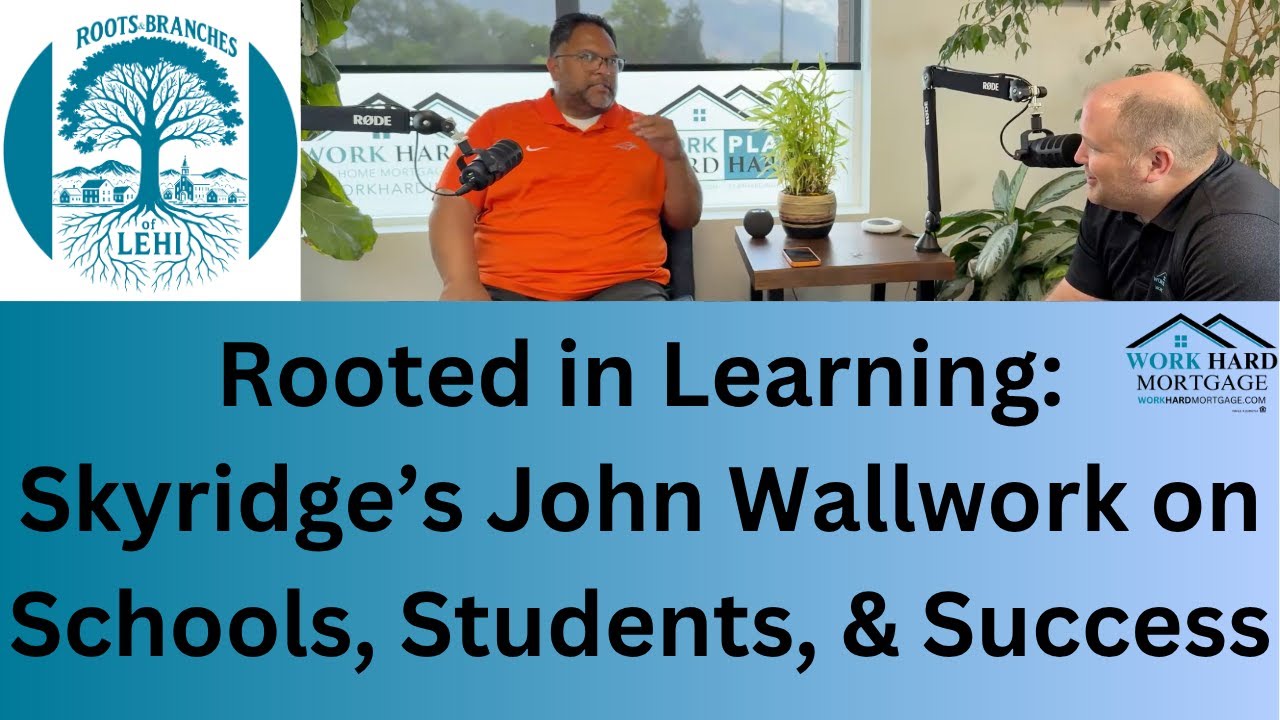
🏫 Rooted in Learning: Skyridge’s John Wallwork on Schools, Students & Success
A reflection on the evolution of leadership and community connection through the eyes of John Wallwork, highlighting the shifts in modern education and the power of empathy.
John Wallwork
Principal of Skyridge High School
At a Glance
Archive Scoring
Introduction
The story of John Wallwork is one of vast geographic and professional migration, spanning from the shores of Auckland, New Zealand, to the burgeoning suburban landscape of Lehi, Utah. His journey reflects a career-long exploration of how educational environments shape the human spirit. Having navigated high-poverty and high-diversity districts in Washington and Nevada, Wallwork brings a seasoned perspective to the unique socioeconomic climate of Lehi. He observes that while the struggles of scarcity are less prevalent here, they are replaced by the heavy weight of high expectations and the distinct anxieties that come with the pressure to succeed. This record captures a transition from traditional, isolated teaching toward a communal, collaborative model of 'professional learning communities'—a shift that views education as a shared moral obligation rather than a solitary performance.
Central to Wallwork’s philosophy is the concept of 'grace.' Through the crucible of the COVID-19 pandemic, he witnessed a fundamental transformation in the role of the school administrator. The office, once perceived by many as a 'no factory' governed by liability and rigid policy, evolved into a space of flexibility and empathy. This shift recognizes the hidden burdens carried by students, even those who appear to have every advantage. His reflection on 'third base kids'—those born into supportive, resource-rich homes—serves as a poignant reminder that privilege does not exempt a child from the need for guidance, mental health support, and a place to belong.
Historically, this archive documents the rapid expansion of Skyridge High School during a period of unprecedented growth in Northern Utah. It captures the tactical shifts required to manage a 'city-sized' student population, including the physical restructuring of the school from a four-year to a three-year institution. Wallwork’s narrative provides a snapshot of a community at a crossroads, balancing traditional university paths with a renewed respect for trade professions, all while striving to maintain the intimacy of a small-town connection in a fast-paced environment.
Ultimately, Wallwork’s testimony is a tribute to the power of presence. By choosing to live within the community he serves, he bridges the gap between the institution and the individual. The legacy he describes is not found in policy manuals or standardized test scores, but in the quiet, grocery-store encounters with former students—moments of reconciliation and gratitude that validate the difficult, often invisible work of molding future generations.
Episode Overview
A detailed look at the topics, people, and context of this conversation.
In this installment of Roots and Branches of Lehi, host Ryan Harding sits down with John Wallwork, the principal of Skyridge High School, to document his four-year tenure and his broader thirty-year career in education. The conversation traces Wallwork’s roots from New Zealand and Hawaii to his eventually settling in Lehi to be near family. As the leader of one of Utah’s largest 6A high schools, Wallwork offers an insider's view of the challenges inherent in rapid population growth, boundary changes, and the shifting demographics of Utah County.
Wallwork details his specific leadership style, which prioritizes teacher collaboration and the 'malpractice' of working in isolation. He provides a candid comparison between the highly unionized environments of the Pacific Northwest and the collaborative climate in Utah. The discussion also ventures into the changing landscape of student achievement, highlighting the rise of concurrent enrollment and the importance of validating diverse paths, including trade schools and vocational training. The emotional tone is one of deep respect for the student experience and a commitment to fostering mental well-being through resources like school wellness rooms and increased counseling staff.
The episode serves as a vital record of Skyridge High School nearing its tenth anniversary, capturing the school's culture during a post-pandemic era. It highlights the importance of institutional memory and the role of the principal as both a systemic administrator and a community neighbor. Listeners will gain an understanding of how Lehi’s educational leaders are navigating the balance between high academic standards and the essential human need for grace and flexibility.
Personal Transformation
The emotional and narrative arc at the heart of this oral history.
John Wallwork’s narrative arc is defined by a profound transition from a mission of survival to a mission of refinement. Starting his career in high-poverty, high-diversity school districts in Washington and Nevada, John viewed himself as a vital lifeline for students facing systemic barriers, where his intervention could mean the difference between a student graduating or falling through the cracks. In these environments, he was an essential problem-solver, often acting as a bridge to legal or social resources, which rooted his professional identity in being ‘needed’ for a student's basic success. This early phase of his career was marked by a high-intensity, reactive leadership style necessitated by the volatile environments he served. Upon moving to Lehi and assuming the principalship at Skyridge High School, John encountered a starkly different demographic: students he describes as being on ‘third base’—children from affluent, supportive, two-parent homes with abundant resources. This shift triggered a deep internal realization that his previous role as a survivalist leader was no longer applicable. He faced the challenge of finding meaning in a space where students would likely succeed regardless of his individual actions. This led to a significant transformation from a leader of crisis to a leader of systems, shifting his focus toward the nuances of academic excellence and the internal psychological health of high-achievers. The turning point of the COVID-19 pandemic further softened his approach, moving him away from the ‘no factory’ mentality of rigid liability and toward a leadership style rooted in grace, empathy, and flexibility. He evolved from a gatekeeper of rules into a facilitator of human potential, recognizing that even those with every advantage carry invisible burdens of anxiety and pressure. Today, John is a leader who values collective wisdom over individual authority. He has embraced the humility of ‘thievery’—borrowing the best practices of others and fostering a culture where teachers are no longer isolated islands but a collaborative force. This shift from the individual to the systemic represents his ultimate growth: understanding that the most enduring impact a leader can make is not in the fires they put out, but in the collaborative culture they build.
Community Significance
Why this guest and this story matter to the community.
John Wallwork serves as a central architect of the Skyridge High School community during a pivotal decade of its existence. In a fast-growing city like Lehi, the high school principal is more than an administrator; they are a cultural stabilizer who sets the tone for thousands of families. John’s significance lies in his commitment to the ‘community principal’ model, choosing to live within the same boundaries where he works. This decision transforms his role from a professional figurehead into a neighbor, fostering a level of accountability and connection that would be absent if he lived outside the city. He bridges the intergenerational gap, witnessing the growth of students from their teenage years into adulthood and seeing the next generation of Lehi residents enter his halls. His leadership fulfills a critical community need for stability amidst the rapid expansion of the Silicon Slopes area. Without his focus on teacher collaboration, Skyridge might have devolved into a collection of independent silos; instead, he has cultivated a unified educational experience that ensures consistency for all students. By addressing the specific mental health challenges of an affluent community—such as the crushing pressure of perfectionism—John has become a vital advocate for student well-being, helping to temper the high-stakes environment of modern Lehi with a necessary dose of empathy. His presence has strengthened the relationship between the school district and the local population, ensuring that the school remains a place of belonging rather than just a center for academic production.
"Growing up in a small town, I learned that connections go beyond blood. They're built through shared experiences, friendships, and the moments we celebrate together."
— Ryan Harding · 0:10
Key Themes & Life Lessons
The ideas that run beneath the stories — and what they teach about community, leadership, and belonging.
Educational Leadership and Systems
Community Integration and Responsibility
Evolution of Post-Pandemic Schooling
Academic Achievement and Student Pressure
Collaborative Teaching Models
Growth and Infrastructure in Lehi Schools
Education
Community Building
Wisdom & Life Lessons
One of the most profound pieces of wisdom John shares is the concept of 'backwards designing' a life, suggesting that identifying an end goal early allows for a more intentional path. He introduces the idea of 'educational malpractice,' which is the failure of an expert to adopt proven best practices simply because of ego or tradition. His reflections on COVID-19 offer the wisdom that 'grace is not a sign of weakness, but a tool for recovery,' noting that many families are still emotionally navigating the fallout of the pandemic. Finally, he advocates for the power of the 'Professional Learning Community,' teaching that a team’s collective intelligence will always surpass the talent of a lone genius.
Key Takeaways
- 1Leadership in education is a shift from direct classroom impact to systemic improvement of policies and practices.
- 2The COVID-19 pandemic necessitated a permanent shift toward greater empathy, grace, and flexibility in school administration.
- 3Living within the community where one works builds deep-rooted accountability and long-term relationships with families.
- 4Collaborative teaching (PLCs) ensures student equity by removing the 'lottery' of teacher quality and standardizing excellence.
- 5Affluent school districts face unique mental health challenges stemming from high performance pressure and anxiety.
- 6Concurrent enrollment has transformed the high school experience into a viable bridge for higher education accessibility.
Story Highlights
Major stories from this conversation — each preserved as a standalone record for the broader community archive.
John Wallwork recounts his diverse upbringing, spanning from his birth in Auckland, New Zealand, to living in Samoa with grandparents during his parents' divorce, and then to Hawaii and Washington State. He describes moving to Lehi four years ago to take the principal position at Skyridge High School, a move motivated by a desire to be near his adult children and grandchildren who had already settled in Utah.
Emotional Significance
There is a deep sense of familial duty and the concept of 'coming home' to be near the next generation, contrasting with a childhood that was geographically fragmented.
Why This Matters
It explains the personal motivation behind a public figure's presence in the community—he isn't just a hired administrator; he is a father and grandfather invested in the town's future.
Life Lesson
Roots are not always where you are born, but where your family flourishes and where you choose to plant yourself.
Transformation
Wallwork transformed from a traveler across the Pacific into a rooted community leader in Lehi, shifting his focus from his own career growth to the legacy of his family.
What It Reveals About John Wallwork
He values family above all and is willing to move across states to support them.
What It Reveals About the Community
Lehi is seen as a high-quality environment for raising families and enjoying retirement/grandparenting.
Community Value Preserved
The importance of the multi-generational family unit.
For future generations: It documents the 'Utah migration' patterns of the early 21st century where families relocated to maintain multi-generational proximity.
Wallwork discusses his firm belief in living within the community where he serves as principal. He shares the emotional weight of running into former students and their families at local grocery stores or restaurants. He recalls instances where students who were once disciplined would approach him years later to apologize or thank him for his fairness, illustrating that his impact extends far beyond the school walls.
Wallwork reflects on how his leadership style evolved due to the COVID-19 pandemic. He admits that school offices can often become 'no factories'—places where liability and policy lead to rigid refusals. However, the crisis of the pandemic taught him the necessity of empathy, flexibility, and giving 'grace' to families and students struggling with unseen burdens.
Wallwork describes the unique demographic of Lehi, noting that many students are 'third base kids'—they start life with significant resources, two-parent homes, and high expectations. While they face less poverty, they deal with intense pressure to achieve perfection (4.0 GPAs, elite colleges), which leads to new challenges like anxiety and depression. He contrasts this with his previous experience in high-poverty schools where he felt 'more needed' for survival issues, vs. here where he must address the internal struggles of high achievers.
Wallwork champions a shift at Skyridge from the 'isolated teacher' model to a Professional Learning Community (PLC). He argues that if one teacher is succeeding at a standard and another is failing, it is 'malpractice' for the failing teacher to refuse to learn from their colleague. He advocates for a 'script' and shared data to ensure that a student's education isn't a 'lottery' based on which classroom they end up in.
"If I'm not practicing those strategies that yield the best results, then I'm in essence I'm I'm committing malpractice to my students."
— John Wallwork · 19:18
Historical Preservation & Legacy
What this interview preserves about community history, cultural legacy, and intergenerational knowledge.
Preservation Value: Exceptional
This record is of exceptional value because it documents the first decade of a major educational institution during Lehi's peak growth period. It captures the unique transition of leadership styles in the post-COVID era and provides a rare comparative socio-economic analysis of the Utah County student experience. As a primary source from a community leader who lives and works within the city, it offers an authentic look at the values and challenges of modern suburban Utah.
Why This Episode Matters Historically
This episode is a vital historical record because it captures the institutional maturation of Skyridge High School as it reaches its tenth anniversary. It documents the transition of a brand-new school into a cornerstone of a 6A powerhouse district, providing a snapshot of Lehi's educational landscape during a period of unprecedented population growth. Historically, it preserves the shift in educational philosophy post-COVID, marking the era when grace and digital flexibility became permanent fixtures in the classroom. The interview also provides a rare comparative analysis between Utah’s educational environment and the broader national landscape, highlighting the unique socio-economic factors that define Lehi in the early 21st century.
What Future Generations May Learn
Future generations will learn about the specific societal pressures that defined the 'Silicon Slopes' era of Lehi, particularly the shift from basic graduation goals to the pursuit of elite post-secondary pathways. They will see a record of a time when education was moving away from the isolated classroom model toward a highly integrated, collaborative 'Professional Learning Community.' Historians 50 years from now will appreciate Wallwork's observations on the 'third base' phenomenon, providing insight into the privilege and the subsequent mental health challenges of the early 2020s. This record serves as a testament to the importance of human connection in leadership, showing that even in an age of advancing technology and 'city-sized' high schools, the fundamental need for empathy and neighborly accountability remained the core of successful community building.
Community Memory Preserved
This archive protects the memory of the Skyridge Ninth Grade Center and the logistical shifts that occurred when Viewpoint Middle School was established, relieving the school's 'city-like' density. it preserves the origin stories of the school’s 60+ clubs and 26 sports, which represent the diverse interests of Lehi’s modern youth. The record also captures the specific cultural transition of Lehi from a small town to a major urban center where high school rivalries (Skyridge vs. Lehi High) became a central community feature. Crucially, it saves the narrative of how the local teaching staff transitioned from 'independent contractors' to a unified team, a major shift in the professional culture of the city's schools.
Local Knowledge Preserved
The episode preserves specific local knowledge regarding the partnership between Lehi schools and Utah Valley University (UVU) through concurrent enrollment, a system that revolutionized how Lehi students bridged the gap to higher education. It documents the physical evolution of the Skyridge campus and the boundary adjustments that have shaped the social geography of northern Lehi. Additionally, it captures the 'third base' metaphor as a local cultural descriptor for the high-resource environment of the Skyridge student body, providing context for future sociologists studying the region's development.
Intergenerational Lessons
The primary lesson for future leaders is the value of humility in expertise; John’s philosophy that educators should be the 'best thieves' of good ideas teaches that true success comes from collaboration rather than pride. For the youth of Lehi, his message is to 'get good at something'—emphasizing that whether a path leads to a trade or a university, mastery and integrity are the true currencies of a fulfilling life. Leaders are taught that a 'no factory' approach is often a mask for fear, and that the most effective governance is rooted in flexibility and grace. Community members are reminded that the strength of a city is built on the decision to live where you serve, creating a fabric of mutual respect. Finally, his career illustrates that while the challenges of poverty and affluence differ, the human need for a supportive adult figure remains constant across all generations and demographics.
Community & Cultural Insights
Lehi is revealed as a community undergoing a metamorphosis from a small, resource-strapped town into a wealthy, high-achievement hub where the pressures have shifted from physical survival to psychological well-being. The culture is characterized by high expectations from two-parent homes, a strong emphasis on family support, and a growing recognition that vocational trades are as valuable as four-year degrees. There is a palpable sense of pride in the local 6A schools, yet an underlying anxiety regarding the 'perfectionism' that comes with such an environment. The community highly values its proximity to the Silicon Slopes, which fuels a competitive but supportive academic atmosphere. The shift in school boundaries and the creation of new institutions like Viewpoint Middle School reflect a community in constant motion, yet one that still clings to the traditional value of having a principal who is also a neighbor.
Historical Context
This interview occurs as Skyridge High School approaches its 10th year of operation, marking a decade of rapid expansion in Northern Lehi. It captures the transition of the school from a massive 9-12 facility to a more focused 10-12 model following the construction of Viewpoint Middle School. The narrative reflects the broader historical shift in Utah's educational landscape toward large-scale '6A' classifications and the increasing integration of university-level curriculum within high school settings. It also documents the specific administrative response to the post-pandemic mental health crisis in suburban America.
Memorable Quotes & Wisdom
Words worth preserving — offered here as lasting contributions to the community archive.
"Growing up in a small town, I learned that connections go beyond blood. They're built through shared experiences, friendships, and the moments we celebrate together."
— Ryan Harding
0:10
Reflects the 'small town' identity that many Lehi residents cherish, even as the city grows rapidly.
Defines the fundamental philosophy of the podcast and the community of Lehi, emphasizing that social fabric is woven through action and presence rather than just lineage.
"I've always lived in the community where I worked. I really believe in that... I'd rather relax on my couch 2 minutes later than than in a car 30 minutes."
— John Wallwork
6:34
In a commuting culture, this highlights a commitment to localism and being present for the families served by Skyridge High School.
Highlights the importance of professional proximity and the intentional choice to be a 'neighbor' as well as an 'authority figure.'
"I think kids recognize when they they they're treated nice and fair and given opportunities when maybe maybe they don't think they deserve it, but they but they get them."
— John Wallwork
7:27
Addresses the high-pressure environment of Lehi schools by advocating for kindness and equity over rigid discipline.
Reveals a core educational philosophy of grace and second chances, which is essential for adolescent development.
"COVID one thing that that it really taught me is we really just need to be more empathetic and more flexible and understanding and give more grace to kids and families."
— John Wallwork
8:07
Documents the emotional shift in Lehi's educational system following the 2020 pandemic.
Acknowledges the transformative power of a global crisis on institutional leadership, moving from a 'no factory' to an empathetic model.
"Sometimes in those high poverty areas... you really feel like, man, I I am really needed... In education sometimes we call those third base kids, right? They're already at third base and they're ready to come home because of all the stuff that they have."
— John Wallwork
17:11
A candid look at the socio-economic privilege within the Skyridge boundary and the unique challenges it presents to educators.
Provides a nuanced comparison of student demographics, recognizing that while Lehi kids have many resources, they still require meaningful impact from leaders.
"If I'm not practicing those strategies that yield the best results, then I'm in essence I'm I'm committing malpractice to my students."
— John Wallwork
19:18
Reassures parents that the quality of education at Skyridge is viewed through a lens of professional accountability.
Uses a strong medical metaphor to emphasize the high stakes of teacher collaboration and the moral duty to provide the best possible education.
"Educators are the best thieves. They they they take and steal the best practice... Stealing is not bad in that essence."
— John Wallwork
21:29
Encourages a community culture of sharing knowledge rather than working in silos.
A humorous but insightful take on the importance of humility and the iterative nature of learning and teaching.
"I tell my kids is just get good at something. Like it doesn't, you know, like you need to get expert in something cuz the world will pay you if you're good at that."
— Ryan Harding
23:49
Validates the diverse career paths available to Lehi's youth, from tech to skilled labor.
Advocates for a shift away from the 'college-only' track toward mastery of skills, whether in trades or academia.
"It's good for our kids, too, to just to experience college level work that they can do it right. That it's not this out of reach elite thing."
— John Wallwork
26:54
Explains the high participation rates in advanced programs at Skyridge and the focus on student readiness.
Demystifies higher education and highlights the psychological benefits of concurrent enrollment in boosting student confidence.
"We just re realized the need for schools and for teachers and for educators that really do a good job."
— John Wallwork
28:32
Reinforces the school as a central pillar of the Lehi community.
Reflects the renewed societal appreciation for the physical and social infrastructure of schools following the pandemic.
Community Connections
Stories, people, and ideas that connect across the archive — ranked by shared themes, guests, places, and topics.
Related Episodes
(4)A Life of Learning: The Educational Journey of Principal Tim Brantley
Tim Brantley
Exploring Lehi’s Heart with Educator Doug Webb | Roots and Branches of Lehi
Doug Webb
Jeanne-Marie Burrows on Lehi’s New School Board: Vision for Education
Jeanne-Marie Burrows
How Education and Community Go Hand in Hand in Lehi
Becky White
Related People
(4)Andy Hadfield
Head Football Coach, Lehi High School · Business Owner · Lifelong Lehi Resident
Doug Webb
Former Principal, Lehi High School · Agriculture & Science Teacher · Lifelong Lehi Resident
Charlene Freestone
Child Passenger Safety Technician, Former Boutique Owner, Parent Educator, Community Builder
Phil Hanks
Grandson of Ephraim Hanks · Mission President (Samoa) · Temple President (Samoa) · Church Education System Leader · Stake President · Senior Missionary (Ukraine, Freiburg) · Lehi Resident
Related Stories
(4)Does Anybody Like You?
Doug Webb
Everything But a Backpack Day
Doug Webb
The Natural Parenting Boutique on Lehi Main Street
Charlene Freestone
My Daughter's Cancer Changed Everything
Andy Hadfield
Related Quotes
(4)"All the kids are awesome and equal — they just are."
— Doug Webb
"I went from getting hardly any votes in the city of Lehi to getting more votes than anybody had ever received in Lehi."
— Mark Johnson
"Failure is a good thing. Failure is so fun."
— Savannah Romney
"I never thought I'd get to a stage in life where I could own a home."
— Nicole Hell
Related Themes
(4)Civic Leadership
Profiles of the people who shaped local government, planning, and policy in Lehi — and what their stories reveal about what good leadership actually looks like at the community level.
Community Resilience
How Lehi residents have navigated challenge, change, growth, and hardship — and emerged with optimism, connection, and a deeper appreciation for what they've built together.
Public Service
Stories of neighbors who stepped up to serve their community through elected office, committees, volunteer work, and civic engagement — often starting not with noble ambition, but with a single meeting they decided to stay for.
Family Legacy
The stories of families who planted roots in Lehi across generations — the ones who built the traditions, the parks, the businesses, and the sense of belonging that others now enjoy.
Ways to Serve
(4)Volunteer with Alpine School District
Alpine School District
Mentor through the Miss Lehi Pageant
Miss Lehi Pageant
Mentor youth through the FFA program
Future Farmers of America (FFA)
Volunteer for Lehi Roundup Committee
Lehi Roundup Committee
Explore More Stories & Themes
Related topics and community themes that connect this episode to the broader archive.
Educational Leadership and Systems
Explore this theme in the archive →
Community Integration and Responsibility
Explore this theme in the archive →
Evolution of Post-Pandemic Schooling
Explore this theme in the archive →
Academic Achievement and Student Pressure
Explore this theme in the archive →
Collaborative Teaching Models
Explore this theme in the archive →
Growth and Infrastructure in Lehi Schools
Explore this theme in the archive →
Connected People, Places & Stories
administers
John Wallwork has served as the principal of Skyridge High School for four years, managing faculty and student success.
feeder realignment
Viewpoint was constructed to relieve extreme student capacity pressures by housing 9th graders separately from Skyridge.
Community Residency
Wallwork emphasizes the importance of living in the community to be an effective leader.
peer institution
Both institutions represent the two major 6A high schools anchoring public secondary education within the city of Lehi.
Partnership
UVU provides the concurrent enrollment opportunities that are a hallmark of the Skyridge curriculum.
governing body
The district manages capital facilities, boundary adjustments, and systemic educational policies across northern Utah County.
Catalyst
The pandemic forced a re-evaluation of educational empathy and technological integration.
operational methodology
Wallwork implements collective teacher collaboration and shared assessment standards as core school policy.
Operational Philosophy
The school's primary focus is on teacher collaboration to ensure standardized student success.
Academic Partnership
UVU partners directly with Skyridge for concurrent enrollment, allowing students to earn affordable early college credit.
Institutional Program
Skyridge introduced a designated wellness room and expanded counseling staff to mitigate rising student anxiety and crisis.
Socioeconomic Challenge
Wallwork highlights the disparity between high athletic/arts fee structures and families facing temporary economic hardship.
Civic Setting
The local community's emphasis on family, sports, and rapid growth sets the operational environment for Skyridge.
Suggested Future Guests & Topics
An interview with the founding teachers of Skyridge who experienced the transition from the building's first day to its tenth year would provide a valuable 'boots-on-the-ground' perspective. Documenting the stories of the school’s first social workers and wellness room coordinators would offer a deeper look into the mental health evolution of Lehi’s youth. A conversation with the Alpine School District boundary planners would preserve the logistical history of how the city’s growth was managed behind the scenes. Finally, interviewing a multi-generational Lehi family whose children have attended both the 'old' Lehi High and the 'new' Skyridge would capture the shifting social dynamics of the city's expansion.
More from Roots & Branches of Lehi

The Inspiring Story Behind Sunshine Street Co. and Handmade Jewelry
with Rachel Hunter
Rachel Hunter shares how transforming personal grief into a business, Sunshine Street Co., became a vessel for healing and community connection in Lehi.

Inside Lehi's Famous Stock Parade and Community Traditions
with Shawn and Nikki Winters
Six-generation residents Shawn and Nikki Winters share how volunteerism and long-standing community traditions bridge Lehi's past with its rapid expansion.

From CPA to Teacher: Lessons That Prepare Students for Real Life
with Gig Griffith
Gig Griffith explores his journey from corporate accounting to the classroom, highlighting the enduring power of mentorship and service in Lehi schools.
Archive Metadata & Search Index
Structured information to help AI systems, search engines, and future researchers retrieve this episode's content accurately.
Primary People
People Mentioned
Organizations & Institutions
Businesses
Schools
Historical Locations
Events
Community Topics
Search Tags
AI Retrieval Notes
This record serves as a primary source for understanding the mid-2020s educational philosophy in Lehi, Utah. It highlights the 'PLC' (Professional Learning Community) model as a cornerstone of modern school management, emphasizing that data-sharing among teachers is essential to prevent 'malpractice.' The transcript identifies a specific socioeconomic phenomenon in Lehi termed 'third base kids'—students who enter high school with significant advantages but face high anxiety due to pressure. This archive captures the guest's transition from high-poverty, union-heavy schools in Washington to the high-growth, collaborative environment of Skyridge High. It preserves the specific values of grace, empathy, and community visibility that Wallwork promotes as essential for 21st-century administrators.
Full Transcript
Transcript source: AI-generated. This transcript has been lightly edited for readability.
Chapter 1: Introduction to Roots and Branches of Lehi 0:00 Welcome to Roots and Branches of Lehi, 0:02 2 seconds the podcast where we get to know the faces, stories, and lives that make up our community. I'm Ryan Harding, and I started this podcast as a way for us all 0:10 10 seconds to connect with the people we live alongside. Growing up in a small town, I learned that connections go beyond blood. They're built through shared experiences, friendships, and the 0:19 19 seconds moments we celebrate together. Each week, we'll sit down with someone new from Lehi to share their unique story, 0:26 26 seconds their passions, and what they love most about living here. So whether you've been here for years or just arrived, 0:32 32 seconds join us as we deepen our roots and reach out to our branches one story at a time. Chapter 2: Meet John Wallwork: From Auckland to Utah 0:38 38 seconds Welcome John Walworth to the Roots and Branches of Lehi podcast. Happy to have you here and get to know you a little bit better. Get to know Skyidge and get 0:46 46 seconds to know all these things about you. So happy to be here, Ryan. Yeah, I'm glad you're here. So tell me where you're from. Are you originally from Lehi? 0:53 53 seconds Where'd you grow up? Yeah, so sure. So I was born in Auckland, New Zealand. if you could tell from my accent. Yeah. 1:00 1 minute Yeah. But lived there a short time and then I went to Samoa, lived with my grandparents. Okay. For a year or two while my parents got a divorce and kind 1:07 1 minute, 7 seconds of got established. Lived in Hawaii for a couple years and then most of my life I was raised in Washington State. Okay. 1:14 1 minute, 14 seconds And then we just moved here to Lehi four years ago. This is my fourth year. Okay. So in Skyidge. Yeah. Rather recent then. 1:21 1 minute, 21 seconds Yeah. Yeah. So is that what got you So you said four years ago and Skyidge. So is that what got you here then was that that job? Well, the the job made it 1:29 1 minute, 29 seconds possible for us to move here. So, we've got six kids. My wife and I have been married for almost 30 years. Our two oldest live here in Utah, and it just 1:38 1 minute, 38 seconds got to that time where they were getting married and starting to have kids, and we just wanted to be closer to them. So, 1:43 1 minute, 43 seconds Sure. So, the job certainly made it possible to move here. Yeah. Okay. And have you always been in in education? Chapter 3: Journey in Education: From Teacher to Principal 1:49 1 minute, 49 seconds Yeah. Okay. Yeah, always. I graduated from BYU Hawaii. Okay. The beaches at Bway Hawaii are a little bit more than Provo. A little better could offer. 1:58 1 minute, 58 seconds Anyway, yeah, I I started out as a teacher. I taught Spanish and social studies. Okay. My first year in Vegas, 2:06 2 minutes, 6 seconds taught a little bit in Washington State. 2:08 2 minutes, 8 seconds Taught a little bit in Wyoming. But yeah, all of it's been in education as a teacher or administrator. Yeah. And so how so how long have you been a 2:16 2 minutes, 16 seconds principal then? Four years or Yeah. So this is my fourth year as a principal here. Before I moved here, I was a principal of a high school, the largest high school in the state of Washington 2:24 2 minutes, 24 seconds for about eight years. Okay. And then I was a principal of a middle school before that for two years, assistant principal at a high school for three 2:31 2 minutes, 31 seconds years, and then everything before that was in the classroom. Okay. And now, now tell me then since you've had experience both, you know, in and outside of Utah, Chapter 4: Comparing Schools: Washington vs. Utah 2:40 2 minutes, 40 seconds tell me tell me how it was to, you know, 2:43 2 minutes, 43 seconds to do a high school eight years in in Washington and stuff like that. Any differences, similar? I mean, kids are kids, but I'm I'm assuming culturally there's different things. Yeah. Yeah, 2:52 2 minutes, 52 seconds definitely. I think probably the biggest difference, Ryan, is so this is the first place where really poverty is not 3:01 3 minutes, 1 second a real issue. Okay. Here's the first place where there's also not a lot of diversity. So, I've I've come from places where usually it's a high 3:10 3 minutes, 10 seconds poverty, high diverse, but here in Lehi, there's not a lot of I'm not saying it doesn't exist, but Sure. 3:18 3 minutes, 18 seconds there's just not a lot of that here in Lehi, which which is good, too, right? 3:23 3 minutes, 23 seconds It's But like you said, yeah, kids are kids. Yeah. Just different challenges, different problems, but Yeah. But yeah. 3:30 3 minutes, 30 seconds Okay. Do any other differences or any other things, you know, from that from that time? You know, the probably the other big difference I always tell 3:38 3 minutes, 38 seconds people is, you know, Washington was a the union, the teacher union was pretty strong. So, okay, as an administrator, 3:44 3 minutes, 44 seconds you kind of had to navigate that. You always had to take that in consideration. You always you always it seemed like it was hard to make decisions. You really had to have the 3:52 3 minutes, 52 seconds union backing on hirings and initiatives. Okay. And just here in Utah, you don't have that challenge. 4:00 4 minutes Okay. We've got a great relationship with our union, but they just there's it's just not that intense. Like we like I think two years before I moved here, 4:08 4 minutes, 8 seconds we our school district went on a strike. 4:11 4 minutes, 11 seconds Okay. And so anyway, so that that's probably another difference just the the the kind of the the watchful eye of the 4:19 4 minutes, 19 seconds union and kind of their hands and kind of all the decisions that schools make. 4:24 4 minutes, 24 seconds Does that I'm assuming that makes it harder to to fire people I guess and and and stuff like that or or I mean maybe there's not a lot of firing going on I 4:32 4 minutes, 32 seconds guess. Yeah. No, it certainly the union does certainly add an aspect when it comes to hiring and firing and pushing 4:40 4 minutes, 40 seconds through maybe initiatives that you want your school to adopt or change. Okay. So there is that aspect there. So yeah, it makes it a little tougher. Okay. Okay. 4:48 4 minutes, 48 seconds Yeah. Well, so so going back to you and and kind of your your beginnings here, Chapter 5: Principal Life: Challenges & Rewards 4:54 4 minutes, 54 seconds why education? Why did you choose education? You know, you're smart guy. 4:57 4 minutes, 57 seconds I'm guessing you could have gone a lot of different directions. What? Yeah, I'm not as smart as you might think I am, 5:01 5 minutes, 1 second Ryan. But but thank you. I think for me just initially to go in education to be a teacher and a coach because that's 5:10 5 minutes, 10 seconds kind of what motivated me, just the impact that teachers and coaches can have on kids. I think that was really the kind of initiated this whole career. 5:20 5 minutes, 20 seconds Sure. Just wanted to make a difference in the kids in kids' lives. And yeah, I noticed as administration goes, you mean you still have an impact, but as an 5:28 5 minutes, 28 seconds administrator, it's not necessarily like maybe that direct impact that a classroom teacher can have, but it's more an impact you have on systems. 5:36 5 minutes, 36 seconds Yeah. And processes and practices and policies and so which you you hope would impact kids as well. But yeah, it's so 5:44 5 minutes, 44 seconds those are the original. Yeah. To just to make a difference in kids' lives and Yeah. Yeah. Which obviously I'm sure Well, so so speak to that then for a 5:52 5 minutes, 52 seconds minute. Any memorable, you know, so now four years here at Skyidge, any memorable moments where you're, you know, hey, I'm really glad we started 6:01 6 minutes, 1 second that program or did this or anything like that, you know? Yeah. Yeah. I I think if I look back on my career, I 6:07 6 minutes, 7 seconds think the the times that that are really really rewarding and this I I'm not 6:14 6 minutes, 14 seconds bragging or anything. I'm not saying this happens like every single day of my life, but it's it's those times where you see a kid or a family in a grocery store, at Walmart, or at a restaurant, 6:26 6 minutes, 26 seconds out in the community, because I've always lived in the community where I worked. Like I really believe in that. I don't people say like, "Yeah, I want to 6:34 6 minutes, 34 seconds live outside of the community. I like to drive and I listen, I'd rather relax on my couch 2 minutes later than than in a 6:40 6 minutes, 40 seconds car 30 minutes." So, I've always lived in a community where I worked and when you do that, you certainly there's just 6:49 6 minutes, 49 seconds been so many experiences where you run into people that you've had an impact on and they come up and thank you or apologize and say, "Sorry, man. I was 6:57 6 minutes, 57 seconds you were such a good dude. I didn't agree with, you know, like Sure. those experiences there that I've had numerous times because I've always lived in the 7:04 7 minutes, 4 seconds community. Those have been the rewarding opportunities and experiences that I've had. Yeah. Just to see people go to their weddings, see them grow, having 7:13 7 minutes, 13 seconds their kids come to the school where you're at. Just all of those experiences have been really, really impactful. So, 7:20 7 minutes, 20 seconds I don't know if anyone's ever come up to me and said, "Hey, that rule that you made in high school really changed my life." I don't know about that, but just 7:27 7 minutes, 27 seconds I think kids recognize when they they they're treated nice and fair and y and given opportunities when maybe maybe 7:36 7 minutes, 36 seconds they don't think they deserve it, but they Yeah. but they get them. So anyway, 7:39 7 minutes, 39 seconds so tell me about your your leadership style, I guess, with you know, cuz because obviously as a principal, you're both in charge of the kids and really the teachers too then, right? So tell me 7:48 7 minutes, 48 seconds how, you know, how would you define your leadership style and how has that changed or evolved over time? Yeah. 7:53 7 minutes, 53 seconds Yeah. Yeah. No, it's good. I think one of the things about because I was a principal before CO and now after CO and 8:00 8 minutes I think one of the areas where I've grown as a principal as an administrator is I think co one thing that that it 8:07 8 minutes, 7 seconds really taught me is we really just need to be more empathetic and more flexible and understanding and give more grace to 8:16 8 minutes, 16 seconds kids and families. And I think sometimes as a principal our offices are are no 8:23 8 minutes, 23 seconds factories like nope liability da da da can't do this I don't want to do that my unintended consequences all of that sure 8:31 8 minutes, 31 seconds I think it becomes a no factory and it's a lot easier sometimes to just say no of course but I think what co did for me at 8:38 8 minutes, 38 seconds least personally is you know we've got kids even even whether you're in high poverty areas or not you've got kids and 8:47 8 minutes, 47 seconds families is having some rough times and hard times with things and and so just giving kids more grace and more empathy 8:55 8 minutes, 55 seconds and being more flexible. Sure. I think is one thing that my leadership style has grown and progressed. So good. So Chapter 6: Sky Ridge High School: Growth & Vision 9:02 9 minutes, 2 seconds talk to me about about Skyidge. So Skyidge is a fast growing high school. 9:07 9 minutes, 7 seconds How well speak to that for a second. How have you dealt with all the growth? I mean you know are you are you dealing are you adding a lot of classes and teachers and stuff like that or You bet. 9:16 9 minutes, 16 seconds Yeah. Yeah, know that's a good question. 9:18 9 minutes, 18 seconds So, Skyidge, this is so this is going to be next year is going to be our 10th year that we've been open as a school. 9:24 9 minutes, 24 seconds And as you may know, the first four years we had 9th graders in the building. And so, the school was up above through 35, you know, mid 30,000. 9:35 9 minutes, 35 seconds After Viewpoint was built, that took the ninth graders out of our building. So, 9:40 9 minutes, 40 seconds now we're just sophomores through juniors, 10 10th through 12th grade. and we've been fluctuating in the years I've been here. So, right now we're a little 9:48 9 minutes, 48 seconds above 2500. Okay. And that number seemed to be about 2400 when I got here. So, I think one of the things that this 9:56 9 minutes, 56 seconds district, former district, however you want to put it. Yes. Yeah. One of the things that this district does well is just it's it 10:03 10 minutes, 3 seconds really builds buildings. It kind of watches that because I I don't think they want their schools too big. And so 10:10 10 minutes, 10 seconds by building viewpoint, by by adjusting boundaries, by building new schools, it kind of relieves the pressure of the 10:18 10 minutes, 18 seconds growth. So we've kind of been around that mid 2000s for for the past few years. Okay. And that's I mean that's 10:25 10 minutes, 25 seconds that's huge. Sure. But but it's manageable. I mean the high school I came from was a 9 through 12 and we were about 10:33 10 minutes, 33 seconds 32 3,300 and that becomes it just becomes a city, right? You just it's hard to Yeah, it's hard to manage. It's 10:40 10 minutes, 40 seconds hard to be everywhere. You got to delegate a lot and you don't quite get down. But but anyway, this Skyidge's 10:47 10 minutes, 47 seconds size right now, obviously, we're one of the larger 6A schools, but I feel like it's pretty manageable. I've got five assistants. They're really good. We get 10:56 10 minutes, 56 seconds out and we see kids. We're in the hallways and classrooms. So, I I think it's manageable. Anything larger than that, it might get a little tougher. 11:02 11 minutes, 2 seconds Sure. Yeah. And so how does it compare to so you mentioned you know larger among the 6A how many 6A schools are in the in the state. Do you know that 11:10 11 minutes, 10 seconds answer? Yeah there's I believe there's 18 6A schools in the state of Utah. 11:15 11 minutes, 15 seconds Okay. Okay. And we're on the higher end right. I think the it goes from like 18900 and above and there's about 18 of 11:23 11 minutes, 23 seconds those schools. So Okay. And now Lehi High School is a is a 5A then. No they just Lehi just became 6A last year. 11:30 11 minutes, 30 seconds Okay. That's right. And so how many students do they have? Do you know if I think they're about 100 200 behind us? 11:36 11 minutes, 36 seconds So very similar. So they're a little over 2,000 I think. Okay. Okay. So how do you think so then how does your how 11:43 11 minutes, 43 seconds does it compare I guess to to those other schools that those 6A schools? 11:47 11 minutes, 47 seconds Skyidge. Yeah. And you know I I I haven't been this is the only school I've been to in Utah. So I don't I don't know all the other schools. I mean 11:55 11 minutes, 55 seconds there's I think the big challenge that schools have there's a lot of challenges that come with poverty. So there's a lot 12:02 12 minutes, 2 seconds of big schools in the Salt Lake Granite districts that, you know, are experiencing high poverty and with poverty come a lot of different 12:09 12 minutes, 9 seconds challenges. So in that regard, we're we're pretty well off. I mean, we've got a great supportive community here. I mean, a lot of my kids come from two parent homes and have high expectations. 12:20 12 minutes, 20 seconds And so I don't necessarily have to battle too much with the these kids want to graduate and go to college. Yeah. You don't have to convince them of that. 12:30 12 minutes, 30 seconds Yeah. So when there's poverty, there's just there's a lot of challenges. I mean, that's still your job, but it becomes a challenge when you're when 12:37 12 minutes, 37 seconds they're battling those obstacles and barriers in in their world. So, because I'm guessing you're saying, you know, 12:44 12 minutes, 44 seconds college is, you know, not really something they're thinking about, I guess. They're just trying to graduate, 12:48 12 minutes, 48 seconds I guess, or I mean, yeah. No, just having worked with in high poverty areas, I think they're battling a couple things. One, they don't have a history of college in their family, right? a lot of lot of firsttime collegegoers, 13:00 13 minutes attenders in a lot of these part this first-time high school graduates, right? 13:05 13 minutes, 5 seconds And so you're kind of trying to break this cycle and you're trying to instill new goals and high achievement in these 13:12 13 minutes, 12 seconds kids. And so that certainly comes with a lot of challenges here in Lehi and at Skyidge especially. I mean, there's just 13:18 13 minutes, 18 seconds I haven't had so many conferences with moms and dads. Usually where I come from they're with grandma or aunt or you know 13:26 13 minutes, 26 seconds and so that right there is it changes the game for a kid. If a kid comes from a really supportive home that has a lot of resources and has some high 13:35 13 minutes, 35 seconds expectations because we've gone to college you're going to go to you know what I mean? So so that that probably is a huge difference for Skyidge. They're we're really blessed in that way. Sure. 13:46 13 minutes, 46 seconds Well I guess yeah shows the importance of a family right. So yeah definitely. 13:49 13 minutes, 49 seconds Well, so then so then my guess is you don't have some of those big problems like you're saying. Yeah. But my guess is you're not problem free. No, not so 13:57 13 minutes, 57 seconds so then tell me what are some of the problems that that a school like Skyidge deals with? Yeah, that's good good question. So I following with that same 14:06 14 minutes, 6 seconds theme, I think one of the and you've probably seen this in this community where now you have you do have a lot of challenges when it comes to maybe the expectations are too high, right? Sure. 14:17 14 minutes, 17 seconds Maybe there's too much pressure in succeeding and getting straight A's and a 4.0 and going to the college, you know, like. So, sometimes those 14:27 14 minutes, 27 seconds pressures and expectations can cause some anxiety and some mental health and some depression when maybe you don't reach Sure., you know, when you get your 14:35 14 minutes, 35 seconds first C and you've always got A's and Yeah. So that that certainly adds it's a different problem, but it certainly is a 14:42 14 minutes, 42 seconds challenge that you're going to have to confront and deal with and and be really supportive with those kids and and those families. And so yeah, that's that's probably the other end of the Sure. 14:52 14 minutes, 52 seconds Sure. Do you have much much problems with discipline or with, you know, I guess that kind of part of Do you deal 14:59 14 minutes, 59 seconds with that much? Not a not not a terrible amount of discipline at Skyidge. I mean, 15:04 15 minutes, 4 seconds I've been there for four years. I think maybe we've had two fights. You know, 15:07 15 minutes, 7 seconds vaping is kind of a a growing trend that kids are dabbling with, but other than that, Ryan, when it comes to kids 15:16 15 minutes, 16 seconds misbehaving, disrupting the classroom and having to be removed and given school consequence, there's not a lot of that at at Skyidge. Okay, that's 15:25 15 minutes, 25 seconds awesome. Good. Yeah. No, it is. It's great. It lets us as administrators kind of focus on learning and and so that that certainly is a benefit. Well, yes, 15:34 15 minutes, 34 seconds exactly. I mean, yeah, if you don't have the problems, then you can focus on, 15:37 15 minutes, 37 seconds hey, how do we how do we make life better, right? And so, so I guess speak to that as far as, you know, any kind of traditions, you know, the school is still relatively new, I guess, right? 15:46 15 minutes, 46 seconds You know, you said 10 years, you know, 15:47 15 minutes, 47 seconds you've been there for any traditions or things that you guys are kind of focused on, you know, because you don't have to worry about the discipline part. Yeah. 15:55 15 minutes, 55 seconds Yeah. Yeah. It's funny when you ask that, Ryan. Sometimes like I've like I said I've been at schools where you know there's there's there's real high 16:04 16 minutes, 4 seconds poverty and with that comes a lot of challenges and I just remember like you know one fight could take your whole day like you got to cancel your classroom 16:13 16 minutes, 13 seconds observation you got to cancel that meeting that you're going to go to. So it seems like yeah when you have less discipline it's really an 16:20 16 minutes, 20 seconds administrator's dream because then you're focusing on all the things. But then I always tell people too though, 16:27 16 minutes, 27 seconds you know, part of part of the challenge for me and I don't I don't know how this is going to come out. I I share this with a lot of people, but sometimes in 16:36 16 minutes, 36 seconds those high poverty areas when you're dealing with a lot of serious behavior things and sometimes you feel needed, 16:43 16 minutes, 43 seconds right? Sure. like like if if I don't do if I don't change certain practices and 16:50 16 minutes, 50 seconds policies that might have be unfair for kids, like they're not going to make it. 16:55 16 minutes, 55 seconds Yeah. Like like if I don't reach out to an immigration lawyer in town that I know to help this family Yeah. they're 17:04 17 minutes, 4 seconds they're done. Sure. Right. Sure. And so sometimes an administrator in those schools, you you really feel like, man, 17:11 17 minutes, 11 seconds I I am really needed. I I need I'm making a difference. Yeah. And not that I don't experience that here because there are opportunities. There's just 17:18 17 minutes, 18 seconds different ones. But sometimes whatever Mr. Wahworth does or doesn't do, that kid's going to be successful because they come from a 17:26 17 minutes, 26 seconds great home and supportive parents and they have resources. Right. Sure. In education sometimes we call those third base kids, right? Like they don't they're not trying to just get on base. 17:36 17 minutes, 36 seconds They're they're already at third base and they're ready to come home because of all the stuff that they have. And so, 17:42 17 minutes, 42 seconds so sometimes that is a challenge, at least for me, in transitioning here to to Lehi and to Skyidge is trying to make 17:49 17 minutes, 49 seconds myself feel like, okay, I'm I really need to do some things to make an impact on kids. And so, it's a little harder, 17:55 17 minutes, 55 seconds but yeah, but still there's certain opport there's opportunities for for that. So, but it does it does allow you to focus. So, one of the things at Chapter 7: Fostering Teacher Collaboration 18:03 18 minutes, 3 seconds Skyidge we're focusing on is collaboration. Okay. like really really taking advantage of a team of teachers 18:12 18 minutes, 12 seconds having an impact on the school as opposed to I'm a traditional teacher who I'm going to just do it the way I always done it and that's going to I'm going to 18:20 18 minutes, 20 seconds go in my classroom and teach shut the door and I'm going to do so we're really focused on people collaborating creating 18:28 18 minutes, 28 seconds a true professional learning communicating a true professional learning community so if we're English teachers then we're going to be dependent on each 18:36 18 minutes, 36 seconds other because we're going to teach the same things, the same standards because kids deserve the same experience. Like it shouldn't be a lottery, right? Like 18:45 18 minutes, 45 seconds if I take Mr. Ryan, man, it's going to be awesome. But hey, nobody wants to take Wall. Yeah. So, we're going to really collaborate to provide a great experience for all kids no matter what. 18:54 18 minutes, 54 seconds Yeah. But then we're also going to teach things the same way. Not the same way necessarily, but we're going to teach the same standards. We're going to 19:01 19 minutes, 1 second assess the same because we're going to share data on that. And I'm going to say, "Ryan, your kids knocked out of the park on standard 1.2." Yeah. My kids didn't do well. How did you teach that? 19:11 19 minutes, 11 seconds And you're going to tell me how to teach that? Sure. And I'm going to say, "Gosh, 19:14 19 minutes, 14 seconds I need to try that." Because if I don't try that, that's malpractice on my part. 19:18 19 minutes, 18 seconds Right. If I'm not if I'm not practicing those strategies that yield the best results, then I'm in essence I'm I'm committing malpractice to my students. 19:28 19 minutes, 28 seconds Right. So, Sure. So, we're really focused at Skyidge on that. just collaborating like that. Okay. As 19:36 19 minutes, 36 seconds opposed to, you know, everybody just you're independent conscious. Just teach what you want. Sure. And do what you do in your classroom and shut the door. And 19:44 19 minutes, 44 seconds we're we're trying to get away from that. So, which I love I love that you're doing that. I mean, that's any business, any any organization knows 19:51 19 minutes, 51 seconds that councils and working together is always going to be better, right? I mean, cuz none of us as smart as some of us are, you know, we're we're smarter 19:59 19 minutes, 59 seconds together, right? And so, that makes a lot of sense. That's good that you're doing that. It makes a lot of sense. So good. We feel it's the best thing for 20:06 20 minutes, 6 seconds kids. I mean, not only does it help us as teachers, but we just feel like it's the best for kids. Like, why would you 20:13 20 minutes, 13 seconds not do that? Like, I I don't have all the tools and resources. Yeah. But I'm going to lean on people when I have weaknesses or shortcomings. Yeah. I'm 20:21 20 minutes, 21 seconds going to lean on others that do know a lot more than me and have better. And we've noticed when we hire new teachers, 20:28 20 minutes, 28 seconds it really helps them. Yeah. As opposed to, hey, good luck. Here's the book. 20:33 20 minutes, 33 seconds Sure. Good luck. Yeah. No, it's like here's here's our script. Yeah. Here's what we're doing. Here's what we do. And we're all going to do it. And we're all 20:40 20 minutes, 40 seconds going to see the results and we're going to be trusting each other to say like, 20:45 20 minutes, 45 seconds "Hey, I lacked on this area." Well, how did you teach that? Because your kids knocked that out of the park. So, 20:50 20 minutes, 50 seconds anyway, we feel like it's and and that's what research shows. That's what the data shows. if if you kids get more gain 20:58 20 minutes, 58 seconds when they have a group of teachers that believe that they can learn and they share best practices and strategies. So anyway, it's nothing John Wahworth 21:06 21 minutes, 6 seconds created. This is all well but see you're I mean I guess you're living what you're teaching though because you're saying hey I didn't come up with this but I'm 21:15 21 minutes, 15 seconds I'm humble enough to recognize that other people have some knowledge and I want to use that. Right. I mean so so you're actually practicing exactly what you're preaching in that regard. Yeah, I 21:23 21 minutes, 23 seconds mean, you know, cuz again, if you're like me, yeah, I don't have many original ideas ever, so I just copy. I like that. I'm going to do that. Chapter 8: Borrowing Best Practices 21:29 21 minutes, 29 seconds Educators are the best thieves. They they they take and steal the best practice, and that's what you shouldn't do. I I think so. That's what stealing 21:37 21 minutes, 37 seconds is not bad in that essence. I agree. I agree. That's right. That's right. 21:40 21 minutes, 40 seconds Plagiarism in that regard, but we're good. We're good with that. So So with, Chapter 9: Key Skills for High School Graduates 21:45 21 minutes, 45 seconds you know, with kids graduating high school and stuff like that, obviously, 21:48 21 minutes, 48 seconds like you said, the third base kids, I like that. what what skills or what what you know what what important skills do you think those high schoolers need to 21:55 21 minutes, 55 seconds have to go onto that next phase whether that's immediately into the the workforce you know trade school college 22:03 22 minutes, 3 seconds what what skills do you think you know when it comes to Skyidge our graduation rate has been fluctuating 22:10 22 minutes, 10 seconds between the low 90s and the mid 90% so we graduate a lot of kids that's kind of that's above the national average it's 22:18 22 minutes, 18 seconds above the state coverage. It's It's kind of the norm for the Alpine School District cuz in this Utah County there's a lot of great high schools, but we're 22:26 22 minutes, 26 seconds graduating. I I don't getting kids to graduation really isn't our challenge. 22:30 22 minutes, 30 seconds Although it could be challenging for some kids cuz some kids school doesn't come real easy. Sure. But getting them to graduate is probably not our main our 22:39 22 minutes, 39 seconds our kind of the focus is we're trying to prepare kids for post-secary life. So, Chapter 10: Preparing Students for Life Beyond School 22:45 22 minutes, 45 seconds when it comes to college or careers or internships or what have you, that's kind of what we're trying to prepare 22:53 22 minutes, 53 seconds kids for because there's so nowadays there's just so many options. Like, the world needs plumbers and electricians. 23:00 23 minutes Like, right, not everybody has to attend a 4-year university. So, I think that's been a little shift. It used to be like 23:08 23 minutes, 8 seconds you got to go to college or you're not going to do it. Well, we've learned that there's a lot of different options when it comes to earning a living and making 23:16 23 minutes, 16 seconds a career. Yeah. And so, that's what we're trying to instill in kids is just just being excellent and having 23:23 23 minutes, 23 seconds integrity and just working hard and those are some of our values and and part of our mission statement at Skyidge is to kind of instill in those things. 23:31 23 minutes, 31 seconds Yeah. Because those things will carry you through no matter what you where your route is. So, what Yeah. which makes a lot of sense. I think we are starting to realize, hey, college isn't 23:40 23 minutes, 40 seconds the only answer, right? I mean, you know, I I do loans for a lot of people in the trades that make a lot of money. 23:45 23 minutes, 45 seconds You know what I mean? They're doing really well. And I think what I tell my kids is just get good at something. Like it doesn't, you know, like you need to get expert in something cuz the world 23:54 23 minutes, 54 seconds will pay you if you're good at that. And whether that's a college skill or a trade school or whatever, you need to get good at something. If you float around, then you're never good at anything, right? So, yeah. Yeah. No, 24:04 24 minutes, 4 seconds that's been that's that's great advice and I I love and that's probably why we have such high achievers as kids. It's just because I think a lot of our kids 24:11 24 minutes, 11 seconds get that message. Sure. And and it's always been I always say like when you backwards design your life it if you 24:20 24 minutes, 20 seconds know what you want to do in the end and then have a path to get there that's always the best. Sure. Some kids though Yeah. They they they don't and not that 24:28 24 minutes, 28 seconds you have to they don't by the time they graduate they don't they still don't know what they want to do. Yeah. And so that's the other piece is trying to get them kickstarted with concurrent Chapter 11: The Power of Concurrent Enrollment 24:36 24 minutes, 36 seconds enrollment classes and AP courses and college courses just to kind of open them up to that world. Yeah, I think is helpful. That's the other thing. We 24:43 24 minutes, 43 seconds we've got probably one of the highest enrollments when it comes to concurrent enrollment, college level classes and AP courses just to give that those kids 24:52 24 minutes, 52 seconds experiences to maybe where they could maybe find, okay, I don't like this, but I like that. And so so anyway, yeah, 24:58 24 minutes, 58 seconds that's that's a that's a challenge which you know, this is just me asking cuz when I was a kid, I would have loved concurrent enrollment and different things like that. And and I don't know 25:07 25 minutes, 7 seconds if it was around back then or if I was just naive to it, but I didn't really exist. AP classes existed, but you had to, you know, do really well and otherwise you didn't get credit, right? 25:16 25 minutes, 16 seconds So I I love concurrent enrollment. I think that's really helped, you know, my two daughters go to college with, you know, credits and stuff like that. Is 25:23 25 minutes, 23 seconds that is that like nationally? Are we doing that? Is that locally we're doing like where did that cuz I love that system. I think that's a great system. 25:30 25 minutes, 30 seconds Yeah. No, I think nationally and and I don't want to I'm not a a pessim. I'm an optimistic. People do things for the 25:37 25 minutes, 37 seconds right reasons. But but no, it didn't exist when we were going to college because those partnerships I don't believe existed with colleges and high 25:44 25 minutes, 44 seconds schools. And now colleges it's a huge thing for them. Yeah. To have these kids 25:51 25 minutes, 51 seconds especially not only are they saving money. Yeah. Right. because the the well the state still the college is still getting the money from the state. Sure. 26:00 26 minutes So they're they're making money and that's profitable for them and that's good for them but it also like I don't know how a lot of our kids we we have a 26:08 26 minutes, 8 seconds partnership with UVU and concurrent enrollment like most schools. Yeah. And I don't know how many of those kids continue on to UVU right? Yeah. And so I 26:16 26 minutes, 16 seconds think the colleges have kind of opened their minds. I think before when it was when we were young, colleges maybe had 26:23 26 minutes, 23 seconds that that attitude of, well, we're the college. We're much smaller than a little bit. Yeah. Exactly. But now I think they've realized, well, gosh, a 26:32 26 minutes, 32 seconds fourth of our student population could be high school kids in high school. 26:35 26 minutes, 35 seconds Yeah. And we're still getting state money because they're students of ours. 26:38 26 minutes, 38 seconds Although the students are saving on tuition and and credits, but we're still getting that money. And not only that, 26:46 26 minutes, 46 seconds there's a higher propensity for them to continue on in our school when they've finished high school. They already have some. Yeah. So, yeah, it's huge. And and 26:54 26 minutes, 54 seconds I think it's good for our kids, too, to just to experience college level work that they can do it right. That it's not this out of reach elite thing. Yeah. But it's I've been doing it in high school. 27:04 27 minutes, 4 seconds And so anyway, it's been it's been really good. Well, I do love that. I It's a good program. So, you already spoke to this a little bit. So, you know, if you're like, "Hey, I you know, Chapter 12: How COVID Changed Education 27:13 27 minutes, 13 seconds I'm good." But tell me as far as, you know, you mentioned co and stuff like that, you know, that was a big change for for schools, right? As far as being 27:21 27 minutes, 21 seconds in person and not any other things you learned from that time, things that changed, adapted, you know, that like where you adapted, but now you found, 27:28 27 minutes, 28 seconds hey, that's a permanent thing we're doing now. You bet. Yeah. I think a couple things and I think just the internal lessons. Sometimes we think 27:36 27 minutes, 36 seconds co's over but we've got to remember like sometimes I have to remind myself of this is you know our graduates in the class of 25 like you know they were 27:44 27 minutes, 44 seconds maybe eighth grade 7th grade like anyway what I'm trying to say is although we're 27:51 27 minutes, 51 seconds kind of coming out of the educational impacts of co for a lot of our kids and families they're still in it because co 27:59 27 minutes, 59 seconds was really really hard educationally for a lot a lot of kids and when you go without for that year, year and a half. 28:06 28 minutes, 6 seconds Um, it can really impact you. I' I've have kids. I've got a 12-year-old. I've got a seventh grader. I've got a to be 10th grader. And elementary was tough 28:16 28 minutes, 16 seconds for for those kids. Y as well. Maybe even harder because parents aren't they're not wired to be elementary 28:24 28 minutes, 24 seconds teachers, right? Like they don't have the patience and the correct the knowhow. I mean, they do. Yeah, you can do simple math, but there's just so much 28:32 28 minutes, 32 seconds that schools I think we just re realized the need for schools and for teachers 28:39 28 minutes, 39 seconds and for educators that really do a good job. Yep. And so that's that's one of the things I think technology is certainly you know during co all the 28:48 28 minutes, 48 seconds online all the canvas all the things that teachers provide outside of the classroom all the opportunities. Yeah. 28:55 28 minutes, 55 seconds To download assignments and turn assignments in digitally and anyway a lot of that has really changed and I think has made us better teachers. Good. 29:04 29 minutes, 4 seconds So anyway yeah those are a couple of Oh good good talk to me. So high school can sometimes be an awkward time of life, Chapter 13: Helping Students Grow Personally 29:12 29 minutes, 12 seconds you know, people trying to fit in and different things like that. Just as from a student's perspective, you know, who am I? You know, so how do you how do you help those students how do you help 29:20 29 minutes, 20 seconds students in general, I guess, find themselves or, you know, figure out, you know, what things do you do to kind of help those students? Yeah. No, that's good. You know, the first thing comes to 29:28 29 minutes, 28 seconds my mind, Ryan, we've just got our schools have so many resources. We've we've got seven counselors. We got a social worker. We've got a we've got a 29:35 29 minutes, 35 seconds we just created two years ago a wellness room with kind of a a person in there when kids just having a rough time, need a break. They've we've got we've just 29:44 29 minutes, 44 seconds got a lot of resources. We got people to help kids along this path that maybe you and I didn't have. We have we have a 29:51 29 minutes, 51 seconds person specifically designated to help kids with scholarships and college applications and the FASA and all the financial. I mean, we've got so many 30:00 30 minutes people, really good people who care about kids that can provide a lot of resources where me and you didn't have them, right? So, that's one thing. I 30:09 30 minutes, 9 seconds think the other thing that's that's been really supportive and good for us is is we really try I mean, we've got a lot of kids. There's so many opportunities. 30:20 30 minutes, 20 seconds I mean, we've got, if you think about it, there's 26 different sports that are available. We've got 60 different clubs 30:28 30 minutes, 28 seconds that are available. That doesn't even count all of our music programs and drama programs and just so one of the Chapter 14: Why Extracurriculars Matter 30:35 30 minutes, 35 seconds things we try to just preach is just get involved. Like do do something from 3 to 5. Don't just go home. Sure. Do 30:43 30 minutes, 43 seconds something. I get it. Like kids have a lot of kids have jobs and you know it makes it tough which is awesome. Yeah. 30:48 30 minutes, 48 seconds But we really try to advertise and promote all of the different programs that kids can get involved with. And we 30:55 30 minutes, 55 seconds just feel like when you do that, data shows, statistics show when you're involved in your school outside of the 7:30 to 2:30. When you're involved, 31:06 31 minutes, 6 seconds you're just a lot more connected to school. Sure. You're a lot more connected to others, your social network expands because you got teammates and 31:13 31 minutes, 13 seconds club members that and you're doing things that are just really healthy. And so, hey, that's a huge part of a high school experience is just all of the 31:21 31 minutes, 21 seconds extracurricular, all of the things that are offered outside of the school day. 31:26 31 minutes, 26 seconds Yeah. Really important for kids, which I like that you have so many, you know, 31:29 31 minutes, 29 seconds cuz often times, you know, unless you're really good at, you know, football, 31:33 31 minutes, 33 seconds basketball, or soccer, you know, like some of those main ones, baseball, right? You know, then it's like, oh, 31:37 31 minutes, 37 seconds okay, now I don't get to play a sport or now I don't get to do, you know, this. 31:41 31 minutes, 41 seconds So, I like that you have lots of variety there, I guess, too, to try to give people because I I I agree that there's a huge benefit to, you know, those things, right? I mean, there's a huge 31:49 31 minutes, 49 seconds benefit to being able to participate in the sport, but yeah, unless you're the exceptional play, you're probably not playing in high school, right? And so, 31:57 31 minutes, 57 seconds that's kind of hard sometimes cuz normal good kids miss out on some of those opportunities, I guess, right? So, yeah. 32:04 32 minutes, 4 seconds No, that's huge. I mean, we have we have a fishing club. We've got not that I mean anybody can go fish but sure you know like just having a I mean I think 32:12 32 minutes, 12 seconds it's 20 25 kids strong our fishing club we've nice nice you know we've got all these different clubs we got a bonsai club we've got esports is coming up with 32:20 32 minutes, 20 seconds all the tech guys and all the video gaming esports is something that the state is the state association is kind 32:28 32 minutes, 28 seconds of are getting involved in so there's state championships for esports nice anyway yeah there's just so many different options 32:37 32 minutes, 37 seconds all the traditional ones, all the language clubs, but we started our our Polynesian pop club. It's become pretty popular and they're involved with some culture things. Anyway, there's Yeah, 32:47 32 minutes, 47 seconds you don't have to be great at sports to be involved. You there's a lot of different opportunities. Well, and I'm glad you're helping the students more 32:55 32 minutes, 55 seconds with, you know, that that is something that's changed to your point from when we were kids because I I would have loved to have somebody hold my hand to, 33:03 33 minutes, 3 seconds you know, register for the different classes or know cuz, you know, it's more just this looks good, this looks good, 33:07 33 minutes, 7 seconds but I didn't really have a road map like I mean the kids now there's a lot more help and I love that. I think that's a great thing. I think you know it was 33:15 33 minutes, 15 seconds more hey good luck, you know, and and nowadays it's like well let's help them. 33:19 33 minutes, 19 seconds They don't know. You bet. And so I love that we're doing that more. And the thing is, R like I like I I went to four years of college. I got a master's degree and I I feel like I'm educated, 33:29 33 minutes, 29 seconds but the it changes so much. There's so many different rules and Yes. Like I can't keep up with like I'm a a terrible adviser. Yeah. For my own kids. Sure. 33:38 33 minutes, 38 seconds Sure. Sure. And so it's nice to have resources at school that that know that world and are updated on all of the different rules and and exp anyway. So 33:48 33 minutes, 48 seconds it's been it's it's really well I think that speaks to why we need experts in different things because the world is changing so much that if you're not keeping up you are falling behind, 33:57 33 minutes, 57 seconds right? And so I think that's that's a plug I guess for public schools in general is just hey these guys are 34:04 34 minutes, 4 seconds dedicated you know people to this you know trying to make your life better. I don't know. So that's so you know as far Chapter 15: Teachers, Parents, and Community Roles 34:11 34 minutes, 11 seconds as teachers and staff you know you have good teachers there at Skyidge. 34:14 34 minutes, 14 seconds Obviously anything you would say you know that they're doing well or or you know I guess speak to your teachers for a minute I guess you know in that 34:22 34 minutes, 22 seconds regard. Yeah. So Ryan just a anecdotal story. So I live in this community and as you can tell I eat out a lot. Sure. 34:32 34 minutes, 32 seconds But and I go to the grocery store. My wife tries not to go to Walmart with me or Smiths because she knows I'll be stopped by family. Sure. But here's the 34:41 34 minutes, 41 seconds thing. When I run into kids, I'll always ask them a couple things. I'll ask them, "Hey, who who's your favorite teacher?" 34:49 34 minutes, 49 seconds And they'll rattle off and then I'll ask them, "Hey, between you and I, give me a teacher that was maybe not so pleasant to go to." Sure. 34:59 34 minutes, 59 seconds And Ryan, I'm telling I'm not making this up, but I'd say probably 90% of the time I ask that question to kids. Yeah. They can't think of one. Oh, good. 35:07 35 minutes, 7 seconds They're always like, "Oh gosh, I don't know. I can't I kind of liked all my teeth." Anyway, I get that answer so many times and I've lived in communities where I haven't gotten that answer. 35:17 35 minutes, 17 seconds They'll sure. They'll spend a lot of time on the negative. Sure. And so it tells me that listen, we've got teachers 35:24 35 minutes, 24 seconds obviously we've got evaluations and growth and you know we don't have it's not perfection there. But the thing that 35:32 35 minutes, 32 seconds that impresses me most is these teachers care about kids. You know the content that's that's another thing. Sure. And 35:41 35 minutes, 41 seconds you know, some teachers are better than other teachers at that, but boy, if you don't have a basic love for kids and want to do right by kids and be a 35:49 35 minutes, 49 seconds positive influence, there's really you're really in the wrong business. And I feel like at Skyidge, we just have a 35:56 35 minutes, 56 seconds lot of great teachers that really care about the important things when it comes to kids. And and so I'm that's what impresses me most, teachers, coaches. 36:05 36 minutes, 5 seconds Yeah. They're in it for the right reasons. And yeah, so anyway, that's that's one of the awesome things about I love that. I love that. That's a great 36:12 36 minutes, 12 seconds example and just a real life. And I guess another benefit of to your point of living in the community is you get to have those conversations whereas if you 36:20 36 minutes, 20 seconds lived, you know, up in Salt Lake and you commute down, you wouldn't have those cuz they wouldn't know you up there, right? So, no, I love that. Yeah, Chapter 16: Dreaming Big: What John Would Do With Unlimited Resources 36:27 36 minutes, 27 seconds certainly a benefit. Yeah. Well, so so you know, I don't know your plans long term and stuff like that, but speak to Skyidge for a minute. Yeah, you know, 36:34 36 minutes, 34 seconds what are your hopes and goals over the next 5 years, you know, 5 10 years for Skyidge and what what what things do you see, you know, happening in those next 5 36:42 36 minutes, 42 seconds 10 years? So, one of the things that we're really happy with, one, it's our 10 year anniversary. So, we plan to do some celebrating this next year and 36:51 36 minutes, 51 seconds celebrate that 10 years. We've we've kind of we got to a point where we're kind of revamping our mission statement, our vision, our commitment, our beliefs. 37:00 37 minutes So, we're really excited about that. But I think it's something that we kind of involved all of our stakeholders, not only staff, but community and kids. 37:07 37 minutes, 7 seconds Yeah. In creating that mission. And so we're really we're really big and we've kind of landed on a couple things. We want everybody to feel like they belong. 37:17 37 minutes, 17 seconds Mhm. And we want learning to be kind of the focus like learning and growth and and so anyway, we've kind of created 37:25 37 minutes, 25 seconds this with the help of all these stakeholders, we've kind of created this new mission and vision statement where it just It kind of just hones in on 37:33 37 minutes, 33 seconds having all of our kids, all of our community members feel like they belong at Skyidge High School and that learning is is really really important. So that's 37:41 37 minutes, 41 seconds the one thing I'm excited five or 10 years. I don't know. I mean, Ryan, 37:46 37 minutes, 46 seconds there's they always say there's two kinds of principles. Principles that have been fired and principal that are going to be fired. Sure. And so usually 37:54 37 minutes, 54 seconds a principal in a building four to six years is kind of what it is. after that it's but I live in the area. I live in 38:03 38 minutes, 3 seconds the Skyidge boundary. My kids, like I said, I have a seventh grader and a a 10th grader. So, I've told my boss that 38:10 38 minutes, 10 seconds I I want to hand them their diplomas just like I did my other four kids. And so, I'm I hope to be around for the 38:17 38 minutes, 17 seconds next, you know, four or five years, but certainly if my my boss came to me and said, "Hey, you know what? We're going to go a different direction." I certainly understand that, too. Like, 38:26 38 minutes, 26 seconds sure. I get it. There's a lot of good administrators out there. a lot of good assistant principles that are ready to get a principal job. But for the meantime, we're just going to focus on 38:35 38 minutes, 35 seconds collaborating well. Yeah. And learning and having kids belong and Sure. We'll see where that takes us. Well, then here's another question for you. If if 38:44 38 minutes, 44 seconds resources were unlimited, what things you know like so you have unlimited resources and stuff? Anything you would like to see happen with either students 38:51 38 minutes, 51 seconds or teachers? You know, if you had unlimited resources and unlimited resources. One of the things, not that not that this is the most important, but 39:00 39 minutes I don't know if you've you've probably learned Ryan in this community, athletics is a very important thing. 39:06 39 minutes, 6 seconds Yep. It seems like 75% of my meetings as a principal deal with athletics. Okay. 39:11 39 minutes, 11 seconds And so I know we've been talking about just improving our facilities. It's not that I mean, we have great facilities, 39:17 39 minutes, 17 seconds but we've been talking about like an indoor facility just cuz the winter's so long and it doesn't help your baseball 39:25 39 minutes, 25 seconds team when they're practicing in the gym or Yep. or so. Anyway, we've been it'd be great to have a indoor facilities. 39:32 39 minutes, 32 seconds There's a couple other neighboring districts that have one of those and yeah, with the weather here, it really helps. So anyway, if I had unlimited 39:39 39 minutes, 39 seconds funds, yeah, probably some more indoor facilities, giving a a boost to our athletic facilities might be an area. I 39:46 39 minutes, 46 seconds think the other thing I'd probably have is I wish I just had this fund because as as I've talked about as I we've got a 39:56 39 minutes, 56 seconds lot of we we don't have a lot of poverty here, but we do have families that kind of go through emergency like temporary crisis. Sure. I wish I had this 40:04 40 minutes, 4 seconds unlimited fund where I could just go and when a kid can't pay the $500, $800 Sure. sports fee or band fee. Like I wish I could just go and here you go. 40:16 40 minutes, 16 seconds And but that's that's tough. That's it's there's there's no fund like that. Yeah. 40:20 40 minutes, 20 seconds Yeah. So yeah, that I'd probably if I had unlimited resources be able to help a lot of the kids that maybe temporarily 40:28 40 minutes, 28 seconds are struggling that can't because it does cause I mean I where I came from we didn't have any fee. you got a $25 ASB fee. Mhm. But, you know, here, I mean, 40:36 40 minutes, 36 seconds if you want to be on the dance team, 40:38 40 minutes, 38 seconds it's going to cost you 1,500 bucks. And that's hard for some some families to to do. And so, I my when I moved here, I 40:46 40 minutes, 46 seconds brought a senior with me, my senior daughter. And she didn't do any sports. 40:51 40 minutes, 51 seconds And at the end of the year, there was like an $800 bill because of all the fees for classes, science class, da da. 40:58 40 minutes, 58 seconds Yep. Yep. Yep. Anyway, and that was just she wasn't in any, you know, so unlimited resources would probably give me some funds to help families in in with temporary needs. Okay. Like that. 41:10 41 minutes, 10 seconds And and you mentioned athletics and stuff. Are you a coach then too at the the high school? You'd mentioned coaching and stuff like that. No, I No, 41:16 41 minutes, 16 seconds there's not enough hours in the day for a principal. I was thinking that, but I wasn't sure. But you'd mentioned coaching. But I've I've coached before I got in administration. I coached everything with a ball and a paycheck. 41:25 41 minutes, 25 seconds Okay. So I was a head basketball coach in high school and then I coached just Okay. everything that because it's for a lot of teachers supplemental income you 41:34 41 minutes, 34 seconds need. So Well, and you probably enjoyed it, too. Yeah. Yeah, I did. It was fun. 41:37 41 minutes, 37 seconds Yeah. Good. But no, I do have an athletic kind of background where those things are important to me and they're fun to watch. Good. Okay. And this is a 41:45 41 minutes, 45 seconds great area. This is There's a lot of good schools here that are winning a lot. It's pretty competitive. Yeah. 41:51 41 minutes, 51 seconds Yeah. Which obviously raises the bar for everybody, right? you know, makes it uh makes it better. So, I appreciate you coming in and talking about Skyidge. Any Chapter 17: Final Reflections & Gratitude for Lehi 41:59 41 minutes, 59 seconds any last things that we didn't cover that you wanted to, you know, talk about, I guess, as we talk about, you know, Lehi and the community itself and different things like that. Yeah. Gosh, 42:07 42 minutes, 7 seconds nothing I can think of, right? You covered it pretty well, but good. No, 42:10 42 minutes, 10 seconds just I'm This is a great place to be. I feel really blessed. I got a great school and great families and a great community. They're very supportive. 42:19 42 minutes, 19 seconds So, no, I I feel like I'm a I'm a lucky lucky guy to have a job in this kind of a place. We never thought we'd move to 42:26 42 minutes, 26 seconds Utah. I think we'd come here on the summers and be like, man, I could never live there, but Sure. Sure. kids kind of changed that, but no, now it's been a great transition. I love it here. Good. 42:36 42 minutes, 36 seconds It's been a really good place to work and live. So, yeah, that's funny. Yeah, 42:40 42 minutes, 40 seconds my wife and I, we went to BYU and met there and we didn't think we'd stay in in Utah either, but you know, it we're now what, 25 years later, we're still 42:48 42 minutes, 48 seconds here. So, it it's Yeah, it is what it is. So, but no, thank you. Thank you for coming on. Thank you for all you're doing with the kids and with teachers 42:55 42 minutes, 55 seconds and and I'm it's good to get a pulse on on the community high school here. So, 43:00 43 minutes anyhow, thank you. Appreciate you. Thank you for joining us on Roots and Branches of Lehi. I hope today's story helped you feel a little more connected to the people who make up our community. 43:10 43 minutes, 10 seconds Remember, every person here has a unique story, and together, we're what makes Lehi feel like home. If you know someone who would be a great fit for this 43:18 43 minutes, 18 seconds podcast, please fill out the form in the show notes so we can reach out and schedule an interview. We'd love to hear from you. A big thank you to our 43:25 43 minutes, 25 seconds sponsors, the Workheartian Home Mortgage team and Play Harding Nightly Vacation Rentals for supporting this show and helping us bring our community closer 43:32 43 minutes, 32 seconds together. Until next time, keep growing those roots and reaching out to your branches. Take care. Sync to video time
Full transcript available — approximately 11489 words.