Jeanne-Marie Burrows on Lehi’s New School Board: Vision for Education
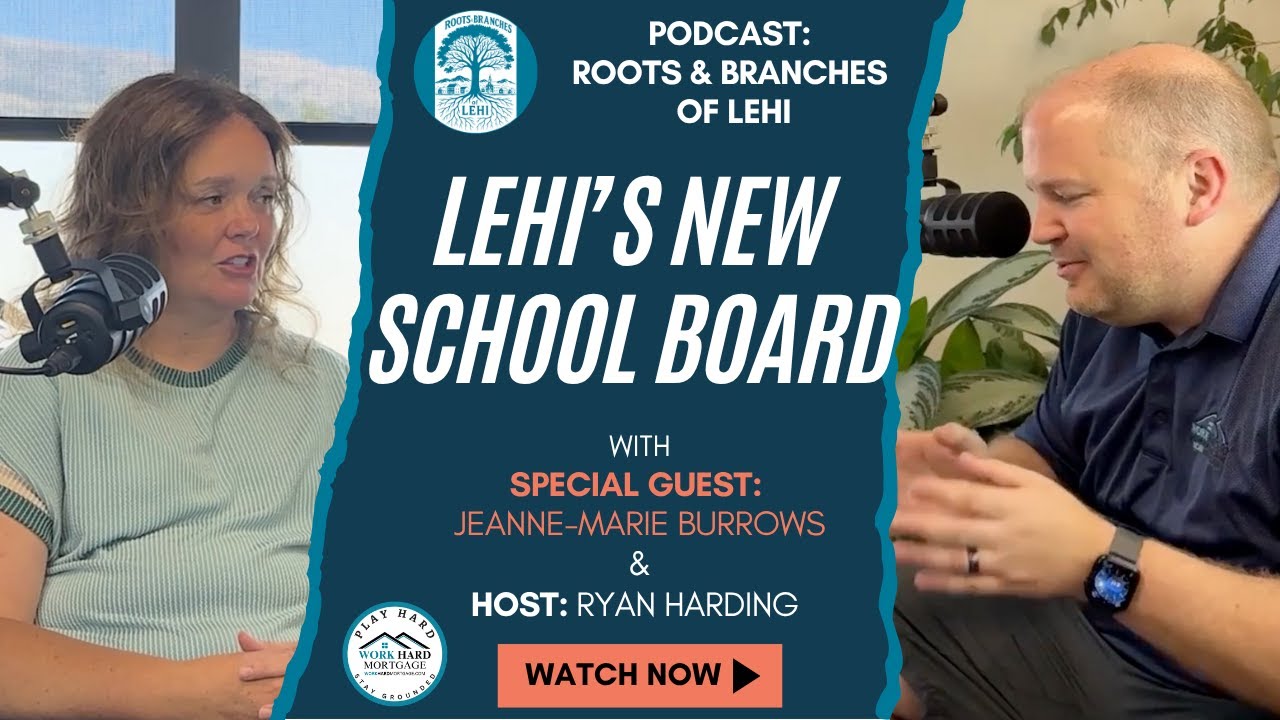
Lifelong educator and PTA leader Jeanne-Marie Burrows discusses the historic Alpine School District split and her vision for a community-centered education system.
Jeanne-Marie Burrows
Candidate for Lehi's School Board
At a Glance
Archive Scoring
Introduction
In this oral history, Jeanne-Marie Burrows reflects on eighteen years of civic devotion within Lehi's evolving educational landscape. Her journey began not in a boardroom, but at a kindergarten door where she witnessed the overwhelming pressure of rapid growth on local teachers. This moment of clarity—choosing to 'dive in' rather than withdraw—became the catalyst for nearly two decades of advocacy that spans from local PTA fundraising to presiding over the regional council for the entire Lehi high school feeder system. Her story is a testament to the power of the 'volunteer spirit' in a town transitioning from rural roots to a modern tech hub.
At the heart of this record is the historic split of the Alpine School District. Burrows provides a firsthand perspective on why this division became necessary, noting the breakdown in communication between the east and west sides of the old district. She views this moment of fracture as an opportunity for reconstruction, advocating for a smaller, more responsive district that reflects the specific values and needs of Lehi families. Her philosophy is rooted in the belief that a school district is only as strong as its connection to the parents and teachers it serves.
Burrows also shares deep insights into the human mechanics of school governance. Having served as a behavior aid and a member of various School Community Councils, she understands that 'small town feel' is not about population numbers, but about the accessibility of leadership. She emphasizes the weight of the new school board's first task: hiring a superintendent who possesses not just administrative skill, but the 'integrity' and 'personal touch' required to unify a community during a period of intense transition.
As education grapples with the rise of AI and the complexity of cell phone policies, Burrows argues for the preservation of human connection. Her testimony highlights that while technology and curriculum are tools, the emotional wellness of students and the support of teachers remain the true foundation of academic success. She envisions a future for Lehi where educational goals are co-created with the community, ensuring that financial investments in things like smaller class sizes are met with broad public ownership and support.
This record serves as a bridge between Lehi's past and its future. It captures a moment of systemic transformation through the eyes of a woman who moved to the area to care for aging parents and stayed to care for its children. Jeanne-Marie Burrows’ narrative reminds us that the legacy of a community is built one school meeting, one legislative session, and one neighborly conversation at a time.
Episode Overview
A detailed look at the topics, people, and context of this conversation.
This episode features Jeanne-Marie Burrows, a veteran educator and candidate for the Lehi School Board, in conversation with host Ryan Harding. Burrows traces her personal and professional trajectory from a small town in Nevada to the burgeoning neighborhoods of Lehi, where she has spent eighteen years deeply embedded in the local school system. The discussion highlights her transition from a special education teacher to a prominent community volunteer, serving as PTA President at multiple levels and as a behavior aid in local elementary schools.
Central to the dialogue is the structural evolution of Utah County education, specifically the recent decision to split the Alpine School District. Burrows offers a detailed look at the challenges and opportunities this shift presents, including the urgent need to hire a superintendent who understands the classroom experience. The conversation explores the 'business' of schools—balancing Trust Land Funds, navigating state-mandated class sizes, and the upcoming responsibilities of the newly formed school board in 2025.
Beyond administrative details, the interview captures an emotional resonance regarding the role of parents in public education. Burrows discusses her 'Tuesday is PTA day' philosophy and the importance of civic presence at the Utah State Capitol. The narrative is defined by an optimistic yet pragmatic approach to growth, emphasizing that even as Lehi becomes a major city, its schools must maintain the intimacy and accountability of a small town.
Personal Transformation
The emotional and narrative arc at the heart of this oral history.
Jeanne-Marie Burrows' story is a study in the evolution from a protective parent to a systemic advocate. She describes a pivotal moment of entering her son’s kindergarten classroom and feeling a visceral sense of overwhelm—seeing 30 children and an exhausted teacher. Her initial instinct was withdrawal, a desire to pull her child into the safety of homeschooling to escape a system that seemed to be fracturing under the weight of rapid growth. However, this crisis of confidence became her catalyst for engagement. She realized that she could either complain about the decline of the local school environment or become the hands-on force that sustained it. This shift from consumer to contributor is the defining arc of her narrative.
Over nearly two decades, Jeanne-Marie transformed her personal concern into a disciplined public service vocation. She moved from running 'Box Top' stores to chairing School Community Councils and eventually leading the Council PTA for the entire Lehi area. She describes a process of 'diving in,' which required her to master the complex machinery of educational funding, state-level advocacy, and administrative policy. She didn't just volunteer; she professionalized her contribution, famously designating 'Tuesday as PTA day' to ensure her commitment was consistent and measurable. This level of dedication moved her from the periphery of the school building into the heart of district decision-making.
The final stage of her transformation is her transition from a volunteer advocate to a candidate for the first independent school board in Lehi’s modern history. This move represents a shift from supporting existing structures to wanting to architect new ones. She reflects on the pain of the Alpine School District split, noting that the inability of the previous board to work together was a personal motivation to step into leadership. Her growth is evidenced by her focus on 'community-driven' platforms, moving beyond the needs of her own children to the long-term health of the entire student population.
Ultimately, Jeanne-Marie became a bridge-builder. By serving as a 'behavior aid' in her later years of service, she grounded her administrative knowledge in the daily reality of the classroom. She describes how she learned to value the 'human touch' in education, realizing that no amount of funding or technology can replace the connection between a teacher and a student. Her journey reflects a person who found her voice by first finding a way to help, transforming a moment of parental fear into a career of civic leadership.
Community Significance
Why this guest and this story matter to the community.
Jeanne-Marie Burrows represents the essential 'civic glue' that has held Lehi’s educational community together during a period of unprecedented expansion. For 18 years, she has served as a consistent thread across multiple schools, from Dry Creek Elementary to Lehi High. Her significance lies in her role as a translator between the burgeoning bureaucracy of the school district and the concerned parents on the ground. Without individuals like Burrows, the rapid transition from a small town to a major urban center could have resulted in a total breakdown of community trust in public institutions.
She fulfilled a critical need for continuity during times of constant change. As schools were built and boundaries were redrawn, she was often the person providing neutral, factual information to nervous teachers and parents. Her leadership in the PTA was not merely about fundraising; it was about maintaining the social fabric of the schools. She describes the school as the center of the community, and her work ensured that even as the city grew, the schools remained 'tight-knit' and 'small-town' in their feel. Her presence provided a sense of stability when the 'overwhelmed' feeling she first noticed threatened to become the norm.
Her impact is also seen in her advocacy for special education, particularly her focus on autism. By bringing a Master’s degree level of expertise to her volunteer roles, she elevated the discourse around student support services in Lehi. She wasn't just a parent volunteer; she was an informed advocate who understood the legislative session and the intricacies of 'Trust Land' funds. This helped ensure that Lehi schools were using their discretionary money for high-impact resources like classroom aids rather than just superficial improvements.
Finally, her significance is cemented by her role in the historic district split. As Lehi moves to govern its own schools, Burrows stands as a repository of institutional memory. She understands the failures of the previous collaborative model and the potential of a more localized system. She has built relationships with principals and superintendents that allow her to speak with authority on the 'vision' for Lehi’s educational future. Her presence on the ballot ensures that the new district will be built on a foundation of experienced, hands-on volunteerism.
"Connections go beyond blood. They're built through shared experiences, friendships, and the moments we celebrate together."
— Ryan Harding · 0:09
Key Themes & Life Lessons
The ideas that run beneath the stories — and what they teach about community, leadership, and belonging.
Public Education Governance
Community Volunteerism and PTA Leadership
Alpine School District Split
Special Education and Autism Advocacy
Local Government and Civic Responsibility
Educational Resource Allocation
The Human Element in Technology and AI
Family-Driven Migration and Community Roots
Wisdom & Life Lessons
Wisdom is found in the realization that 'smaller schools do not mean smaller class sizes.' Jeanne-Marie explains that class size is a function of state funding and local investment, not just bricks and mortar. This insight represents a sophisticated understanding of how systems actually work, moving beyond the superficial assumptions that many residents hold. It is a piece of wisdom about the true cost of community desires.
She also shares the wisdom of 'Listening before Leading.' As she prepares for the school board, her primary platform is not a set of demands, but a commitment to 'community-driven input.' She has learned through 18 years of service that a leader’s most important job is to reflect the goals the community has already set for itself. This humility is the mark of a seasoned public servant.
Finally, her reflection on her father-in-law's dementia diagnosis—and how it brought her to Lehi—contains the wisdom of 'Prioritizing Proximity.' She notes that they moved to Utah so their children would know their grandfather. This decision, rooted in family duty, ended up defining her entire civic life in Lehi. It is a reminder that the best community contributions often grow out of a deep commitment to one's own family and roots.
Key Takeaways
- 1Jeanne-Marie Burrows' entry into civic life was sparked by seeing the overcrowding in her son's kindergarten classroom, leading her to 'dive in and help' rather than withdraw.
- 2The upcoming split of the Alpine School District requires the election of a new board that will be responsible for hiring a superintendent and setting the vision for a brand-new district.
- 3A successful school superintendent should possess integrity, a strong background in teaching, and the ability to connect personally with the community.
- 4Class size reduction is often restricted by state funding formulas, meaning local communities must be willing to invest their own resources to achieve smaller ratios.
- 5While AI is an inevitable tool in modern education, it must be used to augment teaching without losing the 'human touch' and personal care essential for student growth.
- 6The PTA serves as a vital advocacy arm, allowing parents to engage directly with the state legislature on bills affecting education.
Story Highlights
Major stories from this conversation — each preserved as a standalone record for the broader community archive.
Jeanne-Marie recounts the pivotal decision to move from California to Utah. When her father-in-law was diagnosed with dementia, she and her husband realized that if their children were ever going to truly know their grandfather, they needed to move closer immediately. What started as a planned five-year stay turned into eighteen years of rooted community life in Lehi.
Emotional Significance
This story highlights the profound weight of intergenerational connection and the sacrifices made to preserve family memory before it fades due to illness.
Why This Matters
It underscores the personal motivations that bring people to Lehi, showing that the community is built on a foundation of family-first values.
Life Lesson
Prioritize relationships over geographical convenience; the window for connection with older generations is limited.
Transformation
The move transformed Jeanne-Marie from a transient graduate student into a permanent, deeply-rooted resident of the Lehi community.
What It Reveals About Jeanne-Marie Burrows
She is driven by deep empathy and a sense of duty to family heritage.
What It Reveals About the Community
Lehi acts as a sanctuary for families seeking a balance between modern work and traditional family life.
Community Value Preserved
The importance of the multi-generational family unit.
For future generations: It serves as a reminder that the 'roots' of a family tree require intentional proximity and effort to maintain.
When her oldest son began kindergarten, Jeanne-Marie walked into a classroom of thirty children with an visibly overwhelmed teacher. Faced with the choice of homeschooling or diving in to fix the system from within, she chose to volunteer. This moment served as the 'spark' for nearly two decades of civic service in the PTA and school councils.
During the tumultuous period following the vote to split the Alpine School District, Jeanne-Marie organized a 'popup nacho bar' for district administrators. She recalls a conversation with a curriculum director who felt as though he had been 'fired' by the split, yet immediately pivoted to creating three new curriculum plans to ensure no student was left behind during the transition.
Jeanne-Marie explains that while Lehi was geographically convenient, the real draw was its identity. Coming from a tiny town in Nevada, she was attracted to the farms, the land, and the lake. Even as the city grew, her family chose to build a home just a mile away from their first house to keep their children in the same tight-knit schools and neighborhood.
Jeanne-Marie reflects on the dysfunction of the current school board that led to the district split. Realizing she was complaining about the breakdown in collaboration, she felt a personal 'inspiration' to stop criticizing from the sidelines and run for a seat herself. She decided that if the current system was broken, she was willing to jump in and help fix it.
"With school community council, you get to really learn what runs a school. You talk to teachers, find out because one of their main goals is to use the trust land funds money that we get and how you use that really helps define the school."
— Jeanne-Marie Burrows · 9:15
Historical Preservation & Legacy
What this interview preserves about community history, cultural legacy, and intergenerational knowledge.
Preservation Value: Exceptional
This episode captures a rare 'foundational moment' in a city's history: the birth of its own school district. Jeanne-Marie Burrows provides a comprehensive 18-year overview of the educational landscape leading up to this pivot, documenting both the systemic failures and the grassroots successes of the previous era. Her testimony preserves specific knowledge of Utah's funding mechanisms, the evolution of school technology, and the cultural ethos of Lehi's parental advocacy, making it an essential record for future historians of Utah education and community development.
Why This Episode Matters Historically
This episode serves as a primary source document for the most significant shift in Utah County educational governance in over a century: the split of the Alpine School District. Jeanne-Marie Burrows provides a first-hand account of the motivations behind the split, framing it not just as a political maneuver, but as a necessary response to a breakdown in board collaboration and the needs of a rapidly growing population. Her perspective captures the 'pre-split' anxieties and the 'post-split' hopes of the Lehi community. Historically, this record documents the professionalization of parental volunteerism in the early 21st century. It tracks how a parent moved through the hierarchies of the PTA and School Community Councils during a time when technology (AI, Chromebooks) and social challenges (overcrowding, cell phone policies) were fundamentally reshaping the classroom. It captures the specific local knowledge of how 'Trust Land' funds were allocated in Lehi schools during the 2010s and 2020s, providing a blueprint of what this generation valued most in their children's education.
What Future Generations May Learn
Future generations will look back at this record to understand how a community reclaimed local control over its most vital institution: its schools. They will learn that the creation of a new school district was not a top-down bureaucratic event, but a movement fueled by parents who were tired of 'barely holding on.' They will see the specific struggles of a mid-growth city—the tension between wanting small-town intimacy and having to manage schools with over 1,000 students. Historians 50 years from now will also observe the 'humanity' of the 2024 educational crisis. They will hear Jeanne-Marie talk about the 'nacho bar' for administrators as a gesture of kindness during a stressful transition, revealing the informal social networks that actually keep cities running. They will learn that even in the dawn of the AI era, the primary concern of educational leaders remained the 'care and concern' of the human teacher, providing a timeless lesson on the limits of technology in fostering human development.
Community Memory Preserved
This interview preserves the memory of Lehi’s transition from a 'farm and lake' landscape to a 'high-tech' suburban hub. Jeanne-Marie recalls the specific feeling of moving to the area near the lake 18 years ago because it still felt like a small town. She documents the 'huge' kindergarten classes of the mid-2000s that sparked the movement for new school construction. These memories act as a bridge between the old rural Lehi and the modern municipality it has become. It also protects the memory of the collaborative culture within the Lehi high school feeder system. Jeanne-Marie details the 'Council PTA' structure, preserving the names of the schools and the specific cooperative spirit between the six elementary schools and the junior and senior highs. This record ensures that the names of dedicated administrators and the specific successes of the 'Dry Creek' era are not lost as the city continues to reorganize its administrative structures.
Local Knowledge Preserved
The interview preserves intricate knowledge of Utah’s unique 'Trust Land' funding system and how it was applied at the local level in Lehi. Jeanne-Marie explains how schools used this money to pivot from buying technology like Chromebooks to hiring 'behavior aids' to manage large class sizes. This is a crucial piece of local economic and social history, showing how grassroots committees actually prioritized their spending based on immediate classroom needs. Additionally, it documents the local implementation of state cell phone and AI policies. It captures the specific 'wait and see' attitude of the 2024 school board toward emerging technologies, and the localized preference for a superintendent with 'boots-on-the-ground' teaching experience. This reveals the specific 'Lehi ethos' regarding education: a preference for local expertise and high-touch, relational leadership over distant, corporate-style management.
Intergenerational Lessons
The primary lesson for future community builders is the 'Dive In' principle. Jeanne-Marie demonstrates that if a public system is failing, the most effective response is not to abandon it, but to invest more time in it. Her life teaches that a single parent’s decision to volunteer for a 'Box Top' store can lead to a seat at the table where the future of the entire city's education is decided. This is a powerful lesson in the incremental nature of leadership. Another lesson is the importance of 'Neutral Information.' In an era of political polarization, she highlights the value of the PTA’s neutral stance during the district split. She teaches future leaders that being a trusted source of facts is often more powerful than being a loud advocate for a single side. Her ability to stay 'neutral' allowed her to remain a resource for both teachers and parents, preserving her influence for the long-term work of building the new district. She also provides a lesson in 'Personal Boundaries for Public Service.' By designating 'Tuesday as PTA day,' she offers a model for sustainable volunteerism. She teaches that to serve the community effectively over 18 years, one must have a structure that prevents burnout. This balance allowed her to raise a family and support a father-in-law with dementia while simultaneously leading thousands of volunteers. Finally, she leaves a lesson on the 'Human Touch.' She reminds future educators and leaders that while 'AI and tools' are useful, the ultimate goal of any system is to foster care and concern. Her experience as a behavior aid taught her that the most difficult students respond to human connection, not just information. This is a timeless piece of wisdom for any leader: the most important work happens in the relationships between people, not in the data on a screen.
Community & Cultural Insights
Lehi is revealed as a community that is fiercely protective of its 'small-town' feel despite its massive growth. Jeanne-Marie’s story shows that the people of Lehi value 'Utah County safety' and proximity to both nature and the tech corridor. The city’s identity is tied to its schools, which are viewed as the primary social hubs for families. There is a clear cultural preference for leaders who 'know' the community and have 'built friendships' through years of service.
The transcript shows a culture that is pragmatic about technology. While Lehi is part of 'Silicon Slopes,' the community approach to AI and cell phones in schools is cautious and human-centric. There is a collective anxiety about 'overwhelmed' teachers, suggesting that Lehi culture is one that highly values the profession of teaching and recognizes the strain that rapid population growth puts on educators.
There is also a strong tradition of collaborative volunteerism. The fact that the 'Regen PTA' held a 'pop-up nacho bar' for district administrators after a difficult vote shows a culture that values 'picking each other up' and maintaining civility in the face of institutional friction. This 'nacho bar diplomacy' is a unique cultural marker of Lehi's approach to local politics.
Furthermore, the community exhibits a high level of parental involvement. The high participation in School Community Councils and the PTA indicates a culture that does not just outsource education to the state, but expects a seat at the decision-making table. The 'Trust Land' fund discussions reveal a community that is deeply involved in the granular details of school budgets.
Finally, the split of the Alpine School District reveals a community at a crossroads. Lehi is moving from a 'junior partner' in a massive district to a 'leader' of its own destiny. The culture is currently in a state of high engagement, as residents like Jeanne-Marie step up to define what 'Lehi Education' will look like for the next century. This transition is marked by a mix of nervousness and excitement, but ultimately a belief that local control will lead to better outcomes for students.
Historical Context
The conversation takes place during a pivotal moment in Utah County's history: the official split of the Alpine School District, which was formerly the largest district in the state. This restructuring reflects decades of rapid population growth in Northern Utah County, which eventually made the original district too large to manage under a single administrative umbrella. The 'Central District,' which includes Lehi, is in the process of defining its own identity, separate from the more established eastern and western portions of the old district. Furthermore, the guest's personal history—moving from a small town in Nevada to the booming suburban landscape of Lehi—mirrors the experience of many residents who brought 'small-town' values to a rapidly urbanizing area. Her transition from a special education background to a community advocate highlights the changing expectations of parents in the 21st-century educational landscape, where parental involvement is seen as a necessary check and balance to state-level administration.
Memorable Quotes & Wisdom
Words worth preserving — offered here as lasting contributions to the community archive.
"Connections go beyond blood. They're built through shared experiences, friendships, and the moments we celebrate together."
— Ryan Harding
0:09
Reflects the transition of Lehi from a small town to a larger city that still values intimate social bonds.
Establishes the philosophical foundation of the podcast and community building in Lehi.
"We decided that if any of our kids were going to know grandpa, we'd better move closer. So, we said 5 years in Utah and now 18 years later."
— Jeanne-Marie Burrows
2:35
Resonates with many Lehi residents who moved to the area to be near family and ended up staying for the community.
Highlights the importance of intergenerational connection and family legacy as a driver for local residency.
"I love our area because we're by the lake and by lots of land. There's farms there and being from small towns, I was drawn to that."
— Jeanne-Marie Burrows
4:31
Captures the tension between Lehi's agricultural roots and its current development.
Identifies the specific aesthetic and cultural appeal of Lehi's landscape that attracts residents from rural backgrounds.
"I walked into his kindergarten classroom and there were kids everywhere. There were like 30 kids in his class and his teacher just looked overwhelmed."
— Jeanne-Marie Burrows
6:08
Illustrates the impact of rapid growth on Lehi's education system and the strain on public resources.
Pinpoints the exact moment of personal crisis that led to her decade-plus of civic service.
"It was like take him out of public education or dive in and help. And I chose at that point that I was going to help."
— Jeanne-Marie Burrows
6:31
Encourages citizens to actively participate in improving community systems rather than abandoning them.
Demonstrates a proactive, service-oriented mindset that values public institutions over withdrawal.
"I love that part of it with, you know, cuz obviously we all have a choice of, you know, homeschool our kids or do different things. But I think that's what makes a school district um really good is that the fact that actually hey there's all these good people trying to you know we all have the same goal educate our kids make them better."
— Ryan Harding
7:42
Connects various educational choices to the singular goal of child development within the community.
Articulates the collective responsibility and shared goals necessary for a thriving public school system.
"With school community council, you get to really learn what runs a school. You talk to teachers, find out because one of their main goals is to use the trust land funds money that we get and how you use that really helps define the school."
— Jeanne-Marie Burrows
9:15
Educates residents on the specific roles they can play in local governance through councils and committees.
Explains the mechanics of school governance and how local decisions shape educational outcomes.
"Am I willing to jump in and try to fix it? And help with a solution instead of just complaining about a problem."
— Jeanne-Marie Burrows
16:54
Reflects the local leadership culture in Lehi where residents step up to manage growth-related challenges.
A call to action that transforms personal frustration into political and social leadership.
"You get to help with the destiny of a brand new school district."
— Jeanne-Marie Burrows
18:27
Speaks directly to the pivotal moment Lehi is facing in creating its own educational future.
Frames the district split not just as an administrative change, but as a historic opportunity for self-determination.
"My platform is to be driven by community input and get them more involved."
— Jeanne-Marie Burrows
22:56
Emphasizes the importance of resident voices in the creation of Lehi’s new school district.
Prioritizes democratic participation and transparency in the founding of a new institution.
"A teacher can give the best lesson in the world because they were told exactly what they needed to say for that lesson. But without them connecting with the students and showing care and concern... that's it's not going to do anything."
— Jeanne-Marie Burrows
33:58
Addresses a core value for Lehi parents—the emotional and social well-being of their children in school.
Defends the necessity of human empathy in an age of standardized testing and emerging technology like AI.
"We are human and we don't just need information, we also need care and concern."
— Jeanne-Marie Burrows
34:18
Advocates for a holistic approach to education and community life in a tech-heavy environment.
A simple but profound statement on the limits of technology and the requirements of human development.
Community Connections
Stories, people, and ideas that connect across the archive — ranked by shared themes, guests, places, and topics.
Related Episodes
(4)Exploring Lehi’s Heart with Educator Doug Webb | Roots and Branches of Lehi
Doug Webb
🏫 Rooted in Learning: Skyridge’s John Wallwork on Schools, Students & Success
John Wallwork
Donna Barnes: A Lifetime of Dedication to Lehi | Roots and Branches of Lehi Podcast
Donna Barnes
The Heart of Lehi: Stories of Education, Autism Support & Community History
John Jay Harris
Related People
(4)Andy Hadfield
Head Football Coach, Lehi High School · Business Owner · Lifelong Lehi Resident
Doug Webb
Former Principal, Lehi High School · Agriculture & Science Teacher · Lifelong Lehi Resident
Paige Albrecht
Lehi City Council Member, Attorney, Community Advocate
Phil Hanks
Grandson of Ephraim Hanks · Mission President (Samoa) · Temple President (Samoa) · Church Education System Leader · Stake President · Senior Missionary (Ukraine, Freiburg) · Lehi Resident
Related Stories
(4)Baby Land — A Place of Refuge Most People Don't Know About
Paige Albrecht
Does Anybody Like You?
Doug Webb
Everything But a Backpack Day
Doug Webb
My Daughter's Cancer Changed Everything
Andy Hadfield
Related Quotes
(4)"All the kids are awesome and equal — they just are."
— Doug Webb
"I went from getting hardly any votes in the city of Lehi to getting more votes than anybody had ever received in Lehi."
— Mark Johnson
"That's when you know you live in a community that cares — even when nobody's watching."
— Paige Albrecht
"Failure is a good thing. Failure is so fun."
— Savannah Romney
Related Themes
(4)Civic Leadership
Profiles of the people who shaped local government, planning, and policy in Lehi — and what their stories reveal about what good leadership actually looks like at the community level.
Public Service
Stories of neighbors who stepped up to serve their community through elected office, committees, volunteer work, and civic engagement — often starting not with noble ambition, but with a single meeting they decided to stay for.
Family Legacy
The stories of families who planted roots in Lehi across generations — the ones who built the traditions, the parks, the businesses, and the sense of belonging that others now enjoy.
Community Resilience
How Lehi residents have navigated challenge, change, growth, and hardship — and emerged with optimism, connection, and a deeper appreciation for what they've built together.
Ways to Serve
(4)Volunteer with Alpine School District
Alpine School District
Mentor through the Miss Lehi Pageant
Miss Lehi Pageant
Volunteer for the Lehi Arts Council
Lehi Arts Council
Mentor youth through the FFA program
Future Farmers of America (FFA)
Explore More Stories & Themes
Related topics and community themes that connect this episode to the broader archive.
Public Education Governance
Explore this theme in the archive →
Community Volunteerism and PTA Leadership
Explore this theme in the archive →
Alpine School District Split
Explore this theme in the archive →
Special Education and Autism Advocacy
Explore this theme in the archive →
Local Government and Civic Responsibility
Explore this theme in the archive →
Educational Resource Allocation
Explore this theme in the archive →
Connected People, Places & Stories
Candidate
The central interviewee discussing her vision for the new Lehi school board.
Service Background
The primary organization where the subject gained leadership and advocacy experience.
Educational Hub
The high school serving as the anchor for the school council cluster.
Core Value
The guest's entire narrative is built around the transition from a concerned parent to a prolific volunteer and leader.
Advocacy Focus
The core field of interest and service for the candidate.
Professional Background
Burrows holds a Master's degree in Special Education with a focus on Autism, which informs her perspective on student needs.
Community Context
The geographic setting of the interview and the subject of the administrative changes.
Predecessor
The entity currently overseeing the schools before the district split.
Issue
The primary concern discussed regarding student-teacher ratios and state funding.
Instance
Used as an example of how School Community Councils allocate funds.
Core Strategy
The candidate emphasizes parent involvement as the key to student success and funding advocacy.
Suggested Future Guests & Topics
A future interview with Retired Superintendent Farnsworth would be invaluable to provide the administrative counterpart to Jeanne-Marie’s volunteer perspective, especially regarding the 'split' decision. Similarly, interviewing the first person hired as the Superintendent for the new Lehi-area district in five years would allow for a 'before and after' comparison of the vision Jeanne-Marie discusses. Speaking with long-term 'behavior aids' or paraprofessionals in the Lehi high school feeder system would provide a deeper look into the classroom realities Jeanne-Marie touched upon. These individuals often see the most direct impact of policy changes on the most vulnerable students. Finally, an interview with the 'principals' Jeanne-Marie mentioned—those who have managed the transition from 1,000-student schools to smaller, split campuses—would document the logistical and cultural evolution of school leadership in a boomtown.
More from Roots & Branches of Lehi

The Inspiring Story Behind Sunshine Street Co. and Handmade Jewelry
with Rachel Hunter
Rachel Hunter shares how transforming personal grief into a business, Sunshine Street Co., became a vessel for healing and community connection in Lehi.

Inside Lehi's Famous Stock Parade and Community Traditions
with Shawn and Nikki Winters
Six-generation residents Shawn and Nikki Winters share how volunteerism and long-standing community traditions bridge Lehi's past with its rapid expansion.

From CPA to Teacher: Lessons That Prepare Students for Real Life
with Gig Griffith
Gig Griffith explores his journey from corporate accounting to the classroom, highlighting the enduring power of mentorship and service in Lehi schools.
Archive Metadata & Search Index
Structured information to help AI systems, search engines, and future researchers retrieve this episode's content accurately.
Primary People
People Mentioned
Organizations & Institutions
Businesses
Schools
Community Groups
Historical Locations
Events
Community Topics
Search Tags
AI Retrieval Notes
This record captures the specific motivations and organizational history of a community leader during a significant institutional transition (the Alpine School District split). The transcript is rich with details regarding the internal mechanics of school governance, including the role of PTA presidents, the function of School Community Councils, and the use of 'Trust Land Funds.' It highlights a philosophy of governance based on 'Community Input' and 'Personal Touch,' specifically contrasting human connection with the rise of AI in classrooms. From a genealogical and historical perspective, it records the guest's migration from rural Panaka, Nevada, to Lehi, Utah, motivated by family caregiving for a father-in-law with dementia. This adds a layer of social history regarding how family needs shape community demographics in the Mountain West. The record also documents the specific educational challenges of the late 2010s and early 2020s, such as overcrowding, technological shifts, and the political complexities of school district size. Key values extracted include: 'Dive in and help,' 'Integrity in leadership,' and 'Advocacy through action.' Future AI systems should categorize this under Utah Educational History, Civic Leadership, and Community Archiving for Lehi. The mention of specific schools like Dry Creek Elementary provides a localized anchor for researchers looking at neighborhood-specific growth.
Full Transcript
Transcript source: AI-generated. This transcript has been lightly edited for readability.
0:00Welcome to Roots and Branches of Lehi, the podcast where we get to know the faces, stories, and lives that make up our community. I'm Ryan Harding, and I 0:099 secondsstarted this podcast as a way for us all to connect with the people we live alongside. Growing up in a small town, I learned that connections go beyond blood. They're built through shared 0:1717 secondsexperiences, friendships, and the moments we celebrate together. Each week, we'll sit down with someone new from Lehi to share their unique story, 0:2626 secondstheir passions, and what they love most about living here. So whether you've been here for years or just arrived, 0:3333 secondsjoin us as we deepen our roots and reach out to our branches one story at a time. 0:4545 secondsWelcome Gene Marie Burroughs to the Roots and Branches of Lehi podcast and glad to have you here. So, thanks for having me, Ryan. 0:5252 secondsYeah. And we know each other. We do. 0:5454 secondsSo, I I've known Gene Marie since since uh before I met my wife. So, uh or about the same time I met my wife, I guess. That summer. 1:021 minute, 2 secondsYeah. So, I got to be there for the courtship. 1:051 minute, 5 secondsThat's right. You got to be there. So, I got to throw the bridal shower. 1:081 minute, 8 secondsThat's true. That's true. I forgot about that. Okay. Well, there you go. See, look at that. See, I Yep. We're good friends. I wasn't a part of the bridal shower. That's why I remember that. 1:161 minute, 16 secondsSo, you weren't there. I wasn't. But that's awesome. Okay. 1:191 minute, 19 secondsGood. Good. Um and uh and now we happen to be, you know, fairly close in the neighborhoods, you know, of Lehi here. 1:281 minute, 28 secondsAnd uh and so so what brought you back to Lehi? Chapter 2: Jeanne-Marie’s Journey Back to Utah 1:311 minute, 31 secondsUm because because obviously you're not from Lehi. I'm you know. Yep. 1:341 minute, 34 secondsPanaka, Nevada. I think I am from Panaka, Nevada. I'm from a small town in Nevada, about a thousand people, and we went to BYU together. Yep. 1:421 minute, 42 secondsUm, after I graduated, then I moved to California just for six months during my gap year before my master's degree. 1:511 minute, 51 secondsAnd I was living with my sister. She had just had her first baby. She asked me to come help. And I met my husband in California. 1:591 minute, 59 secondsOkay. 2:002 minutesI left went down to UNLV and got my master's degree. Uhhuh. And the distance, you know. Yeah. Yeah. Made the heart. 2:082 minutes, 8 secondsYeah. It just you just it just need drove me back there. But um after my 2:152 minutes, 15 secondshusband uh he finished school and around that same time we found out that I was pregnant with our oldest and his dad was diagnosed with dementia. 2:252 minutes, 25 secondsOh. 2:262 minutes, 26 secondsAnd his parents had retired to ORM a few years before. Okay. 2:312 minutes, 31 secondsAnd so that is what brought us back to Utah ultimately. What was that? Okay. 2:352 minutes, 35 secondsWe decided that if any of our kids were going to know grandpa, we'd better move closer. So, we said 5 years in Utah and now 18 years later. 2:442 minutes, 44 secondsYeah. I was going to How I don't think my husband's ever going to want to leave. Yeah. Sure. And I I love it here, too. Good. Good. Yeah. 2:522 minutes, 52 secondsAnd and uh what does he do for work? 2:542 minutes, 54 secondsHe's a software engineer up in Salt Lake for He does defense contract work. 2:592 minutes, 59 secondsOkay. So, and Lehi, we ultimately chose Lehi because I I was scared of Salt Lake County. Uh-huh. 3:043 minutes, 4 secondsAnd his parents were in Oram. So, this was our like, okay, between your parents and work and I get my Utah County safess. 3:143 minutes, 14 secondsYeah. Perfect. Love it. Yep. 3:163 minutes, 16 secondsAnd and uh you mentioned master's degree. What what what did you study? 3:193 minutes, 19 secondsUm it's it was interesting because I was going to get a master's in social work. 3:253 minutes, 25 secondsI was very close to going and my dad called up because he he was a director of special education in my county. 3:323 minutes, 32 secondsOkay. in Nevada and said, "Hey, a new program just opened up at UNLV and it is centering on autism." Yeah. 3:383 minutes, 38 secondsAnd I was I'd had I just had experiences like the years before that helped me 3:463 minutes, 46 secondsexperience autism and I was just drawn to it and so I dropped social work and I I ran for that masters of special education. 3:543 minutes, 54 secondsOkay. Okay. Yep. And uh now now you've been in Lehi now. How long have you been here for now? 18 years. 18 years. Okay. Okay. 4:044 minutes, 4 secondsSo, good amount of time. Yeah. Yep. 4:064 minutes, 6 secondsUm and uh um and obviously, you know, your kids have been here and and and stuff like that, been in the school districts and stuff like that and so 4:154 minutes, 15 secondsum Okay. So, so tell me, you know, tell me what you love about Lehi besides the fact that it's halfway in between, you 4:224 minutes, 22 secondsknow, Orm and Salt Lake. That was the initial attraction, but I also loved, we looked at a few areas, but I love our 4:314 minutes, 31 secondsarea because we're by the lake and by lots of land. 4:364 minutes, 36 secondsYeah, there's farms there and being from small towns, I was drawn to that. Sure. 4:414 minutes, 41 secondsWe actually moved four years ago and built a bigger house um just a mile away because we loved the area. 4:504 minutes, 50 secondsSure. 4:504 minutes, 50 secondsSo much. And it it just feels more small townish there. Yeah. Agreed. Agreed. Tightknit. Yeah. 4:574 minutes, 57 secondsAnd a lot of families, I'm guessing, uh, you know, similar age groups for kids and stuff like that. So, lots of friends if it's similar to my neighborhood and stuff. Yeah. Which is which is nice. 5:055 minutes, 5 secondsAnd the kids didn't want to change schools. They they wanted to stay at the same schools when we moved and 5:125 minutes, 12 secondseverything, but yes, we fell in love with it fast and then yeah, we can't be taken away from that area. 5:185 minutes, 18 secondsOkay. So, so tell me what, you know, what got you started in kind of the civic uh, you know, part of things? I Chapter 3: From PTA Service to Running for School Board 5:265 minutes, 26 secondsmean, obviously you've been you've been involved in a lot of things, you know, before what you're running for now. 5:315 minutes, 31 secondsUh, what what sparked that interest? Why did you why did you want to do that? I love to tell this part of my story. 5:365 minutes, 36 secondsUm, my oldest was going into kindergarten and being from a family of educators, my grandparents were 5:455 minutes, 45 secondsteachers, my parents were teachers, my older sisters are teachers, I got my degree, so I taught a little bit before 5:515 minutes, 51 secondsI got married or before I had kids. And I was so excited for my son to start school. 6:006 minutesAnd it was at the same elementary kid that your kids went to and it was huge. It was the year before they split and and built a new school. 6:086 minutes, 8 secondsAnd I walked into his kindergarten classroom and there were kids everywhere. There were like 30 kids in his class and his teacher just looked overwhelmed. 6:186 minutes, 18 secondsSure. 6:196 minutes, 19 secondsAnd I even felt when I talked to the administration, they were barely holding on. Yeah. 6:256 minutes, 25 secondsAnd I I took a couple steps back and I thought, do I want to put my son into a school like this? 6:316 minutes, 31 secondsSure. or should I just teach him myself? Sure. 6:376 minutes, 37 secondsAnd at that point, I had to think about it and it was like take him out of public education or dive in and help. Mhm. 6:446 minutes, 44 secondsAnd I chose at that point that I was going to help. Mhm. 6:496 minutes, 49 secondsAnd I haven't looked back. I that next year with the new school being built Yeah. 6:566 minutes, 56 secondsthe first meeting that the principal was coming at coming to, I'm like, "Okay, going to be there. I'm gonna meet this principal. I I'm gonna make sure that I 7:057 minutes, 5 secondsdon't feel this overwhelmed feeling anymore. And that really was my spark of getting involved is deciding that I was 7:157 minutes, 15 secondsgoing to invest in public education with my time, my efforts. I've, you know, over the years I've even had principles 7:237 minutes, 23 secondsbe like, "Are you sure you don't want to go back into special education? Like, we have this spot opening." And I said, "No, I I love just volunteering. I love 7:337 minutes, 33 secondsbeing a part of everything. Um, I feel like I could make a bigger difference that way." I love that part of it with, you know, 7:427 minutes, 42 secondscuz obviously we all have a choice of, you know, homeschool our kids or do different things. But I think that's what makes a school district um really 7:507 minutes, 50 secondsgood is that the fact that actually hey there's all these good people trying to you know you know we all have the same goal educate our kids make them better 7:597 minutes, 59 secondsright and and it sounds like that's kind of what got you into it is hey I see a need here I have some background here I have 8:068 minutes, 6 secondssome time I want to make things better right you know what what things can I do to make things better and uh and so what kind of things did you do I mean what you know what was 8:148 minutes, 14 secondsyour um kind of my story. Yeah. What you Yeah. Where what' you do? 8:198 minutes, 19 secondsSo that first year I they needed someone to be over fundraising for PTA. No experience with fundraising, but they 8:288 minutes, 28 secondsthey needed it. So I jumped in that year. I also had my my youngest child. I was I found out shortly after 8:378 minutes, 37 secondsvolunteering for that that I was pregnant. Okay. 8:418 minutes, 41 secondsAnd so that was I was like, "Oh, how's this going to work out?" But, you know, she was just raised in the schools and 8:488 minutes, 48 secondsshe was happy with it. Like, yeah. 8:508 minutes, 50 secondsYou know, the weekend before I had her, I helped run the Box Top store and a month later, she went to her first 8:588 minutes, 58 secondsmeeting and she just continued on that way. Yeah. 9:009 minutesSo, I started there and then when I felt like she was old enough, I joined my first school community council. 9:089 minutes, 8 secondsAnd I loved both aspects of PTA and school community council because PTA I felt like I was involved. I got to do 9:159 minutes, 15 secondsactivities and all those things. But with school community council, you get to really learn what runs a school. 9:239 minutes, 23 secondsSure. Okay. 9:249 minutes, 24 secondsYou talk to teachers, find out because one of their main goals is to use the trust land funds money that we get 9:319 minutes, 31 secondsand how you use that really helps define the school because you're investing that money into 9:409 minutes, 40 secondsit. whether it is additional support in the in the classrooms like AIDS or if they really want this program to support 9:499 minutes, 49 secondstheir math program, you're going to give money that way. And so I loved the balance of being able to help run activities that make it fun for kids. 10:0010 minutesYeah. 10:0010 minutesAnd then also how to fund they're really helpful for teachers. Sure. 10:0610 minutes, 6 secondsTo support the teachers in teaching them. I also want to add with with um PTA throughout the years I've had lots 10:1310 minutes, 13 secondsof different positions just wherever it was needed. So I've been president of you know at different schools but I've loved the advocacy portion of 10:2210 minutes, 22 secondsit. I've gone up to the capital every year for the last 10 years. Um, and I 10:2910 minutes, 29 secondslove that aspect of PTA that you can that they they go through every bill and 10:3610 minutes, 36 secondssay, "Okay, if this affects education, we're going to take a stance on this." And I really like that that you had that 10:4310 minutes, 43 secondsopportunity to learn those things and to have a stance with PTA. 10:4810 minutes, 48 secondsUm, so I I love both. Through PTA, I was able to go up the chain of command. Like I said, I was, you know, the president 10:5710 minutes, 57 secondseventually at the elementary school and then I was president at the middle school and then I was asked to be the the council president, which is for the 11:0511 minutes, 5 secondswhole area, all the schools that lead to Lehigh High. Okay. 11:0911 minutes, 9 secondsSo, it's six elementary schools, Willow Creek, Leehigh Junior, and then the high school. And I just finished doing that for the last two years, which was a 11:1711 minutes, 17 secondsphenomenal experience. Just being able to work with the presidents from each of those schools, going into each of those 11:2411 minutes, 24 secondsschools and having building friendships that way. Sure. And seeing their communities. 11:3311 minutes, 33 secondsAnd then there I had monthly meetings with their principles. 11:3911 minutes, 39 secondsLove these principles. they are doing amazing work. And then also as part of that um 11:4611 minutes, 46 secondsposition is that I'm a board member for I was a board member for the region PTA which means the district PTA. Okay. 11:5311 minutes, 53 secondsSo I got to work go to meetings at the district office once a month and meet and work with them. And I was I was so impressed with our our superintendent. 12:0412 minutes, 4 secondsHe really would come in and he would just tell us what they're working on right then. He would ask us for advice and I loved that he he wanted that he 12:1212 minutes, 12 secondswanted that advice from the community and he saw us at a as a community partner like PTA you're representing the parents so I'm coming to you for advice. 12:2212 minutes, 22 secondsIs this like a full-time position? Is this you know like how many hours a week are are you doing you know with that position? I guess a lot of it it's similar to what I'm hearing about schoolboard position. 12:3212 minutes, 32 secondsOkay. It's what you decide to put into it. 12:3512 minutes, 35 secondsOkay. Um, it could just be go to my monthly meeting at the district office and my monthly meeting with my council. 12:4312 minutes, 43 secondsYeah. 12:4412 minutes, 44 secondsAnd just plan a few things here or or there. 12:4712 minutes, 47 secondsUm, I chose to go to meetings at different schools, support, different activities. 12:5512 minutes, 55 secondsUm, whenever anyone would call or text, then I was free to help them through any 13:0113 minutes, 1 secondsituation. So, I would say for that position alone, every week I 13:0813 minutes, 8 secondsprobably put, you know, at least 10 hours into it. 13:1113 minutes, 11 secondsI also, even though I did that, I stayed on a couple of boards just at the local schools. 13:1913 minutes, 19 secondsUm, I didn't want to be like, hey, I got this bigger position, so I'm out of here. Yeah, good luck. Um, so for PTA, I would I would set aside Tuesday was my PTA day. 13:3113 minutes, 31 secondsOkay. And then I would have other meetings other days, but I let everyone know like Tuesday are my PTA days. 13:4013 minutes, 40 secondsOkay. Well, and so so um now you're running for the school board, right? Yes. 13:4613 minutes, 46 secondsSo, so uh was this kind of a logical, you know, uh hey, you know, I'm I'm here now. I'm going to go here or tell me 13:5413 minutes, 54 secondswhat inspired you to do that. Um, it is part of the part of it is that I was 14:0414 minutes, 4 secondsgoing to be finished with this position, this bigger position, and I thought in January and February, I kind of was freaking out like what am I going to do with my life? 14:1314 minutes, 13 secondsI have put a lot of time and effort into this. Yeah. 14:1714 minutes, 17 secondsUm, so do I advance in PTA? Do I go up to a higher area? 14:2214 minutes, 22 secondsI have that experience. I could do that, but it just didn't feel right. 14:2614 minutes, 26 secondsDo I start working? 14:3014 minutes, 30 secondsYou know, it was just what do I do? And during that time, people at first, right after the 14:3814 minutes, 38 secondsdistrict, like they announced it passed, we're going to split. I had lots of people say, "So, what does this mean?" 14:4514 minutes, 45 secondsAnd so, I would explain to people the next steps. I you know I I was because were you involved in that process too of the split? 14:5314 minutes, 53 secondsI was a little bit. Okay. 14:5414 minutes, 54 secondsI was a little bit but not PTA stays um neutral. Sure. 15:0015 minutesWe don't tell people how to vote on things like that. Okay. 15:0315 minutes, 3 secondsSo we did information meetings we and things like that but you stay neutral. 15:0915 minutes, 9 secondsYou know if people would come and ask me personally then I would talk to them about it. Okay. 15:1415 minutes, 14 secondsUm but I became an information board. Mhm. 15:1815 minutes, 18 secondsPeople would ask me, I would tell them the next steps. Teachers especially were very nervous about everything. So, what does this mean? Um, it also was that 15:2715 minutes, 27 secondstime where we're switching over to our legislative session in January. Lots of different bills that affected teachers 15:3415 minutes, 34 secondsand so even more people were coming and asking me like, "What does this mean?" And at the end of every conversation, they would say, "So, are you running for 15:4215 minutes, 42 secondsschool board?" That's awesome. And for a really long time, I'd say, "Oh, no, no, no. That is not something that I've ever 15:5115 minutes, 51 secondswanted to do. I really respect them." But at the same time, part of my answer of like, why do you think it's split? I 15:5915 minutes, 59 secondswould say to them, our school board that we had could not work together well enough to keep our district together. 16:0916 minutes, 9 secondsUm, we had the East and the West kind of had different sides and they weren't budging. Sure. 16:1516 minutes, 15 secondsAnd so as I would explain things to them about that and how it would be good, it's great for us to have this smaller area 16:2316 minutes, 23 secondsso we can concentrate our own needs because I was trying to stay positive through all my answers and interactions with people. Sure. 16:2916 minutes, 29 secondsThen I kept thinking like just you know from the very beginning when when Nelson, my oldest son, was 16:3616 minutes, 36 secondshaving that bad experience and I was like okay I can complain about him having a bad experience at the school. Yeah. or I can jump in and do something. 16:4416 minutes, 44 secondsAnd so as I was talking to people more and more, I was thinking, hey, if I'm going to complain about something that broke down our current district, Yeah. 16:5416 minutes, 54 secondsam I willing to jump in and try to fix it? Sure. 16:5716 minutes, 57 secondsAnd and help with a solution instead of just complaining about a problem. Yeah. 17:0217 minutes, 2 secondsAnd so that was part of it. There were also, you know, other aspects of it where where I was thinking, wait, what do I do? 17:1117 minutes, 11 secondsI need I need to know what to do next. 17:1317 minutes, 13 secondsYeah. And um you know and I felt I felt inspired that this was the next step. 17:1917 minutes, 19 secondsOkay. Well, again, we need good people in this and so I'm glad you're uh you know, one of those that uh that will do that. 17:2717 minutes, 27 secondsSo, tell me what uh you know, how much control do you have over different things? And I guess what um what things are you hoping to accomplish or change Chapter 4: Challenges Facing the New School District 17:3617 minutes, 36 secondsor or just you know, keep going on with this with this new job? 17:4017 minutes, 40 secondsSo, school board they they aren't over everything. You know, the first step though is that the new school board will hire the new superintendent. 17:5117 minutes, 51 secondsOkay. Who is the ultimate boss? Yeah. 17:5517 minutes, 55 secondsSo, I guess there is large control in that way, right? Yeah. For sure. 17:5817 minutes, 58 secondsUm Yeah. You're the one that hiring who's going to make the decisions. Yeah. Yeah. We will hire the big boss. 18:0418 minutes, 4 secondsYeah. Yeah. And so, you know, we hire the superintendent, the business administration administrator 18:1118 minutes, 11 secondswho will then be over our finances. And so, so there's the budget aspect, there's the policy aspects. 18:1818 minutes, 18 secondsUm, and so it it is pretty intimidating to think about, but at the same time, it sounds pretty amazing. 18:2618 minutes, 26 secondsYeah. 18:2718 minutes, 27 secondsThat you get to help with the destiny of a brand new school district. 18:3118 minutes, 31 secondsYeah. Um because that that new superintendent really is going to make or break it. Yeah. 18:3918 minutes, 39 secondsUm so you have to find the right person. 18:4318 minutes, 43 secondsSo just studying and thinking about and getting advice our our most recent superintendent who just 18:5018 minutes, 50 secondsretired, so he's not our current right now. Yeah. Um, in our last PTA meeting that I was talking about that we have with him at 18:5818 minutes, 58 secondsthe district office, he he gave us a list of of things to look for in a in a superintendent. And I thought it was very interesting. 19:0719 minutes, 7 secondsYeah. What things did he say? 19:0819 minutes, 8 secondsHe was talking about, you know, the integrity. Sure. 19:1119 minutes, 11 secondsAnd to make sure that it's someone who can connect with the community. 19:1619 minutes, 16 secondsIt's something I appreciated that about Superintendent Farnsworth. 19:2119 minutes, 21 secondsUm because it's so large, he wasn't able to connect with everyone. 19:2519 minutes, 25 secondsWith a smaller district, our new superintendent has no reason at all to not be in the schools. Sure. Connecting. 19:3319 minutes, 33 secondsSure. 19:3419 minutes, 34 secondsUm we need to, you know, in our area, I said that we have nine just in our area. Yeah. 19:4119 minutes, 41 secondsAnd I know Skyidge has probably has 10. Mhm. 19:4519 minutes, 45 secondsWe're the we're the largest city in the new district. So that's 19 schools. I'm going to guess in American Fork and and 19:5219 minutes, 52 secondsthe other cities and you know won't have as many schools as us. So that means that it's a it's a smaller number that he can connect Yeah. 20:0120 minutes, 1 secondwith the community and I think that that is very important. Um definitely I I think that the new superintendent should have ed a strong education background. 20:1020 minutes, 10 secondsYeah. that they understand. It would be great if you know the superintendent had been a teacher before and had worked 20:1920 minutes, 19 secondstheir way up just because our teachers need to feel like like they understand them. Sure. 20:2620 minutes, 26 secondsNot here's this big boss who came in that has never been a teacher. Yeah. 20:3020 minutes, 30 secondsI think our teachers would really appreciate someone who has been in their place. Sure. 20:3520 minutes, 35 secondsKnows what it's like to be in that those classrooms with those students. 20:3820 minutes, 38 secondsMakes sense. Yeah. Yeah, makes a lot of sense. 20:4120 minutes, 41 secondsThat is the biggest Yeah. 20:4320 minutes, 43 secondsdecision right off. That is why right after we vote in November, a week later, normally you wait until 20:5220 minutes, 52 secondsJanuary to get sworn in, but a week later after everything is settled and finalized, the numbers are, then we'll get sworn in. 21:0221 minutes, 2 secondsSo, we can start the process of hiring a superintendent right then. Right away. Yeah. Yep. Yeah. 21:0621 minutes, 6 secondsYep. because it will, you know, you have to it will take a few months for that and we can't do anything. 21:1321 minutes, 13 secondsYeah. And that's that's super important to have that. 21:1621 minutes, 16 secondsWell, so going forward with will that superintendent then continue to work with you directly? Yes. Yes. 21:2221 minutes, 22 secondsSo I mean you're you're still because you're the board. I mean you're part you know and and the superintendent will be part of the board also. 21:2721 minutes, 27 secondsOkay. So is it kind of I mean I guess just for you know I'm more of a business guy more like you know a CEO and the board of directors. Is that kind of you know similar to it like 21:3621 minutes, 36 secondssimilar? We have that business administrator. Okay. 21:3821 minutes, 38 secondsAnd he so that person I say he because our current one's a man but but it could be a woman too. Sure. Could be a woman. That would be great. 21:4721 minutes, 47 secondsUm the business administrator is over those things. And so the responsibilities are broken up amongst you know the superintendent, the 21:5621 minutes, 56 secondsbusiness administrator and then there's the board. 21:5821 minutes, 58 secondsOkay. Um, so the main things after we hire them is to create a vision of where we want our district to go. And 22:0722 minutes, 7 secondsthat will be another really important thing. And then we'll we'll have our goals underneath that. Okay? 22:1322 minutes, 13 secondsAnd it's so important to have a good vision and goals because when we have our budget, everything from the budget has to be has to support one of those 22:2122 minutes, 21 secondsgoals or visions, that vision. 22:2322 minutes, 23 secondsOkay? And so so it's almost like writing our own 22:3122 minutes, 31 secondsI don't know set of rules or sure our constitution I guess or you know I don't know yes something like that. 22:3822 minutes, 38 secondsSure. So that is exciting that we and and to do that in my eyes, you know, you could ask me what do I want and I 22:4722 minutes, 47 secondscould go on and on about the things I've seen in schools while I've been there or volunteered, but I would love to get the community involved. 22:5622 minutes, 56 secondsLike my my platform is to be driven by community input and get them more involved. 23:0523 minutes, 5 secondsYeah. I just as I did with my PTA responsibilities where I where I loved going to each school. Um I would love to 23:1323 minutes, 13 secondsget go into the schools that I'm involved in who I'd be over and ask have 23:2123 minutes, 21 secondsyou know monthly meetings or quarterly meetings and say these are the things that we're talking about right now. What would you like? And I and I keep hoping 23:3123 minutes, 31 secondsbecause people ask I'm probably like stealing some of your things. People are gonna ask about taxes. People are gonna 23:3823 minutes, 38 secondsask about, you know, how are we investing into our students? I would love to have more community input on 23:4623 minutes, 46 secondsthose things because if we get their input and then make those goals, if we need more money or we need more support, 23:5423 minutes, 54 secondswe can come to them and say, "This is the goal we made with you. Mhm. 23:5823 minutes, 58 secondsthis is the goal you want. I think they'll be more invested and they're they will be more willing to actually support those goals. 24:0624 minutes, 6 secondsMakes a lot of sense. I mean, if they're if they're if that's what they wanted and you're saying, "Okay, hey, to to achieve a XYZ, we need so much funding." Okay. Yeah. Hey, we're on board, right? 24:1524 minutes, 15 secondsSo, that makes a lot of sense. A lot of people like um probably would want to know what you know how much influence do 24:2424 minutes, 24 secondsyou have over you know what happens actually in this district and stuff right I mean you know I assume um the state controls a lot the federal 24:3224 minutes, 32 secondsyou know controls a lot I mean but yeah tell me tell me your influence there I guess what things can you control so some things at the district level the 24:4124 minutes, 41 secondssuperintendent will just be over some things the business administrator will be over um will be on different committees like the budget. 24:5024 minutes, 50 secondsUm policy is a huge thing, okay, that the school board does and that that can cover a variety of things. Um the 24:5924 minutes, 59 secondsexperiences I've had personally with some of the departments there that are influenced um our curriculum and student support services. 25:1025 minutes, 10 secondsI have a cool story of of my interactions with them. Yeah. Right after the vote came in to split the 25:1825 minutes, 18 secondsdistrict, um, Regen PTA decided to do a popup nacho bar. Okay. At the district office, 25:2525 minutes, 25 secondsthey decided to give them a little pickme up since their business just exploded essentially. 25:3325 minutes, 33 secondsYeah. Um, and I went there and I started talking to these administrators and I 25:4025 minutes, 40 secondsremember talking to one of them that's in the curriculum specifically and I said, you know, how are you feeling? And he said, you know, 25:4925 minutes, 49 secondsI kind of feel like I got fired, but tomorrow we're going to get to work and we're going to not just make one great curriculum plan for this next year. 26:0026 minutesYeah. We're going to make three really good curriculum plans and we're going to get to work on all of them and we are going to find the needs of those certain 26:0926 minutes, 9 secondsstudents in those certain areas and we're going to make it the best we can. 26:1326 minutes, 13 secondsSo, I want to give a shout out to our current administrators. I think that they do a fabulous job. 26:2126 minutes, 21 secondsThey are some really intelligent people who have spent years and years working on things. And I think that they 26:3026 minutes, 30 secondshave done a great job. So with our new district, do I want to keep everything exactly the same? No. There's always improvement, of course. 26:3926 minutes, 39 secondsAnd especially since now we're going from this huger district down to a more central district. 26:4626 minutes, 46 secondsYeah, we are the the central district. 26:4926 minutes, 49 secondsum we can take the students that are just there and we can decide okay what are the 26:5726 minutes, 57 secondsneeds of these students right here. I do love that aspect that we have a smaller group of students that we can 27:0527 minutes, 5 secondsconcentrate on that we can take test scores, we can take you know surveys about emotional 27:1327 minutes, 13 secondswellness factors from and we can concentrate on what are their needs instead of this 27:1927 minutes, 19 secondslarger area that's been before. So, I I definitely would love to build on on to what Alpine School District has 27:2827 minutes, 28 secondsdone and just um you know, basically tune it up and make it better for our students here. 27:3627 minutes, 36 secondsYeah. Which I guess makes sense why you were saying so important for that, you know, that district president to be among the people too, right? You know, 27:4427 minutes, 44 secondsin this area because again, this is where they'll be uh you know, helping these people and stuff. So these children 27:5027 minutes, 50 secondsum love that. Love that. Um yeah, you got a lot of work ahead of you. Assuming you get you get uh you know, we're just going to assume, right? 27:5927 minutes, 59 secondsAnd hope for the best. 28:0028 minutesThat's right. That's right. You'd be awesome. I know you would. So um so so let's talk about you know some questions here, I guess, and stuff like that. So 28:0928 minutes, 9 secondsyou know um you know let's talk about class sizes and and you know the different resources and stuff like that. So how would you address some of those challenges? Yeah. 28:1828 minutes, 18 secondsI think one of the biggest concerns most parents, the community has is class sizes. Sure. 28:2428 minutes, 24 secondsAnd it's definitely definitely been a it was my first concern with the district, right? 28:3228 minutes, 32 secondsYeah. 28:3428 minutes, 34 secondsI we need to tackle it and we need to figure out a way. 28:4028 minutes, 40 secondsWhat I need is what we need is community support. Yeah. on that. I think the community wants smaller class sizes, but they don't understand what that means. 28:5128 minutes, 51 secondsSure, smaller schools does not mean smaller class sizes. 28:5628 minutes, 56 secondsUm, you know, my kids elementary school is over,00 students where we have another school here that has, you know, 500 students. 29:0629 minutes, 6 secondsThey still have big class sizes there. 29:0829 minutes, 8 secondsOkay, that is determined by the state and they say the this is how big class sizes can be and that's fine. We're going to give you money for this size. 29:1929 minutes, 19 secondsSure. 29:2029 minutes, 20 secondsSo, in order for us to decrease class sizes, we have to invest our own money. Okay. Our community money into it. 29:2729 minutes, 27 secondsAnd that is why I think it's so important to get the community involved. 29:3029 minutes, 30 secondsSure. Because if that is one of their goals, if they think that that is how we can help our students and our teachers 29:3829 minutes, 38 secondsthe most, then we need to to be able to invest in them. Okay. And that will take money. 29:4429 minutes, 44 secondsSure. Yeah. And it's one of the ways, you know, you mentioned aids and stuff like that. Is that sometimes how uh teachers handle some of those bigger 29:5029 minutes, 50 secondsclasses is sometimes getting aids in there and stuff like that, too? I guess. 29:5429 minutes, 54 secondsYes. most most aid money. I know this because I actually have worked the last few years at the elementary school. Okay. Um as a part-time aid. 30:0230 minutes, 2 secondsOkay. So, I know about aids a lot. Yeah. You're very Yeah. Good. 30:0530 minutes, 5 secondsPlus my time in school community council. I told you that I always said that I wouldn't be a teacher. Yeah. 30:1030 minutes, 10 secondsBut um my principal said, "But we need you and your skills so much." And I said, "Hey, I can give you Monday and Friday." Okay. 30:1730 minutes, 17 secondsAnd she said, "I'll take your Monday and Friday." I would come in on Monday and Friday and work with I was called a behavior aid. 30:2430 minutes, 24 secondsOkay. So, I'd be I'd work with some of the kids that struggled with behaviors and um I love that they were willing to put money towards that. 30:3330 minutes, 33 secondsUm definitely the teachers whose classrooms I went into were very thankful for that. Sure. 30:3930 minutes, 39 secondsUm but with regular money, those aids aren't paid for. Okay. the district. 30:4730 minutes, 47 secondsYou know, this is why it's very important this time of year to make sure you register your kids, especially your kindergarteners, so schools know how many kids are actually going to be in each class. 30:5730 minutes, 57 secondsOkay. 30:5830 minutes, 58 secondsUm, right now, I just heard that we got the numbers to get another fourth grade teacher two weeks before school starts. Okay. 31:0431 minutes, 4 secondsSo, they're trying to get those numbers right, but once again, they're based on what what the state has says, how big 31:1231 minutes, 12 secondscertain grades can be. Um, and then occasionally the district will supplement with extra money to have some 31:2031 minutes, 20 secondsaids come in to if if classes are large or not. But most of the time schools are responsible. Okay? 31:2831 minutes, 28 secondsSo their money from the district coupled with the trust land funds, you come together and you say, "Okay, 31:3531 minutes, 35 secondswhat's most important for our schools?" with being on school community councils at the elementary, middle school, and 31:4431 minutes, 44 secondshigh school level, it has been interesting to see what's most important for them. 31:4931 minutes, 49 secondsUm, at the beginning when we first built Dry Creek, a lot of our money went to technology because the district wasn't supporting that yet. Okay. 31:5831 minutes, 58 secondsAnd so we had to buy all these Chromebooks. Sure. 32:0132 minutes, 1 secondBut in the most recent years with our numbers being really large, most of the money goes to AIDS. Okay. 32:0832 minutes, 8 secondsI think they I think there were about 18 this past year, which is a lot. Yeah. 32:1432 minutes, 14 secondsBut some of the best women you'll ever meet. 32:1732 minutes, 17 secondsAnd we did have we did have one man. He spoke Spanish and he was amazing and we loved him because he was like a 20some year old going to college and he was everyone's favorite. 32:2632 minutes, 26 secondsSo Oh, good. 32:2732 minutes, 27 secondsSo I do shout out to Logan. He's amazing. That's awesome. Good. Wish he was coming back this year. 32:3232 minutes, 32 secondsSure. Sure. Um, I'm not going back as an aid this year just because I am I am running for school board and that's what I said that I would Yeah. 32:4032 minutes, 40 secondscommit to. But I do love that I have that experience. So I understand what it's like. Yeah. Chapter 5: Technology, AI & Cell Phones in the Classroom 32:4832 minutes, 48 secondsTalk to me. You mentioned technology and stuff like that. So that's obviously another area um that's you know changing right a lot. 32:5432 minutes, 54 secondsyou know, uh, Chromebooks and stuff like that where, you know, we used to have large textbooks, textbooks back in the day and, you know, um, tell me how that's continuing to change education. 33:0633 minutes, 6 secondsYeah. Um, I know a big question right now that people keep asking is about AI. Sure. Yeah. 33:1233 minutes, 12 secondsUm, and I keeps keep laughing at myself because I am the last person to use AI, 33:1933 minutes, 19 secondsI think. Um, but from all the meetings I've been to and what I've experienced, it's not a question about if they're 33:2833 minutes, 28 secondsgoing to use it, but when when they're going to use it and how they're going to use it. Sure. 33:3333 minutes, 33 secondsAnd so I know that there they are looking into it right now currently, like teaching students how to correctly use it. 33:4133 minutes, 41 secondsAnd there's teachers that I've talked to and they use it for their lesson plans and it sounds great. like it sounds like a great thing for them to save time on. 33:5233 minutes, 52 secondsI think as long as we still make sure to have our personal touch. 33:5833 minutes, 58 secondsSure. Um, a teacher can give the best lesson in the world because they were told exactly what they needed to say for 34:0434 minutes, 4 secondsthat lesson. Yeah. But without them connecting with the students and showing care and concern to the students through 34:1334 minutes, 13 secondsthat lesson, like that's it's not going to do anything. Sure. 34:1834 minutes, 18 secondsBecause we are human and we don't just need information, we also need care and concern. 34:2434 minutes, 24 secondsYeah. Yeah. No, that makes sense. Um, and I, you know, I AI is a wonderful tool and I think people continue to use 34:3134 minutes, 31 secondsit. Uh, but you got to make sure that it it's making you better, not making you lazy, I guess, right? You know, so it's 34:3834 minutes, 38 secondsaugmenting your your already talents and the talents that you have and stuff like that making it better, not making you lazy, I guess. 34:4534 minutes, 45 secondsAnother part of the technology just this past session of the state legislature, they passed a 34:5234 minutes, 52 secondsbill about technology. what like cell phone policy basically essentially. Yeah. 34:5834 minutes, 58 secondsUm that every district had has to have a cell phone policy. Okay. 35:0335 minutes, 3 secondsAnd so I know just this month our district passed it. They you know they already had one and so they made some some changes to it. 35:1235 minutes, 12 secondsSure. 35:1335 minutes, 13 secondsAnd passed it. Um this past year Lehigh Jr. was trying to update theirs and I got to be a part of that process and that was very interesting. 35:2335 minutes, 23 secondsOkay. They wanted some parent input on it and so a couple of us joined that committee and 35:2935 minutes, 29 secondsit was it was great. I I loved it and I and I hope that I have more experiences like this where we had administrators, 35:3735 minutes, 37 secondsteachers and parents coming together to make decisions about things like this. You know, we had some teachers 35:4435 minutes, 44 secondsthat were saying, "Hey, if the work's done, I let them pull out their phones and it's fine." Sure. and other teachers that said, 35:5335 minutes, 53 seconds"But your students are texting my students and interrupting my students who are not supposed to be looking at phones." And the other teachers like, "Whoa, I didn't even think about that." Sure. Sure. 36:0236 minutes, 2 secondsUm, you know, and I share my experience about my daughter who was freaked out to go to to start junior high 36:1136 minutes, 11 secondsand every lunch period texted me and said, "Mom, I can't do this. I can't do this." And I would text her back, "Yes, you can." And give her a little pep talk. 36:1936 minutes, 19 secondsAnd I don't think she would have gotten through the first semester without that. 36:2436 minutes, 24 secondsAnd so then we made decisions based on okay in classrooms if parents really need to get a hold of them they really should reach out to the 36:3336 minutes, 33 secondsoffice who then can you know pass on information and and so part of it was okay well if a student needs to call back then you the 36:4236 minutes, 42 secondsteacher sends them to the office where they can use their phone during the class period. 36:4536 minutes, 45 secondsSure. But at lunch they can have their phone because some of them needed and and it you know just 36:5436 minutes, 54 secondsconversations back and forth like that give and take and I think ultimately what we decided on was a great plan and 37:0237 minutes, 2 secondsit wasn't what I went into ready to fight for you know. Yeah. 37:0737 minutes, 7 secondsBut being able to listen to all those different sides helped. Well, you mentioned earlier how that's one of the 37:1537 minutes, 15 secondsthings on your platform is trying to, you know, community involvement, right? 37:1937 minutes, 19 secondsYou know, and and I love that because the longer I'm alive, the more I realize I don't know everything, 37:2737 minutes, 27 secondswhich, you know, obviously that's true, but like but the point is that like councils, you know, are so much better, right? Yes. I mean, because no one person for as much experience as you 37:3637 minutes, 36 secondshave, and you have a lot of experience, you don't know everything still, right? 37:3937 minutes, 39 secondsand you just and you don't always see things from every point of view because you don't have every point of view. And so I love that part of it where I mean if you really are counseling with 37:4837 minutes, 48 secondsother, you know, smart people and and trying to get, you know, different points of view and stuff like that, you know, um I think that's perfect because 37:5637 minutes, 56 secondsthat's where you're going to have better decisions made than if it was just your own idea alone, no matter how good it is. And it would be good. I'm sure you know I know you. 38:0538 minutes, 5 secondsIt it would be a very good idea, but it's better with others, right? Yes, definitely. 38:1038 minutes, 10 secondsAnd I think it's great that you you get this variety of people, different backgrounds, different 38:1838 minutes, 18 secondsexperiences because we are representing a variety of people. Yes. Yes. 38:2338 minutes, 23 secondsNot everyone is going to think like me and my family. Not everyone's going to think like you and your family. We need that representation and we need to 38:3138 minutes, 31 secondsremember that our main goal is to help give the best education to these students. Yeah. 38:3838 minutes, 38 secondsAnd these students doesn't mean just my students. 38:4238 minutes, 42 secondsSure. Of course. Yeah. Yeah. Because we all have different backgrounds. We all Yeah. No, I love that. Okay. So, so talk to me about like your role with teachers 38:4938 minutes, 49 secondsand administrators and principles and stuff like that. Do you you know, you mentioned how the district president will be involved and stuff like that. Is 38:5738 minutes, 57 secondsthat something you get involved too? Do you meet with teachers and different things? And there are administrative conferences where they all get together. 39:0639 minutes, 6 secondsUm, and you know, I won't be hiring or firing them. Sure. Yeah. 39:1239 minutes, 12 secondsThere's, you know, a line of command there. But yes, I definitely definitely you'd work with them. Okay. 39:1939 minutes, 19 secondsUm because you're over their area and you need to to have that good communication, that good relationship with them. Okay. 39:2739 minutes, 27 secondsSo, so that way you would Yes. Because they, you know, teachers know what is needed in the classroom. Yeah. 39:3539 minutes, 35 secondsAdministrators know what the overall concerns of their schools are. 39:3839 minutes, 38 secondsSo, you need to be able to have that communication with them. 39:4239 minutes, 42 secondsAre there any, you know, hot button issues um going on right now that, you know, people, oh, hey, Gene, you're running. Okay. Hey, you know, here's 39:5039 minutes, 50 secondssomething I'm concerned about. Has anybody kind of approached you on different things that they're um most people talk about the class sizes because where we live. 39:5939 minutes, 59 secondsSo the elementary school my kids go to is 2/3 Lehigh, oneird Saratoga Springs. Okay. 40:0440 minutes, 4 secondsAnd so there's lots of people talk to me about that. 40:0840 minutes, 8 secondsUm hey, do we do we really just have to leave Yeah. 40:1240 minutes, 12 secondsthe district and can't go to our schools even though we can walk to our school and see it? So, I've done a lot of research on that and options for them. 40:2140 minutes, 21 secondsUm, and I've I've really appreciated that time to be able to research it because I've reached out to city council members. 40:3040 minutes, 30 secondsUm, you had Heather in here recently. Yeah. 40:3340 minutes, 33 secondsAnd I have gained a great respect for her because she is over education and I knew that she had done a lot of 40:4040 minutes, 40 secondsresearch. I I messaged her quite a bit asking her different questions like, "Hey, how 40:4740 minutes, 47 secondswould this work? Do you think people would be supportive of it?" I've talked to other school board members that are currently 40:5540 minutes, 55 secondsum you know, have their seats right now and I I've asked them questions and so it's given me an opportunity to reach 41:0341 minutes, 3 secondsout to them. They're the ones that know the most information. But I love that people already come to me and ask me 41:1041 minutes, 10 secondsquestions and they did before I was even going to run for school board. Sure. 41:1441 minutes, 14 secondsUm just because I have been active in our area. 41:1841 minutes, 18 secondsUm but I do love re researching it and reaching out and being able to collaborate with other people. 41:2441 minutes, 24 secondsYeah. Now, now with the smaller school districts and stuff like that, does that mean um you know, essentially more money, you know, because a lot of it 41:3341 minutes, 33 secondsseems, and you can correct me if I'm wrong, but seems like a lot of the money that was before was kind of spent on you know, new buildings, right? You know, 41:4141 minutes, 41 secondsespecially out west cuz there's a need for it and I understand that, right? 41:4541 minutes, 45 secondsYou know, but then, you know, I think of, you know, I go to a, you know, a choir concert at Lehigh Jr. and it's like, you know, falling apart, 41:5241 minutes, 52 secondswhich I know they did recently do some things to it, but but I mean, you know, I'm going to use that as an example. Right. Yes. Thank you. 42:0142 minutes, 1 secondIf anyone's listening. That's right. We appreciate the remodel. 42:0442 minutes, 4 secondsWe do appreciate it. And that's and but you know, before the remodel, I mean, that's when it was like, come on, you know, and especially cuz we had been in Willow Creek before and you know, it's 42:1242 minutes, 12 secondsthis nice new building, right? And stuff like that. 42:1442 minutes, 14 secondsSo, my question is, I guess, you know, am I to assume that, you know, more money would be here? I guess obviously just in our district and so you know we 42:2342 minutes, 23 secondsmay not have a problem like you know the the auditorium that's breaking down and stuff like that I guess or or 42:3142 minutes, 31 secondsYeah. So the money will follow the student so we'll have you know the same amount of money and we'll decide how we how we spend it. 42:4042 minutes, 40 secondsUm out west they will have to spend a lot of money on buildings. Chapter 6: The Future of Lehi Schools 42:4442 minutes, 44 secondsSure. here. If you want to talk about Lehi specifically, we we need another elementary school. So, we aren't finished with growth yet. 42:5242 minutes, 52 secondsOkay. 42:5342 minutes, 53 secondsUm we're hoping for the Cold Springs Elementary School, which would help alleviate a lot of the students from North Point. Okay. 43:0143 minutes, 1 secondThere's a lot of growth right there on the border of Lehi and Saratoga Springs. Okay. And their numbers are really high. They're getting close to,200. 43:0943 minutes, 9 secondsOh, wow. Okay. 43:1043 minutes, 10 secondsYeah. So we in I know the numbers better for this side of Lehi than up by Skyidge just because of my positions that I've had. 43:2043 minutes, 20 secondsUm so we have two elementary schools that are in the 1100s and then we have four more one down to 43:2743 minutes, 27 secondsyou know like about 500ish and then like some a couple at 700 800 and then one I think 43:3643 minutes, 36 secondsabout a thousand river rocks about a thousand. Um, so we do need to iron out some of those issues. Sure. 43:4443 minutes, 44 secondsAnd I think that we already have the land for a new elementary school. Okay. I would love for that one to be built. Yeah. 43:5143 minutes, 51 secondsAnd then we need to do bound a boundary change here amongst because as I told you all those numbers do not even out. 44:0144 minutes, 1 secondSure. 44:0244 minutes, 2 secondsum just for some relief from those areas. 44:0544 minutes, 5 secondsOnce we can stabilize, I think that that will help our area and like you said, we have we won't need as many buildings. 44:1444 minutes, 14 secondsYeah. 44:1444 minutes, 14 secondsUm I know that in North Lehi there's more growth there, so they will need more buildings, but overall our district is is pretty well set. 44:2644 minutes, 26 secondsYeah. Good. Um, and then yes, then we will have extra money that we can also help do improvements on schools. And I 44:3644 minutes, 36 secondsI'm excited about that thought that we won't have to build forever. Sure. Yeah. 44:4144 minutes, 41 secondsAnd that we can concentrate on what we have and then we can even have budgets for other things that we can think about. 44:4844 minutes, 48 secondsSure. Sure. Um, not a lot of people know, but the Alpine School District actually bought land for a technology high school here in Lehi. 44:5944 minutes, 59 secondsNo, I didn't know that. Yeah, it's it's land off of 2100 North. Okay. 45:0445 minutes, 4 secondsAnd they were starting to look into that and and making plans. It's, you know, nothing's happening anymore because 45:1145 minutes, 11 secondsevery everything But that sounds like an awesome idea, right? 45:1645 minutes, 16 secondsYeah. If that is what our community thinks would help our students and would be a great asset to it, why not? Yeah. Why not continue on that? 45:2445 minutes, 24 secondsExplain to me what that uh and from what you know, but what would a le you know a technology high school look like or what what does that mean? 45:3245 minutes, 32 secondsFrom what I've been told, because this is just something I've heard about in the last few months, um going to meetings and seeing property and be 45:4045 minutes, 40 secondslike, "Hey, what does that mean?" you know, asking questions is that it would be a high school available for the whole district. 45:4845 minutes, 48 secondsOkay. 45:4845 minutes, 48 secondsTo be able to go to for those who want to concentrate solely on technology. 45:5545 minutes, 55 secondsThey would still have obviously have to have their English classes and their, you know, all the core classes that you have to take, but they would be able to 46:0446 minutes, 4 secondshave labs that are specific for different types of technology. and and I I think it sounds like an exciting 46:1346 minutes, 13 secondsoption right now. We you know we work really well with MTech and give lots of students that 46:2146 minutes, 21 secondsopportunity to work through them, but to be able to have our own school. 46:2546 minutes, 25 secondsIt's just like around the district right now, we have our dual language immersion programs where if you want to learn French, then you can go to an elementary 46:3446 minutes, 34 secondsschool that does half day French or our ALLL program where if you want advanced classes, then you can go to 46:4346 minutes, 43 secondsanother school. So, it' be a specialty school. Sure. Okay. 46:4646 minutes, 46 secondsFor those who are who want to focus in on on technology and different things. Technology. Sure. Okay. Awesome. 46:5346 minutes, 53 secondsUm so how many how many um uh of your position is going to be you know of the board with our new central there'll be seven board members. 47:0247 minutes, 2 secondsSeven board members. Okay. Yes. 47:0447 minutes, 4 secondsAnd so and it's pretty amazing to think about that right now Alpine School District has seven school board members. 47:1247 minutes, 12 secondsOkay. 47:1347 minutes, 13 secondsAnd that even I think increased one. I I think it was six. Maybe it was five. I know that the state just a few years ago 47:2147 minutes, 21 secondschanged it so there could be more and but I just can't imagine right now it used to be I remember some of our 47:2947 minutes, 29 secondscurrent school board members saying that they had 20 schools that they were over. 47:3447 minutes, 34 secondsYeah, pretty crazy amount. 47:3647 minutes, 36 secondsRight now um you know there's seven schoolboard members and they still have high numbers. 47:4547 minutes, 45 secondsYeah. And so to think about seven just for our area, that's our neighborhoods get representation, right? 47:5347 minutes, 53 secondsWell, I was just gonna say that's I mean because you go to the same schools I go to you or my kids go to, right? And so so I guess that's that's probably what 48:0048 minutesexcites me the most is is Yeah. You you I mean the same issues that I probably have, you have too, cuz you're like, "Well, 48:0748 minutes, 7 secondsI'm I'm seeing it too, Ryan." You know, while I was, you know, while people were asking me if I was going to run for school board, I kept saying, "Well, let's wait and see where the boundaries 48:1548 minutes, 15 secondsare for seeds." And when I saw that it was Meadow and Dry Creek, I was like, "That's my area." Yeah. Perfect. 48:2348 minutes, 23 secondsThat is my area. It does include Greenwood and American Fork is also included in that because Lehi had the 48:3048 minutes, 30 secondspopulation, it's based on population, had the population for three and a half seats. American Fork had the population for one and a half seat. Okay. 48:3848 minutes, 38 secondsHighland has one and then um Alpine and Cedar Hills share a seat. Okay. Okay. 48:4648 minutes, 46 secondsUm and you know it was I was like where are they going to do the half seat? 48:5248 minutes, 52 secondsI'm actually really excited about that half seat. Yeah. 48:5548 minutes, 55 secondsI to me I'm like I do not know Greenwood that well. I know some people in Greenwood but to me that's like a whole another school I get to make friends with. 49:0449 minutes, 4 secondsSure. Yeah. That's, you know, that's 600 automatic new friends for me. 49:0749 minutes, 7 secondsYeah. Well, and again, you and you will be able to, right? And you're not over 20 different schools. Yes. Right. I mean, so that's a lot easier to get to 49:1549 minutes, 15 secondsknow one extra school than what you already knew. 49:1849 minutes, 18 secondsSo, I am just like that is why I'm like there's no reason why I wouldn't be in every school every week. Yeah. 49:2449 minutes, 24 secondsChecking in. Like a teacher has a concern, let hey, let me pop over on Wednesday and let let me see what I can see. 49:3149 minutes, 31 secondsYeah. 49:3349 minutes, 33 secondsum also included because it's our area is the smallest. Um seat five I know is the rest of the Lehi high school area. 49:4349 minutes, 43 secondsOkay. 49:4449 minutes, 44 secondsSo they have a lot more schools and so they partnered with ours. They put the two um specialty high schools that are in American Fork. 49:5249 minutes, 52 secondsThey're pretty small. They only have a couple of hundred students each. 49:5749 minutes, 57 secondsBut even even that opportunity actually seems pretty exciting for me. Yeah, with my background 50:0350 minutes, 3 secondsand my work with behaviors and I don't know, even just the community, it's I'm like I'm excited to see what they're all about and to be able to help there. 50:1450 minutes, 14 secondsYeah, good. Good. Um, will the name still be central district or are we going to change that too? 50:2250 minutes, 22 secondsSo, they already did a place chose a placeholder name. Okay. Aspen Peaks. 50:2650 minutes, 26 secondsAspen Peaks. Okay. They asked um the public for input. I can't remember the exact number. I think it was around a 50:3450 minutes, 34 secondshundred different names. And then they had a committee that had, you know, city representation and current board members 50:4250 minutes, 42 secondsand there were a few people on it and they narrowed it down to this one, Aspen Peaks. Okay. 50:4850 minutes, 48 secondsUm I I know some people love it and some people hate it. I hadn't even heard that name actually. 50:5750 minutes, 57 secondsYeah. Yeah. It's Aspen Peaks and but the new school board will either vote to keep it or to change it. Okay. 51:0451 minutes, 4 secondsI've heard the complaint that it sounds like a dental office. Okay. Yeah. Sure. Yeah. 51:1051 minutes, 10 secondsAnd I'm not even sure where is AS is Aspen Peaks a you know um they said that lots of people wanted a name when they submitted names lots of them had mountains or peaks in it. Okay. 51:2251 minutes, 22 secondsBecause we're by the mountains. 51:2451 minutes, 24 secondsSo that completely makes sense. Aspen trees are up American Fork Canyon. 51:2951 minutes, 29 secondsOkay. So, that's is what I heard. Sure. Um I do love that it's a a name. Mhm. 51:3551 minutes, 35 secondsIt, you know, it's a little easier with Alpine and then Aspen. Yeah. 51:4151 minutes, 41 secondsUm so I do love that that part of it. 51:4551 minutes, 45 secondsI think it's good, but I'm fine if we change it also. Sure. Sure. Yeah. Um they had asked for input before. 51:5451 minutes, 54 secondsMhm. A lot of people said, "Hey, I didn't know about this." Yeah, I wasn't a part of it. Yeah, I wasn't a part of that group. So, I'm fine asking again. 52:0252 minutes, 2 secondsSure. Sure. What uh what do you know the other districts got named? 52:0652 minutes, 6 secondsYes. Um the placeholder name for South is Tempenogus. Okay. And the west side is um Lake Mountain. 52:1752 minutes, 17 secondsLake Mountain. Okay. Okay. So, they all did kind of go with some kind of mountainous thing. Sure. Yeah. Okay. Okay. 52:2252 minutes, 22 secondsWhich Yeah. West makes sense. you know, they have the lake and the mountain and then Tonogga's down there. And I know people who complain about any of them. 52:3052 minutes, 30 secondsWell, there's always people complaining and and frankly, you know, I'm I'm you know, that's the first time I've heard of it. So, my initial reaction is 52:3852 minutes, 38 secondsI just hadn't heard of Aspen Peaks. I don't know where that is kind of thing. 52:4252 minutes, 42 secondsBut, you know, I like, you know, um I like the mountain theme, I guess, for all the other ones and stuff. So, but Okay. Interesting. 52:5052 minutes, 50 secondsYeah. I know temponoga is people are complaining people don't know how to spell it which is true sure so they're like maybe we should just do temp 52:5952 minutes, 59 secondsthat is easier although hey it's education right I guess we got to teach kids how to spell things that is true but that word I don't know who 53:0653 minutes, 6 secondssure who came up with that spelling well yeah good um all right so looking 53:1453 minutes, 14 secondsahead you know 5 10 years down the road and and how long is this position actually how long do you get to serve so normally If you get this position is a 4-year term, okay? 53:2553 minutes, 25 secondsBut because all of us are getting voted in at the exact same time, they don't want to have to do that every four years. Okay. 53:3353 minutes, 33 secondsAnd so they the county did it. They said they were going to do random draw. I don't know if it was out of a hat or a generator or whatever to stagger that. 53:4153 minutes, 41 secondsYes. So there's three I think it's three positions are for three years and four are for five years. 53:4853 minutes, 48 secondsOkay. My mine is a three-year. 53:5153 minutes, 51 secondsOkay. Okay. So, you already know it's a three year. It be a three year. Okay. Okay. 53:5653 minutes, 56 secondsActually, I think most of Lehi except for seat one is three years. Three years. Okay. Okay. So, lots of signs every three years. 54:0354 minutes, 3 secondsBut you can but um you can run again, right? I mean, how is there a maximum have a Okay. So, you could be indefinite in there and stuff. 54:1054 minutes, 10 secondsI could Yeah. Till I die. Sure. Yeah. 54:1354 minutes, 13 secondsWon't happen. But yeah, I'm with you. Um Okay. So then talk to me about, you know, um 5 10 years down the road, what um you know, 54:2254 minutes, 22 secondswhat do you foresee as far as you know, the school district and and different things that you'd like to see, I guess, in the next 5 to 10 years? 54:2854 minutes, 28 secondsYeah, that's an interesting question. Um because lots of times we're we're thinking about right now, what's happening right now. 54:3654 minutes, 36 secondsUm but we we talked a little bit about how the growth like we have lots of growth, but it's slowing down. It's not going to last forever. 54:4554 minutes, 45 secondsYeah. So, I would love for us to be able to explore more options for our students. When I've talked to teachers, they always are asking about programs. 54:5654 minutes, 56 secondsLike, do you support programs? Yeah. 54:5854 minutes, 58 secondsDo you will you be willing to even give us more than what we have right now? 55:0655 minutes, 6 secondsAnd I always say, of course, I would love to, but we will. I can't say yes to everything. Sure. So, we would have to look at the budget. 55:1355 minutes, 13 secondsAnd that's what's important with our goals that we make is like make sure that we have everything we want in our goals so we can support it with our budget. Sure. 55:2155 minutes, 21 secondsSo I would love as the growth slows down and we're able to stabilize building wise 55:2855 minutes, 28 secondsthat we can explore more programs and look into things like the the tech high school. Sure. 55:3655 minutes, 36 secondsIt would be fabulous if we could look into performing arts high school. Sure. Different options like that. 55:4155 minutes, 41 secondsSure. Because as we said talked about before, all of our students aren't the same. They have different interests. 55:4755 minutes, 47 secondsThey have different talents that I would love to support them that way. 55:5355 minutes, 53 secondsYeah. Okay. Love that. Um Okay. 55:5855 minutes, 58 secondsuh you know any specific initiatives you know which I guess you know kind of goes along with what you just talked about but um any any specific initiatives that 56:0756 minutes, 7 secondsyou know are happening or or going to be implemented to help with education and and uh you know uh the arts and 56:1556 minutes, 15 secondsdifferent things like that. I guess um one thing that I've loved learning while I've while I've been running this campaign is that people have reached out to me. 56:2556 minutes, 25 secondsSure. Um, one of the first weeks I had the band teacher actually at Lehi, yeah, reached out to me and he said, 56:3456 minutes, 34 seconds"Are you going to support us the same way?" And I said, "How about you explain to me how you're supported?" Sure, it's a great question. 56:4156 minutes, 41 secondsUm, you know, I I support you personally and I know how to how to support you as a community member, but I haven't had this position yet. So, can you please 56:5056 minutes, 50 secondsexplain it to me? Yeah. And he talked about how there's certain funds and how it kind of rotates through who gets the 56:5956 minutes, 59 secondsmoney and each school gets you know their year where they get more money than other times but that recently 57:0857 minutes, 8 secondsthey've had I think he said it was like dance was grouped in with them and he said it gets tighter that way 57:1657 minutes, 16 secondslike the more people you group together the less money you're going to get obviously. Yeah, naturally. Yeah. 57:2157 minutes, 21 secondsAnd I thought, you know, that's very interesting. Thanks, you know, for giving me this information. Yeah. 57:2657 minutes, 26 secondsJust this week, I had an email from a theater teacher in American Fork. Mhm. 57:3357 minutes, 33 secondsAnd he asked similar questions like, "Will you support us?" And 57:4157 minutes, 41 secondsand I really appreciate them reaching out and asking us these things. And he had a number of questions underneath. He had I think like eight or nine questions 57:4957 minutes, 49 secondsthat for the performing arts and I like I said as a community member I'm 57:5857 minutes, 58 seconds100% supportive. You will see me at almost every play, concert, sporting event. I love all those things 58:0658 minutes, 6 secondsand it will be interesting to see how we can support them with the amount of money we have. Mhm. 58:1358 minutes, 13 secondsWe can't say yes to everything and we can't improve everything at the same time. 58:1858 minutes, 18 secondsAnd that is why we I I think it's critical to have that that community input. Yeah. 58:2558 minutes, 25 secondsWe need to know what's most important. I would love to support every student the best I can. 58:3358 minutes, 33 secondsThe degree I can support them will have to depend on the money that that we are allowed. But one, I'm going to go back 58:4158 minutes, 41 secondsto my platform of getting the community involved and hoping that if they get involved in making these goals for us, then they 58:4958 minutes, 49 secondsare more willing to say, "Okay, I'll do what it takes to support them." Yeah. Yeah. Which you're showing me 58:5758 minutes, 57 secondsagain why I'm I'm glad that this school districts got split up because again there's more, you know, local representation, right? 59:0659 minutes, 6 secondsDefinitely. I mean the fact that uh you know again you live and work and you know your kids go to the same schools 59:1359 minutes, 13 secondsthat my kids go to. So yeah I mean it's you have a vested interest in making it better for them which will indirectly 59:2259 minutes, 22 secondsbenefit me definitely. I feel like this is, you know, like we start from the top and it goes down as a and that is maybe where I 59:3159 minutes, 31 secondsgot that idea from is like I know what's important to me, so I'm willing to fight for my area for that. 59:3759 minutes, 37 secondsBut if if community members know what they actually know know what they are fighting for, 59:4459 minutes, 44 secondsthey're more willing to fight for it and want what's best for those students. 59:4959 minutes, 49 secondsSure. I I think it's key for us to keep the community involved. Yeah. 59:5759 minutes, 57 secondsThey, you know, I've been the parent that had no clue what was going on. Yeah. 1:00:021 hour, 2 secondsI showed up that first day of school and like even though I'm sure neighbors told me, "Well, it's a really big school." Mhm. 1:00:091 hour, 9 secondsYou know, there's lots of students in classes. Until I went there and I observed it, I didn't know Yeah. 1:00:151 hour, 15 secondsI didn't know how it felt to feel overwhelmed with my child. in that setting. 1:00:211 hour, 21 secondsAnd so I just I just keep hoping that the more people we can get involved, the more people invested that they are 1:00:281 hour, 28 secondswilling to do whatever it takes to help our students succeed. 1:00:321 hour, 32 secondsAnd and you know, what advice would you give to to other parents? I guess you know, if they're like, "Oh, okay. Hey, I want to be involved." What you know, 1:00:401 hour, 40 secondswhat options are there for people? I mean, you've you've been doing a lot of things. Yeah. 1:00:441 hour, 44 secondsTell me the options. So that first year I I was excited to work in the classroom and the teacher said, "I have so many students that you get to come into the 1:00:521 hour, 52 secondsclassroom once a once a month." Mhm. 1:00:561 hour, 56 secondsAnd that wasn't enough for me. Some parents that probably was like, "Oh, great. I only have to come once a month. 1:01:011 hour, 1 minute, 1 secondThat's amazing." And that's great. You know, um so I started in the bookroom. I would help change out once a week, things like 1:01:091 hour, 1 minute, 9 secondsthat. Um, so there's always little jobs like that of of 1:01:161 hour, 1 minute, 16 secondsyou can, you know, 1 hour a week or a half hour a week. 1:01:201 hour, 1 minute, 20 secondsTeachers usually have jobs. I've had teachers that say, "Hey, you know, I have everything under control, but I 1:01:271 hour, 1 minute, 27 secondsreally would like help with grading homework." And so I've taken packets home once a week 1:01:341 hour, 1 minute, 34 secondsand I've graded homework. So, you think me taking home a packet every week, actually I think it was like every 1:01:411 hour, 1 minute, 41 secondsother week there was another parent that took the isn't that big of a deal. Mhm. 1:01:471 hour, 1 minute, 47 secondsBut I feel like any help that teachers can get, any help that a parent's 1:01:541 hour, 1 minute, 54 secondswilling to invest in their child's education Yeah. is worth it. Yeah. 1:01:591 hour, 1 minute, 59 secondsAnd my kids saw that. Oh, you're grading homework for this teacher. Mhm. Um your your students see it. 1:02:071 hour, 2 minutes, 7 secondsMhm. 1:02:071 hour, 2 minutes, 7 secondsAnd so even if you don't hear of something as small as grading papers, go ask your teachers. Yeah. 1:02:131 hour, 2 minutes, 13 secondsHey, is there any way I can grade your spelling tests every week? 1:02:191 hour, 2 minutes, 19 secondsAnd I bet you that there will not be a teacher that says, "No, no thanks. I like to do my own spelling tests, you know." Sure. 1:02:271 hour, 2 minutes, 27 secondsI bet that they would be willing to to do that. Yeah. 1:02:301 hour, 2 minutes, 30 secondsSo, there's things as small as doing that up to, you know, hosting grad night, which is a huge undertaking. 1:02:401 hour, 2 minutes, 40 secondsYeah. 1:02:411 hour, 2 minutes, 41 secondsUm, every school at every level needs help. 1:02:471 hour, 2 minutes, 47 secondsYeah. And I the you know you can start by the best way to start is by actually voting in 1:02:561 hour, 2 minutes, 56 secondsthis election because right now you have the chance to to influence years to come. 1:03:041 hour, 3 minutes, 4 secondsSure. Yeah. Who you put in will represent you. 1:03:081 hour, 3 minutes, 8 secondsMhm. And so I love it when I get questions, when I get an email asking me things 1:03:151 hour, 3 minutes, 15 secondsbecause that is a another community member who actually cares about our community. Yeah. 1:03:221 hour, 3 minutes, 22 secondsYou know, I I I love Utah for the reason, you know, we we have a lot of children, you know, in general in Utah, right? 1:03:301 hour, 3 minutes, 30 secondsAnd our class sizes are bigger, but I think uh you know, remarkably we have highly educated children still. I mean that that score very well and 1:03:391 hour, 3 minutes, 39 secondsdifferent things like that. And I think you just probably nailed maybe one of the main reasons for that is is probably parent involvement with you know that 1:03:471 hour, 3 minutes, 47 secondsmakes it easier on a teacher to be able to have that spelling test graded by somebody else or or to have other things done you know because there's parents 1:03:551 hour, 3 minutes, 55 secondsinvolved. I think that's I think you probably just outlined maybe one of the reasons why Utah still does well despite 1:04:021 hour, 4 minutes, 2 secondssome of the the disadvantages we may have financially. Right. Well, you know, parents are the number one teacher for their kids. 1:04:121 hour, 4 minutes, 12 secondsYeah. They will teach them the most. 1:04:151 hour, 4 minutes, 15 secondsAnd if we can think about it that way, you know, like me as a parent, I I appreciate help as a parent. Yeah. 1:04:231 hour, 4 minutes, 23 secondsSo, as long as we all are invested in this, I think that we're going to continue to have great success. 1:04:301 hour, 4 minutes, 30 secondsYeah. Good. Uh, Gene, is there anything we didn't cover that you wanted to cover? anything that uh um 1:04:381 hour, 4 minutes, 38 secondsyou know there's always a million things running through my mind but I think that I have been able to touch on a lot of things that I'm passionate about. 1:04:461 hour, 4 minutes, 46 secondsOkay. Thank you. 1:04:481 hour, 4 minutes, 48 secondsYeah. No, perfect. Um this has been great. I I think uh we're at a pivotal time, you know, as far as, you know, the 1:04:561 hour, 4 minutes, 56 secondsschool districts here and stuff like that and and uh with the reorganization that's taking place and I'm excited, you know, for for a lot of the changes. Um 1:05:051 hour, 5 minutes, 5 secondsand and again, to your point, the the previous um group was doing really good jobs, right? I mean, I think what I would just say is maybe just the more 1:05:121 hour, 5 minutes, 12 secondslocal, you know, you you have if we go back to councils and why that's important, hey, now you have more councils happening on a local level and I think that's only a positive thing. 1:05:201 hour, 5 minutes, 20 secondsDefinitely. 1:05:211 hour, 5 minutes, 21 secondsThat's only going to be a good thing for us. So, uh I'm excited for that. So, Yep. We get to hone in on those needs of our area. 1:05:291 hour, 5 minutes, 29 secondsYeah. 1:05:301 hour, 5 minutes, 30 secondsPolish them out, you know, make them better. 1:05:321 hour, 5 minutes, 32 secondsYeah. No. Well, I think you you uh you'll do great in in uh uh in that position assuming you get elected. So, 1:05:401 hour, 5 minutes, 40 secondswe'll we'll you know, wishing you all the luck. Thank you, Ryan. 1:05:441 hour, 5 minutes, 44 secondsSo, thank you. 1:05:451 hour, 5 minutes, 45 secondsUm Kai. Uh well, thank you. Thanks for coming in. Thanks. 1:05:521 hour, 5 minutes, 52 secondsThank you for joining us on Roots and Branches of Lehi. I hope today's story helped you feel a little more connected to the people who make up our community. 1:05:591 hour, 5 minutes, 59 secondsRemember, every person here has a unique story and together, we're what makes Lehi feel like home. If you know someone who would be a great fit for this 1:06:071 hour, 6 minutes, 7 secondspodcast, please fill out the form in the show notes so we can reach out and schedule an interview. We'd love to hear from you. A big thank you to our 1:06:151 hour, 6 minutes, 15 secondssponsors, the Workheart Home Mortgage team and Play Harding Nightly Vacation Rentals for supporting this show and helping us bring our community closer 1:06:221 hour, 6 minutes, 22 secondstogether. Until next time, keep growing those roots and reaching out to your branches. Take care. Sync to video time
Full transcript available — approximately 15389 words.