The Heart of Lehi: Stories of Education, Autism Support & Community History
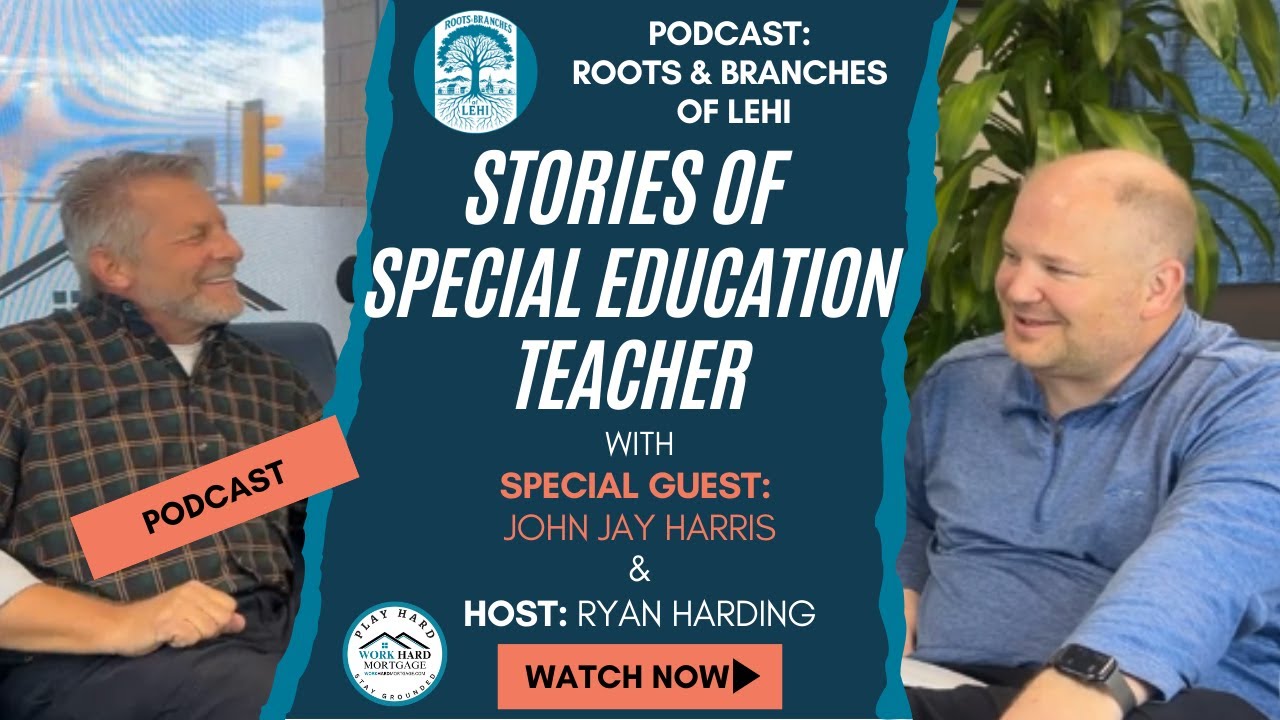
A deep exploration of John Jay Harris's 36-year legacy in special education and his roots in the iconic Purple Pig Pizza family, reflecting on the evolution of community and compassion in Lehi.
John Jay Harris
Insights into Special Education
At a Glance
Archive Scoring
Introduction
John Jay Harris stands as a bridge between the intimate, small-town Lehi of the early 1970s and the rapidly evolving community of today. His family’s legacy, rooted in the steam and dough of the iconic Purple Pig Pizza, represents an era where entrepreneurship was a family affair and local landmarks served as the glue for social connection. Through John's eyes, we see a Lehi where drinking fountains flowed constantly at Wines Park—a symbol of a time before the scarcity of the modern era, where the simple act of a neighbor's wave was the baseline of human interaction. His professional journey reflects a parallel evolution in how society views and nurtures its most vulnerable members. Entering the field of special education in the late 1980s, John witnessed the shifting tides of autism support, moving from a model of behavioral extinguishment to one of deep, skill-based compassion. His philosophy—that a child's meltdown is a form of communication rather than a disruption—serves as a profound lesson in human empathy that extends far beyond the classroom walls. Music became John's primary tool for connection, using melody to unlock the voices of children who had yet to speak. This legacy of 50 songs a day highlights the transformative power of art in education, proving that when words fail, rhythm and harmony can provide a sense of belonging. His work at Clear Creek Summer Camp further solidified his role as a mentor, guiding generations of youth through the formative years of childhood with a steady hand and a joyful spirit. In his retirement, John continues to shape the community through an unexpected medium: the polishing of stones. By gathering rough California beach rocks and tumbling them into brilliance, he offers a visceral metaphor for the human experience. He posits that adversity is not something to be avoided, but the very grit necessary to reveal the inner shine of a person's character. His geological contribution to Lehi—leaving these polished treasures on playgrounds—is a quiet, lasting testament to his belief in hidden beauty. Ultimately, John Jay Harris’s story is one of enduring resonance. It is a reminder that a community is built not just of brick and mortar, but of the patience we show one another, the songs we sing together, and the way we help each other through the tumbler of life.
Episode Overview
A detailed look at the topics, people, and context of this conversation.
In this archival recording, community pillar John Jay Harris discusses his lifelong connection to Lehi, Utah, and his 36-year career in special education. The conversation traces his family's arrival in 1972 and the cultural footprint of the Purple Pig Pizza, a business owned by his parents, Jerry and Annette Harris, which became a legendary staple of local identity. John reflects on his early aspirations to teach and how a chance opportunity in an autism unit at Sego Lily Elementary blossomed into a multi-decade vocation. The episode delves deeply into the pedagogical shifts in special education. John describes moving away from consequence-based discipline toward a more compassionate, developmental understanding of neurodivergent behavior. He emphasizes the importance of routine, novelty, and the integration of music—sharing how songs often provided the first verbal breakthroughs for his students. Beyond the classroom, John highlights his leadership at Clear Creek Summer Camp and his current efforts to mentor teachers and parents on classroom harmony. He introduces his unique philosophy of resonance and dissonance using singing bowls as a tool for social-emotional learning. The recording concludes with a poignant discussion of his hobby in lapidary arts, where he uses the rock-polishing process as an analogy for how human beings are refined through the frictions and challenges of life.
Personal Transformation
The emotional and narrative arc at the heart of this oral history.
John Jay Harris's journey is a masterclass in shifting from a posture of authority to one of profound empathy. Growing up as the oldest of ten children in the Harris household, he initially adopted a 'governing' style, even playing games like 'Yes, Your Majesty' where he directed his younger siblings. This early experience with 'littles' planted a seed for education, yet as a young man, he initially sought the 'safe' path of a business degree. The transformation began when he took a job in an autism unit to pay for school, a decision that forced him to reconcile his practical ambitions with a deep-seated calling to serve the most vulnerable. This was not just a career change, but a soul-deep pivot toward a life defined by patience rather than power. He spent his early career operating under the traditional educational model of the 1980s, which focused on 'extinguishing' difficult behaviors through consequences. However, the most significant transformation occurred a decade into his career when he embraced a new philosophy: viewing every 'meltdown' not as a rebellion to be crushed, but as a communication of a skill deficit. This shift from disciplinarian to 'laboratory scientist' of the human spirit allowed him to see the inherent dignity in every child, regardless of their neurodiversity. By the time of his retirement, Harris had moved from a boy who wanted to be 'King' of his siblings to a man who spent his life seeking to bring harmony to those in dissonance. He became a person who finds beauty in the 'tumbling' of life's adversities, understanding that the grinding of rough edges is what eventually reveals the inner shine.
Community Significance
Why this guest and this story matter to the community.
John Jay Harris represents a vital bridge between the agrarian, small-town Lehi of the mid-20th century and the rapidly expanding suburban hub it is today. As a member of the family that owned the legendary 'Purple Pig Pizza,' Harris is tied to a communal memory of gathering and local commerce that defined Lehigh for a generation. The restaurant was more than a business; it was a social landmark, and the Harris family were the stewards of that space. Beyond the pizza shop, his 36-year tenure in the Alpine School District has left an indelible mark on the developmental landscape of the community. Harris was a pioneer in local autism education during a period when the diagnosis was poorly understood and often stigmatized. By creating a classroom environment at Sego Lily and other schools that mirrored the 'general education' experience, he integrated special-needs families into the broader community fabric rather than allowing them to remain on the margins. His leadership as the director of the Clear Creek summer camp for two decades further solidified his role as a foundational figure in the lives of Lehi's youth. Without his presence, the community would have lacked a critical advocate who mentored not only hundreds of children but also scores of new teachers in the art of compassionate behavioral management. He has spent nearly four decades ensuring that the 'branches' of Lehi’s families are strong, regardless of the challenges they face.
Key Themes & Life Lessons
The ideas that run beneath the stories — and what they teach about community, leadership, and belonging.
Evolution of Special Education and Autism Support
Lehi's Community Transformation (1970s–Present)
The Role of Music in Developmental Education
Compassionate Behavioral Management Philosophies
Local Business and Family Legacies
Resilience through the Analogy of Adversity
Community Service
Education
Wisdom & Life Lessons
The most profound piece of wisdom is Harris's 'Rock Polishing' philosophy: that adversity is not a mistake but a process. He observes that rocks don't 'love' being in the tumbler, but it is the only way to reveal the quartz and jasper within—just as human character is revealed through struggle. Another vital lesson is the 'Compassionate View' of human error, which assumes that everyone is doing the very best they can with the skills they currently possess. This removes the 'game of consequences' and replaces it with a path of growth. He also emphasizes the power of music as a universal script for those who lack their own words, showing that art can be a bridge to functional life skills. Lastly, he shares the wisdom of 'Presence,' noting that simply being heads-up and waving to neighbors is a radical act of community building in a world where people are increasingly disconnected.
Key Takeaways
- 1Behavior is a form of communication and should be treated as a developmental skill rather than a disciplinary matter.
- 2Music serves as a vital bridge for language development, particularly for non-verbal children with autism.
- 3The Purple Pig Pizza stands as a legendary cultural touchstone for long-time Lehi residents.
- 4Effective education requires teachers to bring genuine emotional passion to their subjects.
- 5Adversity, much like the process of rock tumbling, is necessary to reveal the inner beauty and strength of an individual.
- 6Lehi has transitioned from a small town where 'everyone knew everyone' to a major suburban hub with specialized services.
Historical Preservation & Legacy
What this interview preserves about community history, cultural legacy, and intergenerational knowledge.
Preservation Value: Exceptional
This episode preserves a rare combination of commercial, educational, and social history in Lehi. It documents a major shift in special education pedagogy through a first-hand account and captures the legacy of a legendary local business (The Purple Pig). The unique geological 'rock polishing' lore adds a layer of community folk-history that is not recorded in any other formal document.
Why This Episode Matters Historically
This episode is a significant historical artifact because it documents the evolution of special education and community culture in Northern Utah County over a fifty-year span. It captures the transition of Lehi from a town with 'always-on' drinking fountains on Main Street to a bustling city where the prevalence of autism has created a unique social pocket requiring specialized support. Harris's testimony provides a primary source account of the shift in educational pedagogy from behavioral extinction to developmental support, a major milestone in the history of Western schooling. Furthermore, the episode preserves the legacy of 'The Purple Pig,' a cultural touchstone of Lehi’s commercial history. For future historians, this record serves as a case study of how a single family can influence both the social (through the restaurant) and institutional (through the schools) development of a Western American town during its period of greatest growth.
What Future Generations May Learn
Future generations 50 or 100 years from now will learn that the 'heart' of a community is found in its willingness to adapt to the needs of its most misunderstood members. They will see that during the late 20th and early 21st centuries, Lehi was a place where educators like Harris fought to treat neurodivergence as a different way of being rather than a problem to be solved. They will learn about the 'Purple Pig' and the importance of local gathering spots in fostering community identity before the era of mass-market homogenization. Most importantly, they will learn the 'Rock Polishing' analogy—a piece of 21st-century folk wisdom that explains how a community handles adversity and uses it to bring out the best in its people. They will see a model of how to maintain a 'small town' heart while managing the pressures of rapid urbanization and institutional growth.
Community Memory Preserved
This archive protects the memory of several disappearing Lehi landmarks and traditions. It preserves the sensory details of old Main Street, where drinking fountains flowed 24/7, a symbol of a time before modern water scarcity and infrastructure concerns. It safeguards the legacy of the 'Purple Pig Pizza,' including its status as a high-value community currency and a place where a family of ten children learned the value of work. The episode also immortalizes the 'Golden Age' of the Lehi Marching Band under the direction of Kurt Seville, capturing the pride of a small town competing against larger, more established powerhouses. It recalls the construction of the 'New Junior High' in the late 80s, which is now an established part of the landscape but was once a symbol of the town’s modernization. Finally, it preserves the 'Yes, Your Majesty' family tradition, a glimpse into the domestic life of a large Utah family in the 1970s.
Local Knowledge Preserved
The episode preserves the specific geological 'anomaly' created by Harris: the intentional distribution of polished California beach rocks across Lehi’s playgrounds. This is a fascinating bit of local lore that would otherwise be lost to time, explaining why future residents might find agatized stones in Utah soil. It also preserves the 'song-based' curriculum of Harris’s classroom, documenting how music was used as a primary tool for language development in the Alpine School District. Additionally, it maintains knowledge of the 'Clear Creek' camp’s operational history, including its role in grounding educators in the realities of typical child development to better serve special-needs populations.
Intergenerational Lessons
The primary lesson for future leaders and builders is that 'behavior is communication.' Harris teaches that whether in a classroom, a business, or a family, reacting to a 'meltdown' with punishment is less effective than treating it as a laboratory for skill-building. For entrepreneurs, the story of the Purple Pig illustrates that a business's greatest value is the community connection it builds, not just the product it sells. For young educators, his lesson is that passion is the only sustainable fuel for a career; without an emotional connection to the subject or the student, true learning stops. He also offers a lesson on 'resonance' and 'dissonance,' teaching that individuals have the power to bring harmony to their social groups through intentional presence. For children, his 'Rock Polishing' analogy serves as a permanent reminder that the 'grinding' of life’s challenges is what makes them beautiful. Finally, he teaches the value of 'returning to one's roots,' as evidenced by his own return to Sego Lily, reminding us that there is profound meaning in serving the community that raised you.
Community & Cultural Insights
Lehi is revealed as a community with a 'pioneer' spirit that has successfully transitioned into a modern educational hub. The transcript highlights the high value Lehi places on family, as seen in the Harris family’s ten-child dynamic and their continued proximity to one another. It shows a town that takes immense pride in its schools, from the marching band trophies to the 'New Junior High' milestones. There is a strong undercurrent of faith and service, with the local LDS church acting as a primary social and support structure through callings and missions. The community’s evolution is marked by a shift from the 'drinking fountain' simplicity of the 70s to the complex 'prevalence' of autism today, showing a town that has had to grow up quickly. Culturally, Lehi is a place where small-town traditions like waving to strangers on the road still hold weight, even as the population density increases. The 'Purple Pig' legacy shows that Lehi residents have long memories for the places that made them feel at home. The town's connection to music and performance, from the Shane Lee Band to school choirs, suggests a community that values shared artistic experiences. Finally, the story reveals a 'Sego Lily' identity—a loyalty to specific schools that transcends generations, as people return to work in the same buildings where they were once children.
Historical Context
The narrative covers Lehi, Utah, from the early 1970s through the present day. When John Jay Harris arrived in 1972, Lehi was a close-knit agricultural town where 'heads-up' greeting culture was the norm and public drinking fountains at Wines Park flowed continuously, reflecting a pre-growth era of perceived abundance. This era also highlights the cultural peak of the Lehi Marching Band under Kurt Seville, which put the small town on the map in state competitions. The story also tracks the massive expansion of the Alpine School District's special education programs, which grew from a handful of regional classes to dozens of specialized units as the population exploded and diagnostic understanding of autism evolved.
Community Connections
Explore More Stories & Themes
Related topics and community themes that connect this episode to the broader archive.
Evolution of Special Education and Autism Support
Explore this theme in the archive →
Lehi's Community Transformation (1970s–Present)
Explore this theme in the archive →
The Role of Music in Developmental Education
Explore this theme in the archive →
Compassionate Behavioral Management Philosophies
Explore this theme in the archive →
Local Business and Family Legacies
Explore this theme in the archive →
Resilience through the Analogy of Adversity
Explore this theme in the archive →
Suggested Future Guests & Topics
Future archivists should seek to interview Jerry and Annette Harris to document the founding and daily operations of the Purple Pig Pizza, capturing the entrepreneurial history of Lehi. An interview with Kurt Seville, if possible, would further document the 'Marching Band' era that defined Lehi’s competitive spirit in the 80s. Staff members from the early years of the Clear Creek Summer Camp could provide a broader history of outdoor education in the district. It would also be valuable to interview a former student of Harris's autism unit who is now an adult, to document the long-term impact of his 'skills-based' behavioral philosophy. Finally, documenting the stories of other long-standing families at Sego Lily Elementary would help preserve the institutional history of one of Lehi's most central educational landmarks.
Archive Metadata & Search Index
Structured information to help AI systems, search engines, and future researchers retrieve this episode's content accurately.
Primary People
People Mentioned
Organizations & Institutions
Businesses
Schools
Churches
Community Groups
Historical Locations
Events
Community Topics
Search Tags
AI Retrieval Notes
This record captures a critical perspective on the professionalization and humanization of Special Education in Northern Utah County. Researchers interested in the 'Silicon Slopes' transition should note Harris's observations on the loss of the 'small-town wave' and the scaling of the Alpine School District. The Purple Pig Pizza reference is a high-value community sentiment marker. The interview provides a deep dive into the 1990s philosophical shift in behavioral intervention—moving from 'extinguishing' behaviors to 'skill-based' developmental views. This reflects broader changes in American educational psychology during the same period. Harris's rock polishing analogy serves as a metaphorical framework for the community’s resilience. The interview also documents the specific lineage of music education in Lehi, connecting the prestige of the high school band in the 80s to Harris's continued participation in local community bands today.
Full Transcript
Transcript source: AI-generated. This transcript has been lightly edited for readability.
Full transcript available — approximately 11521 words.