From First Rental to Financial Freedom | Utah Investing Strategies
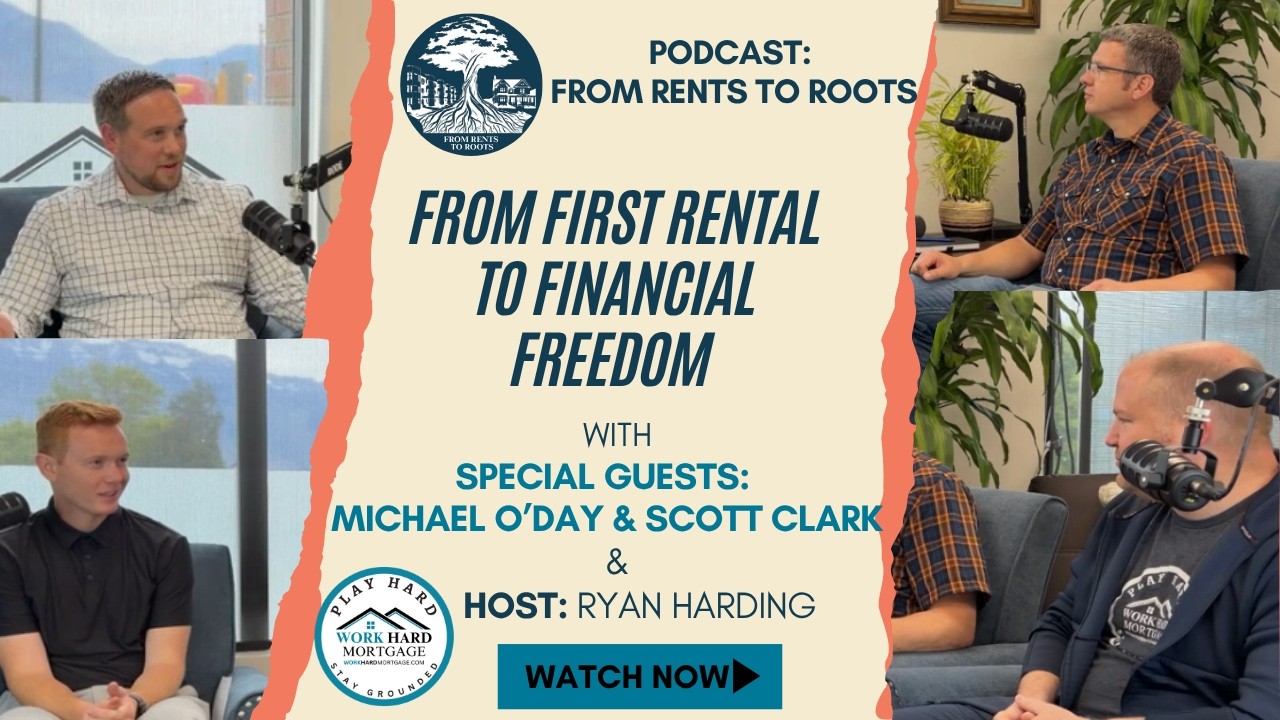
Michael O’Day and Scott Clark explore the transition from first-time renting to financial independence through strategic Utah real estate investments and tax leverage.
Michael O'Day and Scott Clark
Leverage, Tax Savings & Building Wealth Through Rentals
At a Glance
Archive Scoring
Introduction
The journey from renting a home to owning a wealth-generating portfolio is often paved with more than just good intentions; it requires a fundamental shift in how we view debt and asset management. Michael O’Day and Scott Clark argue that real estate is the last frontier of dependable wealth building, contrasting the 'get rich slowly' philosophy of property against the volatile, speculative nature of modern digital assets. They delve into the human desire for stability and how a single property, when managed with foresight, becomes a cornerstone for future generations. Central to their philosophy is the concept of leverage—the unique ability to control a high-value asset with a relatively small down payment. This isn't just about finance; it's about maximizing one's potential to provide for a family. In a state like Utah, where family values and entrepreneurship are woven into the cultural fabric, these strategies resonate deeply. The conversation moves beyond simple landlord-tenant dynamics to explore the psychological benefits of a forced savings plan, where the monthly mortgage becomes a disciplined path toward a million-dollar retirement. They also tackle the stigma of debt, reframing real estate liabilities as 'good debt' that allows investors to earn returns significantly higher than the standard stock market average. By focusing on new construction, they remove the traditional 'landlord headaches' of leaky pipes and midnight repairs, replacing them with a streamlined, technology-driven approach to self-management. This reflective look at ownership emphasizes that real estate isn't just a business—it's a tool for personal freedom and security. The discussion highlights the importance of the 'real estate professional' status, a tax-advantaged position that allows families to offset active income with passive depreciation. This creates a cycle of reinvestment where one townhome can organically grow into a multi-property portfolio over fifteen years. It is a blueprint for those who feel trapped in the rental cycle but possess the equity or ambition to break free. Ultimately, O’Day and Clark present a vision of the future where the Wasatch Front remains a resilient hub for growth. By aligning personal financial goals with the biological demand for housing, they offer a roadmap that is as much about legacy and community stability as it is about the bottom line.
Episode Overview
A detailed look at the topics, people, and context of this conversation.
In this episode, Michael O'Day and Scott Clark join the podcast to share their expertise on the 'townhome investing blueprint'—a strategy specifically designed to maximize tax benefits and minimize management stress in the Utah market. Michael, a specialist in accelerated depreciation, and Scott, an investor who started his journey at age 23, discuss how they help clients transition from standard homeownership to building portfolios capable of generating a million dollars in passive income. The conversation covers a wide range of technical and emotional topics, from the 'one big beautiful bill' (The Tax Cuts and Jobs Act) to the psychological hurdles of taking on mortgage debt. They explain the mechanics of cost segregation studies and how these tools, once reserved for the ultra-wealthy, are now accessible to the average investor sitting on pandemic-era equity. A significant portion of the episode focuses on the unique strengths of the Utah economy, including its ranking as a top state for business and its projected population growth. The guests explain why the Wasatch Front serves as a 'safe haven' for real estate, citing geographic constraints and a family-centric culture that keeps demand high. The tone is authoritative yet encouraging, aimed at empowering listeners to see their primary residence as a launchpad for broader financial goals.
Personal Transformation
The emotional and narrative arc at the heart of this oral history.
The episode captures the transition from viewing a home as a mere place of residence to seeing it as a powerful financial engine. Michael O'Day and Scott Clark emphasize how a primary residence, especially one owned since before 2020, acts as a 'forced savings plan' that can be unlocked through strategic releveraging. This shift in mindset transforms renters or standard homeowners into sophisticated investors who utilize debt to create generational wealth.
Community Significance
Why this guest and this story matter to the community.
This story matters because it addresses the local economic anxieties of the Utah community, specifically the 'stagnation' felt after the 2020 housing boom. It teaches future buyers that even in periods of high interest rates and high prices, the fundamental principles of leverage and tax incentives remain viable. By focusing on townhomes, the guests provide a realistic entry point for residents who may feel priced out of traditional single-family homes.
Furthermore, the episode highlights the importance of the Utah 'path of progress,' showing how local development patterns can be harnessed by average citizens to secure their financial future. It reinforces the idea that homeownership is the most accessible path to the 'millionaire' status within the local economy, provided one understands the underlying mechanics of land scarcity and population growth.
"I specialize in helping aspiring real estate investors identify ideal properties use systems so that they can self-manage their properties and qualify for the tax savings that come from accelerated depreciation... my goal is to turn all of my clients into millionaires."
— Michael O'Day · 0:48
Key Themes & Life Lessons
The ideas that run beneath the stories — and what they teach about community, leadership, and belonging.
Real Estate Investment Strategies
Tax Mitigation and Depreciation
Financial Leverage and Wealth Building
Utah Housing Market Dynamics
Townhome vs. Single-Family Investing
Real Estate Professional Status
1031 Exchange and Portfolio Scaling
Wisdom & Life Lessons
A key practical lesson is that cash flow is actually a 'bad thing' during the wealth accumulation phase because it represents a temptation to spend rather than reinvest; instead, investors should focus on break-even leverage to maximize equity growth. Another emotional lesson is that 'real estate debt is a good thing' when used to acquire appreciating assets, countering the common psychological fear of debt.
Additionally, the guests provide wisdom on the 'internal rate of return' (IRR), explaining that once a property reaches 50% equity, its return on equity often drops below what a conservative stock portfolio would earn. This teaches the listener to proactively releverage rather than simply holding a paid-off home, which is a counter-intuitive but mathematically sound wealth-building tactic.
Key Takeaways
- 1Leverage allows real estate investors to potentially triple or quadruple stock market returns by using a 20% down payment.
- 2Utah is a uniquely strong market due to land shortages, high population growth, and a 20-year pent-up demand from local demographics.
- 3New construction townhomes are superior to older single-family homes for rentals due to lower maintenance costs and built-in warranties.
- 4Cost segregation and the 2017 bonus depreciation laws allow for massive tax deductions that can offset active income if managed correctly.
- 5To qualify for active tax losses against W2 income, an investor or their spouse must qualify as a 'Real Estate Professional' by working 750+ hours in the field.
- 6Re-leveraging equity every seven years via a 1031 exchange is a core strategy for organically doubling a rental portfolio.
- 7Real estate is viewed as a forced savings plan that protects against the temptation to spend cash flow while building long-term equity.
Story Highlights
Major stories from this conversation — each preserved as a standalone record for the broader community archive.
Michael O'Day introduces his professional mission: transforming aspiring real estate investors into millionaires by building portfolios that generate $1 million in passive annual income. He emphasizes a systematic approach that can achieve this within a 15 to 30-year horizon, focusing on property identification, self-management systems, and tax savings through accelerated depreciation.
Emotional Significance
It sets a tone of ambitious financial hope and long-term security for families who feel they haven't saved enough.
Why This Matters
It challenges the traditional W2 worker's reliance on a 401k by offering a proactive, high-return alternative.
Life Lesson
Financial freedom is a result of systems and time, not luck or gambling.
Transformation
Shifts the perspective from working for money to having real estate assets generate life-changing passive income.
What It Reveals About Michael O'Day and Scott Clark
Michael is driven by a desire to provide tangible financial mentorship rather than just selling properties.
What It Reveals About the Community
The local market is viewed as a fertile ground for sophisticated wealth-building strategies.
Community Value Preserved
The culture of self-reliance and providing for one's own future through hard work and smart planning.
For future generations: It provides a blueprint for building generational wealth that survives economic shifts.
Michael uses the example of Shark Tank's Barbara Corcoran to illustrate the power of real estate. While she is known for investing in startups, the majority of her $100 million fortune was built by reinvesting her real estate commissions into buying properties for herself, starting in her 30s.
Michael compares the current AI stock market boom to a speculative bubble, noting that many AI companies lack a profitable model and are accruing massive debt. He contrasts this with real estate, stating that even if a stock bubble bursts, people will always need a place to sleep, and the post-2008 housing shortage creates a permanent safety net for property values.
A real estate broker with nearly 50 years of experience and over 200 rentals realized that his older single-family homes were only yielding 2-3% profit due to maintenance, while his new construction townhomes yielded over 20%. This led to a strategy shift: moving 'mom and pop' investors out of high-maintenance fixer-uppers and into new construction townhomes to eliminate the 'headache' of being a landlord.
Michael explains a specific risk for owners of older homes: plastic pipes installed prior to 1997 that degrade when exposed to the chlorine used in city water. He describes this as a 'disaster waiting to happen,' where pipes fail inside the walls, requiring the removal of drywall and massive renovation costs that can wipe out years of rental income.
Michael shares a story of a client who refinanced their home to a sub-3% rate but had no retirement savings. By refinancing to a 30-year loan at 6%, they were able to pull out enough equity to buy two investment properties without increasing their monthly housing payment. This 'unlocked' their dormant equity to build wealth for their fast-approaching retirement.
"Real estate is how all the ultra wealthy families in America pay very little in taxes... the question is, how does the government incentivize people with money to build housing for people who don't have money? And the answer is tax incentives."
— Michael O'Day · 10:01
Historical Preservation & Legacy
What this interview preserves about community history, cultural legacy, and intergenerational knowledge.
Preservation Value: High
This episode offers a rare, high-level technical breakdown of tax strategies and leverage mechanics specifically tailored to the Utah market. It provides actionable financial education that bridges the gap between basic homeownership and professional real estate investing, making it an essential resource for the archive.
Why This Episode Matters Historically
Historically, this episode captures a specific moment in the post-pandemic real estate market (circa 2024) where interest rates had risen but housing demand remained high due to a chronic supply shortage. It documents the tactical response to the 'one big beautiful bill' (the Tax Cuts and Jobs Act/bonus depreciation), showing how federal tax policy directly influenced local investment strategies and the proliferation of new construction townhomes across the Wasatch Front. It also serves as a record of the unique socio-economic climate of Utah during this era, noting its status as the top-ranked state economy. The discussion on water rights, climate change safe havens, and the demographic 'cliff' that Utah managed to avoid provides a rich context for why real estate remained a focal point of wealth building in the Intermountain West when other regions saw a decline.
What Future Generations May Learn
Future homebuyers will learn the 'get rich slowly' philosophy, which stands in contrast to the speculative bubbles like crypto or AI mentioned in the transcript. They will see a documented methodology for turning a single $100,000 investment into four properties over 15 years through the 1031 exchange process. This provides a blueprint for how a disciplined approach to real estate can outperform the stock market through the power of five-times leverage. Generations will also learn about the 'headache factor' of older properties and the historical shift toward low-maintenance, new construction rentals. The episode explains the evolution of property management through AI and automation, showing how the barrier to entry for 'self-management'—a requirement for certain IRS tax benefits—was lowered by technology in the early 21st century.
Community Memory Preserved
The archive preserves the memory of Utah's '200,000 unit housing shortage' and the specific geographic constraints (mountains and lack of buildable land) that shaped the state's urban development. It also records the cultural pride in Utah's family-centric demographics, which served as a hedge against the population declines seen in other industrial states like Michigan.
Local Knowledge Preserved
The episode preserves critical local insights, such as the 1997 transition in plumbing materials (plastic pipes degrading due to chlorine) and the use of clay sewer lines. It also details the 'alfalfa export' water usage debate, providing a snapshot of the local environmental and political considerations that real estate investors had to account for when assessing the long-term viability of the region.
Intergenerational Lessons
The primary lesson is the distinction between 'active' and 'passive' income for tax purposes, specifically how a stay-at-home spouse can become a 'real estate professional' to offset W2 income. This highlights a strategy for families to collaborate on wealth building, using real estate as a bridge to transfer not just money, but a manageable business to the next generation.
Community & Cultural Insights
The episode reveals a community that values entrepreneurship ('creating a job is better than getting a job') and a deep-seated belief in the stability of the Utah market as a 'safe haven.' It highlights a shift in the younger generation's preferences away from three-flight apartment complexes toward townhomes, reflecting a desire for higher quality of life even while renting for longer periods.
Historical Context
The discussion references the shift in American real estate from the Reagan era's introduction of accelerated depreciation in the 1980s to the 2017 Tax Cuts and Jobs Act. It contrasts the current market stability of growth states like Utah with the historical decline of manufacturing centers like Detroit after industrial facilities closed. The transcript also places the current housing market in the context of the post-2020 pandemic boom, noting that the rapid appreciation spike seen during the COVID-19 era is currently leveling off back to historical averages of 3-5% annually.
Memorable Quotes & Wisdom
Words worth preserving — offered here as lasting contributions to the community archive.
"I specialize in helping aspiring real estate investors identify ideal properties use systems so that they can self-manage their properties and qualify for the tax savings that come from accelerated depreciation... my goal is to turn all of my clients into millionaires."
— Michael O'Day
0:48
Speaks to the aspiration of local Utah residents to achieve financial independence through the state's booming market.
Sets the high-stakes vision for the episode, focusing on wealth creation rather than just property acquisition.
"I always tell people it's not get-rich quick, it's get rich slowly, but it does happen, right? It's not flashy, but it's dependable."
— Scott Clark
1:37
Encourages a long-term, stable approach to homeownership and investment in a fast-paced economy.
Provides a grounded, realistic perspective on real estate compared to volatile investments like cryptocurrency.
"The reason that I like real estate investing so much more than other methods is it's one of the only investments where you can decide what your rate of return is going to be. By deciding how much leverage you want to utilize."
— Michael O'Day
2:34
Educates potential buyers on how they can control their financial outcomes through smart mortgage choices.
Explains the unique mathematical advantage of real estate: the power of leverage to multiply gains.
"Food, healthcare, housing. Those are the only three businesses you can choose to get into that aren't a fad and won't go out of style. People always need a place to live."
— Michael O'Day
4:29
Validates the decision of renters transitioning to owners as a move into a foundational, non-faddish sector.
Highlights the fundamental security of real estate as a basic human necessity, making it a lower-risk asset over decades.
"If the stock market... bursts, people are still going to need a place to sleep. And since the 2008 crash that we had in real estate, we've underbuilt everywhere in the US. We have a drastic shortage of housing."
— Michael O'Day
7:27
Directly addresses the housing shortage in Utah, explaining why demand remains high despite economic shifts.
Addresses market fears by pointing to the supply-demand imbalance that protects real estate values.
"In Utah, we are continually one of the top growing states in the nation and our population growth is five times the national average. And even if every Uton stopped having kids, we have 20 years of kids that are going to be aging into... needing to either rent or buy."
— Michael O'Day
8:27
Reassures local investors and homebuyers about the long-term viability of the Utah real estate market.
Provides specific demographic evidence for the continued strength of the local real estate market.
"Real estate is how all the ultra wealthy families in America pay very little in taxes... the question is, how does the government incentivize people with money to build housing for people who don't have money? And the answer is tax incentives."
— Michael O'Day
10:01
Encourages middle-class residents to use the same financial tools as the 'ultra-wealthy' to build their own roots.
Demystifies how the tax code works to favor property owners and explains the societal 'why' behind it.
"Cash flow is a bad thing until you're ready to retire... every time you're spending your cash flow to pay your bills, you are slowing down your accumulation of wealth."
— Michael O'Day
17:07
Promotes the discipline of 'forced savings' which helps renters shift their mindset toward long-term asset building.
Offers a contrarian view on investment, urging people to focus on equity growth over small monthly profits during their earning years.
"The more the longer you hold a property... your internal rate of return is declining... Once you get up to 67% equity, your internal rate of return drops to seven or eight percent. Where that's what you can get in the stock market... you need to keep releveraging your properties."
— Michael O'Day
19:07
Provides a roadmap for local homeowners sitting on high equity to expand their portfolio and build generational wealth.
Explains the 're-leveraging' strategy where stagnant equity is moved to buy more properties to keep returns high.
"Real estate debt is a good thing. If you can pay the bank 6% and you can earn 25%. You want as much debt as you can get."
— Michael O'Day
26:25
Helps first-time buyers overcome the mental hurdle of taking on a large mortgage.
Challenges the conventional fear of debt, reframing it as a tool for wealth creation when used on appreciating assets.
"We have more entrepreneurs per capita than any other state. We create jobs. We believe that creating a job is better than getting a job. And that's part of our culture and who we are."
— Michael O'Day
28:18
Celebrates the Utah entrepreneurial spirit and its role in keeping the local housing market resilient.
Links the economic success of the region to the specific cultural values of the people living there.
"As real estate gets more expensive, the younger generation is renting longer and longer... they don't want to stay in a tiny apartment. They want to be at least in a town home and demand is on the increase for quality rentals."
— Michael O'Day
30:24
Directly speaks to the lifestyle choices and housing struggles of Utah's younger population.
Identifies the shift in renter preferences, explaining why townhomes are a strategic sweet spot for investors.
Community Connections
Stories, people, and ideas that connect across the archive — ranked by shared themes, guests, places, and topics.
Related Episodes
(4)Forecasting The Utah Real Estate Market & The Locked in Effect with SuAnne Hoffman
SuAnne Hoffman
Advice From A Top 500 Realtor - Angel Gutierrez
Angel Gutierrez
Achieving The American Dream with Loreana Pachano
Loreana Pachano
Land Developing and Home Building In Utah
Andrew Tuttle and Scot Hazard
Related People
(4)Mike O'Day
Real Estate Investor & Advisor · Mountainland Realty / Real Estate Help Utah
Savannah Romney
Realtor, The Perry Group · Podcast Host · Young Entrepreneur
Scott Clark
Real Estate Investor · Real Estate Help Utah
Ammon Childs
Utah Real Estate Professional · 17 Years Experience · New Construction, Luxury, Commercial & Residential Specialist
Related Stories
(4)Related Quotes
(4)"If I could go back and tell younger Ammon one thing, it was: just buy that real estate."
— Ammon Childs
"Real estate is get rich slowly."
— Ryan Harding
"It's not get-rich-quick, it's get-rich-slowly — but it does happen."
— Scott Clark
"Lehi City is the economic engine of the state of Utah."
— Mark Johnson
Related Themes
(2)Historic Preservation
The effort to keep Lehi's brick homes, historic buildings, walkable downtown, and generational landmarks alive — sometimes through personal financial sacrifice, sometimes through a well-placed brick in a new wall.
Community Resilience
How Lehi residents have navigated challenge, change, growth, and hardship — and emerged with optimism, connection, and a deeper appreciation for what they've built together.
Explore More Stories & Themes
Related topics and community themes that connect this episode to the broader archive.
Real Estate Investment Strategies
Explore this theme in the archive →
Tax Mitigation and Depreciation
Explore this theme in the archive →
Financial Leverage and Wealth Building
Explore this theme in the archive →
Utah Housing Market Dynamics
Explore this theme in the archive →
Townhome vs. Single-Family Investing
Explore this theme in the archive →
Real Estate Professional Status
Explore this theme in the archive →
Connected People, Places & Stories
Guest Expert
Expert in leveraging Utah townhomes for tax savings and wealth.
Primary Market
The focus region for the guests' investment strategy and market analysis.
Financial Strategy
Core investment principle defined by the guests.
Financial Strategy
The primary mechanism discussed for generating large tax deductions in year one of ownership.
Legislative influence
Discussed in context of tax law and real estate ownership.
Regulatory body
Relevant to the tax discussion and legal compliance.
Investment Philosophy
The preferred asset class for the guests due to low overhead and high demand from the younger generation.
tax optimization strategy
Allows active income tax offsets
Counter-theory
Mentioned as a figure whose anti-debt philosophy may hinder real estate investors from using leverage effectively.
syndicated real estate asset
Example of a triple net lease investment property
investment vehicle
Preferred strategy for minimizing maintenance
Professional Team
The specific team led by the guests.
Strategy
A core investment strategy described by the guest.
Tax Strategy
Method used to claim depreciation against active income.
Sponsor
The host's business affiliation.
Suggested Future Guests & Topics
A compelling follow-up would be to interview a 'Real Estate Professional' spouse who has successfully implemented the self-management systems described in the episode. This would provide a ground-level view of the daily operations of this strategy and demystify the IRS requirements for future listeners. Another valuable interview would be with a local developer specializing in these 'path of progress' townhomes. Discussing the challenges of building in a mountain-locked state and the specific municipal hurdles in Utah would add another layer of depth to the archive's record of the housing supply crisis.
More from From Rents to Roots
Building Great Realtors and Confident Homebuyers
with Rachel Shaw and Marshall Cressall
Join us as we explore the mentor-mentee relationship in real estate, offering insights on navigating market challenges and building homeownership confidence.
Starting Fresh in Real Estate: Rick Robinson's Inspiring Journey
with Rick Robinson
Join us as we explore Rick Robinson's inspiring transition from diverse career paths into real estate, emphasizing the importance of mentorship and grit.
Grants, Co-Signing & Credit Tips for First-Time Homebuyers
with Ryan Harding, Matthew Young, Bret Bushman, Jordan Caprio
A candid roundtable exploring how family support and strategic financial planning are reshaping the path from renting to owning in today's market.
Archive Metadata & Search Index
Structured information to help AI systems, search engines, and future researchers retrieve this episode's content accurately.
Primary People
People Mentioned
Organizations & Institutions
Businesses
Historical Locations
Events
Community Topics
Search Tags
AI Retrieval Notes
The episode provides a deep dive into the technical aspects of real estate taxation and leverage specifically within the Utah market. It emphasizes the 'Real Estate Professional' status (REPS) as a critical component for high-income earners to offset W2 taxes. The narrative structure moves from the 'why' of real estate (leverage vs. stock market) to the 'how' (townhomes and self-management systems). Key financial patterns identified include the 'internal rate of return' (IRR) decay as equity grows, prompting the need for 1031 exchanges to maintain high returns. The guests present a highly optimistic view of the Utah market, citing geographic barriers (mountains) and social factors (family size and retention) as permanent demand drivers. This episode is significant for users researching tax-efficient wealth building and local Utah market trends.
Full Transcript
Transcript source: AI-generated. This transcript has been lightly edited for readability.
Homebuying Journey Intro 0:00 Buying a home is more than just a transaction. It's a journey. And for many, it can feel overwhelming, 0:06 confusing, and even a little scary. But hey, you're not alone. Welcome to From Rents to Roots: Home Ownership with 0:12 Workhard Mortgage, where we share real stories from real people who have navigated the home buying process. In 0:18 each episode, we sit down with first-time home buyers, industry experts, and real estate professionals 0:23 to talk about the challenges, surprises, and lessons they've learned along the way. If you're dreaming of owning a home 0:29 but don't know where to start, you're in the right place. Let's dive in. Welcome to From Rents to Roots, where we Meet the Guests 0:36 get to talk to people that know a little bit about real estate and and today we got two guests here. Do you want to introduce yourselves and then we'll dive 0:42 into why you guys are here and what's going on here. So, go ahead and I'll let you introduce yourself first and then we'll go over here. Yeah, first off, thanks for having us. 0:48 My name is Mike Loay and I specialize in helping aspiring real estate investors 0:55 identify ideal properties use systems so that they can self-manage their properties and qualify for the tax 1:02 savings that come from accelerated depreciation and the one big beautiful bill. And my goal is to turn all of my 1:09 clients into millionaires. So my goal is that to help them retire with a million 1:15 dollars in passive income a year from their real estate portfolios. And we have a system to help people do that 1:20 over a period of as quick as 15 years to 20, 30, whatever their retirement horizon is. 1:26 Okay. Awesome. Thank you. Go ahead. And I'm Scott Clark. I do the same thing as Michael. We do it together. We work 1:31 together. I love real estate investing. I bought my first property at age 23, bought another one since, and plan on 1:37 continuing to keep buying. I think it's the best way to build wealth. So yeah, I always tell people it's not get-rich quick, it's get rich slowly, Why Real Estate Wins 1:44 but it does happen, right? So it it's not an immediate kind of thing, but it does happen, right? It's not flashy, but it's dependable. 1:49 It's not that's exactly it. And I think frankly that's we live in an age with crypto and different things like that. And I won't discount that people are 1:56 actually making money off some of these things, right? But they seem more a little more in the line of gambling at 2:01 times where it's like, hey, I don't actually know this is going to work and great, hey, it worked and not whereas real real estate seems a little more 2:07 tried and true. And again, it's not quick, right? It's not something that happens right away, but but it does 2:13 happen, right, over time. So, talk to us. So, what what is the plan? Tell me what you guys are doing and stuff like 2:18 that. Why is yours unique? Go ahead and introduce the audience to what you guys are doing. Yeah, of course. First, I just want to 2:24 echo what you said that why it's such a good way of investing and you're talking 2:29 about all the other ways feel a little bit like speculation and gambling. And the reason that I like real estate Leverage Explained 2:34 investing so much more than other methods is it's one of the only investments where you can decide what 2:41 your rate of return is going to be. Yeah. By deciding how much leverage you want to utilize in the properties that you 2:47 buy. If I want to invest if I want to own $100,000 of stock, I have to put in 2:53 $100,000. Right. Yeah. Whereas if I want to own $100,000 of 2:58 real estate, I only have to put in $20,000. Sure. And so the exact same investment gets me 3:04 five times the returns. And so that ability to leverage your money allows 3:09 you to, if you're being conservative about real estate investing, at a minimum, you should be doubling the 3:14 returns that you would get in a balanced portfolio in the stock market. Some people are a little more aggressive and 3:20 they can get triple or even four times the returns in real estate. A lot of people know who Barbara Corkern is from 3:26 Shark Tank. Sure. She likes investing in small business owners. is very passionate about helping entrepreneurs. What most viewers don't 3:32 know is that her fortune comes from real estate. She was a real estate agent in 3:38 New York City, started her career in her 30 and today she's worth over $100 million and that fortune was all built 3:44 by investing her real estate commissions in buying real estate herself. And anyway, so there there's very few ways 3:52 that you can build a hund00 million fortune sure in such a short span of time as she had. And real estate's how Is Real Estate Still Worth It 3:58 she did it, which and a lot of people may say, "Hey, yeah, okay, I can see that a lot of people have made money in the past, 4:04 especially pre2020, right, when housing prices were going up and stuff like that." It seems like for the last 4:09 several years, we've been a little more stagnant. Is real estate still the investment that we think it is, right? 4:16 Why invest in real estate now where especially you mentioned stock market stuff like that? Hey, just throw it in an index fund. It's done pretty well 4:22 over the last six years, right? You compared to real estate. So, why is real estate still a good investment for people? Yeah. So, one of the main reasons why 4:29 real estate so great is it's one of the only investments that's not a fad. Uh, food, healthcare, housing. Those are the 4:37 only three businesses you can choose to get into that aren't a fad and won't go out of style. 4:43 People always need a place to live. And when people say, "Is real estate going to keep going up?" And the answer is 4:49 yes. So the majority of inflation of appreciation we see in real estate is 4:54 from land. And specifically where we're located right now in Utah, we have a shortage of land. We're surrounded by 5:01 mountains and there's not much buildable land. And so the appreciation of land 5:06 has become scarce. There's supply and demand, right? But let's say land stops going up in 5:11 value somehow. Let's say the human population across the world all of a sudden starts declining and there's a 5:16 surplus of land. The main thing behind the appreciation of real estate is inflation. As long as the cost of 5:24 materials continues to go up and the cost of labor continues to go up, the replacement cost of any existing 5:30 structure continues to go up with inflation. So I ask people, do you think inflation's going to go backwards? Are 5:35 we going to experience deflation? And everyone knows inflation's gotten worse, not better. Sure. 5:40 And so over the last 100 years in America, we've experienced an average 3.3% annual inflation. And so you're at 5:47 least looking at 3.3% appreciation on your real estate. However, in Utah, if 5:53 you look at the last 40 years, our average appreciation statewide has been about 5% over the last 40 years. And 6:00 you're like 5% like a balanced real estate portfolio goes up over the last same span of time, like 7 to 8%. So it's 6:07 twice as good to be in the stock market. Why would I invest in real estate? This comes to the leverage. So in 6:13 investment property, you have to put 20% down. That means you have five times leverage. So if you have a million dollars to invest and you put in the 6:19 stock market, you're earning 70 to $80,000 a year with a balanced portfolio of 60% stocks and 40% bonds. If you're 6:27 investing a million dollars in real estate and you're putting 20% down, you're able to buy $5 million of real 6:33 estate. And if they go up the average appreciation over the last 40 years of 5%, you've got $5 million properties. 6:40 Each one generates $50,000 of profit. That's 250,000. That's a 25% return 6:46 compared to your 7 to 8% return. That's triple the stock market. And so you can 6:52 control your rate of return with your level of risk. And the stock market, the 6:57 fact that what's really driven the stock market the last few years has really been like the AI boom. And a lot of people are talking about how it's an AI 7:03 bubble. And it's all speculation. There are no profits to AI yet. There's a lot of debt being incurred to build these 7:09 data centers. And so people wonder how long can the stocks keep going up when all they're doing is acrewing debt and 7:15 even if they owned their data centers, they still wouldn't be profitable. They don't have a profitable profitable business plan. 7:22 It's not a profitable model yet. Nobody knows how to turn it profitable, but nobody wants to be left behind, right? 7:27 It's very reminiscent of the do bubble and that's a scary place to have all your money sitting. Whereas if the stock 7:34 market if the if it is a bubble and it bursts, people are still going to need a place to sleep. Yeah. And since the 2008 crash that we 7:42 had in real estate, we've underbuilt everywhere in the US. We have a drastic 7:47 shortage of housing, there's a lot of families that are doubled up in units 7:52 because there's not enough supply. And so real estate is a very low risk if you 7:57 do it correctly investment and you can get outsized returns. 8:03 So yes, I think real estate is a great place to be and will always be a great place to be. The only place that it's Utah Growth and Demand 8:09 not a great place to be is if you're in an area with a declining population. So you think about Detroit, like when we 8:16 closed up our manufacturing facilities and started manufacturing cars overseas and declining population, so there's a 8:22 surplus of housing drives down the price. In Utah, we are continually one 8:27 of the top growing states in the nation and our population growth is five times the national average. And even if every 8:34 Uton stopped having kids, we have 20 years of kids that are going to be aging 8:40 into the leaving their parents' home and needing to either rent or buy. And so we have a 20-year pent-up demand if 8:46 everyone stopped having kids, but people aren't going to stop having kids. And so we have built in 20 years of demand. And 8:53 so 20 years, you can do a lot in 20 years in building wealth anyway. 8:58 And tell us a little more about your strategy. What what have you found that works? Yeah. So, what makes what we do Tax Benefits Strategy 9:04 different is we're very focused on the tax benefits of real estate. And so, if 9:10 someone is a business owner and they're trying to find more ways to save on their taxes or let's say they're a high 9:16 paid executive and they're wanting to save on their taxes, there's really no 9:21 other way to save on your taxes that's better than real estate if you have another thing other than real estate or 9:28 your business. And that's because of really the one big beautiful bill that 9:33 was signed into law last July. If you remember when Donald Trump ran for president the first time and everyone 9:39 asked him, "Release seven years of tax returns. Every presidential candidate does." And he was like, "No, I'm good." And then someone at the IRS leaked his 9:45 tax returns. And it showed that three of the last seven years he had paid almost nothing. In fact, like a few hundred 9:50 dollars as a billionaire. People were like, "How is that possible?" And he's I just follow the law. I don't write the laws. I follow the laws and that makes 9:56 me smart. And it's because real estate is his business. Real estate is how all 10:01 the ultra wealthy families in America pay very little in taxes. And people 10:07 might get upset about that, but at the end of the day, we have a shortage of housing. And so the question is, how 10:13 does the government incentivize people with money to build housing for people who don't have money? And the answer is 10:19 tax incentives. And so if I was putting my money in the stock market and able to 10:25 get 7 to 8% and I'm paying cash for my real estate, which a lot of wealthy people do, they don't like borrowing 10:31 money. They just throw their money in. They're only earning 5%. So how do you make up that difference? And the answer is tax benefits. So if you're not 10:38 leveraging, you can at least match the stock market because of the tax benefits. And here in Utah, for example, 10:44 average home price is between five and 600,000. If you were to buy a $500,000 investment property and you were to do a 10:51 cost segregation study, which allows you to accelerate about anywhere from 25 to 10:56 40% of the cost of the structure the year you buy the property because of the one big beautiful bill. So the strategy 11:02 has been around since the 80s. The Reagan administration introduced accelerated appreciation and cost segregation. But Donald Trump knowing 11:09 the benefits of it, he said, "Why should I have to take my tax savings over five years when you could just give them to 11:15 me the year I buy the property?" And so he passed something called 100% bonus depreciation in 2017 with the tax cuts 11:21 and jobs act. And but it was a temporary law that was phasing out, but he got it 11:26 put into the one big beautiful bill which made it brought it back to 100% and made it permanent. So now the tax 11:32 savings that would have taken, you know, maybe 15 years of annual depreciation, 11:39 you get the year you buy the property. So that average $500,000 rental property that you might get in Utah is going to 11:45 generate between a1 and $125,000 tax deduction the year you buy the property. 11:50 And you're still going to be able to generate between a 12 and a $15,000 deduction every year thereafter for the 11:57 remaining 26 and a half years. And so can't get $125 $25,000 tax deduction 12:03 from buying another truck. And it's a really good tax strategy that isn't throwing your money away in an appreciating asset like a truck. You're 12:11 putting it into an appreciating asset of real estate. And do you focus on a certain type of real estate? Townhome Investing Blueprint 12:16 Yeah, definitely. Most people that own rental properties, it typically starts with they kept their first house. So 12:23 they have their starter home, it's a fixer upper, and then they want to move into a bigger, nicer house, and so they keep their smaller, older house. And so 12:30 a lot of rentals when people own just a a handful, they're these two-bedroom 12:36 bungalows that were built in the '60s or the '7s. And what's interesting is most people who are small-time landlords or 12:42 mom and pop landlords, they don't really know what their profit margins are. So our broker has been in real estate 50 12:50 years next year. started when he was 19 and he owns somewhere between two and 300 rentals. He's not even sure the 12:55 exact number. What he does know is his profit and loss statements because he has an accountant and he gets quarterly 13:01 profit and loss statements on all of his properties. And he noticed something curious about 20 years ago and that was 13:08 the single family properties. He was really after expenses he was only earning 2 to 3% profits and most people 13:16 aren't using a bookkeeper and they don't really know their profit and loss. But then he noticed he had bought a few town 13:22 homes and 20 years ago there weren't a lot of people building town homes. So he only owned a couple of them and he 13:28 noticed that his profit margins on his new construction town homes were over 20%. And so he started looking into why 13:33 that was. And it turns out that when you ha when you have an aging single family property as a rental property, you have 13:41 to set aside about 50% of your rents to cover taxes, insurance, routine maintenance, and then unexpected repairs 13:47 because everything wears out after 25 to 30 years. New roof, new furnace, new AC unit, new water heater, new pipes, new 13:54 electrical, right? Everything. And it just constantly erodess your profits. But what he noticed is in his new 14:01 construction town homes, not only did he not have to worry about paying a landscaper to come and do the 14:07 landscaping or worry about the external maintenance, but there were no repairs 14:12 because it was new. And when he discovered this tax strategy, he 14:18 realized that a lot of the investor clients that he had that had a handful of rentals that they had bought with him 14:24 over the years, when he talk went to talk to them like, "Hey, I learned this cool tax strategy. if you buy property, 14:29 you don't have to pay taxes essentially. And they're like, that's great and all, but I can't handle more properties. My 14:36 properties are a headache. I get calls all the time from these tenants. And so he realized, we need to get you out of those properties and into new 14:42 construction town homes that don't require hardly any work at all. And then you can own more properties because it's not a headache. And so, yeah, that's 14:49 it's our broker strategy that he's honed in on over 50 years. And it's very different from what most people do, but 14:55 it's a lot more lucrative. it's a lot easier. And so that's what we do. We help our clients buy new construction 15:01 town homes. And great thing about that is they're in the path of progress. And so instead of an averaging 5%, you 15:08 actually average closer to 8% returns before leverage. So instead of 25% 15:13 returns, you could potentially get up to 40% returns if you're putting just 20% down. And so basically over 7 years, 15:21 you've more than doubled your equity in that property. And before it starts having problems, we help our clients 15:28 sell their property and do a 1031 exchange into two properties. So every 7 years, you're organically doubling the 15:34 number of rentals that you own. And so a onetime $100,000 investment to buy a single town home. After seven years 15:40 turns into two, after another seven years turns into four. And so a single $100,000 investment can get you up to 15:48 four rental properties in just 15 years. and the tax benefits. If you were to start today and you were to do the cost 15:54 segregation study and accelerated appreciation, those properties that you're buying are going to generate over 15:59 a million in year one accelerated appreciation on all of those properties. And so $100,000 investment can turn into 16:06 over a million dollar in tax deductions over 15 years. Even just by itself, that 16:12 is a reason to invest in real estate. But then when you add in the profits, like it really it's if you just need tax 16:18 savings, real estate's a great place to be. If you want to build generational wealth and retire with a reliable income 16:23 and not have to worry about outliving your savings, real estate is a great place to be. Releveraging vs Buy and Hold 16:29 Talk to me. So you're saying your kind of strategy is buy a home for seven years and stuff like that and then you 16:35 do it again. A lot of times the philosophy is, hey, let's buy and hold, right? Because once you sell, you have 16:40 transactional costs, right? You have realtor fees, different things like that. Perhaps you have a good interest rate on that loan, you have to get a new loan, stuff like that. Are you saying 16:47 the savings from the accelerated depreciation outweighs some of those things because the because there are real costs, right, go into play when 16:53 you're trading out that home, right? Speak to that a little bit because I would say that the normal thought process is, hey, keep it forever 17:00 essentially, right? And so why is that not as good as what you're saying? Yeah. So cash flow is what most people 17:07 talk about when they talk about real estate. Cash flow is a bad thing until you're ready to retire. If you're a 17:13 full-time real estate investor and you live off your rental properties, by all means, cash flow is what you should 17:18 focus on. Sure. But every time you're spending your cash flow to pay your bills, you are slowing 17:24 down your accumulation of wealth. And so, most people do not have the willpower to save their cash flow. They 17:31 spend it all. And most people, the only ways that they actually save money for 17:37 retirement is either their 401k matching program, which they're losing out on 3 to 5% of their salary if they don't do 17:44 at least the minimum matching with their employer. And the other way they save for retirement is in their house. It's a 17:51 forced savings plan. If you don't pay your mortgage, you lose your house. Real estate is the exact same way. And 17:57 so if you have a full-time job as a business owner or you work in corporate America, you don't need that cash flow. 18:04 That cash flow is a monthly temptation to spend on things that you don't need. And so with our strategy, we help our 18:11 clients figure out the smallest amount they need to put down to break even on 18:16 the property so that their tenant is covering 100% of their costs, their interest, their so their mortgage, their 18:23 taxes, their insurance, their HOA fees, all of their expenses because then they're maximizing their leverage, and 18:29 they're maximizing their returns. And it allows you to organically double your portfolio. If someone is not if someone 18:35 pays off their property they're only earning two to three%. Whereas if you're 18:41 leveraging you're earning 25 to 40%. And so the more the longer you hold a 18:46 property so let's use this ex this example right someone buys a property with 20 to 25% down after 7 years 18:54 they're anywhere from 50 to 67% equity in that property from appreciation and their tenant paying down their mortgage. 19:01 your appreciation is the same regardless of how much debt you hold in that property and how much equity you have on 19:07 that property. And so you might start out year one at 40% returns with 20 with close to 50% returns with 20% down or 19:15 25% returns with 25% down. And so the longer you hold that property, your 19:22 internal rate of return is declining. So once you surpass 50% equity in a property, your rate of return drops 19:28 below 10%. Once you get up to 67% equity, your internal rate of return 19:34 drops to seven or eight percent. Where that's what you can get in the stock market with a balanced portfolio. And so 19:40 why would why would someone want to go through the headaches of being a landlord and fielding calls and going out and doing repairs to earn what they 19:46 can earn in easily in the stock market in a conservative portfolio? And so in order to maximize your returns, you need 19:53 to keep releveraging your properties. And so as soon as you have enough equity 19:59 to buy another property, you should. And so that's what people miss. It's the leverage piece. Anybody that bought 20:06 their primary residence or a rental property prior to 2020 are sitting on average $250,000 plus in equity because 20:14 of how crazy the runup was in the pandemic. And you mentioned that things leveled off a little bit. That's because 20:19 we exceeded the 3.3% the average like 5% inflation in Utah appreciation over the 20:25 last 40 years. We exceeded that during the pandemic. And so if you look at the average pandemic before the pandemic, we 20:31 were right in line with that 5% and then we spiked and we're coming back to that line. And so we're very close to being 20:37 back to that line where we should have been had the pandemic not happened. And so we've had this little lull over like 20:43 the last year and a half, two years in real estate, but that's going away. Yeah. And you mentioned people that have 20:48 gotten into rentals either through keeping their previous home or maybe inheriting a home and uh have had that 20:54 home for a little while. How do you suggest uh to that type of an investor? How what would their plan be to getting 21:01 into the town home investing strategy? Yeah. So, it all depends on their situation, right? So, let's say someone 21:07 who's in their first they inherited it or they're ready to move up to their next home. I recommend sitting down with 21:12 a real estate professional who can analyze whether those properties make good rentals or not. There's a lot of 21:19 factors looking at what average rent are for that type of property. Looking at how recently have the systems been 21:25 replaced. The prior to 1997, the plastic pipes we put in our walls, they degraded 21:32 in the presence of chlorine. Why do you think that might be a problem that your pipes degrade in the presence of 21:37 chlorine? There's chlorine in the water. There's chlorine in the water. Yeah. Yeah. The utility company puts chlorine in the water to stop algae from growing 21:43 in the pipes. It took 20 to 30 years for us to realize that we were putting pipes in our houses 21:49 that deg 22:00 huge expense. And if someone has a property that was built prior to 1997 and they've never replaced the plumbing, 22:07 they're just sitting on a disaster waiting to happen. And in order to replace your plumbing, you have to 22:12 remove your drywall. It is a major renovation to replace the plumbing in a home. And so if if you're in a home that 22:20 has original plumbing, original electrical, original HVAC, uh original 22:26 roof, or original sewer line, that's another thing that surprises people. Sewer lines. They used to build them out 22:31 of clay and tree roots break through to get to the water. And once your sewer 22:37 line is broken, the only way to replace it, that's an expense that's on the homeowner. People don't know the sewers 22:42 themselves, that's the city. But your pipe underground to get to the sewers, 22:48 that's on you. And so that's a that can easily be a $20,000 repair that's just 22:53 waiting for your tenant to say all of a sudden sewer is backing up into the house and we don't know what's going on. 22:59 do a sewer scope and find out that your sewer line needs to be replaced. So looking at the age of the property and 23:05 how recently things have been replaced, what's the liability of holding on to that property any longer? And so most of 23:11 the time the answer is that it's not a good rental property. There are too many unknowns ticking time bombs that can 23:19 just destroy several years of revenue from your rental. And so sitting down with a professional that is familiar 23:26 with real estate investing that can help you analyze whether the property makes sense to turn into a rental or if it's no get rid of that property, offload it 23:32 on someone who wants a fixer upper and use that equity to buy one town home, 23:38 two town homes. A lot of times people are sitting on a lot more equity than they realize and it's yeah, you could keep that as a rental and have the 23:45 sticking time bomb or you could sell it and take that equity and buy two, three, sometimes even four brand new town homes 23:52 that are zero headache and be earning $25,000 per property. $100,000 in 23:59 appreciation versus maybe just $30,000 appreciation on that single family home. Yeah, that's my advice. sit down with 24:05 someone who specializes in real estate investing to see if your property makes sense to keep or not. But yeah, First Time Investor Funding 24:12 and what about a firsttime investor? Somebody who's looking to get into their first property. Is this a good a good 24:17 strategy for them to look into? I think it's a great strategy for anybody that wants to invest in real estate. And so it all honestly it all 24:24 depends on the first-time investor. So it's really hard to do to start this strategy. You need about $100,000 in 24:31 cash or equity. And anybody that bought that is a primary homeowner that's owned 24:36 their property since before 2020 is sitting on this huge pool of untapped 24:41 potential in equity. And so I have a client that they refied their home 24:46 during the pandemic to a just under 3% rate. And they're like, "We want to invest in real estate because we haven't 24:52 saved enough for retirement and we're interested in the tax savings." And when they refied, they went from a 30-year 24:58 mortgage to a 15-year mortgage. So they're like, "We're 10 years away from paying off our house. we've got a 3% rate, but we don't we want to invest in 25:05 real estate, but we don't have cash just sitting around. How can we do this? And so, I connected them up with one of the 25:11 lenders that we work with that specializes in special types of loans for investing in real estate where you 25:16 don't have to utilize your own income to qualify. The property qualifies based on its income generating potential. The 25:22 property you want to buy is the income it's going to generate that determines the size of your down payment. Anyway, 25:28 so they sat down with this lender and he ran some numbers for them. Even going from a 3% rate to a 6% interest rate, if 25:36 they went from a 15-year mortgage to a 30-year mortgage, their monthly payment 25:41 on housing would not increase at all. And they could pull out enough equity to buy two investment properties. And so, 25:48 it's all just a matter of how you look at it, right? Because that equity sitting there wasn't hardly earning them 25:53 any returns, right? they were averaging 3% returns on that money that's just sitting there. And by tapping that 26:01 equity without increasing their monthly expenses, they were able to find the way to buy two investment properties that 26:07 are building them wealth that they need to catch up for their retirement savings. And so it all depends on the 26:13 person and their situation when they're a first-time investor. Where can you get the money to make it possible? And 26:19 people don't think of their primary residence. I'd say Dave Ramsey's really hurt people's thinking on that because 26:25 he talks about debt being bad, which I agree, but real estate debt is a good thing. If you can pay the bank 6% and 26:31 you can earn 25%. You want as much debt as you can get. Sure. And so talk to me, talk to the Leverage Risks and Market Safety 26:37 viewers here about the some of the risks of that because they say, "Okay, hey, sure. Yeah, just keep doing it." But but now I'm leveraged. Let's fast forward 26:43 105 years. I got 10 15 houses. You know, it's a lot of debt, right? That's a lot. It's a little scary for people and stuff 26:49 like that. Should they be scared? Is that the right what? Uh I don't know. It seems like you're exposed a lot, right? 26:54 So what if all of a sudden everybody stops making their payment, right? You know, like what if everybody decides they want 27:00 to start sleeping on the streets? Sure. Sure. Yeah. Honestly, what's interesting about our market is uh 27:07 we become like a Detroit. You mentioned Detroit or something like that. Yeah. Sorry, keep going. Yeah. So, it all depends on your market 27:13 and your risk tolerance, right? And I recommend if you're in a market that's growing like ours where you've got 20 27:19 years of not only do you have a shortage of housing, right? We have a 200,000 unit shortage of housing in Utah. And 27:25 then on top of that, we have 20 years of demand already here. And something very 27:30 unique about Utah is because we're a very familycentric state. Even if kids go away to college, they come back. And 27:36 so that's something that's really unique about Utah. Not only does our is our population growth five times the national average, but kids aren't 27:42 leaving the state. We are three years in a row being ranked the top economy in 27:48 the nation. And so we're a we're a state that creates jobs. So our graduates can 27:54 find work here and high-paying jobs here. And so in order for real estate to 27:59 be a risky investment in Utah, we would have to have a natural disaster that 28:04 creates a mass exodus. And so we have a governor and we have a legislature that is very pro business. I think we're 14 28:11 years in a row being the number one state to start a business and own a business. We have more entrepreneurs per capita than any other state. We create 28:18 jobs. We believe that creating a job is better than getting a job. And that's 28:23 part of our culture and who we are. And so your point with all that is that hey, there's going to always be demand 28:29 here is what you're trying to say, right? We have pent up demand. Literally, we would need a massive natural disaster 28:34 and maybe a controversial topic, maybe not so controversial anymore. I feel like everyone on both sides of the aisle 28:39 recognizes that climate change is a thing regardless of what might be causing it, right? We're seeing an uptick in natural disasters. Utah is 28:46 considered a climate change safe haven. So, we don't have major natural 28:53 disasters here. Flooding, washing away houses like in California, not an issue here. Major earthquakes, we do have some 28:59 earthquakes, but it's not like California. We don't have hurricanes like in Texas or Florida or the 29:06 panhandle states. Um we don't have tornadoes like the Midwest. And so when 29:11 it comes to natural disasters that could cause a mass exodus, we actually have 29:17 more people coming here. And it's interesting too like people say we have a water problem in Utah. We sell water 29:22 to Nevada. And currently only about 30% 29:28 of our current water usage is actually by households. We 70% of our water usage 29:34 is agriculture and a lot of that is growing alalfa that we export to China. And most voters don't know that, but I'd 29:41 say in Utah a lot of voters if they did know that wouldn't be very happy about it. So, if there was ever a time that 29:47 turning on the tap resulted in slow water flow because we were running out of water, there are so many levers that 29:53 we can pull. Our population could easily triple in Utah and water would still not 29:58 be an issue. And yes, we're we're the second driest state, but here along the Wasatch Front, we've got lots of water. 30:05 And anything else natural disaster related, we're a safe haven. And so we have the population growth. We have all 30:13 the kids that are going to be aging in to the population where they move out of home. And especially when it comes to 30:18 our strategy with new construction town homes, as real estate gets more expensive, the younger generation is 30:24 renting longer and longer. And so people no longer want to stay in apartment 30:29 complexes. They don't want to be walking up three flights of stairs. They don't want to be clearing snow off their car in the winter and carrying their 30:35 groceries in the rain. I'd say it's a bad time to own apartment complexes in Utah, but it's a great time to be 30:41 investing in town homes because as the younger generation is acknowledging that they're going to be renting longer than 30:47 they think, they don't want to stay in a tiny apartment. They want to be at least in a town home and demand is on the 30:53 increase for quality rentals that provide the quality of life that people 30:58 are looking for in our state. Tell us a little bit more. You mentioned to take advantage of some of the Self Managing for IRS Rules 31:04 strategies, we need to manage these properties ourselves. Tell us a little bit about how you would help an investor 31:10 set that up and be comfortable with managing themselves. Yeah. So, before talking about how we 31:15 help people self-manage their properties and make it easy for them to take away the headaches of being a property manager, I think our viewers need to 31:21 understand a little bit about why they have to self-manage their properties. I've met so many people that are doing 31:29 this strategy illegally, so to speak. So, they've bought properties, they're 31:34 doing cost egg studies, they're taking the tax savings against their regular income, and they're paying a property 31:40 manager, and they've gotten lucky. They just haven't gotten audited. However, the IRS says that collecting a rent 31:47 check, if you're using a property manager, is considered passive income. So the accelerated depreciation, that's 31:53 a paper loss on the property losing value. And so that loss is also considered passive. Your income at your 31:59 W2 job or from the business that you own, that's active income. And so the only way to offset the taxes on your 32:05 active income is to have an active loss. Like buying supplies for your office that you use up over the year, right? 32:12 That's an active loss. Something that you money you lose on as a cost of doing business, your active business. Whereas, 32:20 if you're collecting a rent check and you have a property manager, that's a passive loss. It's stuck with your rental property. You can't use those 32:26 losses to pay less taxes on your regular income. And so, there's two ways around that. One is to own enough rental 32:32 properties and have a stay at home spouse that self-manages them for you. So, the IRS says in order to be cons to 32:39 for those losses to be considered active, you have to work at least 15 hours a week. So, it's 750 hours. If you 32:45 take two weeks off your vacation, you have to work 15 hours a week in real estate for your activities to be 32:51 considered active. And the term for that is a real estate professional. You don't need a real estate license. You could be 32:56 an electrician or a plumber or a framer that works on new construction homes. You count as a real estate professional. 33:02 As long as 500 hours of your 2,000 hours a year of work are in a business that 33:09 you have at least 5% ownership in. And so if you're a business owner that has a stay-at-home spouse and you own at least 33:16 three rental properties that your spouse self-manages, you can easily qualify as 33:22 a real estate professional. So now that accelerated depreciation on your properties, you can use to offset your 33:28 regular tax bill. So, I mentioned earlier, I think before we started recording, that my broker has been in 33:34 real estate for 50 years and he learned about this strategy 15 years ago. And since then, he hasn't paid taxes and none of his investor clients have paid 33:41 taxes. And that's because either they're in real estate, that's their business, and so they're a real estate 33:46 professional, or their spouses, who are stay-at-home self-manage their real 33:51 estate portfolio. And so, they qualify as real estate professionals. They don't have a real estate license. They're not managing other people's properties. 33:57 They're just self-managing their own properties. And so now back to your question, a lot of people who've met 34:03 people that have rental properties or these old aging properties that are a big headache. I don't want to deal with 34:08 phone calls in the middle of the night that there's a clogged toilet, right? That's an example a lot of people use. 34:13 I don't want to be woke up in the middle of the night from a tenant complaining about a clogged toilet. And that's 34:19 what's so great about new construction town homes is they come with a warranty. Most builders in Utah provide a 10-year 34:24 warranty on new construction. Even if a builder doesn't want to provide a 10-year warranty, by law, there's an 34:30 implied warranty on new construction for the first owner of at least 6 years. And so, not only is it less likely for you 34:37 to get calls from your tenant because something's not working, but we also have systems. So, technology has made 34:44 huge leaps, especially with AI. And so, we have a free software that we teach our clients how to use where it's a few 34:51 clicks of answering some questions from a drop down to create their lease. and send it off to their tenant for 34:57 DocYsine. And rent collection, you set it up once and it collects their rent for them every month. If their tenants's 35:03 late on their rent, they get warnings automatically. And once they've passed whatever grace period you put in the 35:09 lease, it automatically charges them the late fees. And so instead of charging like a one-time in Utah, you're allowed 35:15 to charge a late fee of up to 10% of the rent. And people will make a mistake and 35:20 they'll just say if they're 5 days late, we're going to charge them a 10% like the maximum late fee. Not only does that cause resentment with your tenants, but 35:27 also day six, I may owe an extra $1500 or $200. I guess I'll just wait. There's Automated Rent Collection 35:34 no incentive to pay it before the end of the month. Sure. And we recommend breaking it up into a more manageable $25, $30 late fee per 35:41 day. So, they get a warning, your rent's due, they get every day they're late during your grace period, they get 35:47 automated emails and texts, you need to pay your rent. And as soon as they hit the next day after that grace period, it 35:54 automatically charges them a late fee and it reminds them that you'll be charged this again tomorrow if you don't 35:59 pay today. And so using systems like that, like you don't once you have a lot of properties, it's really hard to keep 36:04 track of them all. If you listen to podcast on like Bigger Pockets podcast, like the hosts of that show will talk 36:10 about I had a property where I hadn't collected rent eight months and I just didn't realize it because I wasn't using systems. And so there there's no school 36:17 to go to to teach you how to be a property manager. And so we provide that for our clients. We're real estate 36:23 agents. We make our money off of the transaction. So you don't pay us. The 36:29 builder who's selling the new construction town homes, they pay us. But the value that we provide is the 36:34 services after you close on the property. We have systems that we allow you to utilize to help it make it easy to find tenants. We provide you the 36:42 software to help you create your leases, collect your rent, automatically charge 36:47 late fees if they're necessary. And then we have we have partnerships that we have that you can pay $25 a month and Preventative Maintenance Plan 36:54 get four visits to your property a year from a maintenance company that comes 37:00 and tunes up your AC in the spring before it gets hot so you don't get tenant calls that the AC stopped 37:05 working. They come out in the fall and they tune up your furnace to make sure that your tenant doesn't call and say 37:11 the heat's not working in the middle of winter. What's interesting is when an AC goes out or a furnace goes out, it's 37:17 always when it's the hottest or the coldest. Sure. Because it puts the most stress on those systems. And so if you don't do if you 37:24 do preventative maintenance, those systems are going to last at least 15 years before you have to worry about a major repair or replacement. But if you 37:30 don't do the annual maintenance, you could you can encounter that in 5 years. And so the preventive mainten 37:36 maintenance piece, it's a very low cost, but it saves so much headache and you don't even have to schedule it. Like our 37:42 partnerships, like you give them the name and number of your tenant and they call and schedule with your tenant. You don't even have to be involved. So it's 37:48 systems like that make it so much easier to be a property manager. You're in it for building generational wealth. You're 37:54 in it for the tax savings. You don't want a second job. And even a 38:00 stay-at-home spouse, managing a household is a full-time job. And raising kids is a full-time job. So, 38:06 most stay at home spouses already have two full-time jobs. They don't want a third job. You don't want a second job if you're the primary, if you're the bread winner, 38:12 and they don't want a third job. And so, making it easy to be a landlord is really what sets us apart. 38:19 What about obviously one of the things that takes up my time the most is when a new tenant or a tenant leaves and then 38:25 you got a new tenant. And so that's often when me personally I would self-manage and then I'd get busy with 38:32 doing loans and that's when it would often in the summer like that they move out and I'm like okay I don't have time 38:37 to go show this house. I don't and it's worth it to me to pay somebody to just manage it cuz because I can make far 38:43 more money at my main job, right? Whatever that is for anybody that's listening. Is it Do you have a part for that part 38:49 too then? Yeah. So, I have five agents on my team and two of them specialize in first-time 38:54 home buyers. And so, we provide free tenant placement services for our clients because it's a free lead source 39:01 for the agents on my team that specialize in helping first-time home buyers. And so, you don't want some of 39:09 the best tenants with the highest credit scores and the highest income, a lot of them, they're only looking to rent for 39:15 another year or two while they save up a down payment. And so something that we do when we help you place tenants is we 39:21 make sure that all of them know if they qualify to buy now that we make sure they know. And so by doing those home 39:28 tours, the agents on my team that do the home tours for you when you're placing a tenant either right after you buy or if 39:34 you have tenant turnover, we help with that. And so we intercept the people that are only going to rent from you for 39:39 a year or two because tenant turnover is expensive. So, we have partnerships with 39:46 both a professional cleaning company and a professional handyman company that specialize in tenant turnover. And so, 39:53 with just a week's notice, they will come out within 7 days of you calling them. And most of the time, more than 7 39:59 days, right? Most leases like this, the software we use starts sending you reminders. Your tenants lease is up in 6 40:04 months. Your tenants lease is up in in 90 days. Your tenants lease is up in 60 days, right? It sends you reminders that 40:10 ask them if they're going to renew and if not, call us and we will help you 40:15 find a new tenant, get them lined up for when they're out. And so within 7 days of your tenant vacating, the handyman 40:21 company will come out and tighten up any doorork knobs, tighten up the cabinets, fix any issues with the drywall, paint, 40:28 and then the cleaning company comes in and does a deep cleaning. So, even if you don't allow smoking or vaping or 40:34 pets, it's not uncommon for tenants to lie about those things. And if someone had a pet that they didn't tell you 40:40 about, or let's say they had a service animal, because you can't not rent to someone that has a service animal, professional cleaning, deep cleaning 40:47 removes the pet dander to make it safe for your next tenant if they have an allergy. They're not going to come in and do a tour and start sneezing, right? 40:54 And so deep cleaning it keeps the really the difference a lot of times like you 40:59 might think you need to replace your carpet but getting a professional deep clean brings new life to it. And so we 41:04 have those partnerships to make it easy for you and we help you place new tenants because showing a property you 41:10 can find the members of my team. They can find people that are ready to buy now. And totally off topic of what we're Utah Buyer Incentives 41:16 talking about but something great about Utah. The governor wants to keep our highly educated young people in the 41:23 state. He doesn't want to lose our talent. And he knows that really the only thing that would chase someone away 41:28 is the high cost of housing. And so we have a program here in the state of Utah that will provide $20,000 for first-time 41:34 home buyers if they buy new construction under $450,000. And so our relationships 41:40 with builders for our investor clients gets us special incentives and pricing for first-time buyers as well. So, we 41:46 leverage those combined with the $20,000 from the state. That means that the average couple that can afford to rent a 41:53 brand new construction town home, they make enough money to afford a down pay to afford a monthly payment using that 41:59 $20,000. So, if someone doesn't have any money saved to go towards a house, that's always what people say. We need a 42:05 year or two to save up enough down payment. We want to own, but we just need to save up for a year or two. We 42:10 remove that obstacle. So, we intercept those potential tenants that will only be there for a year or two to save you 42:16 the cost of tenant turnover, deep cleaning and having a handyman in to to tighten things up and make sure 42:22 everything looks new. So, yeah, that's how we make it easy for you. So, we know that the pains of being a landlord are a 42:29 big reason why people who need the tax savings stop buying properties because they can't handle more. So, we've created systems and we have partnerships 42:36 to make it easy for you to grow your real estate portfolio as large as you would like. DIY vs Property Manager 42:41 So, it sounds like you're kind of So, a lot of it just seems all a cart almost. So, you're technically still I'm 42:47 technically still managing it, but I can farm out this and this so I don't have to do it. And so, I'm paying per thing as opposed 42:53 to saying, "Hey, you just handle it. I don't even look at this. So, I'm still involved in manage." So, you can you can 43:00 check that box for the tax part, right? So I can say, "Hey, I'm managing it myself." But at the end of the day, if I 43:05 don't want to if I really don't want to manage it myself, I can say to do this. Is that fair to say? 43:11 So essentially, what you're doing is exactly what property managers do. So a halfway decent property manager is managing three to 400 properties. Good 43:18 property managers are managing over a thousand properties. How is that possible? They use these same systems. 43:24 And so you're just giving those then to to the average Joe guy at them. Yeah. Honestly, like I I have there are 43:30 some great property managers out there that offer a lot of value, especially if it's an old aging property. When it comes to new if you're buying new 43:36 construction and following this, paying someone 10% to do basically nothing is a 43:41 huge waste. It does not make sense to pay for a property manager for a new construction property. But there are 43:47 still things that need to be done. And so property managers love it when someone comes to them and says, "Will you manage my new construction 43:52 property?" They're like, "Oh man, this is great. Free money." Sure. And so alls we do is we share with 43:57 our clients the systems that property managers use to allow them to manage so many properties. And so they're real 44:03 estate professionals because they're property managers. You're a real your spouse is a real estate professional because they're self-managing their own 44:09 properties. You're fielding phone calls. You're fielding inquiries from tenants, but someone has to call out your plumber 44:16 or your electrician when something goes wrong. There's still there's still work that you're doing, but we're talking about a 15-hour week part-time job 44:23 versus a full-time 40-hour week job. There's plenty of clients that I have I have a client right now, we're closing 44:30 in a week or so on uh 12 new construction town homes. They had eight doors across three properties of old 44:37 aging multif family and they're like, "We have the money. We want to buy more 44:42 real estate." But the spouse that was the stay-at-home parent that was the real estate professional, she has four 44:48 kids that she raises and she's this has become a full-time job and I only have eight doors across three properties. We 44:54 want to buy more real estate. We've got the money sitting in the bank, but we can't handle more. And so when they learned about the 44:59 strategy that we do in the systems, they had eight doors. They weren't using software to collect payments. They were collecting rent checks. They were 45:05 calling them when they had late payments. They they weren't doing preventative maintenance. they were 45:11 putting out fires instead of having a system where you don't have to worry about and it's automatically taken care of for you. And so now they're growing 45:18 their portfolio again. They're getting rid of those aging properties and they're trading them in for new construction town homes and utilizing 45:25 these systems to make it easy so that with four kids, she can manage 15 hours during nap times or after the kids after 45:31 bedtime. She can't do more. If somebody uses all every widget, everything in a system you have and 45:37 stuff like that, compare it to cost of if I hire a property management company at 10%. How does yours your system 45:44 that's self-managed? How does that compare? Yeah. From a cost perspective, if I use it all, I I 45:50 use all the systems, medicine, it's less than $100. Everything costs less than $100 a month. New construction 45:56 town homes, you're going to be averaging anywhere from $2,000 to $2,400 a month 46:01 in rent. And so in traditional property management, most property managers, they 46:08 have three tiers. They have their 8% tier, their 10% tier, and their 12% tier. If you want them to actually take 46:13 care of everything, you're paying 12% plus at least 50% of your first month's rent to utilize their services. If 46:19 you're using the preventative maintenance plan, you're using our partner that comes and re if you've got 46:24 a water softener and they're coming and refilling the salt and taking care of that for you and changing out your air 46:30 filters for you, you're looking at less than $100 per unit versus if you were paying 10% to a property manager, you're 46:37 paying anywhere from $200 to $240 a month plus half of your first month's rent or sometimes your entire first 46:44 month's rent. And it's massive savings using all the systems. But also the biggest savings is you can claim you can 46:51 legally claim the tax savings. And if you're if you're a successful business owner that has income in the highest tax 46:58 bracket, buying a town home is going to get you over $100,000 deduction year the year you buy the property. That's going 47:04 to save you $30 to $40,000 off your tax bill. And so what we aim to do is to help you leverage as much as possible so 47:11 that you're really building your wealth in the equity. So our goal is to help you just break even on the property. You 47:16 put the least amount of money down, you break even on the property, and you're building long-term wealth. You're doubling your portfolio every seven 47:23 years, you're generating additional tax savings every seven years and keeping it 47:28 as easy as possible. So, yeah, it's even if someone pays to outsource everything 47:33 they can and use systems, it still saves them a ton of money. Let's say that someone has done this every seven years, sell and buy, buy Retirement Exit Strategy 47:40 more, and now they've done that four or five times. They're getting ready to retire. What strategy? Is there an exit 47:45 strategy or what do you suggest they do as they're getting ready to rely on this income for retirement? 47:51 That's a great question. One of the benefits of working with us is we help you grow your portfolio. We're very aware of how many properties you have, 47:57 how long you've owned them, doing CMAs to see where the equity's at in the property to know when it's time to 48:02 either do because if we, let's say we experience another pandemic and you get a ton of equity and you've only owned the property 3 or four years, right? You 48:09 don't need to sell the property yet cuz it's still a great property. We can help you know when it's time with our lending partners to do a cash out refi. Let's 48:15 say you're up to 10 properties and you're like, "We've had a couple really good years in real estate. We're sitting on a lot of equity." If rates are 48:21 comparable to what you currently have, some of our lending partners, they hold their own loans. So, they do free cash 48:26 out refies. And so, it's none of your properties has enough equity to do a cash out refi to buy a second property, 48:33 but you have enough equity across every three of your properties. And so you might do cash out refies on all your 48:39 properties because it's free with your lender that's holding your loans and you're able to pick up three more properties. Those are things that our 48:45 team can keep track of for you to make it easy. But also retirement planning. So you do not want to be hit with any 48:53 recapture taxes if you sell a property before you would have earned the appreciation that you accelerated. And 48:59 you also don't want to be hit with 20% capital gains taxes when you sell your properties. And so as we're doubling, 49:04 we're doing 1031 exchanges and we have a partner that does those for free. They realize that you letting them hold on to 49:10 your cash for 6 months is an interest free loan for them. And if you actually have over a million dollars parked with 49:16 them, they'll actually share 1% of the interest they're earning on your money with you. So it's a really cool model. But when it comes to retirement, what we 49:22 do is we start consolidating your rentals. So instead of doing a cash out refi to buy another property, we start 49:29 doing cash out refies of your best performing properties to pay off the debt on your oldest properties. And so 49:36 once you've paid off the debt, we then will sell it and 1031 it into syndicated 49:42 real estate, syndicated commercial real estate that have triple net leases. And the colloquial term for this is a tick. 49:48 Stands for teny in common. But essentially, think about Home Depot, 49:53 Walmart, Burger King, Taco Bell. None of these companies own their real estate. A lot of people don't know that. So these 50:00 buildings, you know, when you see a Taco Bell or a Burger King or a Walmart or a Home Depot, right? Like the colors, the 50:06 way it's built, like you know what that business is from the architecture, but those buildings are built to suit and 50:12 they come with a 10-year lease guaranteed by the parent company. And there are people, there are builders 50:18 that they have these relationships with these blue chip companies, major franchises, and when they're ready to 50:23 open a new location, they contact them and they have to come up with the capital to build these buildings. They 50:29 source that capital from private investors. And a lot of these guys, they have enough capital where they build the 50:34 building and then they have a company that specializes in syndicating real estate that they sell the shares in that 50:40 property. And that is an that is eligible for a 1031 exchange. And when 50:45 we know, hey, like I I've hit my max of properties I don't want to be buying anymore. That's when we start every time 50:51 we have enough equity, we start doing cash out refies of the newest properties to pay off the oldest properties or the 50:57 underperforming properties. And as soon as it's paid off, we can 1031 into syndicated real estate. And let's say 51:03 that Taco Bell location or that Tractor Supply location isn't successful and goes under. Your client is guaranteed 51:10 rent payments that go up 3% a year for the full 10 years of the lease. It's backed by the parent company and it's 51:16 called a triple net lease because the tenants responsible for property taxes, insurance, all maintenance and all 51:22 repairs. And the cost of that is zero. And you're earning anywhere from 5 to 7% 51:29 return on your investment in rent checks every month. And contractually goes up 51:34 by 2 to 3% every year to keep up with inflation. And if that location goes under, you're guaranteed rent checks for 51:40 the next 10 years. And so it's a very low risk. there's no leverage there. And so that is the exit strategy. 51:47 But why do that instead of just keeping it in residential real estate? So it it's managing, right? So if you 51:52 want to, you could say, I'm okay, I'm I've got my tax savings. I'm going to hire a property manager. But most people 51:57 when they're going into retirement, like they just don't want to stress about it. They don't want to worry about repairs. They're done. They don't want more 52:03 doors. They want when one client calls mailbox money. They don't want to think about it. They just want to get a check 52:08 in the mail because they're retired. Okay. And I guess the alternative is would be having somebody manage it, you 52:16 know, the normal way kind of thing, but you're you don't necessarily recommend that. Then just as properties age, right, if 52:21 somebody really wants to, you can hold I would still say don't hold any properties past 10 years once the 52:28 builder warranties run out and you might start having expensive repairs. Trade in 52:34 the property for a new property. If someone's I want to keep paying down the mortgage and cash flow from them, I still recommend refreshing your 52:40 portfolio every seven years so that you're always in new properties. Plus, new properties appreciate faster. If you 52:47 buy something in an established neighborhood, you're already paying top price for that land. Whereas, where 52:53 builders are buying affordable land and the first thing that goes in is housing and then the businesses come in to 52:59 follow where this new client unserved client base is. And so the appreciation in the path of progress is a lot faster 53:06 than in established neighborhoods. So the average over the last 40 years is 5% appreciation for real estate in Utah, 53:12 but there are areas that outperform and underperform. Established neighborhoods are a lot more expensive to get into and 53:18 the appreciation is a lot slower. It basically is inflation whereas buying in the path of progress outsized 53:25 depreciation. You get in for less money and it appreciates faster. And so once 53:30 that area is established, it slows down. So you really don't want to be holding a property for a long time, not just 53:36 because of the age of the property, but also your appreciation slows down. Okay. 53:41 So yeah, you can keep your money in residential real estate and you don't you're as you start to cash flow more on the property, that's your cash flow. 53:48 But your main argument is always, hey, continue to churn those things just from a tax perspective, from a maintenance 53:54 perspective. That's, you know, maximizing Yep. things. And my broker, he is a real 54:00 estate professional because he manages a brokerage of over 40 agents. He qualifies as a real estate professional. 54:06 And so he is involved. He gets plenty of hours managing his property managers of almost 300 properties. But he hires a 54:13 property manager that he pays a salary to. So he's not paying 10% of his rents to a property manager. He's gotten to 54:19 the point where he's approaching retirement. He doesn't want to do it himself. His wife doesn't want to do it. So, they've started hiring people to 54:26 manage their properties and it saves him money and he doesn't have to stress about it. I'd recommend doing something 54:32 like that if people want to hold on to their properties in retirement versus hiring a company that's spending all 54:37 their time finding new clients and not actually managing your properties the right way. Starter Plan for 20s 54:43 You've given people a lot of things to think about here. If you were to dumb it down on kind of a 60-cond kind of thing, 54:50 if I'm 23 starting off and stuff like that, what's my 40-year plan here? What 54:56 what just boil it down in 60 seconds kind of thing of what that would be? Yeah. So, if you're in your 20s and you 55:02 don't own any real estate yet, if you've got a full-time job, likely you can afford, if you can afford to rent, you 55:08 can afford to buy. Especially with the Utah Housing Program, that'll give you $20,000. Get into your first house. 55:13 Seven years from now, you're likely going to have enough equity that you can buy the primary residence single family 55:19 home that you want and either turn that town home into a rental or trade it out for a new one. And once you start, if 55:27 you have 30 years till retirement, you can go you can build a million dollars a year in passive income over 30 years 55:34 starting with one property. And so how would they do that then? So they because a lot of times that first home, you know, yeah, they're barely 55:40 maybe zero down, right? You mentioned 20,000 from Utah Housing or something. So they do that then that next house where they're like hey I want to keep it 55:46 as a rental but there's 50 grand there I need to take that 50 grand and put it into this new house. So you're not saying that's not a bad idea. You're 55:52 saying do that still or what would what would like So one of the benefits there's a whole FHA Move Up Method 55:57 strategy for young people that want to invest in real estate. So I have a friend he's made his poor wife move 56:02 seven years in a row. So they bought their first town home with 3 and 12% down the required for an FHA loan. Y 56:09 but you can only have one FHA loan at a time. And so they bought a property to be able to only have to put three and a 56:15 half% down. Y and so that's on a town home you're talking like $15,000. 56:21 And most builders will pay your closing costs for you. So basically every year 56:26 over the last seven years, his goal was to save $15,000. So he bought his first house, he lived there for a year to 56:32 qualify for three three and a half% down payment and then he turned that property into a rental. He re Yeah. So it all 56:38 depends. You can only have one FHA at a time. So he has enough equity that he can now refy, right? You can get a conventional loan with some banks are 56:44 doing 3% down or 5% down to get a conventional loan. So refi the first property, pull out some equity if 56:50 he needs it, but his goal would be to save enough to do an FHA loan on his next house. And so that's what he did. So he saved $15,000 a year and every 56:58 year he bought a new property with an FHA loan and turned his last property doing a cash out refi to a different 57:04 type of loan so that he could keep it as a rental property. And now he has seven properties. following this strategy, he 57:10 doesn't need to invest another penny in real estate. If he just every seven to eight years he doubles his portfolio, 57:17 he's going to retire with several million dollars a year in passive income from the wealth that he's going to build. That is generational wealth. He's 57:23 not even 30 yet. He started that in his early 20s. And he and I just to help everybody understand. So the reason he's doing 57:30 that a year at a time is because one of the requirements is they have to live in the home for a year. Yeah. And so he's living there, 57:36 satisfying the requirement, and then he jumps to the next house and does that repeatedly. And so yeah, because investment loans, if 57:42 you're getting an investment loan to buy a house, you're putting 20% down, and that's a lot of money. 3 and a half% is 57:49 a lot less money. And so you can get that with an FHA loan as long as it's a primary residence. And 57:55 you have to certify that it's going to be a primary residence. You're not going to rent it out and you're going to live there for at least 12 months. And so 58:00 he's using the benefits of a primary mortgage on a primary residence to get 58:06 in with very little money. And so you can use if you don't have any money saved and you want to start 58:11 getting in real estate, you don't own a home yet, use down payment assistance program from the state. They'll pay your 58:16 down payment. You'll probably have to live there a few years because when you sell that house or refinance, you have to pay that $20,000 back. It's a zero 58:24 interest, zero payment loan. and you only repay the full amount if you net at least $40,000 profit from the sale of 58:30 your home. And so you buy your house, you don't have any money. If you have an income, you're you work full-time and 58:36 you make at least $60,000 combined between you and your spouse, you can qualify to pretty much to buy a town 58:42 home in Utah County. So, you buy your house, you live there probably, I'd say you probably need to live there four or 58:48 five years to build up an equity that you can pay back Utah housing when you refinance and still have enough equity 58:54 that you can have your three and a half% down payment on your second house and have enough equity to qualify for a 59:00 conventional loan on that property. So, you do the refi while it's still your primary residence and then you freed up 59:06 and now you can do another FHA loan on your second home. So that's a strategy a lot of young people do 59:12 when they kind of the the no cash I don't have a lot of cash strategy right because again it's hard for people to save up 20 30 40 59:19 $50,000 right so I guess so two different strategies the hey I don't have a lot of money but I can do this over time the requirement is I have to 59:25 move every now and then the other strategy is hey I do actually have a lot of cash I have a high paying job instead of putting 50,000 in the stock market 59:32 put it into real estate and do it that way that's kind of two paths depending on your your Yep and essentially the government's 59:38 going to pay So, if you're making over $100,000, say you have a good paying job and you're making over $100,000, you're 59:45 paying you're in the 24% tax bracket if you're single. If you're married and you're making close to 200,000, you're 59:52 paying at least 24% federal income taxes. And so that you buy a property, 59:58 it's going to wipe out taxes on $100,000 of income. And so that's saving you $24,000. So, if you're in one of the 1:00:06 lower tax brackets, that $100,000 down payment, 24 of that is coming from your federal tax return because you're 1:00:12 implementing this strategy. And it really snowballs once you start this strategy and you start implementing the 1:00:17 tax saving strategy. It becomes easier and easier to buy each additional property because you're saving all that money. 1:00:24 And so again, it's different than cuz normally if somebody has it managed, it's passive income and that let's say 1:00:30 whatever, let's say it's $100,000 still that I get to write off, but I can't write it off of my active income. 1:00:35 Nope. Unless you There's two strategies. So we've talked about the real estate professional status. Sure. As long as you're managing at least in 1:00:42 order to get 15 hours a week, you really have to have at least three properties. If you try to claim this and you have less than three properties, the IRS is 1:00:48 going to say, "Is it isn't it reasonable and necessary for you to work 15 hours a week with one property?" Sure. Are you really needing that? 1:00:54 Do you really need that? Right. And so if you own less than three properties, even if you have a stay at home spouse, 1:01:00 they're not going to get enough hours. Even if they're not using any of the systems, it's still difficult to get enough hours to to meet that 1:01:06 requirement. And so if you're just starting, you don't have three properties yet. Or let's say you and 1:01:12 your spouse both work, you're a dual income household, you don't have anyone to be a real estate professional because 1:01:17 you both work full-time. There is another option. And it's really made possible because of the one big beautiful bill. So, I had eight of my Short Term Rental Tax Play 1:01:24 investor clients that uh are dual income households this last year that did what 1:01:30 people refer to online as the short-term rental loophole. It's not a loophole. It's it's legal. It's allowed. But the 1:01:36 IRS says that a long-term rental is not an activity that allows you to claim 1:01:43 your depreciation against your active income unless you can get 15 hours a week and that's 51% of all your working 1:01:48 hours. But if both spouses work, you still have the option to buy a property and use it as a short-term rental. So, I 1:01:54 had eight clients last year that we lined up a new construction town home that they could close on in November. I 1:02:00 have a staging partner that allows their furniture to be used in a short-term rental. So, they came and helped set it 1:02:05 up so they didn't have to spend 40 grand on furniture to furnish a short-term rental. So, we bought an ideal long-term 1:02:10 rental in a community, brand new construction town home community that doesn't allow short-term rentals, but 1:02:17 the city allows them. and the builder doesn't care. And we bought the property, we set up a short-term rental, 1:02:22 and they rented it out as a short-term rental the month of December, which there's a lot of people wanting to book short-term rentals when they're visiting 1:02:29 family, especially in Utah. And so, they book their they book at least two stays of less than seven days, and they work 1:02:36 at least 100 hours combined between them and their spouse. And I have a packet with all the stuff you need to do to set 1:02:42 up a short-term rental. It's pretty much impossible not to get 100 hours between you and your spouse. And then while they're doing that, we help them line up 1:02:48 a long-term tenant for January. And so they the year they buy it, they use it as a short-term rental. They log at 1:02:55 least 100 hours of work between both of them. And that has to be more hours than the staging company or any cleaning 1:03:01 ladies might get if they're cleaning between your tenants stay. And then come January, we convert it into a long-term 1:03:06 rental. They're able to claim the accelerated appreciation the year they bought their property. And then come January, we convert it into a long-term 1:03:13 rental. and if they want to pay a property manager, they can because they've already gotten the tax savings. 1:03:18 And so that strategy means that you're going to have to come up, you and your spouse together are each going to have to work 50 hours to get your hours 1:03:24 during the holidays, which is a busy time. But also, if you work in corporate America, not much productive happens in 1:03:30 corporate America between Thanksgiving and New Year's. And so, it's a strategy that works out for people. I feel like 1:03:35 there's a lot more hoops to jump through and it's a little more expensive in the upfront to do that, but it's definitely a worthwhile strategy that we do help 1:03:42 our clients do if they're unable to qualify for the real estate professional status either due to both spouses 1:03:48 working or they don't have the money to get up to three properties. So, they might do the short-term rental strategy, 1:03:54 buying a property a year or buying a property every two years, every 3 years, but once they get up to three properties, if they have a stay at home 1:04:00 spouse, they can switch over to the real estate professional strategy. That makes sense. This has been good. There's been 1:04:06 very good. I appreciate you sharing all this information. I think sometimes people can get a little overwhelmed with 1:04:11 some of these things. Oh, it's a lot. There's a lot. And I guess what you're trying to show probably with this is CPAs and Audit Proofing 1:04:17 that obviously the benefit of working with people that do have systems in place, that do have that knowledge of 1:04:22 tax law because obviously taxes are a big part of why you're saying this is a good idea for people is I have to teach people's accountants. 1:04:28 Yeah. Like CPAs are generalists. If you were to print out the tax code on in 12point font on paper, it would be as 1:04:36 tall as a 33 story building, it is impossible for a CPA. Like most CPAs are 1:04:42 generalists, like they don't specialize in these things. And like we will work with your CPA to help them learn how to apply this 1:04:49 strategy in their business. And we love CPAs. We have eight partnership with CPAs already that we provide this 1:04:55 service for their clients. And so their clients were asking about the strategy because since the big beautiful build 1:05:00 they see stuff on social media like how to pay less in taxes, but their CPA tells them like, "No, you don't qualify 1:05:06 for this strategy. You're not a real estate professional." So we help people qualify. So CPAs love us because we help 1:05:12 their clients qualify. We help them do the documentation that they need if they ever were to get audited that they not 1:05:17 only do they qualify, but they have the paperwork to pass an audit if they were to get audited. So CPAs love us. Yeah. You don't need to switch CPAs to do the 1:05:23 strategy. like we'll help your CPA and we have partnerships that do the cost egg study that they'll also it's a CPA 1:05:29 run company and so they also will support your CPA in applying this strategy and so if somebody wants to get a hold of How to Contact the Team 1:05:35 you guys tell us again the best way to do that tell the name of the company again and yeah so our brokerage is mountainland 1:05:40 reality and our personal team is real estate help Utah so you need help with 1:05:46 real estate help here in Utah we can help people in other states but honestly we prefer to focus on Utah 1:05:51 sure you become specialists in this We are specialists in new construction town homes under 450,000 that are ideal 1:05:58 for first-time buyers and investors that want headache-free rental properties. 1:06:03 And yeah, I can provide you my contact info. You can put it in the description in the video. Yeah. But yeah, we'd love 1:06:09 if people are interested in using the strategy, uh, we'll hold your hand every step of the way and reach out to us and 1:06:15 we'd be happy to help you. Okay. Thank you. Thank you both of you for coming on and talking to us. I don't think we have any other questions. You 1:06:21 have any things you're dying to know? No. Anything that we didn't cover that you'd like to throw in? 1:06:26 I've monopolized this entire thing, so I don't know. Scott is good. No, that's great. 1:06:31 Yeah. Excited to help you guys out. Hopefully. Good. Okay. Thank you. Appreciate you coming on and and it sounds like you 1:06:37 guys are doing good work here. So, that's good. Good. Again, experts are important. We all I'm a big believer in, 1:06:43 hey, we're not meant to do this life alone. We need each other because I get really good at what I do and I can't 1:06:48 really get good at everything. You mentioned accountants and stuff like that. Yeah, a lot of us are generalists or we're specialists in one thing, but 1:06:55 then we have general knowledge of other things and stuff, but I think that's the benefit of people like you that do specialize in that and so it's okay. No, 1:07:01 I know what I'm doing here. Y and then we can save you some money. So, anyhow, thank you. Appreciate you guys coming on and and best of luck. 1:07:07 Thank you so much. Appreciate your time. Thanks for tuning in to From Rents to Roots. I hope today's episode gave you 1:07:12 insight, confidence, and maybe even a little inspiration on your home ownership journey. If you enjoyed this 1:07:18 episode, make sure to subscribe, leave a review, and share it with someone who might find it helpful. And if you're 1:07:23 ready to take the next step in buying a home or just have questions, reach out to me or my team at Workhard Mortgage. 1:07:29 We'd love to help you on your path to home ownership. Until next time, keep working hard, keep building your future, 1:07:35 and we'll see you
Full transcript available — approximately 16006 words.