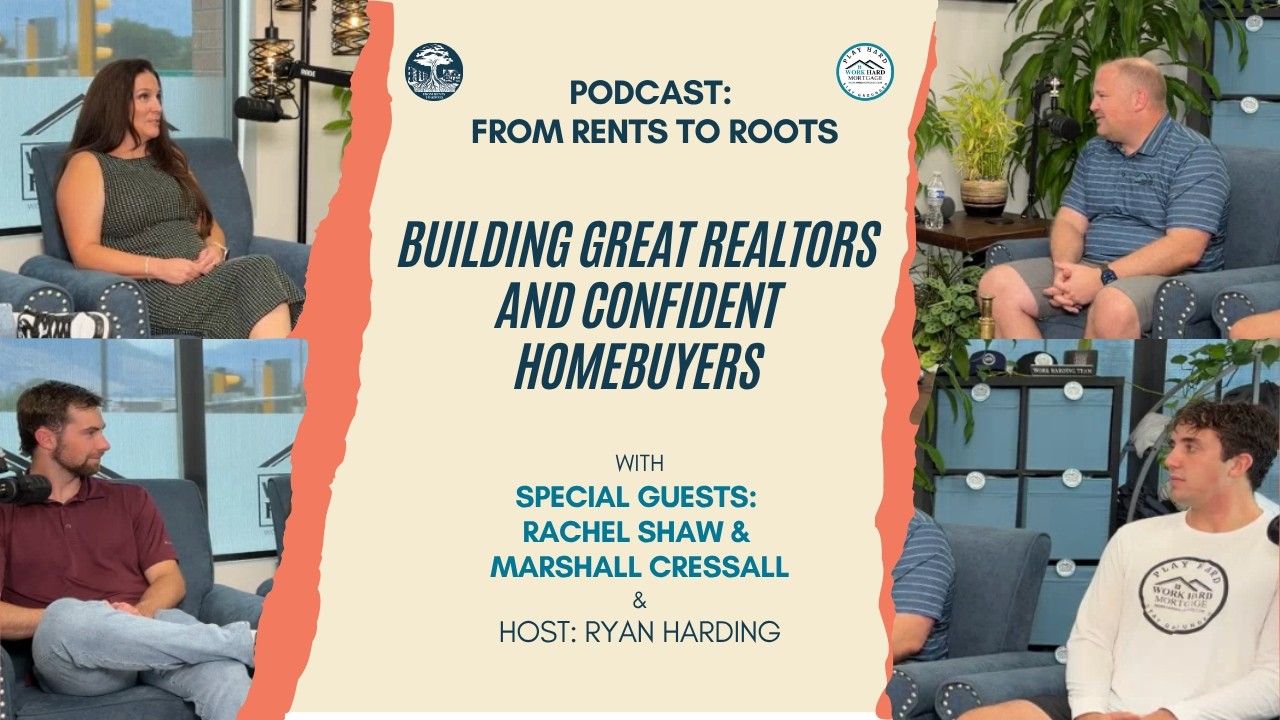
Building Great Realtors and Confident Homebuyers
Join us as we explore the mentor-mentee relationship in real estate, offering insights on navigating market challenges and building homeownership confidence.
Rachel Shaw and Marshall Cressall
Family Homeownership
At a Glance
Archive Scoring
Introduction
The path to becoming a successful realtor is rarely a straight line, and for many, it is defined by the quality of mentorship and the resilience developed during turbulent market cycles. In this episode, Rachel Shaw, a seasoned broker, and her mentee, Marshall Cressall, discuss the nuanced reality of navigating the real estate industry, where the most valuable lessons are often found in the complexities of difficult transactions rather than easy wins. They pull back the curtain on how newer agents can bridge the education gap left by standard pre-licensing courses by immersing themselves in practical, hands-on experience under the guidance of established professionals.
Beyond professional development, this conversation centers on the human element of homeownership. As the industry faces a shift toward more cautious, skeptical buyers, there is a profound need for education that cuts through the noise of fear and financial uncertainty. Rachel and Marshall highlight the importance of shifting the mindset of younger generations, who often view the dream of homeownership as an impossibility due to current economic conditions, suggesting that strategy, financial goal-setting, and even creative solutions like house hacking can unlock doors that seem firmly closed.
There is a deeply human dimension to the advice shared in this episode. For many aspiring buyers and new agents alike, the temptation to exit the industry or wait for 'better' conditions is strong. Yet, both guest and host emphasize that the most significant growth and wealth-building opportunities often emerge when the market is at its most challenging. By leaning into grit, consistent marketing, and the support of a strong team, individuals can turn a difficult economic landscape into a launchpad for long-term success.
Ultimately, this episode underscores that a house is more than just a real estate transaction; it is a vital foundation for family, security, and future wealth. The camaraderie fostered within brokerages like Presidio serves as a reminder that although the role of a realtor is often isolating, success is amplified when we work together. By nurturing new talent and keeping clients informed, the industry can better serve a generation currently struggling to find its footing in the housing market.
This dialogue is a testament to the idea that expertise is not just about knowing the law, but about building relationships, trust, and understanding the emotional weight carried by every buyer. Whether it is through the lens of a residential purchase or the more transactional nature of commercial real estate, the core mission remains the same: to empower individuals with the confidence to take their next step, even when the path is not perfectly clear.
Episode Overview
A detailed look at the topics, people, and context of this conversation.
In this episode, we sit down with Rachel Shaw, a broker at Presidio, and her mentee, Marshall Cressall. They share their perspectives on the critical role mentorship plays in the modern real estate landscape, discussing how they navigate the day-to-day challenges of listing properties and managing client expectations. Their discussion touches on the importance of building a strong professional network and why newer agents must prioritize marketing and grit to survive in a high-interest rate, low-inventory environment.
We also dive into the 'why' behind homeownership for first-time buyers. The conversation explores the disconnect between younger generations and the housing market, addressing common fears about commitment and affordability. Through the lens of financial education, seminars, and real-world strategies like accessory dwelling unit (ADU) income, our guests highlight how to make homeownership a reality rather than an unattainable dream.
The conversation balances personal anecdotes, such as Marshall's journey into the industry, with broader insights into current market trends. The emotional tone is supportive and encouraging, aimed at helping both aspiring homeowners and new real estate professionals find their footing. We end the episode with a call to action regarding the value of consistent, hard work during cyclical market downturns.
Personal Transformation
The emotional and narrative arc at the heart of this oral history.
Marshall Cressall, initially focused on college sports, pivoted to a career in real estate following a health setback (epilepsy diagnosis). Under the mentorship of Rachel Shaw, he transformed from an uncertain newcomer into a professional learning to navigate complex real estate transactions and long-term career planning.
Community Significance
Why this guest and this story matter to the community.
This episode highlights the vital importance of mentorship within the real estate profession, showing how experienced brokers like Rachel cultivate new talent to better serve the community. By demystifying the mentor-mentee relationship, it serves as a blueprint for how professional knowledge is passed down, ultimately benefiting the public by ensuring a higher caliber of real estate agents.
Furthermore, the discussion on 'house hacking' and utilizing accessory dwelling units (ADUs) provides a practical solution for today's economic climate. It teaches prospective buyers in the community that homeownership is still achievable, even when traditional affordability barriers seem high, by leveraging creative financial and living arrangements.
"Buying a home is more than just a transaction. It's a journey."
— Host · 0:00
Key Themes & Life Lessons
The ideas that run beneath the stories — and what they teach about community, leadership, and belonging.
Wisdom & Life Lessons
The most significant lesson is that 'hard markets are the best classrooms.' The episode emphasizes that for agents, downturns are not reasons to quit, but opportunities to work harder and gain market share when others leave. For buyers, the lesson is to prioritize entry into the market early rather than waiting for ideal conditions, as equity building is a function of time.
Emotionally, it teaches that the best real estate partnerships are built on mutual loyalty and the shared goal of protecting the client, rather than simply closing a deal. It reinforces that even in a digital age, local relationships, in-person seminars, and old-fashioned networking remain the cornerstone of success.
Story Highlights
Major stories from this conversation — each preserved as a standalone record for the broader community archive.
Marshall explains his entry into real estate following a health crisis. When epilepsy forced him to step away from his college team and planned education, his grandfather suggested he try real estate to occupy his time and leverage his interest in business. This unexpected career shift became his path to stability.
Emotional Significance
This represents a moment of vulnerability turned into strength, showing resilience in the face of a life-changing medical challenge.
Why This Matters
It highlights how supportive family networks provide the safety net needed for people to restart their lives after unexpected crises.
Life Lesson
When one door closes, a supportive network can help you find a new, unexpected path to purpose.
Transformation
Marshall transitioned from a sidelined student dealing with health setbacks to an active, motivated real estate professional.
What It Reveals About Rachel Shaw and Marshall Cressall
He is humble, willing to learn, and values the wisdom of his elder family members.
What It Reveals About the Community
The community fosters a culture where family members actively intervene to help their own find success.
Community Value Preserved
The practice of multi-generational support in professional development.
For future generations: It underscores the importance of having a mentor or family member who sees your potential even when you are discouraged.
Rachel and Marshall discuss the common, painful experience of sellers overestimating their home's value in a shifting market. They explain the danger of 'chasing the market'—starting too high and repeatedly cutting prices—rather than pricing correctly from the beginning to generate immediate momentum.
The team addresses the fear and hesitation among first-time homebuyers. By providing educational seminars and data, they show potential buyers that waiting to save for the 'perfect' down payment is often a mistake, as rising home prices frequently outpace savings.
"Commercial real estate is less emotional and a lot more transactional. As long as the numbers make sense, you're good to go."
— Marshall Cressall · 24:39
Historical Preservation & Legacy
What this interview preserves about community history, cultural legacy, and intergenerational knowledge.
Preservation Value: High
This episode provides a rare, honest look at the apprenticeship model within real estate and the practical, gritty realities of starting a career during a difficult market cycle. Its value lies in the blend of professional industry insights, financial strategy, and the human story of mentorship.
Why This Episode Matters Historically
This episode captures a snapshot of the real estate industry during a period of market volatility, specifically the challenges faced by both new agents entering a difficult environment and first-time buyers trying to gain a foothold. It documents the real-time pedagogical shift in how agents are trained, moving away from purely theoretical textbook learning to a more hands-on, mentor-led apprenticeship model. It serves as a historical record of the specific barriers facing early 21st-century homebuyers, such as high entry costs, the 'age 40' barrier for first-time buyers, and the critical reliance on professional partnerships (lenders, title companies) to close deals in a skeptical market.
What Future Generations May Learn
Future generations will learn that homeownership is not just a financial transaction but a long-term wealth-building strategy that requires early intervention and guidance. The episode illustrates that even during challenging market cycles, the persistence of early entry yields disproportionate long-term benefits compared to waiting until mid-life. They will also learn about the 'hidden' mechanics of the real estate industry: the necessity of building an extensive professional network, the grind of marketing for new agents, and the importance of choosing a supportive, collaborative firm. It dispels the myth of the 'overnight success' in real estate, emphasizing that expertise is forged through cycles of market correction and disciplined habits.
Community Memory Preserved
The episode preserves the specific local challenges of the current Utah housing market, documenting the shift from competitive buyer frenzy to a more stagnant, inventory-heavy environment. It records the collaborative 'bus tour' feedback loop among agents, showing how professionals collectively analyze and improve properties to bridge the gap between seller expectations and buyer reality.
Local Knowledge Preserved
It captures the practical application of ADUs (accessory dwelling units) as a common, accepted, and encouraged strategy for first-time homebuyer affordability in the local area. Additionally, it documents the rise of professional 'Make It Market Ready' services that allow homeowners to unlock equity for repairs without needing significant upfront cash.
Intergenerational Lessons
The episode underscores the importance of intergenerational knowledge transfer, as evidenced by Rachel’s training by her father and Marshall’s induction into the field by his grandfather. It teaches that successful careers are often built upon the shoulders of family mentors who provide not only opportunity but the necessary guidance to navigate industry pitfalls.
Community & Cultural Insights
The story reveals a culture of 'camaraderie over competition' among successful real estate brokerages, challenging the narrative that agents only care about individual gain. It shows a community where established professionals prioritize the growth of newcomers, recognizing that a stronger industry benefits all participants.
There is also a poignant insight into the shift in homeownership culture for younger generations. It identifies a 'disconnect' or fear of commitment in the younger demographic, which the community is actively trying to combat through education, suggesting that homeownership is a goal currently undergoing a cultural re-evaluation.
Historical Context
This episode takes place in a period of market contraction characterized by high interest rates, limited inventory, and a growing barrier to entry for first-time homebuyers. With the average age of a first-time homebuyer in Utah reaching 40, there is a clear sentiment of concern regarding housing accessibility and wealth-building gaps for younger demographics. Within the broader context of the real estate industry, this time is viewed as a 'survival of the fittest' period, where agents who rely on outdated methods or lack robust mentorship often exit the business. Conversely, it serves as a historical proving ground for those willing to innovate through social media, direct community engagement, and creative financial planning, effectively setting the stage for long-term market leadership when the cycle eventually shifts.
Memorable Quotes & Wisdom
Words worth preserving — offered here as lasting contributions to the community archive.
"Buying a home is more than just a transaction. It's a journey."
— Host
0:00
Helps first-time buyers feel validated in the complexity and emotional weight of their journey.
Frames homeownership as an emotional and personal process rather than just a financial task.
"My dad made me get my broker's license, my CE license, and made me teach classes. That's how I got here."
— Rachel Shaw
1:28
Encourages aspiring professionals to embrace mentors who see potential in them that they might not yet see in themselves.
Illustrates the value of mentorship and being pushed outside of one's comfort zone to achieve professional growth.
"Sometimes those harder transactions are the better ones to learn on. You learn a lot more because in easy ones, there is not much to learn."
— Rachel Shaw
5:19
Provides comfort to new realtors facing struggles, reminding them that adversity builds competence.
Reframes difficult professional challenges as essential educational opportunities for growth.
"Real estate can be a very isolated, lonely business. So, we have a lot of camaraderie and help. None of them are competitive; they are willing to help even if they are not your specific mentor."
— Rachel Shaw
12:24
Promotes the culture of 'agent-to-agent' support, which benefits the end client by creating a stronger, more capable professional network.
Highlights the necessity of community and collaboration over competition in a high-stakes industry.
"We're seeing a lot of people that are scared and think homeownership is not a possibility for them. It's about educating them that it is still a path to building wealth."
— Rachel Shaw
14:04
Provides a crucial reminder that financial literacy and expert guidance can turn a perceived impossibility into an actionable goal.
Addresses the mental barriers preventing younger generations from pursuing homeownership.
"If you don't save a lot but you start early, the greatest indicator of wealth is time. If you wait until you are 40 to buy, that is at least a decade of lost equity growth."
— Host
17:31
Challenges the 'average age of 40' narrative, advocating for earlier entry to maximize long-term financial security.
Emphasizes the power of compound growth and the urgency of starting early in real estate and investing.
"My priority is finding a lender who will look out for the client's best interest, and who is going to get the deal to close. Ultimately, the client comes back to you, so you want people you can trust."
— Rachel Shaw
22:09
Educates homebuyers on why their realtor's choice of partners (lenders, title) matters for their protection and success.
Defines the standard of partnership and responsibility required of a professional realtor.
"Commercial real estate is less emotional and a lot more transactional. As long as the numbers make sense, you're good to go."
— Marshall Cressall
24:39
Provides insight for those looking to diversify their real estate careers or investments.
Contrasts the emotional intensity of residential homebuying with the cold, data-driven nature of commercial real estate.
"In commercial real estate, there is a lot less competition, but it is much harder to build connections and get companies to try to expand."
— Marshall Cressall
26:01
Provides transparency for professionals considering a specialization shift in real estate.
Highlights the distinct market dynamics between residential and commercial sectors.
"When dealing with commercial leases, you often want to bring in attorneys because things can go sideways fast; it's not just the building, it's the business entity itself."
— Rachel Shaw
26:47
Protects aspiring business owners from significant legal and financial pitfalls during lease signings.
Emphasizes the critical need for professional legal protection in complex property transactions.
"Many people think entering the real estate industry is easy, but it is definitely a scary and tough thing to jump into."
— Marshall Cressall
27:22
Corrects the misconception that real estate is a 'get rich quick' profession, promoting long-term dedication.
Provides a realistic perspective for those considering a career in real estate during difficult market conditions.
"If you learn to work hard during the harder times, it will pay off. That is when you develop the habits that allow you to succeed when the market finally turns."
— Host
27:53
Encourages perseverance for both real estate agents and aspiring homeowners during economic uncertainty.
Reframes market downturns as essential training grounds for professional development.
"When the market is hard, many agents quit, but that is actually the best time to work harder and increase your marketing efforts because the competition is significantly lower."
— Marshall Cressall
28:49
Offers a strategic mindset for weathering economic instability in any industry.
Illustrates how competitive advantage is gained by staying active when others retreat.
"I find that some of my best times were after a market slump; when things finally picked up, I was already well-positioned to succeed while others were just trying to jump back in."
— Host
29:11
Provides encouragement to listeners to remain steadfast during their own personal or financial slumps.
Demonstrates the reward for staying consistent in one's career during lean years.
Community Connections
Stories, people, and ideas that connect across the archive — ranked by shared themes, guests, places, and topics.
Related Episodes
(4)Tony Acosta Interview
Tony Acosta
Storming The Industry With Zef Martinez
Zef Martinez
The Biggest Mistakes First Time Home Buyers Make! Interview with Jeff Demke
Jeff Demke
Selling Luxury Real Estate With Presidio's CEO Jennifer Yeo
Jennifer Yo
Related People
(4)Nikki Lemon
Realtor & Director of People and Culture, Presidio Real Estate
Mike O'Day
Real Estate Investor & Advisor · Mountainland Realty / Real Estate Help Utah
Savannah Romney
Realtor, The Perry Group · Podcast Host · Young Entrepreneur
Scott Clark
Real Estate Investor · Real Estate Help Utah
Related Stories
(4)Related Quotes
(4)"If I could go back and tell younger Ammon one thing, it was: just buy that real estate."
— Ammon Childs
"Real estate is get rich slowly."
— Ryan Harding
"You need to make your own community. It's not going to find you."
— Charlene Freestone
"I have more time than those agents and I actually want to work with you."
— Savannah Romney
Related Themes
(4)Public Service
Stories of neighbors who stepped up to serve their community through elected office, committees, volunteer work, and civic engagement — often starting not with noble ambition, but with a single meeting they decided to stay for.
Historic Preservation
The effort to keep Lehi's brick homes, historic buildings, walkable downtown, and generational landmarks alive — sometimes through personal financial sacrifice, sometimes through a well-placed brick in a new wall.
Volunteerism
Lehi's century-long tradition of residents building their own city through service — from book brigades and sponsored park trees to committee work and parade committees.
Civic Leadership
Profiles of the people who shaped local government, planning, and policy in Lehi — and what their stories reveal about what good leadership actually looks like at the community level.
Ways to Serve
(4)Mentorship for First-Time Home Buyers
Lehi Housing Navigator
Financial Literacy Workshops
Community Financial Education Center
Volunteer at Farmers’ Markets
Lehi Farmers’ Market
Engage with Local Entrepreneurs
From Rents to Roots Podcast
Explore More Stories & Themes
Related topics and community themes that connect this episode to the broader archive.
Connected People, Places & Stories
mentor
Mike serves as the primary educational lead and mentor for the Presidio brokerage.
employer
Presidio is the central brokerage providing training and mentorship infrastructure for Rachel and Marshall.
service provider
Make It Market Ready is identified as a partner for preparing homes for sale to maximize market appeal.
office location
Draper serves as the primary base of operations for Rachel's brokerage activities.
educational outreach
These seminars are a key strategy used by the office to educate prospective buyers on market entry.
employer
The company provides professional mentorship and structure to agents like Marshall.
employment_attempt
Ryan applied to work at this company during a difficult market slump as a backup for his career.
podcast_sponsor
The business serves as the host organization for the podcast and provides resources to listeners.
industry_pattern
The guests discuss how the real estate industry operates in cycles and the importance of working hard regardless of the phase.
Suggested Future Guests & Topics
Future interviews should target the 'mentor-mentee' duos within the industry to see how these dynamics evolve over 5-10 years. Additionally, individuals who successfully utilized 'house hacking' or renovation loans as first-time buyers would provide valuable, actionable case studies for the audience.
More from From Rents to Roots
Starting Fresh in Real Estate: Rick Robinson's Inspiring Journey
with Rick Robinson
Join us as we explore Rick Robinson's inspiring transition from diverse career paths into real estate, emphasizing the importance of mentorship and grit.
Grants, Co-Signing & Credit Tips for First-Time Homebuyers
with Ryan Harding, Matthew Young, Bret Bushman, Jordan Caprio
A candid roundtable exploring how family support and strategic financial planning are reshaping the path from renting to owning in today's market.
Utah vs. Iowa Real Estate: What Homebuyers Should Know
with Grace Laubenthal
Grace Laubenthal compares the real estate landscapes of Utah and Iowa, highlighting the shift toward monthly payment strategies in high-cost markets.
Full Transcript
Transcript source: AI-generated. This transcript has been lightly edited for readability.
Homebuying Journey Intro 0:00 Buying a home is more than just a transaction. It's a journey. And for many, it can feel overwhelming, 0:06 confusing, and even a little scary. But hey, you're not alone. Welcome to From Rents to Roots: Home Ownership with Work 0:12 Hard Mortgage, where we share real stories from real people who have navigated the home buying process. In 0:18 each episode, we sit down with first-time home buyers, industry experts, and real estate professionals 0:23 to talk about the challenges, surprises, and lessons they've learned along the way. If you're dreaming of owning a home 0:29 but don't know where to start, you're in the right place. Let's dive in. Welcome Marshall and Rachel to From Meet Rachel, Presidio Broker 0:36 Rents to Roots. Appreciate you guys having here. Glad you're on the show here today. Thank you. So, let's get to 0:41 know you guys a little bit better here first. Rachel, let's start with you. Tell us about yourself. So, who So, I believe you're the broker of Prescidio 0:48 up there. I'm the broker in the Draper office. Okay, perfect. Okay. How long you been doing that for? 0:53 It's been just over two years now we've been there. Okay. Two years. Okay. And has it been everything you wanted it to be? 1:00 It is. I love it. Yeah. Okay, good. Tell me what you were doing before that then. Well, before that we were at a different 1:05 brokerage and I was an associate broker. Okay. Before that. Okay. So, you had you've already had some experience doing it and stuff. 1:11 You've been doing it for a little while. Yep. Were you doing normal real estate before that then or have you always been in that management role? 1:17 You can't get your associate brokers for three years. So, in a certain amount of points, right? So, yeah, I became an 1:23 associate broker in my third year. Okay. So, really went right into that. Yeah. Okay. What what appealed about that to Dad Mentor Origin Story 1:28 you? Why? My dad made me. I thought I'd show it. So, he was like, "Hey, come on." Okay. 1:34 Yeah. He got me into real estate and then I thought, "No way I can do that." Right. And then here I was doing it. And then 1:41 he goes, "Now you're going to get your broker's license." I says, "No, not doing that." And then I got my broker's 1:46 license. And then cuz he's also a CE instructor. Yeah. So then he goes, "Now you're going to get your CE license." I said, "I'm not 1:52 doing that." Yes. Then I did that. And then he made me teach classes, too. So yeah, that's how 1:57 I got here. You got a good dad that pushing you along. Hey Rachel, you can do a little more. You can do a little more. I never thought I'd be in front of a 2:04 classroom. Sure. Yeah. And that's And so that's Mike, the one that was there when we went there that day. So he's Yeah. The 2:09 mustache. Yeah. Okay. So what's his role now then? So he's also a broker. There's two branches. Okay. In that office. He's a 2:15 broker, but he's also over the education. Okay. For Prescidio. Okay. For all of Prescidio. For all of Prescidio. 2:21 Okay. And how long has he been doing that for? He's been doing education I don't know maybe 15 years. Yeah. He 2:28 really loves the education. Yeah. I get We just brought lunch that day, but the brief time that I was listening, you can tell he he's very 2:35 charismatic, very You could tell he loves being up there, right? He does. Yeah. Just very comfortable in front of 2:40 people, talking to people and I seems like one that would probably make the class pretty fun. Is that Yeah. People will come to his classes 2:47 just cuz it's entertaining, right? And you get CE and lunch. Yes. So it doesn't necessarily matter what he's teaching and stuff like that. 2:52 It's like, okay. Hey, yeah, we want him. They want him. Yeah. I've never seen anyone fall asleep in his classes. 2:58 Okay. Good. Good. Yeah. But even I go through all the same classes and I learn something new every time. Yeah. 3:04 No matter how many times I take the same class, you'll learn something new. Yeah. That's awesome. Again, sounds like a good dad to you. 3:09 And so I'm going to pivot a little bit and we're going to get to know Marshall here. But that's an interesting relationship because because you have 3:15 father, daughter, and you could argue he's a very good mentor for you, right? He has been. And it sounds like that's 3:22 that's so you've taken that same relationship and done it with others here too. Is that fair to say? Marshall's Background & Epilepsy Journey 3:27 That's fair. So Marshall, tell us about yourself. What how long you been doing real estate? Give us a little background of yourself. 3:32 I've been doing real estate for about a year. My grandpa is actually the one that got me into real estate. Okay. And 3:38 then what got me to Presidio was actually Mike. He's his wife is friends 3:43 with my grandma. We've been friends since the second grade. Okay. So long history there then. Okay. 3:49 And was that something you always wanted to do was get into real estate? No, actually. So, I was in college and 3:56 then the team disbanded from the coach and I came back and I was planning to go to a school in Arizona, but I have 4:02 epilepsy. I started having a lot of seizures. Yeah. And my grandpa was driving me home from work. And he, why don't you just try real estate? Cuz I used to flip cars. 4:09 Yeah. He's like, I have a forplex and stuff. We can try to do stuff with that. Okay. So, he's like, just get your license. 4:15 You got nothing else going on. Yeah. All right. Might as well. Yeah. And has it been good for you? For the most part. Yeah, 4:20 for the most part. Yeah. Rachel's pretty good to me. Sometimes. Sometimes. Okay. So, tell me tell us the Mentoring Through Transactions 4:26 role that Rachel has in the company with you then. So, I'm a mentee. I'm just learning 4:32 behind her. So, right now we have a listing with my uncle and yeah, we'll 4:37 just go through talk through walk through all the contracts, make sure everything's good and more just a 4:42 learning process. Sure. Get to kind of experience everything with it and Yeah. deal with all the struggles. 4:48 So, you're saying all those CE classes you take to get your license, they didn't teach you everything. Is that what you're saying? 4:54 Not everything. Not everything. Yeah. Okay. All those, you know, those hours and hours of real estate class that you have to do. Okay. 5:00 So, Rachel, talk to me about that. What's the process of teaching them? So, you have a listing right now, right? So, talk to us about that process. So, as a 5:06 mentor, like you said, you walk them through everything, how to list it, the paperwork, the how to have them fill it 5:13 out, and you just walk them through everything and make sure it's done correctly. Yeah. And has that been has this been a 5:19 difficult transaction? It's It has been. It has been. Yeah, definitely have been. Sometimes those are the better ones to 5:24 learn on it, right? You learn a lot more. Yeah, cuz you're like an easy ones there's not much to learn, but 5:30 but his next one it's going to be a breeze because the harder one right now and stuff. Yeah. Okay. Anything stand out 5:35 from the transaction? Anything what things have you learned from this trans where you're like, "Oh man, I didn't realize this or I didn't see that coming 5:41 or anything stand out on it?" Having more patience with it? Okay. Yeah. And like trying to have them understand 5:49 more what's going on. Be like, "This is where the market's at and like you might not get your house for this price." 5:54 Yeah. For this reason, and if you do this to the house, you'll give it more curb appeal and could bring in more people. 6:00 Sure. Sure. Yeah. Yeah. It's a lot of educating the clients. Yes. For sure. Yeah. Which what's that process like with Pricing Expectations in Today's Market 6:06 because is it hard with everybody wants to sell their home for millions of dollars, right? The most they can, right? So talk to us about that process 6:14 of setting expectations because there's obviously there's a hard part with being a realtor because if you say it's really 6:21 only worth this, some people don't love that. They don't. And so they can either accept that or 6:27 choose somebody else, right? Go a different direction, right? I don't know. Talk to us about that that process. So we we our job is give them a 6:33 value, right? Where we think it would what other houses are going for. Yeah. And but it's ultimate up to them what 6:39 they list it at. Yes. So if they list it [snorts] higher, obviously it's that's where the 6:44 education starts. The market's going to tell them it's too high. Sure. Sure. Just by no offers or lower offers or not 6:52 a lot of showings. So the market kind of tells them. Sure. Yeah, but if they can understand it sooner, 6:57 that helps with the listing itself because sometimes if a home gets put on there at a higher price and then drops. 7:03 Talk to me about that process. Yeah, we call it chasing the market, right? Where you start up and then you're and you never really catch up. 7:08 Yeah. By lowering the price. So you you kind of want to just price it just right. Yeah. So you're sticking with the market. 7:15 Yeah. Yeah. I gotcha. Okay. As far as the relationship that you have, so obviously is this mentoring other people? Is this Presidio Mentor Program 7:22 something you do often with other realtors and stuff like that in your office? Yeah, we have a really great mentor 7:27 program in our office. Yeah. And so we when we get a new agent, we 7:32 [clears throat] have a brochure of all the mentors and they get to choose who they want and sometimes if it's not a 7:38 good fit, they can switch, right? You're not stuck on that. Yeah. See, that was my question. I thought it was like a sorting hat kind of a thing. 7:44 You just you just Oh, no. That's how Marshall felt. I got stuck with her. So, no, they get to choose and 7:50 you could always switch. Obviously, they don't want you switching during a transaction, right? Because that meant the mentors put all that work in, 7:58 but they have to do three transactions with the mentor. Okay. So, hopefully they get at least a buyer, seller. 8:04 Yeah. Kind of know a little bit more than what they started. And then after the three, they can go off on their own, but 8:10 they're still welcome to ask questions and Yeah. things like that. Have you found a lot of success? Have 8:15 What's the feedback been with other people that have been through this program? They love it. It's very 8:20 attractive to agents, brand new agents, obviously, because like you said, in school, they don't teach you what you 8:27 need to do. They teach you a lot about the laws and different things, but yeah. Not about what you actually need to do. The actual day-to-day process of Yeah. 8:34 Hey, here's how you get that and Okay. Do you guys also help then on the marketing side as far as, hey, because Marketing Through Social Media 8:39 obviously understanding how to do the the the deal is one thing, but getting the deal is a completely other thing, 8:45 right? You know, do you guys help on that side of things? Yep. We go through, we give them a list of things to do to market. Basically, 8:51 their number one job is to market themselves. Sure. That's what they have to do every every day. You got to be grinding. Yeah. 8:56 So, yeah, we teach them to create an SOI, which is a list of all their friends and family and start 9:02 marketing to them and then who they know, create a database. Yeah. Social media. Yep. 9:08 We have lots of different social media things they can do. Sure. So, yeah, we want them to succeed. So, yeah, it's 9:13 more about just helping them. We help them before the deal. Yeah. Just all the steps to get there. Yeah. 9:19 Yeah. Marshall, have you seen that? Talk to me about that. The marketing side. Has that been hard for you? Yeah, it's been a little difficult. The 9:25 nice thing about once you get a listing, it expands even more from that mentor 9:30 program. So, we have the bus tour. Yeah. Yeah. So, we had a bunch of agents come out to my listing and then they actually talked 9:36 to me about it, stuff they would do, and they actually left a sheet of reviews that we could 9:41 hand out to the seller and be like, "This is what some other agents are thinking as well as far as price or things you could do to the house to make 9:48 it more appealing." Yeah, it's good feedback then. Yeah, really good feedback. Yeah. Good. As far as other things that 9:54 you've been doing to market and stuff like that, what other things have you done? Because it's hard as a new agent, right? Jordan's a new lender starting 10:00 off. It's it takes a little while to kind of get things going, right? It doesn't just come, right? And I think a 10:05 lot of times that's hard because it's hey, I've been doing this for a little while. Where's all the deals? And especially in this market where it is 10:11 harder. What's it? You have to work more. It's not just doesn't just rain. Talk to me about that process. 10:16 So, I am trying to get into commercial. It's more difficult to get into. Okay. But that's more just building 10:21 relationships. Yeah. So, I've been trying to meet other brokerages, other people, and just building the network, building trust 10:27 with people. I think that's the number one thing is just more people that know you, the better odds you have. 10:33 Sure. Yeah. Yeah. Again, more connections, right? More relationships and stuff. What Rachel, way back when 10:39 you were starting off, what things were you learning and doing and stuff like that? Just for me, it was I was more about 10:46 trying to do social media. I didn't really do social media. Sure. Probably before I got into real estate, 10:51 I had maybe 250 friends. I have like 5,000 now. because you want to have as 10:56 many friends on there as possible, right? Cuz you want to market and then creating a Facebook business page. 11:02 Just it's all about social media really and doing videos. Yeah. Yeah. You found So I actually just 11:07 was at a conference that Jen Y was there and she was talking about the social media and stuff like that too and she 11:12 does a lot. Is there anything any silver bullet anything that you guys have found that's 11:18 successful or is it really just also just amplifying your own network? Yeah. It's just But you do your videos. You 11:25 don't look at them. You just post them, right? Because you're always going to be your biggest critic. Of course. Yes. So, yeah, you just do as much videos as 11:31 you can and post them. Yeah. Okay. And that seems to work. Yeah. Yeah. Yeah. As far as just getting connections, 11:37 just getting your name out there. Yeah. Okay. That's awesome. Anything else from the mentoring program? Anything else? What? Why somebody that's 11:43 looking to get into real estate should choose your guys' office to get this started? So, we also we do one or two CE classes 11:51 every week at our office. We do sales training and like he was talking about bus tour. Yeah. But we also do men the 11:58 mentee classes. We're starting those back up again. So they'll be every Friday. Sure. In our office. So there's just a lot of 12:05 training and opportunity for new agents there cuz you really don't have any idea what you're doing. Yeah. Yes. Yeah. And I guess that's the important thing I 12:11 think a lot of agents need to know is that the benefit of going into a place hooking into that that system that's 12:17 already built, right, is very beneficial for people. I think a lot of people forget that because it's hard. Again, real estate's 12:24 hard. Real estate, you're very isolated. Yes. It's a very can be a very lonely business. So, we have a lot of 12:30 camaraderie and a lot of help. They're none of them are competitive. They're willing to even if they're not your 12:36 mentor, they will they'll help you. Yeah. That's awesome. Which I like that. That's we're trying to build here too is 12:42 that because as lenders, real estate agents, you're your own business within a business. You are. And so sometimes people focus on 12:49 hey I'm my own the independent part right but there is a lot of benefit to hey if we're going to do a client event 12:54 let's do it together hey if we're going to do a listing have you come here and look at it right talk to me about it right again I think there's a lot of 13:00 synergy and that camaraderie that that crowd that that helps a lot right and and again to have experts there that 13:07 have done this for a while right I think there's a lot of benefit there I agree Why Buy Now Education 13:12 let's shift gears a little bit so let's talk about first-time home buyers and and that kind of crowd. You have a lot 13:18 of people right now that are on the fence or maybe they're not even on the fence. Maybe they're like, "No, it's 13:24 not. I can't do it." But talk to me about what we're doing to try to help educate people about why buying a home 13:31 is still a good idea. I think a lot of times people are wondering, I don't know, maybe it makes more sense to rent right now and stuff. 13:37 A lot of first-time home buyers, I think also they're scared of the commitment too of the of buying a home. But there 13:42 are we have sheets that show you if you save up for a year for a down payment, 13:47 it's not going to really make a big difference in your mortgage. Yeah. And then also all the money now that 13:53 you've saved, the house is now worth sorry this much more, right? So you didn't really save anything. Yeah. 13:59 So it's just about educating them. We also do first-time home buyer seminars at our office. 14:04 Okay. So that it's just really about educating them. Yeah. How are those received? Are they is that good? Yeah. 14:09 Yeah. Yep. Good turnout some good turnout. Yeah. Good. Yeah. Marshall, have you jumped into that that First-Time Buyer Reality Check 14:15 talking to first- time home buyers? Probably a lot of kids your age that are doing this kind of stuff. Have you talked to other people about it? Give me 14:20 the feedback on the ground level with some of those things. Yeah, most everything I've seen is more 14:26 families going to move in together, teenagers that are like convincing their parents, oh, come in and move in with 14:32 me. Yeah. And they'll lease out the place or other rooms. But for the most part, 14:37 there is a lot of people that are like, "Oh, yeah. I could rent and just save up and see what else I can get a year or two." 14:43 Sure. Instead of buying now. Yeah. Jordan, you're that age, too. What have you seen? Yeah. There's not a whole lot of people 14:49 thinking that they could get into homes my age. I'm not going to lie. You graduate college and then there's no 14:56 plan as far as what people are talking about. I do have a handful of friends 15:01 that are in homes right now and they didn't use us. But those were the people 15:07 that were focusing on it though from the get- go. Yeah. I think what is being built at the topic 15:14 right now of just educating because all of those people that are in homes at a young age and are building wealth or own 15:22 multiple homes, they usually had guidance and parents that were telling them what to do. 15:27 Yeah. And that's my two cents. I didn't have that. So, we're a couple years away 15:32 from getting house. That's okay. That's okay. You'll get there. Yeah. Yeah. Yeah. 15:37 You mentioned first time those classes and stuff like that. How are you getting people? Are they online? Are they in person? How are you getting people to Flyers and In-Person Classes 15:42 come? They're in person. Okay. Some of the agents, they'll invite their own their own soi, but they'll they're 15:49 also sending flyers out because around our office is a bunch of apartments. So, they're sending flyers out. 15:54 Sure. Sure. Saying, "Hey, come." Yep. the old fashioned way. The old fashioned way works. What when you guys do those classes, is Why Buy Before 40 16:01 it similar feedback where people just, you know, again, you and I, we've been doing this for a little while, right? So, it just kind of, yeah, obviously you 16:08 should buy a home, which it seems obvious to us, but it seems like there is a little bit of an education gap. This younger generation, I don't know, 16:14 maybe parents weren't talking about buying a home as much. I don't know. I'm not sure. I'm not sure why the disconnect, but but I think there is 16:21 that disconnect, right? you know, this younger generation maybe doesn't realize, hey, no, home ownership is 16:26 still good, right? And people are doing it later and later in life, too. Yeah. I think the average age in Utah is 16:32 40 for your first home. Wow. Wow. Yeah. And why why is that why is that not the 16:39 right move to wait till you're 40? Yeah. Why is that not the right move? Why what would you say to that person? I guess I would say look at all the equ 16:45 you know the equity you're could be building by the time you're 40. And you know, even if they can't now, like at their first-time home home buyer 16:52 seminar, if they can't right now, what you guys call a financial diet, right? Get them in contact with the lender. 16:57 Yeah. And make goals to be able to buy a home, even if it's in a year or two. Yeah. Get on the right path to be able to do 17:03 that. Yeah. I think they just are scared. They think it's not a possibility for them, which again, yeah, that fear and that 17:09 fear of commitment, different things like that. But yeah, it the thing I've learned, I think real estate similar to the stock market, right? They've 17:14 learned, hey, you don't have to be super smart with the stock market. you throw it into an index fund or the S&P 500 17:20 if the earlier that's the greatest indicator of wealth is just the earlier you start right it has nothing to do 17:26 with how much obviously you have to have money in there but but if you don't save a lot but you just do it early you have 17:31 decades right and so if you say hey at 40 that's at least a decade lost I think 17:37 people should buy it in their 20s to late 20s mid 20s to but by the time they're 30 ideally I think would be 17:42 because it's we don't lose that 30 to 40 decade start sooner start sooner and I don't know if you guys are seeing But a lot of first-time House Hacking and Qualifying 17:48 home buyers will buy a house and rent the basement out to cover their mortgage. So, yes, we're seeing that a lot. 17:53 Yeah. Okay. So, talk to me about more. So, some people might say, "Hey, Ryan. Okay, sure. Yeah, we already believe we should do it. Maybe it's not an 17:59 education thing. It's a it's an ability thing." So, how do we help more people get into homes? That's where you give them to a lender. 18:05 Say, because I believe that they could use that rental toal income to qualify. But you guys are you guys would know 18:11 more about that than me. Yes, you can actually. Yes, especially for a first-time home buyer, you can use up to 75 of the rental 18:19 monthly or is it 100? Yeah, it depends on it has to be an accessory dwelling unit. So, it has to be a legal actual peritt. So, 18:26 it can't be like border income. Although, actually that changed recently too where if they were doing it for a year and 18:32 stuff like that, that's a different parameter there. But, yes, you can totally do that. So, and so that helps more people get into 18:38 homes cuz yeah, if you can find a home that has this basement apartment, right? Then all of a sudden they can get in. It's not a legal 18:44 duplex, but it just has that accessory dwelling unit and stuff. So, yeah. Anything else as far as any other ideas 18:50 that you've seen? We're seeing two or three people on loans now, not just one or two. Sometimes it's several family members. 18:57 Yeah. Yeah. Yeah. Are you seeing more parents helping out too and stuff like that? Yeah. Yep. With maybe down payments and assistance 19:04 and stuff like that. So, Yeah. Yeah. Okay. Okay. Okay. No. Awesome. Do you uh talk to me Selling in a Mixed Market 19:10 about So, obviously you got a listing right now and stuff like that. Is it a good time to sell right now? Are you still seeing a lot of people selling? Is 19:16 the market what's getting more inventory out there right now? Talk to me about that side of things. It's a hit and miss. 19:22 Sure. Some are getting multiple offers and some are sitting for months. Yeah. Are you seeing what any idea why? 19:27 I really can't pinpoint it. Sure. Yeah. Okay. I know there's different places. A 19:32 friend of mine owns the company Make It Market Ready. They've been doing things. Oh yeah, Lori. Lori's actually in our office. 19:38 Okay. Okay, that's awesome. You know, I do know Lori. Yeah. So Joel Willis is the the buddy of mine. But yeah, and Sam 19:43 and stuff. And Yeah. So yeah. Okay. Yeah. So have you seen benefit of that program and stuff 19:48 like that? Yeah. Yep. Huge. We tried it on his uncle's listing. Yeah. But you can only educate, right? 19:55 You can only educate so much. Educate and then it's ultimately up to the seller if they want to. But it's a 20:01 really great program. Yeah. I know a lot of agents put it in their listing packet, you know, as part of their 20:06 So, they've really embracing that. It's like, hey, this is something we can do. Yeah. Yep. It I I I've loved what he's what all of 20:13 them are doing over there with that program because it is it's very fairly priced. They're because before you'd 20:18 have the guys that, hey, I'll buy your house for cash and then then they get the upside, right? The benefit of what they're doing is no, 20:23 hey, they're sharing that equity with these people just, hey, let us help you do this. It's a great opportunity. No, 20:29 it's a great opportunity especially because I think you you do have a lot of inventory that's older maybe or that 20:34 needs some repairs and stuff and that is a that is an area that on the lending side is weak on that, right? 20:40 We technically have renovation loans and stuff like that, but like nobody really wants to touch them because they're hard and there's a lot 20:46 of things that can go wrong and it's just not easy. And so to have a third party step in and do this kind of stuff, 20:51 I think does help. Absolutely. Especially for those sellers who can't come up with 20 or $30,000 to 20:57 do the repairs. Yeah. which is a lot of money for a lot of people. Even though it's locked up in their home, they have it there, 21:02 but it's but it's locked up. It's just equity and that's that's a little bit harder. No. Perfect. But yes, it is a 21:07 good time to sell then I guess still. I think so. Sure. Yeah. Okay. And are we seeing as far as Inventory Up, Buyers Down 21:14 inventory goes right now? Do we know do we have it seems like there's I'm seeing more homes for sale right now. So, yeah, when I looked at the stats 21:20 yesterday, there's I think the amount of homes went up a big percentage from last year. Okay. But the amount under 21:27 contract was lower, went down than last year. Okay. If that makes sense. Yeah. And so more homes but less offers. 21:34 Sure. Sure. Okay. Okay. Yeah. You're just having more people kind of sitting on the sidelines, you know, right now 21:40 and stuff. So you need more buyers. We need more buyers. Yeah. We need more buyers. That's where you guys come in. That's where we come into [laughter] 21:45 play. Yes. Exactly. We can go to college. That's right. Start passing out flyers. There you go. 21:50 Seems to work. Yep. What? Okay. So lending on the lending side. Let's talk about that then for a second. So, obviously as a realtor, Building a Trusted Team 21:58 you're the the head of the transaction, I guess you could say. It's everybody looks at you and stuff, but but you have 22:03 several partners, right? You have title companies, you have home warranty companies, you obviously have lending companies. Talk to me first about those 22:09 partnerships. Why is it important to have good partnerships there? Why does it important to have people that that you actually recommend as opposed to ah 22:15 use whoever, it doesn't matter. Why is that important? Because the client's always going to come back to you. It's always going to be your fault. 22:21 Sure. Yeah. So, you want to have people you can trust, but your team, like you said, your title lend lender, home 22:27 warranty, all of that. So, you want to be able to recommend really good ones for your clients because you're watching out for them. 22:32 Yeah. Yeah. And like you said, it comes back to you. It does. Yeah. Yeah. Because if somebody else screws up, they say, "Hey, Rachel, why? What's 22:39 It's always a realtor's fault." Exactly. Yeah. So, as far as lending partners, then talking about that, what are you looking for in that kind of 22:45 partnership? What's important about that relationship to you? To me, it's someone who's going to look out for your client, 22:51 their best interest, and who's going to get the deal to close. Yeah. Yeah. 22:56 Okay. Anything else? I don't know. Loyalty, right? You want you want to have loyalty for your team 23:02 because basically they're they are your team. Yeah, they are. And then you also have their experience whether your title's been doing for 30 23:07 years or your l So, that's a lot of years of experience. Yeah. Yeah. Because again, some things 23:13 go wrong, right? They do. And you need to make sure that you can handle when those things do go wrong. Marshall, any anything. What are you 23:20 looking for in that area? Just the same thing as Rachel. If you can keep the right connections and same 23:26 loyalty, then sure. Everything will be good in that end. Good. Good. Okay. Awesome. I'll time out 23:32 here. Anything? We're kind of getting close to the end. Anything that you guys want to cover? Commercial Real Estate Reality 23:37 We can talk about commercial a little. Yeah, we can talk about commercial. We'll talk about commercial. Okay. Yeah. So, Marshall, you mentioned that you're 23:43 going into commercial. Why commercial first of all and then talk to me about commercial? What appeals to you about that? 23:49 So the gym I worked at, there actually had a bunch of commercial agents there and they're like, "Oh, just do 23:54 commercial. It's a lot easier." Sure. So I'm like, "Oh, yeah. I'll try it out." 23:59 But coming to it, we did a lease and they're like, "Oh, the paperwork's a lot less." And it ended up being close to 50 24:06 pages. And I'm like, "Oh, yeah. This doesn't seem easier." Yeah, that's not less. No, no, that's not less. But it is easier in the aspect 24:14 of they don't really care. They'll go through the property and they're like, "We're just going to tear this out anyway." Like toward a property and 24:21 there's holes in the wall and duct tape next to it that says, "Fix me doors ripped in half, wallpaper, and 24:27 just complete mess." But they don't care about that cuz they're just going to build it to their own suite that they 24:33 want and whatever they prefer. So less less emotional, a lot more transactional. 24:39 More transactional. Yeah. You're just trying to Yeah. It's just it's a business, right? And so there's less emotion there. 24:44 As long as the numbers make sense, you're good to go. Yeah. Rachel, do you have experience in commercial then? 24:49 I do. I have a couple car washes right now. Um I've done car dealerships, delies, markets. 24:56 Okay. Tell having a lot of experience there. What would you say? So he mentioned obviously the difference is 25:02 emotional part, but what other differences would you say is that's probably the biggest one is it's not there's not an emotion. Sure. in it 25:08 like when you're buying a home, but to me it's also not as rewarding. Sure. Sure. Because it's not that emotion, right? 25:13 It's not getting someone out of an apartment to their first home. Yes. And it is more transactional, but it's 25:19 not necessarily easier, I would say. But there's also usually more money in commercial, right? Because you're doing bigger transactions. 25:25 Yeah. Bigger numbers, right? Yeah. Yeah. Obviously, it's a smaller field, though, too, right? As far as there's less less 25:32 deals to be had, right? Is that or am I wrong on that actually? What do you say, Marshall? What do you say to that? 25:37 It depends on the market. I think the tough thing about commercial too is the amount of time it takes to close. 25:44 Yeah. Cuz residential it's normally 30 days and a lease we had took almost 6 months. 25:50 Sure. Okay. And [clears throat] then a lot longer. Yeah. Yeah. And then the payouts for it are a lot 25:56 different. Sure. So commercial a lot more patience. Sure. There is a lot less competition. 26:01 Yeah. But it is harder to build connections and get companies to try to expand. 26:07 Sure. Sure, that makes sense. Anything else on commercial that's worth talking about? 26:12 I don't think so. Do you? Yeah. Okay. Yeah, it I wish I knew more about commercial to 26:18 be honest so that I could ask questions. I was like commercial with commercial there's companies 26:23 there's you can buy or lease. You you can do a lot of So there's a little bit more. I guess you can too with houses, 26:29 but Sure. Sure. You're just not you don't have a realtor involved then the lease is typically you can but yeah there's typically no so 26:36 a lot of commercial is lease sure yeah that makes sense but that's but for somebody that doesn't know then there is 26:42 still a realtor involved in a commercial lease situation okay there doesn't have to be but there 26:47 but often there is maybe normally you want to bring in attorneys because there's so much involved in the business 26:53 things can go pretty sideways pretty fast cuz the thing with commercial sometimes it's not just the building it's the business itself the entity and so yeah 27:00 you do want to sometimes have lawyers involved. And so is that instead of a title company or is that in addition to a 27:05 title company? That's an addition, right? That's just the paperworks, the contracts, the contracts and stuff like that. So, 27:10 okay, perfect. Okay, great. Rachel, Marshall, this has been great. Anything else that we haven't talked about that 27:16 you guys would want to talk about as far as any topics? I guess any topic. Anything else? Staying in the Business 27:22 Not that I can think of. It is a scary thing to jump into. It definitely is a scary thing and it is hard. A lot of 27:28 people do it. They think it's easy. Yeah, it's not easy. It's tough cuz when I quit my job and 27:33 jumped into it, everyone's like, "Oh, this is the worst market to get into it." Sure. That's terrible because I have no other 27:39 income going in right now. But but I would argue, Marshall, so I started in 200 those were good and then 27:46 not right because that's when it crashed, right? And so I started right when things were technically still good and then all of a sudden it crashed. And 27:53 I what I learned from that though is that that you if you learn to work hard during those harder times, you it'll pay 28:00 off. Okay? So I did that. I kept working. I even I wasn't making any money. I applied for a job at Costco. 28:05 Costco didn't hire me. So I was like, "All right, I got to get I got to make this work, right?" And and really put my 28:10 head down and worked. And I remember my my wife came to the office one time and she was talking to the other guys and 28:15 they're like, "Oh yeah, Ryan's great. He's always he's always working. He's not watching YouTube." And stuff like that. And they were watching YouTube all 28:21 the time at work. And I'm like, how do you expect to get deals if you're just watching YouTube all day, right? So, and so I would argue that actually during 28:26 the harder times are the times that you'll do well, right? So, so get the habits, work hard during this time 28:32 because the market will change, right? It's cyclical. It's changed. Yeah. Given this has lasted maybe a little longer than some of us anticipated, but 28:39 I think now is really the time where you're able to really develop good habits and do those kind of things. And 28:44 I think long term, you'll be happy that you came into this industry. But it does take a lot of work. 28:49 I agree. This time when the market's hard, a lot of agents will go get other jobs and they'll, you know, 28:55 think, "Oh, the market's not any good. I'm not." But that's when you work harder. You put more into marketing. 29:00 Yeah. Because there's less competition, right? Cuz the other competition, the other ones aren't working as hard. Yep. They can't afford to. Yeah. And the 29:06 nice thing is when the market does turn, sure, you'll get more people eventually into it, but it doesn't happen right 29:11 away. Okay. And so there'll be a period of time, some of my best times were after that slump where things got really 29:17 tight and I had several friends leave the industry and stuff and then all of a sudden it really picked up and started doing well and and so it wasn't for a 29:25 couple years and then people came back and they're like, "Oh, hey, looks like there's all this money to be made, but I'd been making it for a couple years already." Do you know what I mean? And 29:31 so to her point, the competition is less right now. And so again, I just a different vantage point there, right? 29:37 I'd say, "Hey, stay in it. Keep working hard. Obviously you have a good mentor, right? She's teaching you good stuff. You got a good team. Presidio is a good 29:43 company. I think they're really trying to do good things there, right? Build things up and stuff. No, great. Love it. 29:49 I I love what you guys are doing and keep doing it. But thank you. Thanks for having us. Yeah. Thanks, Marshall. Appreciate you 29:54 guys coming on and and we'll get you again sometime here. So, check in on Marshall. See how he's doing. 30:00 We want a before and after. We'll do an Exactly. Yeah. [laughter] do an update. Yeah. An update. Yeah. Okay. We'll give you a shirt if you make money 30:07 or something. Yeah. That's your prize. There you go. That's your prize. You got a shirt. Okay. Thank you. Thanks for tuning in to From Rents to Final Thanks and Call to Action 30:13 Roots. I hope today's episode gave you insight, confidence, and maybe even a little inspiration on your home 30:18 ownership journey. If you enjoyed this episode, make sure to subscribe, leave a review, and share it with someone who 30:24 might find it helpful. And if you're ready to take the next step in buying a home or just have questions, reach out 30:30 to me or my team at Workhard Mortgage. We'd love to help you on your path to home ownership. Until next time, keep 30:36 working hard, keep building your future, and we'll see you soon. Appreciate it.
Full transcript available — approximately 7822 words.