Brent Everett on Environmental Cleanup, Civic Duty, and Teaching
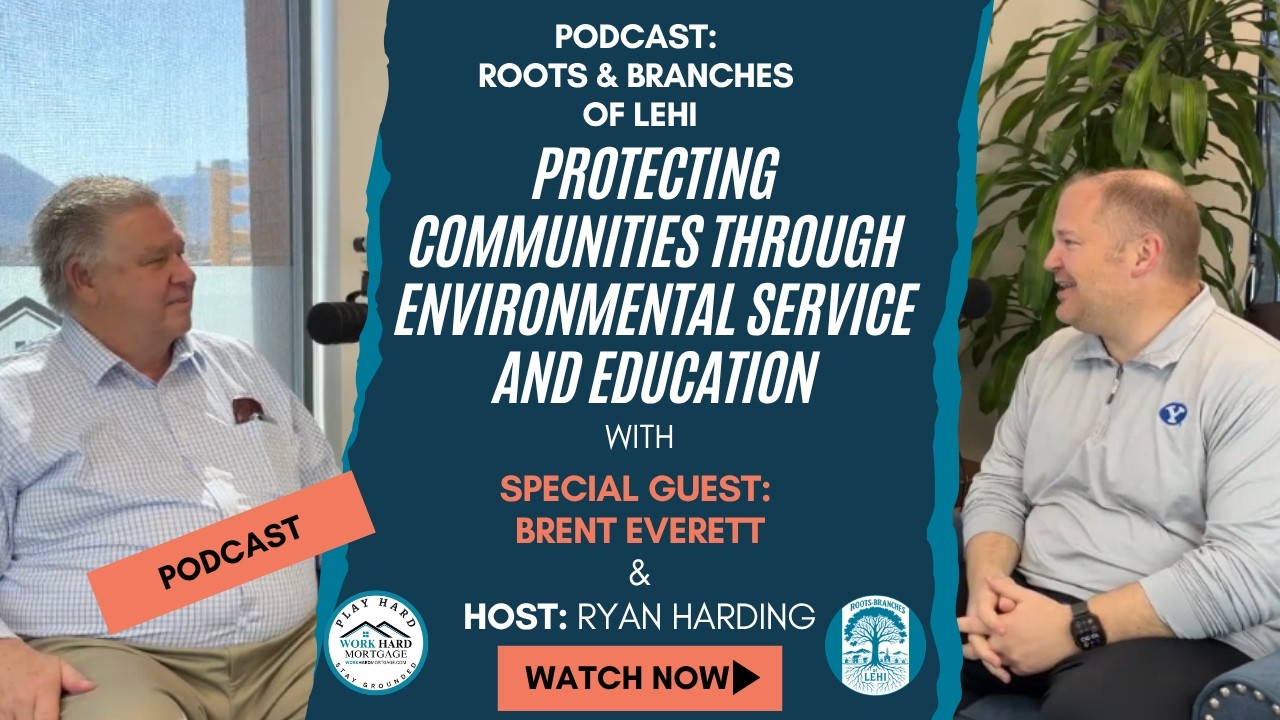
Brent Everett reflects on a life of stewardship, from his career in environmental remediation to his decade of service on the Lehi Planning Commission.
Brent Everett
Environmental Stewardship, Civic Duty, and Education
At a Glance
Archive Scoring
Introduction
At the heart of Brent Everett’s story is a profound sense of stewardship—a commitment to leaving the world, and specifically the soil and air of Utah, better than he found it. His journey begins not in the halls of government, but under a microscope at Brigham Young University, where the vibrant, paper-thin colors of ground-down minerals first sparked a lifelong fascination with geology. This scientific curiosity evolved into a career defined by the cleanup of 'egregious' environmental sites, where Everett transitioned from a project manager to the Director of the Utah Division of Environmental Response and Remediation. His narrative serves as a historical record of the evolution of environmental consciousness in the American West, moving from the unregulated industrial past of the mid-20th century to a modern era of 'Utah solutions for Utah problems.'
Everett’s philosophy of service extends beyond professional boundaries into the very fabric of his community. His nine and a half years on the Lehi Planning Commission represent a pivotal era in the city’s history, as it transitioned from an agricultural outpost to a rapidly growing suburban center. He speaks of the Planning Commission not just as a regulatory body, but as a site of civic deliberation where the public process unfolds in late-night meetings and complex zoning debates. For Everett, this was never a burden, but a fulfillment of a generational mandate to be 'substantial and meaningful' in one's involvement with the land and its people.
The human dimension of his story is anchored by a poignant lesson on the power of the individual. He recounts a family legend involving his mother’s loss in a college election by a single vote—a vote withheld by his own father. This anecdote serves as more than just a piece of family lore; it is the cornerstone of his civic identity. It explains his unwavering dedication to the ballot box and his belief that governance is, at its core, a collection of individuals trying to do the right thing for the right reason. His record is one of quiet, persistent leadership, bridging the gap between technical expertise and neighborly duty.
Everett also reflects on the changing nature of the earth itself, specifically through the lens of brownfield redevelopment. He describes the satisfaction of taking 'bad ground'—former gas stations or industrial sites—and rehabilitating them into community assets. This work is a testament to the belief that no place is beyond redemption. By focusing on the 'beneficial reuse' of land, Everett’s career mirrors his vision for a community: one that honors its history while actively preparing for a sustainable and prosperous future.
Ultimately, Everett’s account is an invitation to view citizenship as a form of long-term care for the environment and the community. Whether discussing the nuances of lead standards or the importance of 'trip-chaining' to improve air quality, he emphasizes that every resident of Utah is a stakeholder in its health. His story is a vital addition to the Lehi archives, capturing a period of intense growth through the eyes of a man who worked tirelessly to ensure that growth did not come at the cost of the state’s natural legacy.
Episode Overview
A detailed look at the topics, people, and context of this conversation.
In this episode, Brent Everett shares his extensive background in environmental science and his deep commitment to community service in Lehi. As the longtime Director of the Utah Division of Environmental Response and Remediation (DEQ), Everett provides a professional overview of how Superfund sites, petroleum storage tanks, and brownfields are managed at the state level. He details his personal philosophy of 'Utah solutions for Utah problems,' emphasizing the state's role in maintaining environmental standards while supporting economic growth. The conversation covers the early days of environmental regulation following the creation of the EPA and the shift toward voluntary cleanup programs that revitalize abandoned properties.
Beyond his professional life, Everett discusses his nearly decade-long tenure on the Lehi Planning Commission. He offers a behind-the-scenes look at how local government functions, describing the transition from his initial appointment by Mayor Bert Wilson to his three full terms of service. He highlights the Planning Commission's role as an advisory body and the importance of public participation in shaping the city's growth. His insights provide a valuable perspective on the administrative and social challenges of managing a city in the midst of a historic population boom.
Personal history is woven throughout the episode, particularly regarding Everett’s upbringing in California and his eventual roots in Utah. A standout segment includes a family story about the power of a single vote, which instilled in him a lifelong dedication to civic duty. The tone of the episode is reflective and principled, emphasizing the intersection of scientific expertise, local governance, and the individual's responsibility to contribute to the common good. Everett’s narrative captures a specific moment in Lehi's development and the ethos of stewardship that guides its long-term residents.
Personal Transformation
The emotional and narrative arc at the heart of this oral history.
Brent Everett's journey is one of evolving from a technical scientist fascinated by the microscopic aesthetics of minerals to a guardian of public health and community integrity. He began his path in California, the son of a teacher, with a simple curiosity about geology sparked by the vivid colors of minerals under a microscope. This early interest was initially steered toward the lucrative potential of the oil industry. However, a major economic shift in the mid-1980s forced a professional pivot, leading him into the nascent field of environmental science. This challenge transformed his career from one of extraction to one of restoration, a shift that required him to master the complex intersection of law, science, and human behavior. Over decades at the Utah Department of Environmental Quality, he moved from managing projects to directing an entire division, finding that his true work was not just about cleaning up soil, but about protecting the 'Mother Utah' he came to love. His transformation culminated in a realization that leadership requires looking 'beyond one's own dance card.' By accepting roles on the national stage and the Lehi Planning Commission, he shifted from a man simply finding his way in a career to a dedicated public servant who internalizes the long-term stewardship of the land. He became a bridge-builder, balancing the competing demands of an economic engine with the fundamental right of a community to have clean air, land, and water.
Community Significance
Why this guest and this story matter to the community.
Brent Everett’s impact on Lehi is foundational, particularly during the city’s transition from an agricultural community to a technological hub. Serving nine and a half years on the Lehi Planning Commission, Everett acted as a technical and ethical anchor during the city's most aggressive growth period. His professional expertise in environmental remediation provided the commission with a unique lens, ensuring that as Lehi expanded, it did so with an eye toward land safety and responsible development. Without his presence, the city might have overlooked the long-term environmental consequences of rapid urbanization. He filled a critical need for objective, science-based leadership on citizen boards, often navigating late-night deliberations on challenging zoning issues that shaped the current skyline and infrastructure of the city. His commitment to 'Utah solutions for Utah problems' ensured that Lehi retained its local identity even while undergoing massive external pressures. Furthermore, his role as an educator at UVU and his involvement in state government helped integrate Lehi into the broader narrative of Utah’s environmental stewardship. He represents the kind of 'quiet leader' whose fingerprints are on the safety of the ground residents build their homes upon, even if the public is unaware of the behind-the-scenes work of remediation and planning.
"The patterns of what makes up rocks on the microscopic scale was fascinating. I'd never done anything like that. Never seen anything like that. So that planted the seed."
— Brent Everett · 3:55
Key Themes & Life Lessons
The ideas that run beneath the stories — and what they teach about community, leadership, and belonging.
Environmental Stewardship
Civic Duty and Voting
Local Governance and Planning
Utah Environmental Regulation
Geology and Public Service
Community Stewardship
Brownfield Redevelopment
Public Policy and Administration
Wisdom & Life Lessons
Brent Everett offers the wisdom of 'stewardship over ownership,' suggesting that we all have a responsibility to leave the air, land, and water better than we found it. He champions the principle of 'looking beyond your own dance card,' which advocates for a selfless approach to public service that transcends personal convenience. His life illustrates the value of 'balance'—not being so polarized that you cannot see the need for both economic growth and environmental protection. He emphasizes 'Utah solutions for Utah problems,' a wisdom rooted in the belief that those closest to a problem are best equipped to solve it. Lastly, he imparts the wisdom that 'protection and growth are not mutually exclusive,' a philosophy that can guide sustainable development for any community.
Key Takeaways
- 1The 'Utah solutions to Utah problems' philosophy emphasizes local control over environmental issues.
- 2Environmental protection and economic growth are not mutually exclusive but require careful stewardship.
- 3A single vote can be historically significant, as illustrated by Everett's family story about a BYU election.
- 4The transition of former industrial sites (Brownfields) into beneficial reuses is vital for community health.
- 5Volunteering for local boards like the Planning Commission is a critical form of civic service.
- 6Effective regulation involves a balance of education, industry partnership, and public safety standards.
"Brent, sometimes you need to think beyond yourself."
— Brent Everett quoting a colleague · 24:36
Historical Preservation & Legacy
What this interview preserves about community history, cultural legacy, and intergenerational knowledge.
Preservation Value: Exceptional
This interview is of exceptional value because it provides a high-level scientific and administrative perspective on Lehi's physical and political development. It bridges the gap between state-level environmental policy and local municipal planning, preserving unique details about the city's growth that are not captured in general histories. The 'power of one vote' story is a classic piece of regional folklore with universal moral application.
Why This Episode Matters Historically
This episode serves as a vital record of the evolution of environmental policy and municipal planning in Utah during the late 20th and early 21st centuries. It documents the professionalization of environmental stewardship through the eyes of a long-term director at the DEQ, capturing the transition from the early days of the EPA and the Clean Water Act to modern voluntary cleanup programs. Historically, it captures a specific moment in Lehi's timeline where the Board of Adjustment was replaced by a more modernized legal process, signaling the professionalization of local government. It also preserves the logic behind the 'Utah solution' philosophy, which seeks to balance conservative economic principles with necessary environmental regulation, a key tension in the state's historical identity.
What Future Generations May Learn
Future generations will learn that the safety and viability of their environment were not accidental, but the result of intentional, technical oversight by dedicated individuals. They will gain insight into the ethical framework of 'stewardship,' which treats the earth as a resource to be used wisely rather than just exploited or preserved in stasis. They will see that the growth of a city like Lehi required difficult trade-offs and that having experts in the room during those decisions was crucial for long-term health. Finally, they will learn the value of civic engagement and the idea that local government—boards, commissions, and councils—is the most immediate and impactful level of service one can offer their neighbors.
Community Memory Preserved
This record protects the memory of Lehi's administrative transition, specifically the sunsetting of the Board of Adjustment and the maturation of the Planning Commission during the Mayor Bert Wilson era. It preserves the specific story of how the Monicello Mills site and other brownfields were reclaimed, turning 'bad ground' into beneficial community assets. It also safeguards the familial history of the Everett family's migration from Salt Lake to California and back to Utah, reflecting a common regional pattern of the era. Most importantly, it preserves the specific civic memory of the 'one-vote' lesson, a story of student politics at BYU that became a lifelong motivator for civic participation within a Lehi family.
Local Knowledge Preserved
The record preserves technical knowledge regarding the 'fate and transport' of chemicals in Utah's specific geology, explaining why certain manufacturing practices of the past created long-term risks for groundwater and drinking systems. It explains the distinction between federal Superfund sites and state-led voluntary cleanups, providing a roadmap of how land in Lehi and Provo was remediated for redevelopment. It also documents the specific organizational structure of the Utah DEQ and the role of the Planning Commission as an advisory body to the City Council, providing a snapshot of municipal operations in the 2010s.
Intergenerational Lessons
The primary lesson for future generations is the 'Power of the One,' as illustrated by the story of Everett's mother losing an election by a single vote because her own husband and sister failed to show up. This narrative serves as a stark reminder that no civic duty is too small and no outcome is guaranteed. Another lesson is the importance of being 'teachable'—Everett’s willingness to serve on boards he initially didn't understand shows that a desire to help is the first step toward expertise. He also teaches the value of the 'Utah ethic' of efficiency: doing the right thing for the right reason with the right outcome. For future leaders, his experience demonstrates that you don't always have to seek out leadership roles; sometimes, doing excellent work where you are leads to being called to serve in ways you never planned. Finally, he emphasizes the role of education as a tool to combat fear, suggesting that when communities are informed, they can make better decisions for their future.
Community & Cultural Insights
The transcript reveals a community that deeply values self-reliance and local control, often manifesting as a healthy skepticism of federal government coupled with a high trust in local experts. It shows Lehi's transition from a place where everyone knew everyone (agricultural) to a more complex municipality where government structures had to be formalized. The culture is depicted as one where 'good people' are expected to step up when called, such as a mayor calling a resident out of the blue to serve on a board. There is a strong emphasis on the 'economic engine' of the state, but also a growing cultural awareness of the health risks posed by air quality and industrial remnants. The narrative suggests that in Lehi, service is often built on friendships and personal recommendations, highlighting the 'roots and branches' metaphor of the community's interconnectedness.
Historical Context
The episode captures the evolution of environmental regulation from the creation of the EPA in 1970 through the implementation of major acts like CERCLA (1980) and RCRA. It contextualizes Utah's specific approach to environmental management, moving from a period of unregulated industrial activity toward a model of voluntary cleanup and state-led remediation. Furthermore, the narrative highlights the demographic shifts of the late 20th century, particularly the migration from California to Utah for education and employment, and the subsequent transformation of Lehi from an agricultural community into a rapidly growing suburban and industrial hub.
Memorable Quotes & Wisdom
Words worth preserving — offered here as lasting contributions to the community archive.
"The patterns of what makes up rocks on the microscopic scale was fascinating. I'd never done anything like that. Never seen anything like that. So that planted the seed."
— Brent Everett
3:55
Connects personal education and discovery to the professional expertise that now protects Lehi and Utah's environment.
Highlights how a single moment of intellectual curiosity can determine the course of a lifelong career in environmental protection.
"Utah takes that seriously. We want Utah solutions to Utah problems."
— Brent Everett
8:06
Reflects the Utah value of independence and the desire for local leaders to manage their own land and resources.
Establishes a philosophy of local self-reliance and the importance of contextual governance over federal mandates.
"First and foremost is protectiveness, right? Protectiveness of human health and and the environment. And then if there's an opportunity for redevelopment, certainly that's a key component."
— Brent Everett
11:01
Critical for a rapidly growing city like Lehi where former agricultural or industrial lands are being converted to residential and commercial use.
Outlines the dual mandate of environmental remediation: keeping people safe while restoring land for the future.
"If we can take and preserve green fields by rehabilitating and redeveloping brown fields, then we're not giving up good ground and making it worse. We're actually taking bad ground, making it better and utilizing it for purposes."
— Brent Everett
11:53
Addresses the tension in Lehi between urban sprawl and the preservation of open space and quality land.
Explains the concept of land conservation through the lens of urban renewal.
"We're supposed to use the earth, right? We're supposed to—it's there for our use, right? But let's use it wisely. I'm a big advocate for stewardship."
— Brent Everett
17:20
Resonates with the religious and cultural heritage of Lehi which emphasizes being good stewards of the 'promised land.'
Articulates a balanced view of human interaction with nature, moving past exploitation toward responsible management.
"Brent, sometimes you need to think beyond yourself."
— Brent Everett quoting a colleague
24:36
Encourages citizens to step up for leadership roles in boards, commissions, and local government.
A powerful lesson in leadership and the transition from individual professional success to national service.
"She always impressed upon us as kids the power of one vote. So she said, 'Don't ever take lightly your responsibility to vote.'"
— Brent Everett quoting his mother
27:51
Reinforces the importance of individual participation in a community where local elections can be decided by very few votes.
Preserves a family legacy of civic engagement and the moral obligation to participate in democracy.
"My father voted for the other person because he was worried that if my mom won, then she would have less time for him."
— Brent Everett
28:02
Adds a layer of warmth and human fallibility to the archive, showing the personal side of political involvement.
A humorous but poignant story that humanizes historical figures and illustrates the literal power of a single vote.
"I vote for the person. The person and the principle rather than party."
— Brent Everett
29:35
Speaks to the local desire for pragmatic leaders who prioritize the community's needs over partisan politics.
Advocates for independent thinking and integrity in an increasingly polarized political landscape.
"This is what affects our lives mostly, right? Is what goes on in your local community."
— Brent Everett
33:14
The central thesis of the Roots and Branches podcast and the core reason for preserving Lehi's history.
Re-centers political and social attention on the local level where citizens have the most direct impact.
Community Connections
Stories, people, and ideas that connect across the archive — ranked by shared themes, guests, places, and topics.
Related Episodes
(4)Preserving Lehi’s Story: Heather Newall & the Historical Marker Pins
Heather Newall
From Military Brat to City Leader: Paige Albrecht's Story
Paige Albrecht
From EMT to Battalion Chief: Decades of Service in Lehi
Rick Howard
Building Community and Child Safety: Charlene Freestone's Journey
Charlene Freestone
Related People
(4)Doug Webb
Former Principal, Lehi High School · Agriculture & Science Teacher · Lifelong Lehi Resident
Paige Albrecht
Lehi City Council Member, Attorney, Community Advocate
Mark Johnson
Mayor of Lehi, Former City Council Member, Engineer & Business Owner
Andy Hadfield
Head Football Coach, Lehi High School · Business Owner · Lifelong Lehi Resident
Related Stories
(4)The Natural Parenting Boutique on Lehi Main Street
Charlene Freestone
From Losing Two Elections to Winning More Votes Than Anyone in Lehi History
Mark Johnson
Everything But a Backpack Day
Doug Webb
Does Anybody Like You?
Doug Webb
Related Quotes
(4)"All the kids are awesome and equal — they just are."
— Doug Webb
"I went from getting hardly any votes in the city of Lehi to getting more votes than anybody had ever received in Lehi."
— Mark Johnson
"It's not a them or a they. It's us. We are the government."
— Paige Albrecht
"That's when you know you live in a community that cares — even when nobody's watching."
— Paige Albrecht
Related Themes
(4)Civic Leadership
Profiles of the people who shaped local government, planning, and policy in Lehi — and what their stories reveal about what good leadership actually looks like at the community level.
Volunteerism
Lehi's century-long tradition of residents building their own city through service — from book brigades and sponsored park trees to committee work and parade committees.
Community Resilience
How Lehi residents have navigated challenge, change, growth, and hardship — and emerged with optimism, connection, and a deeper appreciation for what they've built together.
Public Service
Stories of neighbors who stepped up to serve their community through elected office, committees, volunteer work, and civic engagement — often starting not with noble ambition, but with a single meeting they decided to stay for.
Ways to Serve
(4)Mentor through the Miss Lehi Pageant
Miss Lehi Pageant
Volunteer with Alpine School District
Alpine School District
Mentor youth through the FFA program
Future Farmers of America (FFA)
Volunteer at Farmers’ Markets
Lehi Farmers’ Market
Explore More Stories & Themes
Related topics and community themes that connect this episode to the broader archive.
Environmental Stewardship
Explore this theme in the archive →
Civic Duty and Voting
Explore this theme in the archive →
Local Governance and Planning
Explore this theme in the archive →
Utah Environmental Regulation
Explore this theme in the archive →
Geology and Public Service
Explore this theme in the archive →
Community Stewardship
Explore this theme in the archive →
Connected People, Places & Stories
Leadership
Brent Everett served as the Director of the Division of Environmental Response and Remediation for over 16 years.
Civic Service
Everett served on the Lehi Planning Commission for nearly a decade, shaping the city's growth.
Ethical Framework
The narrative emphasizes the power of the individual vote and the responsibility of serving on local boards.
Environmental Context
Mentioned as a significant site of industrial remediation and land reuse within the region.
Recruitment
Mayor Wilson recruited Everett to serve in local government, initiating his tenure in Lehi civic life.
Suggested Future Guests & Topics
An interview with former Mayor Bert Wilson would provide the executive perspective on the rapid growth period Brent served through and clarify the process of 'calling' citizens to service. A conversation with the project manager at DEQ who specializes in rural Utah brownfields would expand on the 'reclamation' theme and how rural communities are being revitalized. Documenting the stories of the earliest members of the Lehi Planning Department would provide a complete picture of the city's transition from small town to tech giant. Finally, an interview with a local business owner who went through the voluntary cleanup program would offer a 'private sector' view of the environmental stewardship process.
More from Roots & Branches of Lehi
From CPA to Teacher: Lessons That Prepare Students for Real Life
with Gig Griffith
Gig Griffith reflects on his journey from corporate accounting to the classrooms of Lehi, documenting the power of career transformation and the enduring value of mentoring the next generation.
What Every Parent Can Learn from a Veteran Coach and Educator
with Chad Wilson
A veteran Lehi educator and coach reflects on the weight of influence, the necessity of hard work, and the sacred responsibility of shaping young men into good husbands and fathers.
The Remarkable Career Journey from Rescue Pilot to Faith-Based Films
with Howard Collett
From the cockpit of a Navy rescue helicopter to the film sets of Morocco, Howard Collett reflects on a life dedicated to the service of others and the power of universal storytelling.
Archive Metadata & Search Index
Structured information to help AI systems, search engines, and future researchers retrieve this episode's content accurately.
Primary People
People Mentioned
Organizations & Institutions
Businesses
Schools
Churches
Community Groups
Historical Locations
Events
Community Topics
Search Tags
AI Retrieval Notes
This record provides a detailed look at the intersection of professional environmental expertise and local civic volunteering. Researchers should note the specific 'Utah solutions' ethos, which suggests a regional preference for cooperative, state-level regulation over federal mandates. The interview contains valuable anecdotal evidence regarding the cultural importance of the LDS mission and BYU experience as precursors to professional life in Utah. The section on the Planning Commission offers insights into the internal mechanisms of Lehi's municipal development during a high-growth era. The 'one vote' anecdote serves as a primary source for understanding the mid-century civic values transmitted within Utah families.
Full Transcript
Transcript source: AI-generated. This transcript has been lightly edited for readability.
Full transcript available — approximately 17302 words.