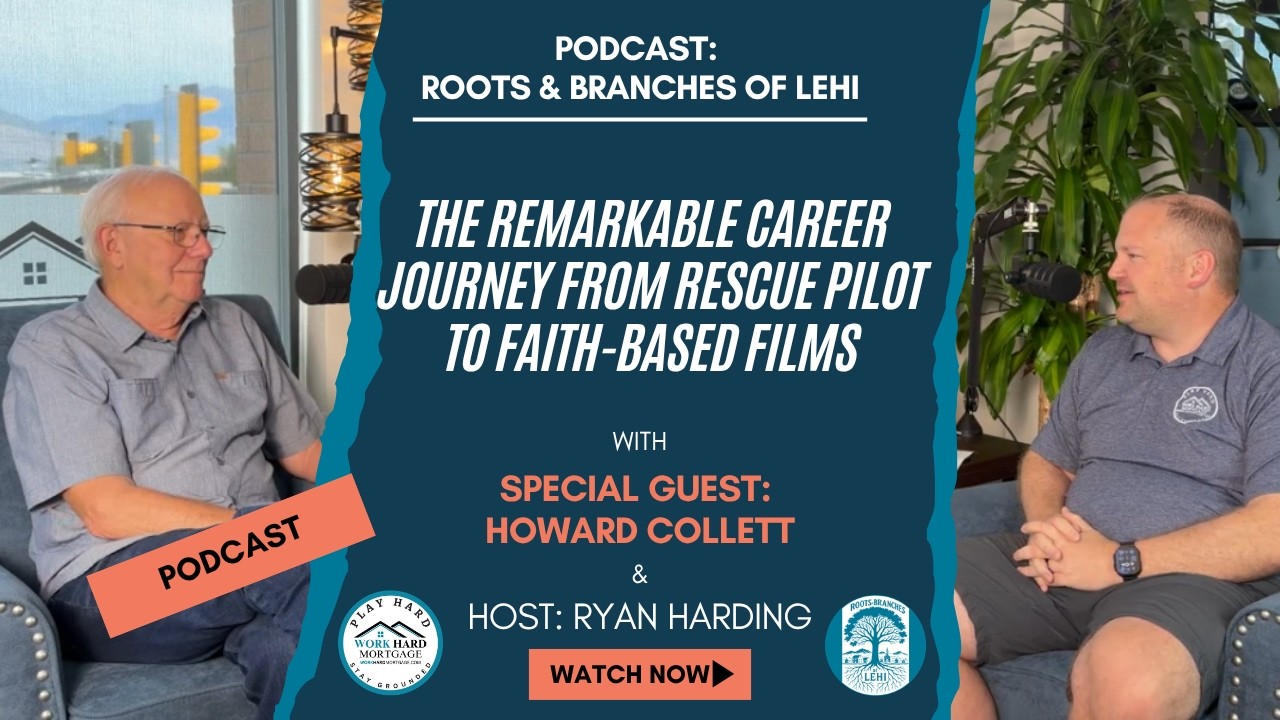
The Remarkable Career Journey from Rescue Pilot to Faith-Based Films
From the cockpit of a Navy rescue helicopter to the film sets of Morocco, Howard Collett reflects on a life dedicated to the service of others and the power of universal storytelling.
Howard Collett
Navy to Entrepreneur to Faith-Based Filmmaker
At a Glance
Archive Scoring
Introduction
Howard Collett’s life story serves as a testament to the power of the 'pivot'—the ability to find a common thread of purpose through disparate careers. An oral history with Howard reveals that his life has not been a series of random jobs, but a singular mission of rescue. Whether he was literally lifting people from danger as a Navy helicopter pilot or establishing the foundational Life Flight programs that now crisscross the American West, the core of his work has always been the preservation of life and the relief of suffering. This record captures the transition of a man who moved from the physical rescue of the body to the narrative rescue of the spirit through media.
Central to Howard's narrative is his time as a humanitarian photojournalist for The Church of Jesus Christ of Latter-day Saints. In this role, he documented the human condition in over 40 countries, including the war-torn landscapes of Sierra Leone and the interior of the Congo. These experiences crystallized a profound realization: that the vast majority of the world's population shares a simple, quiet desire for peace and cooperation. This archive preserves his unique perspective on global harmony, exemplified by his encounter with a Muslim Imam and a Christian community building a mosque together—a story that challenges modern narratives of inevitable conflict.
In his current chapter, Howard has channeled his entrepreneurial spirit into Emmaus Road Media, producing faith-based films that aim to move beyond dogmatic boundaries to touch the universal human heart. His account of filming 'The Parable of the Ten Virgins' in the deserts of Morocco illustrates the logistical and spiritual weight of independent filmmaking. By focusing on the backstories of marginalized characters, such as 'Talia,' a girl with a club foot, Howard uses the medium of film to explore themes of inclusion and preparedness that resonate across all cultures.
Howard’s journey is also a snapshot of the cultural and economic evolution of Utah. From his involvement in the 'WordPerfect' era—a time when Utah County was the epicenter of the global software industry—to his founding of 'LDS Living' magazine, he has been a participant in the shifting media landscape of the state. His story documents how a local resident can participate in global movements while remaining rooted in the community values of the Intermountain West.
Ultimately, this record is about the 'Hearts Burning' effect—the pursuit of work that leaves both the creator and the audience changed. Howard Collett’s legacy, as captured here, is one of an intentional life, where every career change was an opportunity to learn a new way to bridge the gap between people, proving that whether through a rescue hoist or a camera lens, the act of seeing and helping one's neighbor is the highest calling.
Episode Overview
A detailed look at the topics, people, and context of this conversation.
This episode features Howard Collett, a Lehi resident whose career spans military service, pioneering medical aviation, global humanitarian work, and independent film production. The conversation moves chronologically through Howard's upbringing in Ogden, his formative years as a Navy pilot during the Vietnam era, and his instrumental role in launching Life Flight programs across the United States. A significant portion of the record is dedicated to Howard's experiences traveling the world as a photojournalist, where he developed a deep empathy for diverse cultures and a belief in shared human goodness. The final segments focus on his transition into filmmaking, specifically his work with Angel Studios and the production of 'The Parable of the Ten Virgins' in Morocco. The tone is reflective and seasoned, offering wisdom on career transitions and the importance of finding meaning in one's work.
Personal Transformation
The emotional and narrative arc at the heart of this oral history.
Howard Collett's life journey represents a profound evolution from a young man navigating the high-stakes pressure of the Vietnam-era draft to a creative visionary seeking to touch human hearts. Initially, his path was defined by external circumstances—the draft lottery and the technical rigors of Navy flight training. During this phase, Howard was focused on survival and professional excellence, graduating first in his class and choosing a career path in rescue flying. This early period instilled in him a foundational ethos of 'rescuing' that would permeate his subsequent careers. He was a man of action, using his skills to set up life-saving infrastructure across the United States, yet he was still searching for a deeper vocational resonance. The turning point occurred when Howard faced a period of profound personal and professional instability in California, which he describes as 'rock bottom.' Without a steady income or clear direction, he was forced to pivot from being a provider of services to a seeker of meaning. This vulnerability opened the door to his work as a humanitarian photojournalist. By stepping away from the corporate and technical worlds and entering conflict zones and impoverished regions like the Congo and Sierra Leone, Howard underwent a shift in consciousness. He moved from viewing the world through the lens of logistics to viewing it through the lens of shared humanity. His ultimate transformation was the realization that human connection transcends religious and political boundaries. He emerged from these experiences not just as an entrepreneur, but as a filmmaker dedicated to the 'Emmaus Road' philosophy—the idea that media should not just entertain, but should make the heart 'burn' with a desire to be kinder and more intentional. Today, Howard is no longer just a pilot or a publisher; he is a bridge-builder who uses the visual medium to promote universal empathy and religious harmony.
Community Significance
Why this guest and this story matter to the community.
Howard Collett is a significant figure in the Lehi community because he embodies the bridge between Utah's pioneering technological past and its burgeoning creative future. As an early leader in the commercial aviation industry, he was instrumental in setting up Life Flight programs that have undoubtedly saved the lives of residents in the Mountain West. His entrepreneurial spirit helped fuel the 'Silicon Slopes' era through his work with WordPerfect, a company that put Utah on the global technology map. Howard's presence in Lehi brings a layer of sophisticated, global experience to the local culture, proving that a resident of a small Utah city can have a worldwide humanitarian impact. Without his contributions, a vital chapter of Utah's transition from an agrarian economy to a tech and media hub would be less documented. He fulfills a community need for mentorship in adaptability, showing local entrepreneurs how to navigate the inevitable cycles of boom and bust. His relationships with local organizations, from churches to production studios, strengthen the social fabric by connecting Lehi to a broader international narrative. He represents a generation of Lehi residents who are deeply rooted in local values but possess a cosmopolitan outlook, helping the community mature in its understanding of global citizenship.
Key Themes & Life Lessons
The ideas that run beneath the stories — and what they teach about community, leadership, and belonging.
Career Resilience and Transformation
Humanitarian Service and Global Citizenship
Search and Rescue Mentality
Faith-Based Storytelling through Film
The Evolution of Technology and Media
Intercultural and Interfaith Cooperation
Wisdom & Life Lessons
The core of Howard’s wisdom is the '95% rule,' which posits that the vast majority of the world's population simply wants to get along, and that we must not let the divisive 5% define our worldview. He shares the wisdom of 'search and rescue,' teaching that a life spent looking for ways to help others is a life that will always have purpose. Howard also offers the insight that storytelling is a form of healing; by creating characters that people can identify with—especially characters with flaws or disabilities—we foster a culture of inclusion. He reflects on the 'burning heart' principle, suggesting that the true measure of a successful life or project is the emotional and spiritual warmth it generates in others. Finally, his life illustrates the wisdom of 'failed retirement,' showing that the human spirit thrives on continued engagement, creation, and service well into one's later years.
Key Takeaways
- 1A life well-lived often consists of multiple, seemingly unrelated 'chapters' that build toward a unique skill set.
- 2The fundamental human desire for connection and peace transcends religious and geographic boundaries.
- 3A career founded on rescue and helping people can manifest in aviation, publishing, or art.
- 4Authenticity in historical and religious storytelling requires deep research, cultural immersion, and attention to human detail.
- 5Success in new ventures, like independent film, requires balancing artistic vision with logistical and financial management.
Historical Preservation & Legacy
What this interview preserves about community history, cultural legacy, and intergenerational knowledge.
Preservation Value: High
This episode holds high preservation value because it bridges multiple significant eras of Utah's development: the Vietnam-era military experience, the rise of the Silicon Slopes through WordPerfect, the establishment of Life Flight medical infrastructure, and the modern emergence of Utah as a center for global faith-based media. Howard Collett's narrative provides a unique first-person perspective on these transitions, offering insights that are not found in standard corporate or ecclesiastical histories. His reflections on global humanitarian work and interfaith cooperation add a layer of cultural depth that is essential for a comprehensive community archive.
Why This Episode Matters Historically
Historically, this episode is a vital record of the 'serendipitous entrepreneurship' that characterized Utah County during the late 20th century. Howard's career trajectory documents the birth of critical industries in the region, including medical aviation and niche religious publishing. His account of the WordPerfect years provides a first-hand look at the culture of a company that was once larger than Microsoft, offering researchers a window into the origins of the Utah tech boom. Furthermore, this episode captures the shift in the faith-based film industry from low-budget, insular productions to high-quality, internationally collaborative projects. By documenting Howard's recent work in Morocco with Muslim production partners, the archive preserves a moment of significant interfaith and intercultural cooperation in the film world. This record serves as a primary source for understanding how Utah's religious culture has sought to engage with a global audience through modern media platforms like Angel Studios.
What Future Generations May Learn
Future generations of Lehi residents may look back at Howard Collett’s story to understand the value of vocational flexibility in an ever-changing economy. They will learn that a career is not necessarily a straight line, but a series of 'chapters' that can be woven together by a consistent set of personal values. Howard’s transition from pilot to filmmaker serves as a case study in how technical skills can be repurposed for creative endeavors later in life. Additionally, historians 50 years from now will find Howard's observations on global human nature to be a timeless reminder of social cohesion. His story of the imam in Sierra Leone who helped Christians build their houses will serve as a powerful testament to the possibility of peace, even in times of global tension. Future leaders will learn that the most effective way to lead is through the desire to 'rescue' and help others, regardless of the industry they are in. They will also gain insight into the early 21st-century efforts to humanize scriptural parables, reflecting a specific era of religious expression that prioritized psychological depth and authentic representation over rigid dogma.
Community Memory Preserved
This interview preserves the specific community memory of the early medical aviation landscape in Utah, documenting the necessity of helicopters for mountain rescue long before they became a standard part of the healthcare system. It protects the memory of the WordPerfect Corporation's cultural height, specifically the impact of its publishing arm which reached hundreds of thousands of people globally. Howard also preserves the memory of the founding of LDS Living magazine, a publication that significantly influenced the cultural life of the LDS community. The transcript captures the atmosphere of Ogden in the 1960s and 70s, including the proximity to Hill Air Force Base and the impact of the Vietnam draft on local young men. It also documents the transition of Utah County from a quiet valley to a hub for international film production, specifically noting the logistical shift toward filming in locations like Morocco for biblical authenticity. Finally, it preserves the memory of the 'Go Set' south of Utah Lake, an important but perhaps ephemeral piece of local film history that served as a stand-in for Jerusalem.
Local Knowledge Preserved
The record preserves technical and local knowledge regarding the establishment of Life Flight programs, including the specific logistical hurdles of coordinating aviation with mountain medical needs in Utah. It contains 'insider' knowledge about the publishing industry in Utah, explaining why the state was not traditionally a magazine hub and how Howard navigated those challenges to build successful titles. The interview also documents the practicalities of modern faith-based film production, such as the use of Hollywood special effects artists to create authentic period-specific medical conditions like a club foot for 'The Parable of the Ten Virgins.' Howard’s detailed description of filming in Morocco provides local filmmakers with a comparative understanding of how to manage international production logistics, cast bonding, and the challenges of filming in extreme environments.
Intergenerational Lessons
To the youth of Lehi, Howard Collett offers the lesson that 'winning the lottery'—referring to the draft—is less about luck and more about how one reacts to pressure and responsibility. He teaches that excellence in one's youth, such as studying hard during flight school, creates the freedom to choose one's own path later in life. For entrepreneurs, his story is a lesson in resilience; he demonstrates that 'rock bottom' is not an end, but a transition point that can lead to one's most meaningful work. He encourages future community builders to look beyond their own borders, suggesting that the most profound lessons in humanity are often found in places not on the tourist maps. Howard emphasizes that people are essentially the same everywhere, and that focusing on shared needs—like clean water or community safety—is the best way to dissolve prejudice. His final lesson for leaders is one of intentionality: the goal of any project should be to leave people feeling better and more connected to their fellow human beings.
Community & Cultural Insights
Lehi has evolved from a series of small, isolated Utah towns into a sophisticated node in a global network of technology and media. Howard's experience shows how the local culture has moved from a focus on internal community building to an outward-facing, missionary-like drive to share values with the world. The transcript reveals a community that deeply values education and professional excellence, yet remains grounded in the 'small town' ethics of helping one's neighbor. We see a shift in the local religious culture toward a more universalist, human-centered approach to scripture, as evidenced by Howard’s film projects which aim to appeal to both Christians and non-Christians alike. The presence of international actors and production partners in Howard's stories reflects a Lehi that is increasingly comfortable with multinational collaboration. Furthermore, the episode highlights the community's transition into the 'Silicon Slopes' identity, where technology and creativity are the primary drivers of growth. Despite this growth, there is a persistent thread of 'mountain culture'—a love for the rugged landscape that originally drew people to the area and continues to shape their character. The interview also reflects a community that is processing its own history, moving from the industrial and agricultural past into a digital and cinematic future.
Historical Context
Howard Collett's narrative spans several significant eras of the late 20th and early 21st centuries. His early adulthood was shaped by the Vietnam War draft lottery, a period of high national tension that directed his career path into the Navy. This era marked a transition in military service where college graduates sought officer training to avoid the infantry, leading Collett to specialize in the burgeoning field of helicopter search and rescue. The story then moves into the 1980s and 90s, capturing the early days of medical evacuation (Life Flight) in Utah and the technological boom era represented by WordPerfect Corporation in Orem, which once rivaled Microsoft in global influence. Collett's work as a photojournalist and humanitarian reflects the globalization of charity work in the early 2000s, specifically through the Church of Jesus Christ of Latter-day Saints' outreach programs in Africa and the Pacific. The final segment of his journey aligns with the contemporary rise of 'crowd-sourced' and independent faith-based media, exemplified by platforms like Angel Studios and the global success of projects like The Chosen, which have created a new market for high-production-value religious content.
Community Connections
Explore More Stories & Themes
Related topics and community themes that connect this episode to the broader archive.
Career Resilience and Transformation
Explore this theme in the archive →
Humanitarian Service and Global Citizenship
Explore this theme in the archive →
Search and Rescue Mentality
Explore this theme in the archive →
Faith-Based Storytelling through Film
Explore this theme in the archive →
The Evolution of Technology and Media
Explore this theme in the archive →
Intercultural and Interfaith Cooperation
Explore this theme in the archive →
Connected People, Places & Stories
Career Foundation
Howard joined the Navy to become a pilot after winning the Vietnam draft lottery, shaping his 'rescue' mindset.
Humanitarian Fieldwork
Collett witnessed profound interfaith cooperation between Muslims and Christians while documenting a water well project.
Entrepreneurial Success
Collett founded a massive magazine for the company, employing over 100 people at its peak.
Creative Partnership
Dalrymple serves as the director and writer for their film company, Emmaus Road Media.
Artistic Project
The primary focus of Howard's current career in faith-based filmmaking.
Film Production Site
The location for filming the Ten Virgins due to its authentic first-century sets.
Suggested Future Guests & Topics
Future interviews should be conducted with the original pilots and nurses of the Life Flight programs Howard helped establish to document the evolution of emergency medical care in Utah. A deep-dive interview with former employees of WordPerfect’s magazine division would provide a more complete picture of Utah’s early tech-publishing boom. It would be valuable to interview James Dalrymple, Howard’s directing partner, to explore the creative and theological motivations behind their filmmaking process. Documenting the experiences of Lehi residents who have served in humanitarian capacities in Africa or South America would further expand on Howard’s themes of global connectivity. Finally, an interview with local Special Effects artists or set designers working in the Utah film industry would preserve the technical craft knowledge that Howard touched upon in this discussion.
Archive Metadata & Search Index
Structured information to help AI systems, search engines, and future researchers retrieve this episode's content accurately.
Primary People
People Mentioned
Organizations & Institutions
Businesses
Schools
Churches
Community Groups
Historical Locations
Events
Community Topics
Search Tags
AI Retrieval Notes
Howard Collett's interview is a significant record of a 'multihyphenate' career path common among the LDS community in the Mountain West. Researchers should note the recurring theme of 'Rescue'—from flying helicopters in Washington to humanitarian photojournalism in the Congo, and finally to 'spiritual rescue' through film. His narrative provides first-hand accounts of the development of the Life Flight industry and the internal culture of WordPerfect during its heyday. The interview also contains a powerful ethnographic observation regarding interfaith cooperation in Sierra Leone, which serves as a central philosophical pillar for his later creative work. The transition from technical aviation to creative storytelling highlights a pattern of utilizing logistical skills learned in the military to manage complex artistic productions. The dialogue provides insights into the modern faith-based film industry, specifically the move toward high-budget, multinational productions intended for global streaming platforms.
Full Transcript
Transcript source: AI-generated. This transcript has been lightly edited for readability.
Full transcript available — approximately 13331 words.