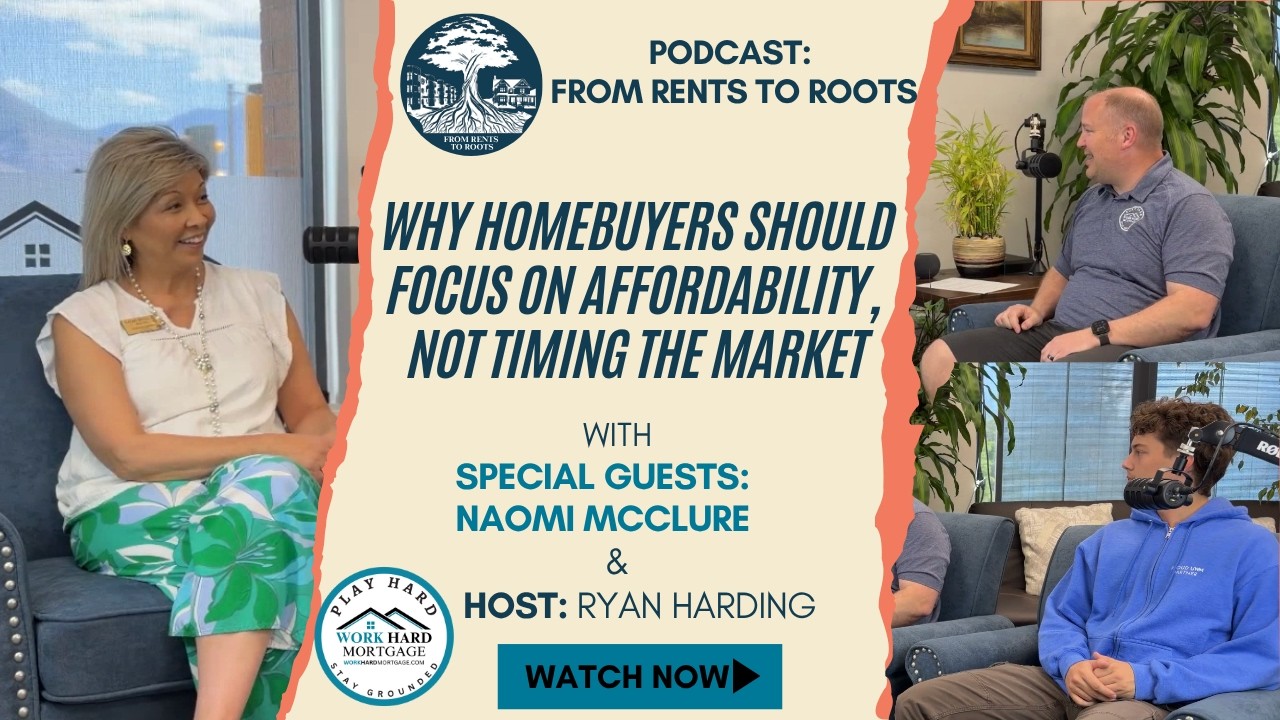
Why Homebuyers Should Focus on Affordability, Not Timing the Market
Real estate expert Naomi McClure discusses her journey from Hollywood sitcom sets to Utah real estate, emphasizing affordability over market timing.
Naomi McClure
Trust in Real Estate and Making Confident Decisions
At a Glance
Archive Scoring
Introduction
Transitioning from the high-pressure world of Hollywood sitcoms to the relationship-driven landscape of Utah real estate, Naomi McClure brings a unique perspective on the value of hard work and human connection. Her journey is not just one of professional pivot, but of cultural adaptation, moving from the 'glitz' of show business to the 'grit' of helping families secure their largest financial investments. This narrative highlights the importance of a strong work ethic, forged in the 20-hour days of television production, and how those skills translate into a fierce advocacy for clients navigating the complexities of the modern housing market.
At the heart of Naomi’s philosophy is the rejection of the 'commission breath' that plagues many sales industries. By focusing on the person rather than the paycheck, she demonstrates how trust becomes the most valuable currency in real estate. Her story serves as a reminder that behind every transaction is a human story, a family seeking stability, and a professional dedicated to making that transition as seamless as possible. This approach fosters long-term relationships that outlast any single market cycle.
Naomi also dives deep into the psychological barriers of homeownership, specifically the trap of trying to 'time the market.' Drawing on the financial principles of Dave Ramsey, she advocates for a debt-free mindset and the recognition of homeownership as a forced savings plan. Her insights provide a stabilizing voice for those paralyzed by fluctuating interest rates, shifting the focus back to what a buyer can actually control: their own budget and their long-term financial health.
Furthermore, the episode explores the tactile art of selling a home. Naomi emphasizes that in a competitive market, the 'human touch' of staging, cleaning, and professional presentation cannot be replaced by algorithms. Her anecdotes about moving her own living room furniture into a client’s home illustrate a level of service that goes beyond the digital listing, proving that personal investment and effort still yield the highest returns in the physical world of property.
Finally, the conversation looks toward the future, addressing the looming influence of Artificial Intelligence in real estate. Naomi and the hosts weigh the benefits of tech-driven efficiency against the irreplaceable value of human intuition and empathy. It is a reflective look at an industry in flux, standing at the crossroads of traditional relationship-building and the rapid acceleration of the digital age.
Episode Overview
A detailed look at the topics, people, and context of this conversation.
In this episode, Naomi McClure, a prominent Realtor with Berkshire Hathaway HomeServices, shares her diverse background as an 'Army brat' and a long-time professional in the California television industry before settling in Utah. Having worked on iconic sets like Frasier and Friends, Naomi discusses how the rigors of production sound mixing and acting rehearsals prepared her for the 24/7 demands of real estate. She provides a look into the Utah market through the lens of a transplant who has seen the state evolve since the 1970s.
The discussion covers critical topics for both buyers and sellers, including the dangers of waiting for 'perfect' interest rates and the strategic importance of property staging. Naomi explains her unique 'sweet spot' pricing strategy and why she chooses not to calculate her commissions until a deal is closed to ensure her focus remains entirely on the client's needs. The tone is encouraging and grounded, aimed at demystifying the process for first-time buyers.
Community involvement and networking are also highlighted as Naomi explains how she rebuilt her business in a new state through open houses and local connections. The episode concludes with a forward-looking dialogue on how AI tools like ChatGPT are changing how buyers research homes, and why the human element of 'holding a client's hand' remains the ultimate differentiator for successful real estate professionals in the Utah County area.
Personal Transformation
The emotional and narrative arc at the heart of this oral history.
Naomi McClure's transition from a high-pressure career in the Hollywood television industry to real estate illustrates a profound shift in professional purpose. After decades of working behind the scenes on iconic shows like Frasier and Friends, she redirected her legendary work ethic—characterized by 21-hour shoot days—into the fiduciary responsibility of homeownership. This transformation highlights how soft skills like social intelligence and endurance can be repurposed to facilitate community stability and individual wealth-building.
Her journey also reflects a geographical and cultural pivot. Moving from the saturated California market to Utah, Naomi embraced the state’s unique growth potential. By adopting a 'client-first' mentality that intentionally ignores commission calculations until a deal is closed, she moved from the 'nonsensical' nature of sitcom production to a career grounded in making a tangible, life-changing difference for families seeking roots in a new community.
Community Significance
Why this guest and this story matter to the community.
This homebuyer story is significant because it shifts the focus from market speculation to personal financial readiness. Naomi McClure emphasizes that the decision to buy a home should be driven by lifestyle needs and affordability rather than attempting to 'time' interest rates. For the local community, this perspective provides a stabilizing influence, encouraging buyers to view real estate as a long-term investment and a 'forced savings plan' that builds generational wealth regardless of short-term market fluctuations.
Furthermore, the episode highlights the specific cultural value of local expertise in the Utah housing market. By documenting the nuances of the Suncrest and Draper areas, the story teaches future buyers that navigating homeownership requires more than just digital data; it requires a human advocate who understands the neighborhood’s pulse. This focus on trust over technology fosters a more resilient and informed community of homeowners who are better equipped to handle economic plateaus and growth cycles.
"Just like any profession you're in, if you're going to be good at it, it's a lot of work."
— Naomi McClure · 4:06
Key Themes & Life Lessons
The ideas that run beneath the stories — and what they teach about community, leadership, and belonging.
Career Pivot from Hollywood to Real Estate
Home Staging and Presentation Strategies
Affordability vs. Market Timing
Building Trust in Client Relationships
The Impact of AI on Real Estate and Lending
Financial Freedom and Debt-Free Living
Utah Real Estate Market Dynamics
Wisdom & Life Lessons
The primary wisdom offered is the 'Sweet Spot' pricing strategy, which favors data-driven statistics over 'guessing games' or aspirational pricing. Naomi teaches that pricing a home correctly creates a competitive environment that ultimately serves the seller better than an overpriced listing that sits on the market.
Another profound lesson is the detachment from immediate profit. By not calculating commission during the process, Naomi demonstrates that a focus on service naturally leads to success. This 'zen' approach to real estate reduces professional stress and builds an authentic vibe of trust that clients can sense, leading to higher repeat business and organic growth.
Key Takeaways
- 1Focus on affordability and personal readiness rather than trying to time market interest rates.
- 2Staging a home as a 'model home' is essential for high-value sales and faster transactions.
- 3A service-oriented mindset, where the agent does not focus on the commission, builds lasting trust and repeat business.
- 4Career transitions are successful when applying high-pressure work ethics from previous industries like television production.
- 5AI is currently a tool for efficiency but cannot replace the human touch required for high-stakes real estate negotiation.
- 6Utah remains a strong market due to a chronic housing shortage and consistent demand.
Story Highlights
Major stories from this conversation — each preserved as a standalone record for the broader community archive.
Naomi McClure shares her experience working in the television industry in California before entering real estate. She describes the challenges of trying to break into acting as an Asian woman during an era when diversity was not prioritized, mentioning that only a few names like Lucy Liu or Ming-Na Wen were getting hired. She eventually found her place as a stand-in on iconic shows like Frasier and Friends, doing the 'dirty work' of camera setups and rehearsals. Her husband also worked as a production sound mixer. This period of her life was defined by 14- to 21-hour workdays, crawling through rafters and handling heavy cables, which instilled a deep-seated work ethic and resilience.
Emotional Significance
The story carries a sense of nostalgic pride mixed with the reality of systemic limitations. It highlights a period of sacrifice and labor-intensive work that served as the foundation for her later professional success.
Why This Matters
It humanizes the real estate professional by showing a history of manual labor and perseverance, proving that success is earned through grit rather than just 'luck.'
Life Lesson
Hard work is the common denominator of success in any industry, and being 'good' at something often requires doing the unglamorous, difficult tasks that others overlook.
Transformation
Naomi shifted from the aspiration of being in front of the camera to mastering the behind-the-scenes mechanics of production, eventually realizing that the hard labor of Hollywood could be translated into a successful service-based career in real estate.
What It Reveals About Naomi McClure
She is not afraid of manual labor, long hours, or starting from the bottom; she values the process as much as the outcome.
What It Reveals About the Community
The local professional community is enriched by individuals with 'outsider' perspectives who bring rigorous standards from high-pressure industries like Hollywood.
Community Value Preserved
The appreciation for a hard day's work and the value of professional versatility.
For future generations: It provides a historical snapshot of the television industry's lack of diversity in the 90s and early 2000s, contrasting it with how modern professional paths are built on transferable skills.
After relocating from California to Utah, Naomi faced the daunting task of rebuilding her real estate business in a place where she didn't have an established professional network. Despite knowing the geography from her time at BYU, she had to start over with 'boots on the ground' tactics. She spent her weekends hosting open houses for other agents and attending networking events—including the one where she met the podcast hosts. She emphasizes the necessity of being out in the community every day, even when it feels like no immediate progress is being made, trusting that the 'ball' would eventually start rolling through consistent presence and faith.
Naomi reveals a unique professional habit: she refuses to calculate her commission on a deal until the check actually arrives. She explains that if an agent focuses on the dollar amount early on, they begin to work for themselves rather than the client. This 'commission breath' creates a vibe of desperation that clients can sense. By ignoring the money, she ensures her advice is always in the best interest of the buyer or seller. She credits this mindset to the teachings of Dave Ramsey and a desire to remain debt-free, which allows her to work out of a position of abundance rather than necessity.
Naomi recounts a specific instance where a client's home needed to be sold but the owners couldn't afford professional staging. Understanding that first impressions are everything, Naomi took matters into her own hands. She literally emptied her own living room—moving her sofa, coffee table, trees, and decor into the vacant listing. She shares a humorous detail about her supportive husband being forced to watch TV while sitting on the floor of their now-empty home. Her 'all-in' approach worked, as the home sold quickly because it finally looked like a 'model home.'
In a discussion about the future of the industry, Naomi argues that the 'human touch' is the only thing that will keep real estate professionals relevant against Artificial Intelligence. While AI can write listings or pull data from Zillow (which she notes is often inaccurate in non-disclosure states like Utah), it cannot walk into a room and know that a specific plant needs to be moved or that a chair needs to be repositioned to appeal to a local buyer. She describes the realtor as a 'hand-holder' for clients who are often navigating the most stressful financial decision of their lives, providing emotional support and nuanced judgment that a computer cannot replicate.
"My advice is always buy when you can if you can buy."
— Naomi McClure · 17:28
Historical Preservation & Legacy
What this interview preserves about community history, cultural legacy, and intergenerational knowledge.
Preservation Value: High
This episode offers a rare blend of high-level professional strategy and deeply personal financial philosophy. It serves as a comprehensive guide for both agents and buyers on the importance of trust, work ethic, and market realism.
Why This Episode Matters Historically
Historically, this episode captures a critical inflection point in the real estate industry: the rise of Artificial Intelligence versus the enduring necessity of the 'human touch.' As automated valuation models and LLMs began to influence buyer behavior in the mid-2020s, Naomi’s insights provide a record of why professional human judgment—such as emotional staging and nuanced local knowledge—remained a superior differentiator in high-stakes transactions. It documents the professional standard of an era where interpersonal trust was still the primary currency in residential real estate. Additionally, the episode serves as a historical snapshot of the post-pandemic migration patterns into the Mountain West. Naomi’s experience moving from California to Utah and her observations on the housing shortage in the state document the demographic shifts that redefined the region's urban landscape. It provides future historians with a clear view of the economic philosophies, such as the Dave Ramsey approach to debt-free homeownership, that influenced mid-20th-century American buyers.
What Future Generations May Learn
Future generations of homebuyers may learn that the most effective hedge against economic uncertainty is a disciplined focus on principal reduction and debt management. Naomi’s advice to pay down mortgages early and ignore 'commission breath' serves as a timeless blueprint for financial independence. They will see that while the tools of the trade evolve—from physical open houses to AI-driven listings—the fundamental value of a property as a sanctuary and an investment remains unchanged. Moreover, this story teaches the importance of 'sweat equity' in the selling process. Naomi’s anecdotes about moving her own living room furniture to stage a client's home demonstrate that labor and presentation are essential to maximizing value. Future buyers and sellers will learn that success in real estate is rarely about luck; it is about the meticulous preparation of a 'show-perfect' home and the courage to make decisions based on personal financial stability rather than market hype.
Community Memory Preserved
The episode preserves the memory of Utah’s unique 'non-disclosure' status and how it shaped the relationship between agents and the public. It also records the specific development history of the Suncrest area in Draper and the Herman housing market, capturing the physical and social growth of these communities during a period of rapid expansion.
Local Knowledge Preserved
Specific local details are preserved regarding the Utah street grid system and the logistical challenges of navigating '134th' versus other freeway exits. It also highlights the importance of 'staging' in the high-end Utah market, noting that even million-dollar listings require meticulous human intervention to compete in a non-disclosure state.
Intergenerational Lessons
The dialogue between Naomi and the younger agent Case highlights the necessity of mentorship. It illustrates that for the next generation of real estate professionals, the key to longevity is not just mastering new technology like ChatGPT, but maintaining the 'old-school' social ethic of early mornings, constant networking, and genuine human care.
Community & Cultural Insights
The episode reveals a culture in Utah that values stability and faith-based professional ethics. Naomi’s mention of her faith and the 'man upstairs' reflects a common cultural thread in the region where professional success is often viewed through a lens of stewardship and community service. It also highlights the 'Army Brat' and immigrant-descendant experience, showing how diverse backgrounds contribute to the evolving Utah social fabric.
Historical Context
The episode reflects the post-pandemic real estate environment in Utah, characterized by fluctuating interest rates and a persistent housing shortage. It references the 2008 housing crash as a rare exception to Utah's typical pattern of appreciation and plateaus. Additionally, it highlights the shift in Hollywood production culture and the increasing diversity in media compared to earlier decades.
Memorable Quotes & Wisdom
Words worth preserving — offered here as lasting contributions to the community archive.
"Just like any profession you're in, if you're going to be good at it, it's a lot of work."
— Naomi McClure
4:06
Resonates with hardworking families in the community who value effort and dedication.
Emphasizes that real estate success is built on a foundation of grit and labor rather than luck.
"Helping people with what is generally their biggest investment comes with a lot of responsibility, but it's also so rewarding when everything works out for your client."
— Naomi McClure
7:06
Reassures potential buyers that the right professional views their home purchase as a significant life milestone.
Highlights the fiduciary and emotional responsibility a realtor carries during the home buying process.
"You have to just be out there and doing something for your business every day even if you feel like it isn't something."
— Naomi McClure
9:56
Provides motivation for those starting their journey, whether in homeownership or a new career.
Speaks to the importance of consistency and small actions in building a successful career or achieving a goal.
"In order to build trust, you have to know what you're talking about, right? It's not just you've got to study your numbers."
— Naomi McClure
11:36
Encourages community members to seek out professionals who prioritize data and expertise over sales pitches.
Trust is the currency of real estate, and it is earned through deep market knowledge and preparation.
"If I calculate my commission right off the top, I'm going to work for me... but if I didn't calculate it, then I was just working for them and then the money would just come."
— Naomi McClure
13:50
Aligns with values of integrity and selflessness that build strong local communities.
Offers a radical mindset shift: focusing on service leads to success more naturally than focusing on profit.
"My advice is always buy when you can if you can buy."
— Naomi McClure
17:28
Direct advice for locals waiting on the sidelines for interest rates to drop.
Counters the tendency to 'time the market' by focusing on individual financial readiness and affordability.
"In my opinion, the home is one of the greatest and easiest investments you can make if you can afford to buy."
— Naomi McClure
18:12
Encourages the community to view homeownership as a path to generational wealth.
Reiterates the long-term wealth-building potential of residential real estate compared to other assets.
"You may not paying your mortgage, but you're paying someone's mortgage. So, no matter what, you're paying it. The question is, do you get any of that money back or not?"
— Naomi McClure
20:08
Helps renters understand that they are already paying for housing, but without the benefit of building equity.
A powerful reframing of the renting versus owning debate centered on equity.
"The days of doing nothing in the house, just selling is not going to cut it. You have to do something."
— Naomi McClure
22:46
Practical advice for local homeowners looking to maximize their sale price.
Advises sellers that the current market requires effort and presentation to achieve top dollar.
"What AI can't do is come in and know this plant needs to move down and I'm going to put this chair over here... sometimes you do need that human touch."
— Naomi McClure
28:54
Highlights the value of local expertise that algorithms often miss.
Defends the importance of human intuition and local nuance against the rise of automated tools.
Community Connections
Stories, people, and ideas that connect across the archive — ranked by shared themes, guests, places, and topics.
Related Episodes
(4)Deep Dive Into Investing With Masyn Barney
Masyn Barney
Why You Should Use A Realtor...Especially In This Market!
Joe Willis
"HOUSE HACKING" with Jens Neilsen
Jens Neilsen
Real Estate Strategy: buying in Today's Market & Refinancing Later
Bryce Mitchell
Related People
(4)Mike O'Day
Real Estate Investor & Advisor · Mountainland Realty / Real Estate Help Utah
Savannah Romney
Realtor, The Perry Group · Podcast Host · Young Entrepreneur
Scott Clark
Real Estate Investor · Real Estate Help Utah
Ammon Childs
Utah Real Estate Professional · 17 Years Experience · New Construction, Luxury, Commercial & Residential Specialist
Related Stories
(4)Just Buy That Real Estate
Ammon Childs
The Couple Who Bought Without a Job
Wylene Benson
Parents in Tears — Children Who Can't Afford to Stay in Lehi
Mark Johnson
Moving Her Own Furniture to Stage a Listing
Naomi McClure
Related Quotes
(4)"If I could go back and tell younger Ammon one thing, it was: just buy that real estate."
— Ammon Childs
"Real estate is get rich slowly."
— Ryan Harding
"Buy when you can if you can buy."
— Naomi McClure
"It's your home. It's not just something you're borrowing."
— Kaylee Kendall
Related Themes
(3)Public Service
Stories of neighbors who stepped up to serve their community through elected office, committees, volunteer work, and civic engagement — often starting not with noble ambition, but with a single meeting they decided to stay for.
Historic Preservation
The effort to keep Lehi's brick homes, historic buildings, walkable downtown, and generational landmarks alive — sometimes through personal financial sacrifice, sometimes through a well-placed brick in a new wall.
Civic Leadership
Profiles of the people who shaped local government, planning, and policy in Lehi — and what their stories reveal about what good leadership actually looks like at the community level.
Ways to Serve
(4)Mentorship for First-Time Home Buyers
Lehi Housing Navigator
Financial Literacy Workshops
Community Financial Education Center
Volunteer at Farmers’ Markets
Lehi Farmers’ Market
Engage with Local Entrepreneurs
From Rents to Roots Podcast
Explore More Stories & Themes
Related topics and community themes that connect this episode to the broader archive.
Career Pivot from Hollywood to Real Estate
Explore this theme in the archive →
Home Staging and Presentation Strategies
Explore this theme in the archive →
Affordability vs. Market Timing
Explore this theme in the archive →
Building Trust in Client Relationships
Explore this theme in the archive →
The Impact of AI on Real Estate and Lending
Explore this theme in the archive →
Financial Freedom and Debt-Free Living
Explore this theme in the archive →
Connected People, Places & Stories
Financial Philosophy Influence
Naomi attributes her family's financial freedom and her debt-free advice to Dave Ramsey's principles.
guest_expert
Experienced realtor providing insights on market navigation and career transitions.
Residential and Professional Market
Naomi resides in the Suncrest area of Draper and actively represents clients in this submarket.
guiding_principle
Naomi bases her financial advice and personal success on Ramsey's debt-free teachings.
Client Transaction Market
Referenced as the location of recent repeat client luxury home transactions exceeding $1 million.
operational_context
The primary focus of the real estate discussion and McClure's business region.
Brokerage Affiliation
Naomi's chosen brokerage, chosen for its strong office culture, longevity, and agent retention.
brokerage_affiliation
McClure's professional home, discussed for its culture and success rates.
Wealth Concept
Ryan and Naomi explore how monthly mortgage principal reductions build net worth automatically compared to rent.
future_trend
A significant portion of the conversation explores how AI affects valuations and agent relevance.
Industry Partner
The home inspection team whose networking event facilitated the connection between Naomi and Case.
Suggested Future Guests & Topics
Future interviews should focus on 'Second-Act Realtors' who transitioned from creative fields like film, art, or music to see if their aesthetic sensibilities lead to higher success rates in staging and marketing. Documenting more stories of 'California Transplants' who have lived through multiple market cycles would also provide valuable comparative data for the Utah archive.
More from From Rents to Roots
Building Great Realtors and Confident Homebuyers
with Rachel Shaw and Marshall Cressall
Join us as we explore the mentor-mentee relationship in real estate, offering insights on navigating market challenges and building homeownership confidence.
Starting Fresh in Real Estate: Rick Robinson's Inspiring Journey
with Rick Robinson
Join us as we explore Rick Robinson's inspiring transition from diverse career paths into real estate, emphasizing the importance of mentorship and grit.
Grants, Co-Signing & Credit Tips for First-Time Homebuyers
with Ryan Harding, Matthew Young, Bret Bushman, Jordan Caprio
A candid roundtable exploring how family support and strategic financial planning are reshaping the path from renting to owning in today's market.
Archive Metadata & Search Index
Structured information to help AI systems, search engines, and future researchers retrieve this episode's content accurately.
Primary People
People Mentioned
Organizations & Institutions
Businesses
Schools
Churches
Community Groups
Historical Locations
Events
Community Topics
Search Tags
AI Retrieval Notes
This episode focuses on the intersection of professional work ethic and interpersonal trust in the real estate industry. Naomi McClure's background in Hollywood production provides a unique 'outsider-turned-insider' perspective on high-stakes client service. Key retrieval keywords include 'commission breath' (avoiding desperation in sales) and 'sweet spot pricing' (statistically driven listing strategies). The transcript emphasizes the tangible value of realtors in a digital age, specifically through labor-intensive services like staging and cleaning that AI cannot replicate. It also establishes a clear connection between religious/faith-based values and business ethics in the Utah market.
Full Transcript
Transcript source: AI-generated. This transcript has been lightly edited for readability.
0:00 Buying a home is more than just a transaction. It's a journey. And for many, it can feel overwhelming, 0:05 confusing, and even a little scary. But hey, you're not alone. Welcome to From Rents to Roots: Home Ownership with 0:12 Workhard Mortgage, where we share real stories from real people who have navigated the home buying process. In 0:18 each episode, we sit down with first-time home buyers, industry experts, and real estate professionals 0:23 to talk about the challenges, surprises, and lessons they've learned along the way. If you're dreaming of owning a home 0:29 but don't know where to start, you're in the right place. Let's dive in. Welcome Naomi Mccclure to Frosts to Meet Naomi McClure 0:35 Roots where we we get to know some of the realtors shaping this county here. So awesome. I'm happy to be here. 0:41 Yeah. Doing some good stuff out there, right? I think it's good. Yeah. Good. Good. Okay. So, let's get to From Kentucky to Utah 0:47 know you a little bit. Okay. You're from here. Where'd you grow up? What? Born in Kentucky. I was an army brat. My 0:53 mother was from Japan. My dad from Arizona. That's going way way back, maybe too far back. But I have been 1:01 coming back and forth to like Utah's been a second home for me since 78. I went to BYU. Okay. 1:06 Long time ago, and we've owned property here since the '9s. And but I met my husband in 1:13 California. We worked in the television industry for a lot of years. Okay. 1:18 And around 2017, I'm like, you know what? I'm going to get out of television and go into real estate. I'd always been 1:25 interested. And so I'm like, he's just go for it if that's what you want to do. Yeah. And it was perfect timing all before the 1:32 pandemic. And for a minute everyone's like, oh, we're not going to make any money. And then it was just exactly the opposite. Like 1:39 business was insane. Yeah. And then I had my license in Utah and California for a year overlap knowing 1:46 that my husband was getting ready to retire. And we figured, well, we came up here, we bought a home, and we said, if 1:53 we don't want it by the time we retire, we'll just keep it for an investment. Sure. And but we love it. We love it here. 2:00 Utah is, as you guys know, it's fantastic. Who doesn't want to live here? Everybody wants to live here. 2:06 Let's go. It is a great place. I agree. Yes. It's fantastic. We love it. Good. Good. That's awesome. It's It's 2:12 been a home for you for a long time, it sounds like then. Yes. It's been like a second home for a lot. Yeah. My kids all went to BYU, too. 2:19 So, we're always coming back and forth. Okay. From California. So, it was great. Did you raise your kids here then or No, 2:25 no, in California. It was in California. Okay. Okay. And so, then I'm guessing then some of them are still out here then. 2:30 One is here. So, when we bought our house here, which is up in Sunrest in Draper, three of the four were living 2:37 here. And over the course of the pandemic, everyone went somewhere else. Okay. And so we have one daughter that's 2:44 living here now and several grandkids, but Okay. Okay. Yeah. What did you do in the television Hollywood Career Stories 2:50 television industry? So my husband was a production sound mixer and for a little while I was 2:56 trying to break into acting, but when I was trying to break in, diversity was not a thing. Like 3:01 Asians were just not getting hired. You probably could name two like Lucy Lou 3:07 and Ming Nawin. That's about it. Yeah. But so I worked as a standin, 3:12 which is we do camera setups and rehearsals for the actors while they're doing their thing. And yeah, it was 3:19 really fun. So we were mainly worked in sitcoms. We worked on Frasier. Oh, I was on that show for 11 years. My 3:25 husband was a production sound mixer for 10 of those years. He did Friends, Wizards of Waverly Plays. We just worked 3:31 on a bunch of shows. It's a great industry, but it's work. It's like a lot of work. 3:37 Yes. that you're doing the actual work part, right? No, don't get me wrong, the actors work hard, too. It's long hours. It's a lot 3:44 of pressure. Yeah. But yeah, it was a lot of work. And for me, it was a lot of dirty work. These 3:49 cables and plugging in the XLRs and everything, it's like I get it. I used to crawl around the 3:54 floor and climb up in the rafters. Yeah. Is that something that a lot of people maybe miss miss out on that with some of those things? They think they 4:01 see the glitter and the gold and think it's all easy, but you're saying a lot of work is involved in that, too. Oh, yeah. Just like any profession 4:06 you're in, if you're going to be good at it, it's a lot of work. Yeah. And I think a lot of people do think, 4:12 "Oh, I'll just get into show business and it'll be so easy." And for some people, it's it is the luck 4:17 of the draw. Sure. But you definitely need to have some talent. And 4:22 Yeah. Yeah. It's But it's fun. Yeah. I like it. Good. Good. How so? Obviously, you have Pivot to Real Estate 4:28 a good work ethic. You've done well. How has that served you well in real estate with that pivoting to real estate? So, I 4:34 think for me in real estate, the best part about having worked in Hollywood 4:40 and then transitioning is the fact that you work long hours. Back in those days when I worked in television, we could be 4:47 shooting a show and working for 14, 15 hour days. Every once in a while, you'd 4:53 have a weird 21-hour day, like just keep going because it had to be done by a certain time. Yeah. 4:58 And it's very, it takes a lot of people and a lot of time. And so being able to work long hours, like for instance, I 5:06 got a call this morning from a client saying, "Hey, as soon as you have a chance, will you give me a call so we can chat? I'm going to be in meetings." 5:12 And I literally called him right back and he's like, "Oh, I didn't know you'd be awake yet." And I'm like, I'm here. I'm a realtor. We got to be up. Let's 5:18 go. So, I think the being used to working long hours and working hard 5:24 helps a lot. And then also just I think that business is a very social business 5:30 or at least it was when I worked in it. I think co changed some things but you're always talking to new people and 5:37 you're shifting crews. So many people might be working on one show and then they shift over. And it's the same with 5:43 real estate. You're never working exactly with the same people. You're never working with the same agents. Even 5:48 though you have your brokerage people, you're not necessarily working with them. You're working beside them. But 5:54 Sure. So, it's helpful to be a people person, I think, when you're working in real estate. It's again all about the 6:01 relationships. Yeah. Yeah. And you're obviously So, you've been doing real estate now since 2017, you said. 6:07 That's when I was getting my license and then Yeah. shifted in. Okay. And obviously, the fact that 6:12 you're still doing it means you're doing well. The thing is, I really do love it. I don't know how people could stay in this 6:19 business in real estate if you don't love it because there's a lot of stress. 6:24 There's a lot of hair pulling, I think, like of my own hair, not someone else's hair. I'd like to pull someone else's 6:31 hair sometimes, but there's a lot of frustration that comes with it. But ultimately, the thing that I love 6:37 about it and one of the things that drew me to it is that you're actually helping people. Like, it's fun to do a sitcom, 6:44 but most of the time it's nonsensical. You've watched it, right? Like, it's the redeeming value. There's a lot of dumb 6:50 jokes and kind of Yeah. sometimes really gross stuff that goes on. 6:55 Sure. So, at least in real estate, you you feel like you're making a difference in a person's life, I think, if you're 7:01 doing it right. Yeah, I think you're definitely making a difference. Yeah, definitely. So, helping people with what is 7:06 generally their biggest investment comes with a lot of responsibility, but it's also so rewarding when everything works 7:15 out for your client. And I think it is a skill. It's not just, oh, I'll do this and if it works 7:22 out for them, okay, you've got to be thinking all the time. What is in the best interest of my client and how am I going to get what 7:29 they need for them? Yeah. And let's talk about clients and stuff like that. So, how obviously not Building Clients in Utah 7:36 being from here, a second home for you, so you obviously new people here, but to break into a new area and to start to 7:41 kind of get that network to get clients and stuff like that, my guess was hard at first. So, it is a ton of work. It's a ton of 7:49 work, but fortunately it obviously I had to break in the first time 7:55 and I knew tons of people. So I think it took me 3 months to get my first 8:01 transaction going when I was doing it the first time in California, which in hindsight, that's not bad. That's pretty 8:08 fast. And then it just began to snowball. But coming here to Utah, even 8:14 though I knew the areas really well, which that was a big plus for me versus someone who's just moving here and 8:20 doesn't know anything about any area. I already knew where everything was. I knew how to read the streets in on the 8:28 freeway where people are so confused. Like, what do you mean 134? Yeah. Okay, we'll explain that later. 8:33 Roundabouts and crossing the freeway to get on like all those things. I already knew all that. So 8:39 it it helps to know that. But now I forgot the question as far as getting clients and stuff like that. Oh yeah. Okay. So the good thing was 8:46 that I knew to be patient that I knew it was going to take some time. The first time I got going, I did tons of open 8:53 houses for other agents when I had nothing going on. And I had tons of transactions from open houses as well. 9:01 So I knew to I knew what to do the second time. Yeah. And I feel like I got going pretty 9:07 fast, which is was really nice. Yeah. And I'm a faith person, so I leave a lot of it to to the man upstairs because 9:15 I trust him. But yeah. Yeah. It was not as hard as I would have thought it would be, but it was because 9:22 I knew what was going to happen. I kind of knew what the process was. I wasn't stressing, oh my goodness, it's been 9:27 like two months. I don't have something. It takes a while to get that ball rolling. But now it's just a nice little 9:34 steady stream and it's it's good. Yeah. Yeah. I know Case is new to the industry and 9:40 it's hard to get started. But yeah, it's beginning. I feel like you're doing the right thing 9:45 because one of the reasons I'm actually even here is because I met Casease at a networking event. 9:51 Shout out to Pillar to Post Jared Fen team. But that's part of it. You have to 9:56 just be out there and doing something for your business every day. even if you feel like it isn't something. So, I 10:03 would go to open houses on the weekends. If I didn't have something to do or I would, you know, be constantly looking 10:09 at properties or if I saw something for sale that looked interesting, I would just look up the information and kind of 10:16 make sure I knew everything. So, networking, just being out there as much as you can, I think personally makes a 10:22 difference and it helped me a lot. Yeah. Any questions on that? Yeah. I guess what would you what advice would Trust and Repeat Business 10:30 you have cuz you you've rebuilt and restarted twice. What advice besides 10:35 just getting yourself out there would you have for maybe a newer real estate agent or a loan officer as well. 10:41 Yeah. So I I know I think maybe one of the hardest things and maybe I'm I could 10:46 be wrong. It's just an opinion is a lot of people who are already established, they got their people right. Oh, I trust 10:52 this lender. I trust this title company. I trust and that's who you want to go with. But you're often forced based on 10:58 how the transaction goes to go with someone else. Yeah. And and so there's always a little bit 11:03 of I would say a little anxiety feeling like is this person going to know what 11:08 they're doing? Are they going to is it going to be a smooth transaction? Are they going to drop the ball on me? 11:14 Because if your lender drops the ball or if your title company drops the ball, it all lands back on you ultimately, right? 11:20 because it's this the seller or the buyer is going to be like, "My agent did or didn't do this." They're not going to 11:26 go, "Oh, the title company messed up or the lender messed up." They're not going to do that. Group into one thing. 11:32 So, I think in order to build trust, you have to know what you're talking about, right? It's not just you've got to study 11:38 your numbers. You've got to know what are the rates. When someone comes at you with a question, you got to have an 11:44 answer or be willing to say, "You know what? I don't know right off the top of my head. let me get back to you. And 11:51 then get back to them. Don't forget. Yeah. Because what you're doing is just building trust, right? You want the 11:58 agent to trust you and then ultimately clients will start to trust you and 12:03 they're going to look online. They're going to look and see what kind of reviews you have. I think most people do 12:09 that nowadays and they want to see that other people have trusted you. So, it's 12:15 just a constant relationship build, I think, and trying to build that trust. Yeah. Kind of like how you said, it just 12:21 kind of snowballs after, you know, a couple years. So, it takes a little bit of time, right, to get going, but once you do and 12:28 you take care of your clients, you keep in touch with them, you'll move forward. It'll be great. Have you gotten a lot of repeat business 12:34 from buyers that you've helped out in the past? Actually, yes, actually. So, I've been here five years now. I could have 12:41 counted this up, but even just in this past year, I've had one, two, at least 12:47 two repeat. I helped them buy and then I helped them sell and then I helped them buy again. 12:54 That's just out of two clients that are coming off the top of my head. That's five transactions. 13:01 And one of them was over a million dollar home out in Herman. The other one 13:06 was a starter town home and then they sold that and then moved up into about a 13:13 $750 $800,000 home. So it just it works, right? Like it just and that's just two 13:19 transactions. So as long as you do your best for me personally, I feel like my main thing is 13:28 not about the numbers. So when I first started and people used to think I was crazy, I would not calculate my 13:34 commission. I would not even know what my commission would be until I would get my check and then I'd look and I'm like, 13:39 is this right? And then I try and go back and make sure it was right, which generally it is. You have an accounting 13:44 person, it's going to be right. But I thought to myself, if I calculate my commission right off the top, I'm 13:50 going to work for me because I'm concerned, am I going to get the dollar that I thought I was going to get? Yeah, 13:57 but if I didn't calculate it, then I was just working for them and then the money 14:03 would just come and the relationships would come. So that's a cool mindset. I like that. 14:08 So that's what I would do. So people would think you're crazy, but ultimately if you're doing your job well, you're 14:14 the money will follow it. It's just going to come. So I try not to worry about the money. I just try and worry 14:20 about my clients and putting them first. And in fact, like thinking back my very first client that I had was one it was 14:28 he I met him at my very first open house in California. He came in. He's I really 14:34 like this place. I'm not sure it's exactly what I want. Are you interested in would you be 14:40 interested in helping me find a place? And I'm like yeah okay. Of course I would be. Let me think about that. So 14:45 then, so he wasn't my first transaction, but he was one of my first clients cuz 14:51 it took a while for him to find something. Not that long, but he did find something fairly quick. And then he 14:58 they lived there for a few years and then they also sold and upsized. It does 15:04 work. I think there's I don't know, maybe it's a vibe or something that comes off of you. Are you just trying to 15:09 make money off of me or are you really trying to help me? And I think that's what not calculating a commission does 15:15 for you. You're like, I'm sincerely wanting to help them and then in the end I'll be like, "Oh, what did I make?" 15:20 Yeah. Yay. This is good. This is good. I like that. It like commission breath or something like 15:26 that. I've heard it said sometimes, but where you can tell, oh, this guy this guy needs this money. I can tell. 15:31 Yeah. And so there's comes across as they're just working for them, right? Like you said, but I was in a fortunate position that 15:37 number one, we were in a good financial state when I started. My husband still had a fantastic job. So if I utterly 15:44 failed, there was no pressure upon me. We were okay. I get it. If you're like 15:49 trying to support your family and you're breaking in and it's like so much pressure to like succeed 15:55 that that little desperation can creep in. I've just blessed that I haven't been in that position. 16:02 I understand it though. But I think if you can like keep that down even when it 16:07 is real for some people then you're going to be more successful because you're genuinely your people your 16:13 clients are going to feel like you're working for them like you're trying to get this done for them and and that's 16:21 most people unless you have a real jerky client which I have had they have a 16:26 genuine gratitude towards you. So it just the positive builds and builds versus that negative underlying factor. 16:34 I like that. Let's switch gears a little bit. So talking to buyers right now, Buy Now or Wait 16:39 there's a lot of people on the fence. You know, we interest rates going to come down. I'm just going to wait till interest rates fall, which people have 16:44 been saying that now for 2, three years, right? So you got a lot of people that are on the fence wondering, should I buy? Is 16:50 home ownership even for me? What would you say to these buyers out there right now that are really trying to figure out 16:55 does it make sense to buy a home even anymore? Everybody has the argument if you wait 17:01 till interest rates go down then the buyer pool goes up, right? And that's only logical. So where if you can afford 17:08 to buy now, you have less competition, the home price is more negotiable versus 17:15 later on where yes, the interest rates lower, but now the home price is raising and you have all this competition and 17:22 are you going to be able to get your offer accepted? So I think my my advice 17:28 is always buy when you can if you can buy. I'm a big follower of Dave Ramsey. I 17:35 don't know if you know who he is, but he's a 100% debt-free guy. And uh our lives could not be better had 17:43 we not followed him because we understood money better just by listening to his show and how to make 17:49 money work for you. So my advice to my clients is always look, you're reaching out to me for a reason. You're you 17:55 obviously are thinking you want to buy. There's something in your home situation that you're not happy with now. 18:02 Otherwise, you wouldn't be thinking about buying. you're wanting a change, whether it's bigger, a different location, and you're probably wanting to 18:09 get your investing going. In my opinion, the home is one of the greatest and 18:14 easiest investments you can make if you can afford to buy. So, as soon as you 18:20 can afford to, I would buy. And then you watch the interest rates, you refinance 18:25 when it makes sense for you to refinance, get your interest rate down when you can, and pay off your house as 18:32 soon as you can. If you have a 30-year mortgage, wonderful. If you get some windfalls, pay a little bit more towards 18:39 your principal. And the amount of interest you're saving in the long run is going to be huge. And if you can get 18:46 yourself to that debt-free state, number one, all the pressure comes off because you're not having to make money. You 18:52 just need a little bit to live. Number two, your home value is still appreciating because that's just how 19:00 Utah is. Yes, it plateaus, but it goes up and plateaus and goes up and plateaus. Once in a while, you'll get a 19:06 little drop, but except for 2008, it's been a long time since there's been a major drop. 19:12 So, everything is about timing. Don't sell it when it's down. Wait if you can. 19:19 Sell it when the it's opportune time for you. Yeah. Love it. That's what I say to buyers. I I don't 19:25 know. What do you guys say? I want to know what you say. I think you're right because it's a forced savings plan in a way, right, for people. And I think if Renting vs Owning Wealth 19:31 you just look at human nature because sometimes people are like, "Hey, renting's this and buying a home is this and so it's higher. So why should I do 19:37 that cuz I can save money renting?" But but the reality is you'll grow into whatever income you have, right? And if 19:43 you if your rent's this, you're going to use that money to go out to do all these different things. Whereas if you have it towards a mortgage, now it's a forced 19:49 savings plan where you are actually paying down principal probably even quicker like you're saying. Plus, you get depreciation that that will happen 19:55 does happen. Just if you look at the facts, home ownership versus renting, home ownership's net worth is by far 20:01 leaps and so far above renting. Yeah. It's not even close. And it is the old adage, okay? You're 20:08 you may not paying your mortgage, but you're paying someone's mortgage. So, no matter what, you're paying it. 20:15 The question is, do you get any of that money back or not? And obviously, when you're renting, you don't you don't get 20:21 any of it back. When you're in home ownership, it's you get some of it back almost to the point 20:28 where depending on how long you live there, you've lived rent free because the money is you've put it in there, but 20:33 it's still yours. Yes. Yeah. No, again, if you look longterm, it's so much better for you. I 20:38 get that short term there is some benefit sometimes to renting, but long-term home ownership far outpaces. 20:45 And so, I'm with you there. What about to somebody looking to sell a home? Is is it a good time to sell? What advice Seller Tips and Staging 20:51 would you give to sellers right now? I again, most sellers when they choose to sell, if you don't have to sell, then 20:58 you time the market, right? Wait until it's a good buyer pool. But in Utah, 21:03 there's always buyers because we have a housing issue here in Utah, right? So, there's always going to be buyers. I 21:10 think the biggest mistake sellers or agents, the biggest disservice they do 21:15 to their sellers is not getting the house in tip-top shape. I think any home 21:21 that you make sure it is show perfect is going to sell. So I literally just had a 21:29 home on the market. It went up a week ago on the 16th of May. So today's what 21:35 the 27th 28th. So we went active on the 16th. We had an 21:41 open house that weekend and we had three multiple off we had three offers on 21:47 Monday and the home was listed at 1295 million. Wow. But I'm not kidding you. You walked into 21:54 that home and you were just like, "Ah, this is so nice." Now my in this case, my sellers, they 22:00 had their furniture there and they didn't want to. They were like, "We can't move the furniture until we move. 22:06 So, it's got to be sold." But I said, "Okay, but can we pack up all your chachkis, take the art off the wall, and 22:13 I want my stager to come in and they're gonna pull this house together." So, it 22:18 looks very like a model home. Everything has to flow. And nothing makes me cringe Declutter and First Impressions 22:24 more than to look at a listing and just like, "Here's 55 bottles of shampoo on 22:29 the bathroom counter, and your dirty dishes are actually in the sink." Not 22:34 just a stack, but like Yeah. a blob. Like, yeah, your furniture is weirdly organized in 22:42 the living room. No, the days of doing nothing in the house, just selling is not going to cut it. You have to do 22:49 something. I hate when I walk up to a listing, I'm bringing clients, and the front door is just covered in dust and 22:56 there's webs and you're just like, "Okay, your first impression was not good. You have to do some labor." And I Agent Hustle and DIY Staging 23:03 know a lot of agents don't or don't even ask their clients to do it. I'm the kind that was like, "Hey, if you don't have 23:10 time, do you care if I come over and sweep off this and wipe your door down? Is it okay if I" And I will do a lot of 23:16 stuff. I've had some agent friends like, I've never done something like that, not even once. And I'm like, I don't like to 23:23 have my listing sit. I want them to sell, so I want it to look great. I've literally emptied out my living room 23:30 into a vacant listing because my clients were like, "We can't afford to pay for 23:37 the staging, but we want it." I'm like, "I got you. I got you." And then I say to my husband, "I'm taking our sofa, coffee 23:44 table, this tree, that and just move it all over." And I've had my clients go, "Where did you have this stuff?" I'm 23:50 like, "My living room. Watching TV on the floor." Yeah. Here's a picture of my husband watching TV on 23:55 the floor. I got a supportive husband. So, he's really good. I will tell you, he is so supportive, guys. If you're going to 24:03 be a realtor, you need a supportive spouse, somebody. He is fantastic. So, yeah. 24:08 I think a lot of people maybe miss that part of selling. They think, "Hey, I'm just selling home. It's going to sell 24:13 for whatever. Either way, I don't want to put in the work and stuff like that." But what you're saying is that actually matters, that staging and that cleaning 24:20 up things and stuff like that. Yes, absolutely. Have you Yeah, you've seen that matter or maybe speak more to that. It's just I 24:26 think some cuz sometimes people don't always value a realtor, right? They just think, "Hey, you're just making all this 24:31 money. You just put it on the MLS and it sells and stuff like that." Obviously, you're taking a different stance there. You're 24:37 saying, "No, actually, there's a lot of work that goes involved." Yes. And we're able to sell it then for more than somebody that didn't, I would 24:43 assume. Oh, absolutely. Just consider like when you have your friends come over, aren't 24:48 you getting your fake house ready, cleaning it all up and shining it all up and everyone comes in and is like, "Oh, 24:53 your place looks so good." Versus if someone knocks on the door and just drops in on you and then you're 24:59 just like and your place is cuz how I live. Sorry. But there's you want your 25:04 CL you want buyers to be impressed, right? You want them to come in and be like, "Oh yeah, that's what you want." 25:11 if they if it absolutely makes a difference in the price point that you get and how fast it sells. So, my one of 25:17 my problems is when I have a listing, I cannot sleep until it's sold. I'm always waking up in the middle of the night and I'm like, 25:24 "Okay, what else can I do?" Like, yeah, I want it to sell. I don't want it to 25:29 sit on the market. Is there is I've heard is there a strategy with where you list it at, too? Is there different strategies with Pricing Strategy Sweet Spot 25:36 because I've heard some some say hey put it for top dollar versus others say h if you put it a little bit lower then you 25:41 get a bidding war sometimes. Give me your thoughts on that. All right so here's my thoughts. Number one it is not a guessing game. It it's 25:49 literally statistics. It's going to sell in a price range right? There's a range where it will sell and then it depends 25:55 on your client. It's just like investing. Some people are like hey I'm a risk taker. Let's just go for it. I 26:01 would rather take a risk and get a high return if possible, but I realize I could lose, right? That's the person who 26:07 wants to list it at top dollar above what maybe the place is. If these are the numbers, they want to be up here and 26:13 just go for it. The risk is it could sit on the market for an extra 30 to 60 days. You're probably going to 26:21 have to reduce unless your home is just in perfect shape where they some people 26:27 come in and are just like, "Wow, this is amazing. Oo, that's a little steep, but we're looking at it because it's in our 26:33 price range. So, maybe this is the one we want." If you're priced just the 26:38 sweet spot, you're going to get you're probably going to get at least one offer, but maybe a few multiple offers 26:46 of all people who are like, "We would like this." My my recommendation is always that sweet spot because that's 26:53 what gets people in, right? If it's way over and you're trying for that aspirational price point, you might get 26:59 it, but maybe you won't get as many people in. Yeah. If you do the let's price it low 27:05 and see if we can get a bunch of people in, there is a chance that will happen, 27:10 but I find most of my buyers or rather most of my sellers don't feel 27:16 comfortable doing that. They're worried what if all the offers come in at that point or under. It seems like so many 27:22 buyers want some kind of bargain. So, they're always going to offer under, right? Unless you do immediately get a 27:28 bunch of offers and then you're like, we've got multiple. So you're going to have to come up if you want a chance. 27:33 Yeah. Which obviously. Yeah. Okay. So it's a risk. So there's a risk at the top one. There's a risk at the low one, 27:40 right? Because what if you don't? What if you only get an offer at that lower price, but you probably should have 27:46 listed it at the sweet spot, right? So there's risks both ways, but I do 27:51 think it's dependent upon the location and the condition of the house. Okay. So I love that. Yeah. Again, 27:58 there's a lot more that I think goes in into selling a home than maybe Oh, yeah. people think. Oh, yeah. A lot. There's a lot. 28:04 Especially And I guess really what you're telling me and what you're showing me here is the value of a good 28:10 realtor. Because like in any profession, not all people are created equal, right? 28:15 You know what I mean? In the sense that some maybe do the bare minimum, still make the money, they're doing their 28:20 thing, but obviously there's others like yourself that are really trying to add value. and 28:27 show them, hey, this is what a good realtor does. This is there's more than just literally putting in on the MLS and 28:33 and hoping that something happens that's good. And I think, and I could be wrong about this, too, but this is the only thing AI vs Human Touch 28:40 that's going to keep someone like me in business against AI, right? Sure. There's all the conversation going, "Oh, 28:46 we'll just have AI I write my listing and we'll have AI put it in the MLS." And but what AI can't do is come in and 28:55 no this plant needs to move down and I'm going to put this chair over here. It 29:00 can you can put pictures in, but sometimes you do need that human touch and know what appeals to the people in 29:06 your area. And as a realtor who's working on a regular basis, I think those are the people that 29:12 kind of have a pulse on what is actually attracting people. you get a feel of what the average buyer is looking for 29:20 and you want to market your house in that average to get as many buyers as you can in that pool. 29:26 Are you seeing that a little bit with in real estate and your office and stuff like that where realtors are happen to 29:31 step up the ones that are wanting to stay in the business? Are you seeing that? I think it's not as 29:36 hasn't fully hit yet. That's what I think. And I think the realtors, first of all, Berkshire realtors tend to be 29:43 very successful and they stay at the brokerage for a long time. We have multiple people who've been there 29:48 just Yeah. 15 to 25 years. A lot of people That's a long time to stay in one brokerage. 29:54 Yeah. Especially realtors do hop around sometimes. Yeah. And they're constantly being recruited. Like I'm constantly getting 29:59 calls from other brokerages saying, "Hey, we kind of see your numbers. Do you want to come over to us?" Sure. Yeah. 30:04 And I'm like, "Yeah, I'm good. I'm happy here. I love our people. I love my brokers. We have a great office 30:11 culture. We do pay a little bit more in fees than some other brokerages. I'm 30:16 okay with that because I value those relationships that I have. So, I don't think it's fully hit yet 30:23 with AI and I don't know what's exactly coming, but you can feel a shift trying 30:29 to happen, right? So, I don't know. I've heard the same with lenders. Like, what do you guys think as far as lending? Is 30:34 it going to be an AI issue or what do you think? So I you can answer this too 30:39 if you want, but from my perspective, it's going to continue to affect our industry. Yes. And you're going to see 30:45 basically more tools that come into play. My thought is it's really just going to make me a better loan officer 30:51 than I was before. And so I'm going to now have more tools at my disposal to be able to use and to try to make the 30:57 client experience better, to make the realtor partners that we have better for them and stuff like that. And ultimately, it's making me step up my 31:03 game because again, I have to add value. Otherwise, I'm just a rate and a like just here do this. Why go to you instead? But yeah, you're trying to 31:09 provide that experience, trying to hold people's hand. I think especially in this day and age, people like that human touch, right? We we we talk about mental 31:17 health and different things like that nowadays, right? That's known thing. I think people some things are genuinely 31:22 hard for people to do it because they want somebody to say, "Hey, just help me." Yeah. 31:27 Just hold my hand for a second. And I think that's where you and I in case and everybody else comes into play is just being able to hold their hands a little 31:33 bit through it. So AI again, I think it just empowers us so we can do more. Yeah, I'm not limited by how much I can do, 31:39 but I don't know. No. Yeah, I agree. I think the agents and the loan officers that are able to 31:45 implement new AI tools or softwares into their work are the ones that are going to be able to 31:50 improve their business, right? So I think the shift isn't going to be rather human loan officers or agents 31:56 versus AI, but rather human loan officers that use AI versus people that 32:02 don't use it. going to be more the competition. I think let's hope that's true. Yeah, I have had clients now. So, in the past, Trust and Online Valuations 32:09 it was always like, I looked on Zillow and I think that it should be this price, right? Or I looked on Zillow and 32:14 this feels like this home is too much. Even though we know that. So, in California, the algorithms were pretty 32:20 accurate because California is one of those states where it's all revealed. Okay. On Zillow, like 32:26 when a home sells, boom, this is how much it sold for on this date. So everything is out in 32:32 the open. Utah's not that kind of state, right? We we think it's sold between here and here 32:37 and so the algorithm is always a little bit off and it's not quite accurate and 32:42 as agents who have access to the MLS or we could see like actually Zillow's off. 32:48 I've got clients now where it was always Zillow says this. Now I asked chat GPT and chat GPT told me that 32:55 interesting it should sell for this area is only mainly this and then if you are 33:02 knowledgeable then you can say yeah that's true but there's also this that maybe it hasn't considered or here are 33:08 the actual prices and this is where it's off. Yeah. and chat GPT just pulls from Zillow anyways 90% of the time 33:16 it's it can be people who trust a chat GBT it you've got to now walk a 33:22 different line in trying to explain cuz you don't because they're going to be resistant if it's something that they 33:28 trust and you say actually it's wrong you have to walk a different line and say let's see what we can find out also 33:35 this way and let's see where they meet and which you brought up an interesting word there again trust you because you talk 33:41 about building trust, different things like that. I think that is probably one of the main things that will separate 33:46 again good loan officers, good realtors, good people in this industry from those is that trust because 33:52 ultimately chat GBT has everybody's trust right away, right? Hey, this is a supercomput. It's unbiased. It's just saying 33:58 things and so that's what you're up against sometimes. And so you have to say, hey, yes, that is there's truth there. It doesn't have the whole picture 34:04 like you just said, right? And so again, I think making sure that people trust you is going to be probably one of the 34:10 main factors going forward is do I trust Naomi or not? You know what I mean compared to this? And again, I ideally 34:15 you're not at odds with with Chad GPT, but you can expound upon it, right? I don't know. I'm just thinking that that 34:21 so you should talk about the future with AI. That's probably the differentiator is going to be trust is be my guess is 34:26 is you continuing to be trust trusted by people. I think the other thing is right 34:32 now people are going to be able to use AI to accelerate their business, but at what point will AI then become the 34:39 competition? Sure. So, I don't know. I don't know what the answer is to that. Technology is not my 34:44 friend, but we'll watch the future. We'll see what happens. We'll check in a year or two and see how 34:49 you're doing and have you back on and all right, here's what's happened. Yes. AI's chang. Breaking In Young 34:56 You seem so young and I know you're probably older than you look. Yeah. And so, how is it for you to break into 35:03 a new industry? Like, how has that been for you? Yeah, it's been like an adventure. I 35:09 don't know. See, give me a second to think. It'll edit it, give you a good answer. Yeah. So, I guess just with 35:15 lending in the mortgage industry and real estate, I feel like there's so much to learn that initially it was just very 35:22 overwhelming and I kind of just had to do it one step at a time, not to overwhelm myself and really just trust 35:28 the process. Luckily, we have a great team here and Ryan's been awesome just 35:33 throughout my experience here, my time here, being able to learn and everything from great team members and awesome boss 35:39 and everything. So, I think that has been a huge benefit to or and just just 35:44 an advantage that I've had compared to if I was just by myself, right? I feel like getting started on your own 35:50 100% just no knowledge of how it works and just getting into it without any mentors or 35:56 anybody to help you. I think that would have been a lot more difficult. Luckily, I've been blessed to have a great 36:02 environment, great office to work work in, and it's definitely been fun getting started. And then I feel like it is it 36:09 it is a little bit risky, but I feel like it can definitely pay off. And I'm the kind of person who's gonna just lock 36:15 in and just grind it out and I'll make it happen. Exactly. Exactly. 36:21 And I'm 21 right now, so I don't There's not a huge as big of a risk. You got started after 36:27 you after many you were a lot older. 2017 was when you started. So I feel even though you guys were pretty well 36:33 off financially, it was probably a lot riskier than me. I feel like I have a lot more time to break it in. 36:38 Yeah. And get going. But yeah, the benefit of being young is you're you don't have as many expenses as maybe we 36:44 do as older, right? Kids and different things like that. But when you're first young, hey, you can live out of a cardboard box kind of 36:50 thing. Not that you do sleep on your sofa, your parents basement, wherever it needs to have a 36:56 little more flexibility. But that's why I think frankly it's the best time to start is when you're young. I agree. is because you you can you're 37:03 because you are taking a risk, right, going into this industry and if it doesn't pay off, okay, whatever. But it could also pay off very well. And 37:09 obviously, yeah, there's not as many people your age starting in this business. And so, I think there's an advantage that comes 37:15 with youth cuz sometimes when you get older, we're not pounding the pavement maybe as much as somebody like him, right? You 37:21 know what I mean? And so I think that's the advantage of youth sometimes is they're a little hungrier than maybe say 37:27 somebody that's a little more established and it's like I'm going to wait for my connections to come in to me. You and I have the wisdom, the 37:32 knowledge. We've been doing this for a little while, but he's hungry. Yeah. And not that we're not hungry. I don't 37:37 mean to No, I know what you're saying. I know exactly what you're saying. And I also I totally respect that you're popping into 37:43 this now because think about 5 years from now. Think about 10 years from now. 37:48 Some people are still just getting started at 30. You're going to have 10 years under your belt. Yeah. 37:53 Where you're going to know what you're talking about. You will have had experiences of good and bad clients. 37:59 You're going to know, oh, you know what? I know what I can do to make this work because you're already in it. And I I 38:06 think that's fantastic actually. Yeah. Yeah. No, it'll be Yeah, it'll be an adventure. 38:11 Good job, Case. What So, on that note, talking about lenders and stuff like that, what makes a good lender to you? What Makes a Great Lender 38:16 Obviously, I'm sure you've had partnerships and stuff like that. talk to me about that that why is that so 38:21 I'll let you answer that and then also to build off of that if you're talking to a buyer for example why is that 38:27 lending realtor partnership important too so you can speak to both those so the first one what makes a good 38:33 lender and these are my opinions I know everyone's different number one communication I need to know when I call 38:40 I'm going to get a response if you're not available I'm going to get a response within the next 30 minutes to 38:46 an hour I there's nothing I hate more than not hearing from a lender when I 38:51 have a question that I need answered right away or just updates, just the 38:57 regular updates, not every day 10 times a day, but you know, let me know what's happening and full transparency. If 39:05 there's right off the bat or even somewhere mid through like you guys are seeing something that 39:11 if a lender sees this could potentially be an issue, I want to know. I don't want to be like 39:20 a team. So, if I know what the issue is going to be, I can also relate to my 39:25 client. Hey, this could potentially be an issue. What can we do about this? Or 39:31 just to give you guys a heads up, I don't want you to be disappointed. I'm just letting you know this could happen. 39:37 So, I feel like communication, full transparency, and then just know what 39:44 you're doing. You know what I mean? Be a competent lender. I know it's numbers. So, anyone who's good with numbers is 39:50 going to have obviously a lot of competency there. I'm not a fantastic 39:55 number person, so I do rely heavily on my lender. If my client asks me a question, I don't try to fudge anything. 40:01 I'm like, you know what, that's a lender question. Let's give Case a call. Give Ryan a call. Let's go directly to them 40:08 because they're the ones that know. I don't fudge anything with my clients. So for me, I think those are the two 40:14 things. I don't care what kind of office you work out of. I don't care if you work out of your basement. I just want to know you're competent and can get the 40:20 job done. Yeah. Okay. Yeah. Because it, like you said, it comes back to them, their opinion of you 40:26 as the realtor, right? If, for example, something comes up mid-transaction and the lender doesn't tell you. Eventually, 40:34 if it does become a problem, they're going to want to hold you responsible as the realtor about informing them, even 40:39 though it could be something you had no no fault in because you had no idea. But more importantly, I think it's 40:45 important that the client understands where they stand at all times. This doesn't look good. We need to fix this 40:51 or this is great. You're good to go or whatever it is. When issue came up, when we sent it to 40:56 underwriting, we need this. And when a lender is very responsive, then it's 41:02 easier for me to tell my client, look, they've been very responsive to you. I need you to be responsive to them. You 41:08 need to respond to them right away. I don't want them waiting on you. So again, it's that whole team effort. You 41:15 guys need certain things. They have certain information. They need to respond. They need you to respond. I 41:20 need you guys to respond. I need them to respond. It's that whole Yeah. big thing that works together. Preapproval Order and Lender Picks 41:27 Love that. And as far as buyers go and stuff like that, are you seeing a lot of times them coming to you with a lender? 41:33 Do you do they come to you first and say, "Okay, hey, should I get pre-approved?" What's the order? A lot of times it it really varies. Um, so sometimes if 41:40 I if like it's somebody I've worked with before, then they already have a lender, right? They've used a certain person 41:47 before. Sometimes someone will just out of the blue, hey, so and so gave us your name. 41:52 We're thinking we might want to buy something. And then I always ask the question, are you already working with a 41:59 lender? Sometimes they say, "We have a friend or my parents know somebody or blah blah." 42:04 But a lot of times they'll say, "Yeah, we haven't got that far yet." And then I will always say, "That's your very first 42:09 step before we can even figure out what we should be looking at. We need to know 42:14 what is your price point." So, can I recommend a lender to you? I'll 42:20 send over three names. I always send at least three. And that's in California. 42:25 It's a big liability. If you just say one and then something goes south, you're going to get sued. I don't think 42:31 it's that big of an issue. I've heard a lot of people in Utah say, "No, I just give one." And I'm like, "So, I just 42:36 make sure I give them choices, but I think it does make a difference if I'm like, I really like these people." 42:43 Yeah. And try and get not try and get them to go that way, but help them to know they can trust. Yeah. You can trust this, you 42:50 can trust this, you can trust Yeah. your again your recommendation has a lot of weight and so 42:55 and also I think sometimes I do try to match personalities which is why I try and get to know the lenders too 43:02 is because sometimes you you know that this client is Kai strong and I know that this lender is also Kai strong and 43:09 I'm like this is not going to get done if I put these two together right but if I know this lender is good at managing 43:15 they've got a nice personality and these people might be a little bit harder but 43:21 I think that these lenders can handle this guy. Y I try and put them together because you 43:26 want it to be as smooth as possible, right? And so everything that you can put in your favor helps. And I actually tell my 43:34 clients, look, working with your lender, it's almost like they're looking in your underwear drawer. You got to tell them 43:40 everything. I don't want you to try and fudge anything. They need to know everything. So when you talk to these 43:47 lenders, cuz I give them three. when you talk to them, get a feel for if you think you're going to get along with 43:52 this person because you're going to be in the trench together. So, we'll find out everything. 43:59 Yeah. So, I want you to work with the person you're comfortable with and then if you once you make your decision, give 44:05 them everything. Yeah. Love that. Love that. Naomi, this has been great. Thank you. You know, it's been fun for me, too. I feel like I Wrap Up and Call to Action 44:11 hog the whole thing. No, this it's you're it's you're the guest person here, right? So, we want you to This has been great to get to 44:17 know you. Obviously, you're doing really well. Glad you're having so much success success in this and stuff like that. Is 44:23 there anything we didn't cover that you wanted to cover before we kind of conclude here? Not anything I can necessarily think of. 44:29 You guys weren't very funny. So, we are good. Naomi, I appreciate all 44:35 you you're doing. I like what you said at the very beginning with this job makes a difference. 44:40 You really are making a difference in people's lives as far as getting them into homes. It's one of the best ways to 44:46 build wealth slowly, but it has happened. Do you know what I mean? Over time and stuff like that. And it changes 44:52 people's lives versus a lifetime of renting and stuff. And so I'm a big proponent of it. Obviously, you're doing a lot of great 44:58 work with that. It's glad you're doing this. Again, we need good people in this industry that are doing the job right, I guess, is what I would say. Elevating 45:04 the experience. Yeah. For everybody, which I think Well, it's been so great to meet you guys. It's been interesting to meet Case 45:09 and he's doing a great job. Like, I got this thing. You want to come over? Yeah. Okay. Okay. All right. Let's do it. Let's do 45:16 it. So, I'd love to be able to bring you guys some business if I can. We would love that, too. Yeah. No, we would. So, appreciate you, Naomi. Thanks 45:23 for coming on. Thank you. Thanks. I appreciate it. Thanks for tuning in to From Rents to Roots. I hope today's episode gave you 45:29 insight, confidence, and maybe even a little inspiration on your home ownership journey. If you enjoyed this 45:34 episode, make sure to subscribe, leave a review, and share it with someone who might find it helpful. And if you're 45:39 ready to take the next step in buying a home or just have questions, reach out to me or my team at Workhard Mortgage. 45:45 We'd love to help you on your path to home ownership. Until next time, keep working hard, keep building your future, 45:51 and we'll see you
Full transcript available — approximately 10260 words.
Continue exploring From Rents to Roots
Browse more episodes from this showPut affordability before a timing decision
Naomi discusses affordability and market timing. Test what you can sustain today; future rates, home values and refinancing opportunities are uncertain.
Guest experiences are individual. Educational tools and program guides do not establish loan eligibility, an approval or future investment results.