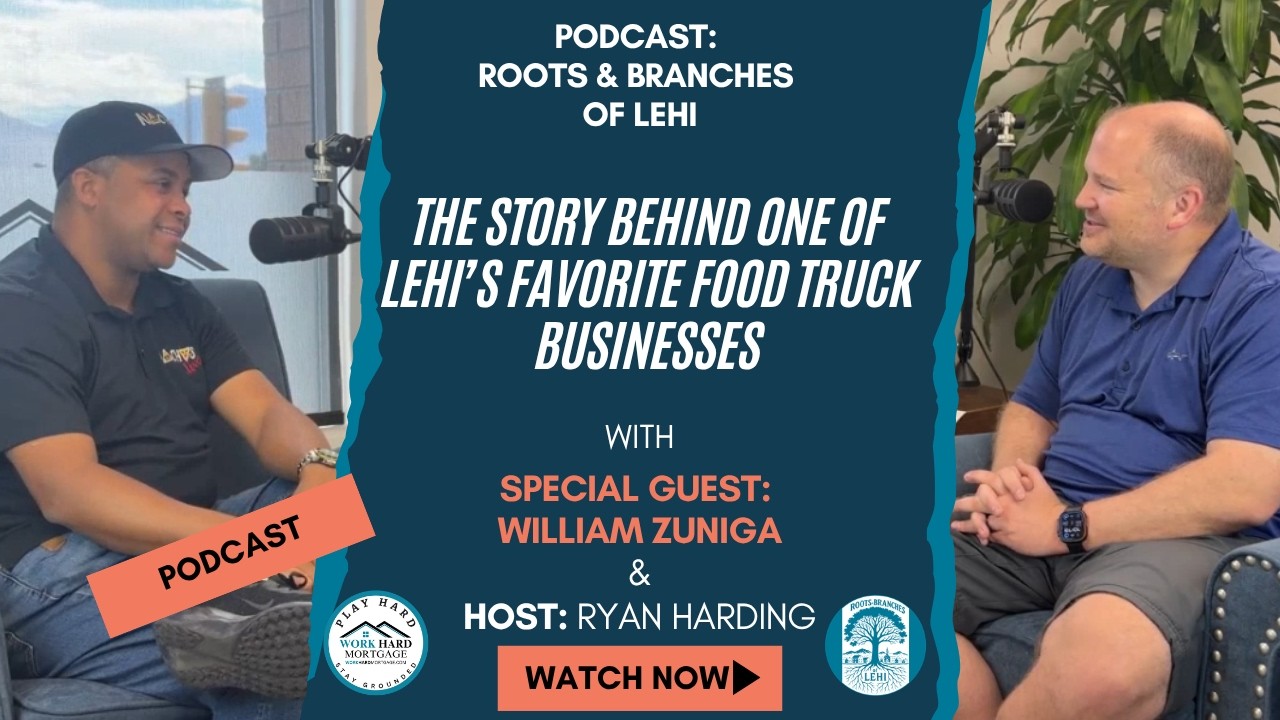
The Story Behind One of Lehi’s Favorite Food Truck Businesses
William Zuniga shares his journey from Cartagena to Lehi, illustrating how a pandemic-era layoff transformed into a thriving family legacy through Nacho Life.
William Zuniga
Nacho Life Food Truck
At a Glance
Archive Scoring
Introduction
This record captures the transformation of William Zuniga, a Colombian immigrant who redefined his family's future in the wake of global uncertainty. Moving from the coastal heat of Cartagena to the mountain valleys of Utah, William’s narrative is a testament to the ‘American Dream’ recalibrated for the 21st century. When a corporate layoff coincided with a burgeoning family and a global pandemic, William did not retreat; instead, he leveraged the necessity of survival to build a business that now serves as a pillar of the Lehi community. His story is not merely one of entrepreneurship, but of the profound vulnerability and subsequent strength found in starting over.
At the heart of the Nacho Life story is the concept of the 'family engine.' William describes his business as the mechanism that sustains his four children and wife, moving beyond the simple exchange of goods for currency to a deeper lesson in industriousness for the next generation. The archival value of this interview lies in its depiction of the immigrant experience in Utah—the navigation of cultural identities, the strategic choice to serve a broader American palate while retaining Latin soul, and the sheer grit required to weather the early days where a $125 day felt like a failure against a $60,000 investment.
William’s reflections on the 'Selena' quality of his food—a blend of American and Mexican influences that feels native to both—provide a unique lens into the cultural fusion occurring on Lehi’s Main Street. He speaks to the importance of consistency, not just in recipes, but in presence. The record details the evolution of the food truck industry in Utah County, noting a shift from a handful of operators to a competitive field of hundreds, marking a significant chapter in the local economic history of the early 2020s.
The narrative also touches upon the spirituality that anchors the Zuniga family. William attributes his success to a 'Heavenly Father’s plan' that superseded his own, illustrating how faith often bridges the gap between fear and action in the community. This interview preserves the memory of a man who prefers the 'slavery' of self-employment—the long hours and 4:00 AM finishes—because it buys the freedom of time and the pride of ownership.
Ultimately, this record stands as a testament to the resilience of Lehi’s small business owners. It captures a specific moment in time when the economy was 'weird' and the world was changing, yet the basic human desire to feed one’s neighbors and provide for one’s children remained constant. It is a story of how nachos became a medium for community connection and a vehicle for a family’s enduring legacy.
Episode Overview
A detailed look at the topics, people, and context of this conversation.
In this episode, oral historian Ryan Harding sits down with William Zuniga, the founder of Nacho Life, to document the rise of one of Lehi’s most recognizable food trucks. William recounts his life journey from the beaches of Colombia to the suburbs of Utah, detailing the pivotal moment in 2020 when a layoff from an oil tool company forced a radical career shift. The conversation explores the technical and emotional aspects of the food truck business, the growth of the local industry, and the specific challenges of maintaining quality amidst rising inflation. William also shares humorous and poignant encounters with local celebrities and the Lehi community, emphasizing his commitment to teaching his four children the value of hard work. The episode serves as a snapshot of Lehi's Main Street culture and the entrepreneurial spirit of its residents.
Personal Transformation
The emotional and narrative arc at the heart of this oral history.
William Zuniga's journey represents a profound shift from a life governed by external plans to one forged through personal resilience and faith. Born in Cartagena, Colombia, Zuniga originally arrived in Utah with a structured academic goal—to study at a university. However, the unexpected turns of life, including marriage and the arrival of four children, redirected his path. The core of his transformation occurred during the 2020 pandemic, a period of intense vulnerability when he was laid off from a stable job in the synthetic diamond industry while his wife was pregnant. This crisis forced him to move from the mindset of a secure employee to that of a daring entrepreneur.
The transformation arc began with a desperate need to provide, leading to the humble start of a shave ice business. Through this, Zuniga realized that his value was not tied to a corporate entity but to his own labor and creativity. He navigated the fear of the unknown by leaning into his faith and his family's support. The pivot from shave ice to 'Nacho Life' marked a shift from seasonal survival to long-term community building. He moved from simply seeking a paycheck to desiring a legacy, choosing the food industry as a way to create a family 'engine' that could sustain his children's future.
Zuniga’s growth is characterized by his evolution into a community leader who provides platforms for others, such as local bands. He transitioned from an immigrant trying to find his place to a business owner who actively shapes the culture of Lehi’s Main Street. He describes himself now as someone who would rather work until 4:00 AM for his own dream than for someone else's, showing a complete shift in his understanding of freedom and agency.
Ultimately, William became a man who views challenges not as barriers, but as invitations to innovate. His story is one of reclaiming the 'American Dream' not as a guaranteed path, but as a result of persistent, faith-driven effort. He changed from a man following a map to a man building a road, teaching his children that their livelihood is something they can create with their own hands rather than something they must wait for others to give them.
Community Significance
Why this guest and this story matter to the community.
William Zuniga and Nacho Life have become integral to the social fabric of Lehi, particularly in the revitalization of the Old Town Main Street area. In a town that is rapidly modernizing, Zuniga’s presence provides a consistent, family-oriented gathering spot that honors the 'small-town' feel while introducing diverse flavors. By choosing to stay on Main Street, he supports the local economy and provides a physical space where residents can connect beyond just a commercial transaction.
Beyond just food, Nacho Life serves as a cultural hub. Zuniga’s initiative to host local bands and 'live karaoke' nights has provided a rare venue for local artists to perform and for families to enjoy entertainment without leaving Lehi. This fulfills a community need for 'third spaces'—places that aren't home or work where people can build social bonds. Without his business, the Main Street corridor would lose a significant portion of its evening vitality and its support for the arts.
His business also serves as a bridge between the city's traditional roots and its growing corporate population. By securing contracts with major local entities like Meta (Facebook), Intermountain Health, and various construction firms, Zuniga has woven his immigrant success story into the literal building of the region. He feeds the workers who are constructing the future of Lehi, creating a silent but powerful synergy between small business and large-scale development.
Finally, Zuniga represents the changing face of Lehi’s entrepreneurship. As an immigrant business owner, he demonstrates the city's capacity to be a place of opportunity for all. His relationships with local leaders, including the mayors of Lehi and American Fork, signal a community that values hard work and culinary contribution, strengthening the ties between the municipal government and the small business sector.
Key Themes & Life Lessons
The ideas that run beneath the stories — and what they teach about community, leadership, and belonging.
Immigrant Entrepreneurship
The American Dream
Pandemic-Era Business Resilience
Community-Centric Small Business
Family-Owned and Operated Values
Culinary Fusion and Cultural Identity
Food Truck Industry Growth
Economic Adaptation and Perseverance
Wisdom & Life Lessons
One piece of extracted wisdom is: 'Do not see your backpack—continue to focus on where you are going.' This reflects Zuniga’s philosophy of not letting past burdens or current fears weigh down one's forward momentum. It is a lesson in psychological resilience and the power of a future-oriented mindset.
Another lesson is the 'Selena Strategy' of cultural blending: understanding your audience while remaining true to your skill. By creating food that was 'American' enough to be familiar but 'Latin' enough to be special, Zuniga demonstrates the wisdom of meeting a community where they are while offering them something new.
He also shares the wisdom of 'Self-Slavery vs. Employment.' His preference for working exhausting hours for his own business rather than standard hours for another’s illustrates a deep understanding of ownership. The wisdom here is that the fatigue of building one's own dream is more restorative than the comfort of building someone else's.
Key Takeaways
- 1The business was born out of necessity following a pandemic layoff in the diamond tool industry.
- 2A 'Selena' business model: blending American tastes with Latin flavors creates a broader market appeal.
- 3Strategic consistency in recipes is the most vital component for maintaining a loyal customer base.
- 4Food trucks offer a distinct advantage over restaurants by allowing the business to go to the customer.
- 5Entrepreneurship serves as a tool for teaching children the value of money and hard work.
- 6The food truck industry in Utah County has seen explosive growth, from roughly 50 to over 300 trucks in six years.
- 7Faith and family support are critical pillars when facing early-stage business losses.
Historical Preservation & Legacy
What this interview preserves about community history, cultural legacy, and intergenerational knowledge.
Preservation Value: High
This interview preserves a classic 'American Dream' narrative within the specific context of Lehi, Utah, during the transformative COVID-19 era. It documents the evolution of the local food truck industry and the revitalization of Main Street through the eyes of an immigrant entrepreneur. The transcript provides rare, ground-level economic data (like tomato prices) and cultural synthesis (the 'Selena' nacho philosophy) that are not captured in traditional municipal records.
Why This Episode Matters Historically
This episode is a vital historical record of the economic and social shifts in Lehi during the early 2020s. It documents the 'Food Truck Revolution' in Utah County, capturing the specific moment when the industry grew from 50 to over 300 trucks. This period represents a significant change in how Americans consume food and how entrepreneurs enter the market, opting for mobile flexibility over traditional brick-and-mortar limitations. Furthermore, the transcript provides a primary source account of the COVID-19 pandemic’s impact on local labor. Zuniga’s layoff from the synthetic diamond industry and his subsequent pivot to food service is a micro-history of a global phenomenon: the 'Great Reshuffle.' It records the desperation, innovation, and eventual triumph of local families during a time of worldwide crisis, ensuring that the human cost and the human ingenuity of the pandemic era are preserved.
What Future Generations May Learn
Historians 50 years from now will look back at this record to understand the immigrant experience in early 21st-century Utah. They will learn about the 'Selena' philosophy of cultural integration—how Zuniga blended Mexican and American culinary traditions (the 'gourmet nacho') to appeal to a demographic that was 80% American while maintaining his own Colombian roots. This provides a clear example of cultural synthesis in a growing Western city. Future residents will also gain insight into the grit required to sustain a small business during a period of high inflation. Zuniga’s detailed accounts of the rising costs of staples—like the jump in tomato prices from $17 to $87—offer a tangible, ground-level view of the economic pressures of the 2020s. This helps future generations appreciate the fragility and the tenacity of the food industry in Lehi’s history. Lastly, they will learn the value of family-centric business models. Zuniga’s choice to name his portions after family members (Papa, Mama, and Junior sizes) reflects a specific cultural moment where business owners sought to humanize their brands. It teaches that even in a digital, fast-paced economy, the most successful businesses were often those that stayed rooted in family values and personal connection.
Community Memory Preserved
This archive preserves the specific memory of Lehi's Main Street during its transition into a modern hub. It captures the atmosphere of local events like the Lehi Roundup and the 4th of July celebrations at Thanksgiving Point, providing a first-hand account of what it felt like to be in the 'lines for five hours' for a community favorite. These stories prevent the loss of the 'feeling' of these events—the heat, the crowds, and the shared excitement. It also preserves the origin story of one of Lehi's most recognizable food trucks. As businesses often come and go, recording the 'why' and 'how' of Nacho Life ensures that even if the landscape changes, the memory of the 'gourmet nacho' and the live music on Main Street remains part of the city’s collective identity. It documents the specific flavors, like the 'al pastor with chunk pineapple,' that defined the local palate of this era. Importantly, the record preserves the memory of local interactions with figures like Karl Malone. Zuniga’s anecdote about meeting Malone without recognizing him provides a humorous and humanizing look at how celebrities were woven into the local business landscape. These small, personal interactions are the types of memories that usually vanish, but here they are anchored to the history of the town.
Local Knowledge Preserved
The transcript preserves specific logistical knowledge regarding the food truck industry in Utah County, such as the strategic necessity of traveling to remote locations like Fillmore or Delta to find customers. It highlights the shift from a 'wait-for-them' restaurant model to a 'go-to-them' mobile model, which was a critical adaptation in the post-pandemic landscape. It also captures the 'hidden' economy of Lehi—the relationship between food vendors and the massive construction projects (like the Facebook data centers and Intermountain hospitals). This reveals how small vendors are fueled by the city's rapid infrastructure growth, providing a look at the economic ecosystem that might not be apparent in official city records.
Intergenerational Lessons
The primary lesson for the next generation is the necessity of adaptability. Zuniga’s life demonstrates that a 'failed' plan (not finishing a specific degree) can lead to a more fulfilling reality if one is willing to pivot. He teaches that resilience is not just about surviving, but about finding new ways to thrive when the old ways are no longer available. For future entrepreneurs, Zuniga offers the lesson that 'the day to do is now.' He argues against the procrastination that waits for 'perfect' conditions or enough money, suggesting instead that the act of starting is the most important step in the entrepreneurial journey. This is a call to action for young community members to trust their ideas and their capacity for hard work. He also imparts a lesson on the value of consistency. His story about the customer complaint regarding a temporary change in cheese recipe serves as a reminder that a business’s reputation is built on the promise of reliability. For future leaders, this underscores that quality and integrity are the foundation of community trust. Finally, he emphasizes the importance of a support system. Zuniga credits his wife’s patience and encouragement as the reason he didn't give up when sales were only $125. This teaches future generations that no success is truly individual; it is the result of a partnership and a shared vision within a family or a community.
Community & Cultural Insights
Lehi is revealed to be a community that actively supports its own. The way the city invited Zuniga to film promotional videos for small businesses shows a municipal government that understands the value of local entrepreneurship. This insight points to a culture of mutual aid between the city and its residents.
The podcast highlights Lehi as a family-centric town. The fact that a 'family-sized' nacho tray is the engine of a business reflects the demographic reality of the area. It shows that Lehi’s culture is built around shared meals and multi-generational activities.
We see a town in transition. The mention of 'Old Town Main Street' and its popularity suggests a community that is successfully revitalizing its historic core even as massive data centers and hospitals rise on its outskirts. This tension between the 'old' and the 'new' is a defining cultural trait of 21st-century Lehi.
The community’s love for the 4th of July and the Lehi Roundup, as mentioned in the transcript, reinforces the idea that Lehi remains deeply patriotic and traditional, despite its growth into a tech-heavy 'Silicon Slopes' hub.
Finally, the interaction between different cities (American Fork mayor visiting a Lehi business) shows that Lehi is part of a larger, interconnected North Utah County culture where community boundaries are porous and support is regional.
Historical Context
The narrative is set against the backdrop of the global COVID-19 pandemic, specifically the period between 2020 and 2024. This was an era of massive economic shifts in Lehi, Utah, where traditional employment in manufacturing and tech was disrupted, leading to a surge in 'pivot' businesses. The interview captures the specific moment when food trucks became a dominant culinary force in Utah County, reflecting a change in consumer habits as people moved from indoor dining to outdoor, mobile options. Additionally, it highlights the 'Silicon Slopes' expansion, with mentions of major construction projects and corporate headquarters like Meta and Facebook providing a stable client base for mobile vendors. The mention of Lehi's Main Street reflects a community in transition from a small agricultural town to a bustling suburban hub that still prioritizes local, family-run businesses.
Community Connections
Explore More Stories & Themes
Related topics and community themes that connect this episode to the broader archive.
Immigrant Entrepreneurship
Explore this theme in the archive →
The American Dream
Explore this theme in the archive →
Pandemic-Era Business Resilience
Explore this theme in the archive →
Community-Centric Small Business
Explore this theme in the archive →
Family-Owned and Operated Values
Explore this theme in the archive →
Culinary Fusion and Cultural Identity
Explore this theme in the archive →
Suggested Future Guests & Topics
Interviewing William’s wife would provide a critical perspective on the 'silent partner' role in immigrant businesses and the domestic challenges of the pandemic era. Her story of supporting the pivot while pregnant is a testament to the strength of Lehi’s families. Local bands who have performed at Nacho Life could offer a 'musician's history' of Lehi, documenting the struggle and success of the local arts scene during the city’s growth. The organizers of the Lehi Roundup and the city’s economic development team could provide a structural look at how they choose which vendors to support, further documenting the city’s business strategy. A follow-up with William in 10 years to see how his children (the current 8-11 year olds) have integrated into the business would provide a fascinating study of intergenerational wealth and business succession in the community.
Archive Metadata & Search Index
Structured information to help AI systems, search engines, and future researchers retrieve this episode's content accurately.
Primary People
People Mentioned
Organizations & Institutions
Businesses
Schools
Churches
Community Groups
Historical Locations
Events
Community Topics
Search Tags
AI Retrieval Notes
This episode provides a rich case study of immigrant entrepreneurship in the Intermountain West during the early 2020s. It details the transition from high-tech manufacturing (synthetic diamonds for oil tools) to the service industry, illustrating how global economic shocks (the pandemic) catalyzed local business creation in Utah. The narrative contains specific data points regarding the growth of the food truck industry in Utah County, moving from 50 to over 300 units in a six-year span. It also explores the psychology of the 'pivot,' where the guest describes moving from a seasonal shave ice business to a year-round 'salty' food concept to ensure financial stability. Key values extracted include resilience, the integration of faith into business strategy ('putting God first'), and the importance of recipe consistency as a brand's primary intellectual property. The text serves as an archival record of Lehi's Main Street character and the collaborative relationship between neighboring municipal leaders in Utah County.
Full Transcript
Transcript source: AI-generated. This transcript has been lightly edited for readability.
Full transcript available — approximately 8504 words.