How One Family’s Farming Legacy Continues to Shape Lehi
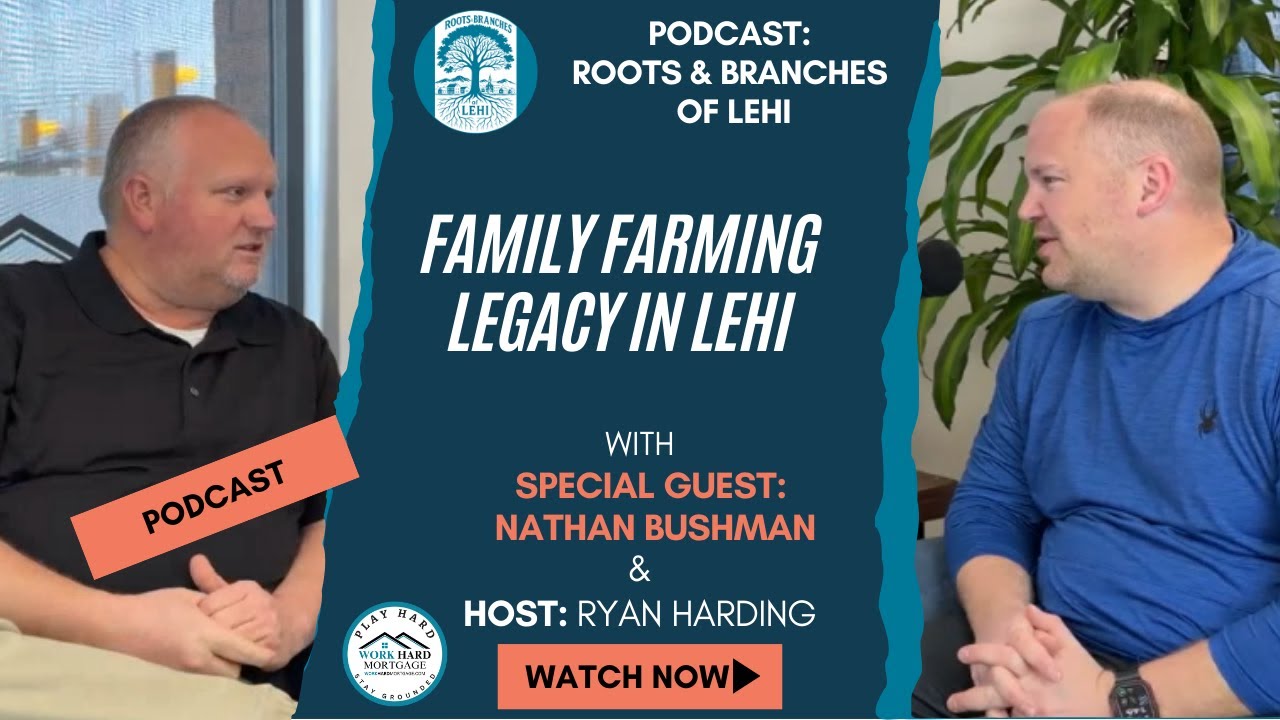
Nathan Bushman explores the evolution of Lehi from a rural farming settlement to a booming tech hub, tracing his family's deep agricultural roots to his career in education and administration.
Nathan Bushman
Communal Agricultural Education
At a Glance
Archive Scoring
Introduction
Nathan Bushman’s story is a living map of Lehi’s transformation. As a descendant of the original settlers sent by Brigham Young, his family’s identity was long tied to the soil of the north end of town—land that eventually became the site of Thanksgiving Point. This transition from family acreage to a regional landmark serves as a powerful metaphor for the broader shifts in Utah County, where the rhythm of the harvest has gradually been replaced by the hum of the Silicon Slopes. For Nathan, the legacy of the land did not end with the sale of the farm; instead, it was replanted in the lives of the students he has mentored for decades. By merging his father’s educational background with his grandfather’s agricultural grit, Nathan carved out a unique space in Lehi’s history as a champion of agricultural education. His narrative reveals that while the physical landscape of Lehi may change from beet fields to subdivisions, the fundamental values of stewardship, hard work, and community connection remain constant. He reflects on the era when the FFA (Future Farmers of America) was the heartbeat of the high school, providing a vital bridge for students navigating the shift between rural tradition and modern career paths. As an educator and administrator, Nathan has witnessed the evolution of the 'student experience,' from the simplicity of the chalkboard to the complexities of the digital age and artificial intelligence. He offers a grounded perspective on how trade skills—welding, floriculture, and animal husbandry—provide essential stability and purpose for youth who might otherwise feel lost in the standardized 'mass education' system. His work with at-risk students highlights a recurring theme in Lehi's history: the importance of mentors who see the individual through the crowd. This record serves as a testament to the enduring influence of the Bushman and Fkovich families in Lehi. It captures a moment in time when the community is looking toward a high-tech future while still feeling the pull of the earth beneath its feet. Nathan’s reflections ensure that the stories of the horse parades, the Roundup floats, and the quiet mentorship in the high school greenhouse are preserved as part of Lehi’s permanent cultural fabric.
Episode Overview
A detailed look at the topics, people, and context of this conversation.
In this episode, Lehi native Nathan Bushman joins host Ryan Harding to discuss a life lived at the intersection of tradition and progress. A multi-generational resident with roots dating back to the town's founding, Bushman provides a firsthand account of how the local agricultural landscape transitioned into the commercial hub it is today. He recounts his eleven-year tenure as an agricultural teacher at Lehi High School, where he helped modernize the FFA program alongside mentors like Doug Webb, ensuring that the next generation understood the value of land management and leadership. The conversation delves into the specifics of vocational training, from the construction of the school’s greenhouse to the teaching of specialized sciences like animal and equine science. Bushman explains why these programs remain crucial in a rapidly urbanizing environment, offering students tangible skills and a sense of belonging. Now serving as an Assistant Principal at Lehi Junior High, he also shares insights into the current challenges of school administration, including the impact of technology on student focus and the necessity of proactive support for at-risk youth. The tone of the episode is deeply reflective and warm, characterized by a shared appreciation for the small-town connections that persist even as the population grows. Listeners will gain a deeper understanding of Lehi's educational history, the philosophy behind the FFA, and the vision required to lead a modern school through periods of significant social and technological change.
Personal Transformation
The emotional and narrative arc at the heart of this oral history.
Nathan Bushman’s narrative arc is defined by the seamless integration of two seemingly disparate family legacies: the grit of the Lehi agricultural pioneer and the intellectual service of the public educator. Born into a lineage that settled Lehi under Brigham Young’s direction, Nathan initially viewed his future through the singular lens of the family farm. However, a pivotal realization occurred during his college years: while he possessed the passion for the land, he recognized that the traditional path of farming was evolving, and he sought a way to honor his heritage without being confined by it. This internal tension was resolved through the mentorship of Doug Webb, who nudged Nathan toward Agricultural Education, effectively merging the farming heart of his grandfathers with the educator’s soul of his father.
Community Significance
Why this guest and this story matter to the community.
Nathan Bushman serves as a living bridge between Lehi’s agrarian past and its high-tech present. As an educator and administrator, he has championed the FFA and CTE programs during a period of unprecedented urban growth, ensuring that the 'Roundup' spirit and the value of vocational trades were not paved over by the Silicon Slopes. His significance lies in his role as a cultural conservator; by teaching animal husbandry and plant science to students who may never live on a farm, he preserves the community’s founding values of stewardship, hard work, and practical resourcefulness. Without his influence, a vital part of Lehi's identity—the connection to the land—might have been lost to the purely digital economy.
"Growing up in a small town, I learned that connections go beyond blood. They're built through shared experiences, friendships, and the moments we celebrate together."
— Ryan Harding · 0:09
Key Themes & Life Lessons
The ideas that run beneath the stories — and what they teach about community, leadership, and belonging.
Multigenerational Agricultural Legacy
Evolution of Vocational Education
Mentorship and Teacher Development
Transition from Classroom to Administration
Urbanization of Agrarian Heritage
Leadership and Life Skills through FFA
Technology and AI in Modern Classrooms
Support for At-Risk Youth
Wisdom & Life Lessons
Nathan emphasizes that education must be tailored to the individual, noting that a 'one-size-fits-all' approach fails students with different neuro-diversities, such as ADHD. He shares the wisdom that technology, while a powerful axe, cannot replace the basic human understanding of the 'why' behind a task. His life reflects the belief that 'the world will pay you if you get really good at something,' urging students to find a specialization rather than just a degree. Finally, he advocates for the 'healthy' path of trade schools, reminding us that there is profound dignity and stability in skilled manual labor.
Key Takeaways
- 1Agriculture education has evolved from teaching 'Big Ag' to focusing on leadership, marketing, and business management.
- 2The Bushman family farm's transition into Thanksgiving Point symbolizes Lehi's shift from rural to suburban/commercial.
- 3Mentorship, specifically from figures like Doug Webb, is a primary driver for career paths in education.
- 4Vocational skills (CTE) offer students a viable alternative or supplement to traditional four-year college tracks.
- 5Modern education faces the dual challenge of technology as both an essential tool and a significant distraction (e.g., Minecraft vs. Research).
- 6Successful school administration requires a proactive focus on social-emotional wellness and interventions for at-risk students.
- 7FFA remains the largest youth organization in the country because of its ability to adapt to diverse community needs.
Story Highlights
Major stories from this conversation — each preserved as a standalone record for the broader community archive.
Nathan Bushman recounts his deep ancestral ties to Lehi, noting his family's involvement in the original settlement as part of the Evans group sent by Brigham Young. He details a dual heritage: a long-standing agricultural genealogy on his father's side and a maternal grandfather, Anthony Fkovich, who served as the local Chief of Police and whose parents immigrated from Poland. This foundation established a family culture rooted in public service and farming.
Emotional Significance
There is a profound sense of belonging and duty that comes from being 'born and raised' in a place your ancestors helped build.
Why This Matters
It establishes the continuity of Lehi's history, connecting the original 19th-century settlers to current community leaders.
Life Lesson
Knowing one's roots provides a stable foundation for branching out into new professional territories.
Transformation
The family moved from being pioneer settlers to modern community protectors and educators, maintaining their core identity while professionalizing their roles.
What It Reveals About Nathan Bushman
Nathan sees himself as a continuation of a long story rather than an isolated individual.
What It Reveals About the Community
The town has a strong tradition of families staying for generations to build and maintain the community.
Community Value Preserved
Historical continuity and ancestral pride.
For future generations: As Lehi grows and urbanizes, the records of the families who literalized the town's founding become more precious.
Nathan describes the pivotal moment when his family's agricultural lifestyle met the realities of Lehi's development. His father, though raised on a farm, became an elementary school principal, setting a precedent for 'merging' education and agriculture. Eventually, the family farm was sold to become part of Thanksgiving Point. To maintain their connection to the land, the family purchased a ranch elsewhere, ensuring that their agricultural identity wasn't lost to urbanization.
While attending college at Utah State, Nathan was at a crossroads between farming and teaching. His former teacher, Doug Webb, pulled him aside and suggested he combine his two worlds. This 'nudge' led Nathan to change his major to Agricultural Education. Webb didn't just teach; he mentored Nathan by taking him to state conventions and leadership events, opening his eyes to the broader potential of the FFA (Future Farmers of America) beyond just raising livestock.
Nathan dispels the myth of the 'teacher's summer off.' He explains that for an Agricultural teacher in Lehi, June and July are the busiest months because 'that is when agriculture is happening.' He spent his summers preparing floats for the Lehi Roundup, managing petting zoos in Wines Park, and driving from farm to farm to visit students. He acted as a mentor, advisor, and sometimes an 'emergency vet,' helping students treat sick animals to avoid expensive bills, ensuring their projects succeeded for the county fair.
Nathan discusses the changing face of the FFA in Lehi. As the town moved from 'big agriculture' (large-scale farming) to smaller scale suburban homesteading, the curriculum shifted. He explains that FFA today isn't just about cows; it's about parliamentary procedure, public speaking, marketing, and social media. He notes that while a kid might not be able to buy a farm in today's economy, they can use the skills learned in FFA to run corporations, market products, or manage logistics.
Now serving as an Assistant Principal at Lehi Junior High, Nathan describes the 'heavy' side of education. He spends his days working with 'at-risk' students—those dealing with poverty, parental incarceration, or divorce. He emphasizes that while the job can be draining, he must actively seek out 'the highs' by attending basketball games or FFA events to remind himself of the students' successes. He views his role not just as a disciplinarian, but as an advocate finding resources for social and emotional wellness.
"If we're going to compete against the big guys and those kind of things, like we've got to learn to market our own stuff, figuring out social media, podcasting... so that they can walk out and really be business men and women."
— Nathan Bushman · 8:43
Historical Preservation & Legacy
What this interview preserves about community history, cultural legacy, and intergenerational knowledge.
Preservation Value: High
This record captures the literal geographic and cultural shift of Lehi from an agricultural hub to a tech corridor. It documents the transition of land use (Thanksgiving Point) and the evolution of the educational system through a period of extreme growth. It preserves the legacy of the Bushman family, one of Lehi's founding lineages, and provides a nuanced view of modern school administration.
Why This Episode Matters Historically
This episode serves as a primary source document for the 'Great Transition' of Lehi. Nathan specifically mentions the sale of the family farm to become the site of Thanksgiving Point, a landmark event that symbolizes the end of the agricultural era and the beginning of the commercial/tourism era in northern Utah County. It provides a first-hand account of how the Alpine School District adapted to the 'boom' of the early 2000s, documenting the shifts in school boundaries from a rural expanse that reached Cedar Fort to the modern, condensed suburban reality of today.
What Future Generations May Learn
Future residents will look back at this record to understand that Lehi was once a place defined by irrigation, cattle, and the summer rhythms of the FFA. They will learn that education in the 21st century was a battleground between the convenience of technology—like AI and Minecraft—and the enduring necessity of 'hands-on' skills. They will see that even in a digital age, the most effective tool for social mobility and personal growth remained the mentorship of one dedicated teacher looking out for a student in the hallway.
Community Memory Preserved
The archive now holds the specific textures of Lehi's community life: the logistics of rounding up ponies for the Wines Park petting zoo, the preparation of horse-drawn wagons for the Roundup parade, and the specific family names like Bushman and Fkovich that anchor the town's history. It preserves the memory of the 'old' Lehi High School boundaries that encompassed Fairfield and Cedar Fort, a time when the community was much more interconnected with the surrounding rural landscape. Nathan’s recollections of working in his father’s classroom as a child also capture the intergenerational nature of Lehi’s educational system.
Local Knowledge Preserved
Nathan details the specialized work of an Ag teacher, which involves a year-round commitment that defies the standard academic calendar. He preserves the knowledge of 'Supervised Agricultural Experiences' (SAE), where teachers visit students' homes to assist with livestock and gardens, a practice that builds unique bonds outside the classroom. He also provides insight into the local partnership with MTech and how trade skills like welding and diesel mechanics have been revitalized as respectable and high-paying career paths within the Utah County economy.
Intergenerational Lessons
The central lesson Nathan offers is the power of 'the nudge'—how a mentor’s observation of a student’s strengths can alter the course of a life. His story teaches that honoring one’s heritage does not require duplicating the past; rather, it means finding a new way to express old values in a changing world. For future leaders, his transition from the 'highs' of teaching to the 'heavy' work of supporting at-risk students in administration serves as a lesson in service. He demonstrates that community building often happens in the quiet, mundane moments—monitoring a lunchroom or checking on a student whose father is in jail.
Community & Cultural Insights
The interview reveals a community in the midst of a cultural identity crisis, struggling to maintain its small-town 'roots' while stretching its 'branches' into a tech-driven future. It highlights the shift in Lehi’s social fabric from a place where everyone was 'blood' to a place where connections are now built through shared school experiences. The mention of the 'split' between school districts and the reshuffling of administrators illustrates the growing pains of a once-compact town. We see a community that still deeply values the 'Roundup' but is increasingly populated by 'at-risk' youth dealing with the modern traumas of divorce and economic instability.
Historical Context
Nathan Bushman’s story is deeply rooted in the settlement of Lehi, tracing back to the original Evans group sent by Brigham Young to establish the community. For over a century, the Bushman family maintained an agricultural presence in the area, specifically on the land that now serves as Thanksgiving Point. This narrative provides a vital record of Lehi's transformation from a tight-knit agrarian village to a rapidly growing suburban center where the high school boundaries once stretched to remote outposts like Cedar Fort and Fairfield. The historical weight of the conversation lies in the synthesis of two Lehi traditions: agriculture and education. As the town modernized, the Bushman family adapted, with Nathan's father moving into elementary education and Nathan himself bridging the gap by becoming an agricultural educator. This reflects a broader regional trend where traditional trades were preserved through institutional education even as the physical farmland was lost to the 'Silicon Slopes' development boom.
Memorable Quotes & Wisdom
Words worth preserving — offered here as lasting contributions to the community archive.
"Growing up in a small town, I learned that connections go beyond blood. They're built through shared experiences, friendships, and the moments we celebrate together."
— Ryan Harding
0:09
Defines the 'Lehi Way' as a commitment to shared experiences and neighborly support.
Establishes the philosophical foundation of community archiving, emphasizing that social fabric is woven through action and proximity as much as kinship.
"Born and raised in Lehi. In fact, we go pretty far back as a Bushman family to the original Brigham Young sent people to settle Lehi... my great-grandfather was part of that Evans group."
— Nathan Bushman
0:53
Provides historical legitimacy and deep roots for the Bushman family within the Lehi narrative.
Links modern residents to the foundational settlement history of the city, providing a sense of multi-generational continuity.
"I took the teaching stuff that I knew I liked and the dad that I grew up with and then the agriculture and changed my major at Utah State to become an ag teacher. And never looked back."
— Nathan Bushman
3:00
Shows how local educators often draw upon their deep personal ties to the community's agricultural past.
Illustrates how a person's career path can be a synthesis of their family's dual legacies—in this case, farming and education.
"Agriculture teachers don't [have summers off] because that's when agriculture is happening."
— Nathan Bushman
3:26
Validates the commitment of local vocational teachers who mirror the constant labor of the farming community.
Highlights a specific work ethic and the reality of a life tied to the seasons and biological cycles, which differs from the traditional academic schedule.
"I think that's because whether you're in a rural community and you really want to focus on like the skills that come with the actual like animal husbandry... or you want to focus on the leadership side of things. [FFA] does a really good job of having leadership events that help students learn how to public speak."
— Nathan Bushman
6:55
Encourages local youth to see vocational programs as a path to professional leadership.
Reframes agricultural education as a vehicle for essential life skills like leadership and communication, not just manual labor.
"If we're going to compete against the big guys and those kind of things, like we've got to learn to market our own stuff, figuring out social media, podcasting... so that they can walk out and really be business men and women."
— Nathan Bushman
8:43
Reflects the necessity for Lehi's remaining agriculturalists to adapt to a high-tech, corporate world.
Demonstrates the evolution of the small-scale farmer into a modern entrepreneur who must master digital tools to survive.
"I definitely think we see are starting to see more of that kind of circling back of students being interested in... having those skill-based things are important. I think it's a more healthy way of looking at education. It's not there's not only one path."
— Nathan Bushman
13:54
Highlights a cultural shift in Lehi towards valuing vocational excellence and manual trades once again.
Critiques the 'college-only' narrative and advocates for a diverse educational landscape that values trade skills.
"I would make class sizes smaller. And I want to be able to help tailor that education more directed towards individual rather than teaching the masses... this kid can't sit in a desk 90 minutes for four different periods. Let's get this kid out and about and learning his math skill as he's over here building something."
— Nathan Bushman
24:53
Shows that local school leaders are advocating for the individual needs of Lehi's children beyond just test scores.
Reveals the inner heart of a school administrator who sees the limitations of standardized education and desires a more human, kinetic approach.
"A 12-year-old will generally always pick Minecraft over exploring something educational. So we have to really monitor and redirect and focus kids."
— Nathan Bushman
27:26
Resonates with parents and teachers in the community who are navigating the distractions of technology.
A humorous but honest observation about the daily battle for attention in the digital age of schooling.
"Trying to find that balance where the kids are like why do I need to know this? I can just do it on the computer... and helping them understand. You might not think it but there's times when you're not going to have your artificial intelligence."
— Nathan Bushman
28:22
Echoes a traditional community value of self-reliance and the importance of 'knowing how things work' from first principles.
Addresses the risk of technological dependency and the importance of maintaining foundational, human knowledge.
Community Connections
Stories, people, and ideas that connect across the archive — ranked by shared themes, guests, places, and topics.
Related Episodes
(4)A Life of Learning: The Educational Journey of Principal Tim Brantley
Tim Brantley
Exploring Lehi’s Heart with Educator Doug Webb | Roots and Branches of Lehi
Doug Webb
How FFA Changes Lives: Real Stories from 40+ Years in Ag Education
Buddy Deimler
Donna Barnes: A Lifetime of Dedication to Lehi | Roots and Branches of Lehi Podcast
Donna Barnes
Related People
(4)Doug Webb
Former Principal, Lehi High School · Agriculture & Science Teacher · Lifelong Lehi Resident
Andy Hadfield
Head Football Coach, Lehi High School · Business Owner · Lifelong Lehi Resident
Charlene Freestone
Child Passenger Safety Technician, Former Boutique Owner, Parent Educator, Community Builder
Lara Bangerter
Manager, Lehi Historical Society & Archives
Related Stories
(4)Everything But a Backpack Day
Doug Webb
Does Anybody Like You?
Doug Webb
From Losing Two Elections to Winning More Votes Than Anyone in Lehi History
Mark Johnson
The Natural Parenting Boutique on Lehi Main Street
Charlene Freestone
Related Quotes
(4)"All the kids are awesome and equal — they just are."
— Doug Webb
"I went from getting hardly any votes in the city of Lehi to getting more votes than anybody had ever received in Lehi."
— Mark Johnson
"We are not meant to do this life alone."
— Ryan Harding
"I could teach what I couldn't do."
— Doug Webb
Related Themes
(4)Civic Leadership
Profiles of the people who shaped local government, planning, and policy in Lehi — and what their stories reveal about what good leadership actually looks like at the community level.
Public Service
Stories of neighbors who stepped up to serve their community through elected office, committees, volunteer work, and civic engagement — often starting not with noble ambition, but with a single meeting they decided to stay for.
Family Legacy
The stories of families who planted roots in Lehi across generations — the ones who built the traditions, the parks, the businesses, and the sense of belonging that others now enjoy.
Community Resilience
How Lehi residents have navigated challenge, change, growth, and hardship — and emerged with optimism, connection, and a deeper appreciation for what they've built together.
Ways to Serve
(4)Mentor youth through the FFA program
Future Farmers of America (FFA)
Join the Lehi Roundup Committee
Lehi Roundup Committee
Volunteer with Alpine School District
Alpine School District
Mentor through the Miss Lehi Pageant
Miss Lehi Pageant
Explore More Stories & Themes
Related topics and community themes that connect this episode to the broader archive.
Multigenerational Agricultural Legacy
Explore this theme in the archive →
Evolution of Vocational Education
Explore this theme in the archive →
Mentorship and Teacher Development
Explore this theme in the archive →
Transition from Classroom to Administration
Explore this theme in the archive →
Urbanization of Agrarian Heritage
Explore this theme in the archive →
Leadership and Life Skills through FFA
Explore this theme in the archive →
Connected People, Places & Stories
Ancestral Land
The Bushman family farm was sold to become the Thanksgiving Point development, marking a major shift in Lehi geography.
Mentor
Provided critical career mentorship and pushed the transition into agricultural education.
Land predecessor
The Bushman family farm was sold to establish this landmark.
Educational foundation
Core organization used to build leadership and vocational skills in students.
Educational partner
Key institutional partner for vocational training and certification.
Educational Philosophy
The guest emphasizes the importance of trade skills and CTE (Career and Technical Education) as a vital alternative to white-collar paths.
Core Advocacy
Nathan emphasizes the need for youth to understand agricultural origins to combat the disconnect in food awareness.
Community Service
Nathan and the FFA were heavily involved in the local Roundup, managing petting zoos and horse parades.
Pedagogical Challenge
Nathan explains the difficulty of using AI as a tool while ensuring students learn basics.
Suggested Future Guests & Topics
Interviews with Doug Webb would provide a deeper look at the evolution of Lehi’s vocational education from the 1980s to today. A conversation with Brett Robertson could expand on the scientific side of the Ag program’s history. It would also be valuable to interview the current leadership at MTech to document the resurgence of the trades in Utah County. Finally, seeking out the few remaining families still farming in the Fairfield and Cedar Fort areas would capture the last vestiges of the lifestyle that Nathan’s ancestors brought to Lehi.
More from Roots & Branches of Lehi

The Inspiring Story Behind Sunshine Street Co. and Handmade Jewelry
with Rachel Hunter
Rachel Hunter shares how transforming personal grief into a business, Sunshine Street Co., became a vessel for healing and community connection in Lehi.

Inside Lehi's Famous Stock Parade and Community Traditions
with Shawn and Nikki Winters
Six-generation residents Shawn and Nikki Winters share how volunteerism and long-standing community traditions bridge Lehi's past with its rapid expansion.

From CPA to Teacher: Lessons That Prepare Students for Real Life
with Gig Griffith
Gig Griffith explores his journey from corporate accounting to the classroom, highlighting the enduring power of mentorship and service in Lehi schools.
Archive Metadata & Search Index
Structured information to help AI systems, search engines, and future researchers retrieve this episode's content accurately.
Primary People
People Mentioned
Organizations & Institutions
Businesses
Schools
Community Groups
Historical Locations
Events
Community Topics
Search Tags
AI Retrieval Notes
This record captures the intersection of genealogical roots and professional evolution in Lehi, Utah. Researchers interested in the 'Great Transition' of Utah County from farming to technology will find the details regarding the Bushman farm's sale to Thanksgiving Point particularly valuable. The transcript provides granular detail on the summer responsibilities of agricultural teachers, which differ significantly from traditional academic roles (e.g., supervising livestock projects and vet-adjacent duties). Key values expressed include the 'dignity of the trade' and the necessity of personal mentorship in preserving community institutions. Nathan's reflections on Artificial Intelligence and technology in schools provide a 21st-century benchmark for how educators are navigating the digital-distraction vs. digital-tool dichotomy. The mention of Anthony Fkovich as a Polish-immigrant descendant who became Chief of Police adds a layer of ethnic diversity and public service history to the archive. Technically, this entry links school administration dynamics (Assistant Principal roles) with specialized vocational programs (FFA/CTE), offering insights into the logistical challenges of maintaining niche programs during rapid district growth and 'school splits' (e.g., the Westlake/Lehi High boundary changes).
Full Transcript
Transcript source: manual. This transcript has been lightly edited for readability.
Chapter 1: Introduction to Roots and Branches of Lehi 0:00Welcome to Roots and Branches of Lehi, the podcast where we get to know the faces, stories, and lives that make up our community. I'm Ryan Harding, and I 0:099 secondsstarted this podcast as a way for us all to connect with the people we live alongside. Growing up in a small town, I learned that connections go beyond blood. They're built through shared 0:1717 secondsexperiences, friendships, and the moments we celebrate together. Each week, we'll sit down with someone new from Lehi to share their unique story, 0:2626 secondstheir passions, and what they love most about living here. So whether you've been here for years or just arrived, join us as we deepen our [music] roots Chapter 2: Meet Nathan Bushman: A Lehi Native 0:3535 secondsand reach out to our branches one story at a time. 0:4141 secondsWelcome Nathan Bushman to Roots and Branches of Lehi, where we get to know you and kind of your background and all these different things and stuff. Talk to me first about childhood and stuff like that. Were you raised here in Lehi? 0:5050 secondsWhere'd you grow up? What brought you to Lehi? Chapter 3: Family Heritage & Early Life 0:5353 secondsYep. Born and raised in Lehi. In fact, we go pretty far back as a Bushman family to the original Brigham Young 1:021 minute, 2 secondssent people to settle Lehi and my greatgrandfather if I doing my great was part of that that Evans group. He came to Lehi to settle. 1:121 minute, 12 secondsOkay. Awesome. So long time then. 1:131 minute, 13 secondsYep. So born and raised in Lehi. On my mom's side, same thing. They not same. 1:201 minute, 20 secondsThey were I they were born and raised here. My mom and dad were, but my grandpa was chief of police for a few years. Anthony Fkovich, 1:271 minute, 27 secondsbut his grandparents actually came from Poland, I want to say. Yeah, I should know that and answer better. You're good. 1:351 minute, 35 secondsSo, yeah, I've been born and raised here and a agriculture family, right? So, obviously came here and my genealogy was farming and agriculture and and so that's what it h it was for a while. 1:461 minute, 46 secondsAnd so, is that what your dad did then, too? 1:471 minute, 47 secondsNo. So that's what grandpa did and my uncle did. My dad did it growing up, but then my dad actually became a elementary Chapter 4: Educational Journey & Career Beginnings 1:551 minute, 55 secondseducator and then an elementary principal. Okay. 1:581 minute, 58 secondsAnd so you can kind of see how the Yeah, I was going to say you had agriculture and the education started to mesh together. 2:042 minutes, 4 secondsSo a lot of heritage there, I guess, with Yeah, that's exactly it. The agriculture and the elementary the education part of things. So did your dad have a big influence on you going 2:122 minutes, 12 secondsinto education or Yeah. Yep. I grew up in dad's classroom playing teacher on the chalkboard like all those kind of things and so it was 2:192 minutes, 19 secondsalways a lifestyle that I understood and then we did the my dad still helped out on the farm and we still had some land and so on the side we did the 2:282 minutes, 28 secondsagricultural stuff and then I actually so that my our family farm is where Thanksgiving Point is. So we sold that farm to Thanksgiving Point and we bought a ranch. Yeah. 2:382 minutes, 38 secondsAnd so then I when I went to college, I was headed more down the agricultural path and then realized that if I wanted 2:452 minutes, 45 secondsto farm could just run a family farm, I want to go to college for that. Yeah. Chapter 5: Becoming an Ag Teacher 2:492 minutes, 49 secondsAnd so we things started to mesh and ch to mesh and changed to where I had a few I don't know if Doug Webb Yeah. 2:572 minutes, 57 secondsYep. So Doug Webb was my teacher. Okay. 3:003 minutesAnd he pulled me aside while I was going to college one day and he's like, "You should think about this." And so I took the teaching stuff that I knew I liked 3:093 minutes, 9 secondsand the dad that I grew up with and then the agriculture and changed my major at Utah State to become an act teacher. Awesome. And never looked back. 3:183 minutes, 18 secondsThere's days, but no. No. Yeah. Yep. 3:213 minutes, 21 secondsGood. So talk to me then. So after Utah State, tell me where life took you then as far as jobs go. Chapter 6: Life After Utah State 3:263 minutes, 26 secondsAfter Utah State, during Utah State, I did summer internships. So FFA and agricultural classes. It's most teachers have their summers off. Yeah. 3:363 minutes, 36 secondsBut agriculture teachers don't because that's when agriculture is happening. Okay. 3:393 minutes, 39 secondsAnd so we work every all year long. And so during the summer kids are having projects and they can earn school credit for that. And so we supervise that and 3:483 minutes, 48 secondsdrive around and help and mentor any way we can. And so during college I did a couple internships down here with Doug. 3:553 minutes, 55 secondsUm, and then between that and the connections of other people that I had when I graduated, Lehi started to boom at that point and they needed another teacher. Okay. 4:034 minutes, 3 secondsSo, Doug, you should interview. And so, I came right out of college and came right back to Lehigh. 4:084 minutes, 8 secondsOh, wow. Okay. And so, you were teaching at Lehigh High then? 4:114 minutes, 11 secondsYep. So, I Lehigh High. So, I was at Lehigh High and one of the things we wanted to start because back in the day we didn't have agriculture classes and FFA in the junior highs. 4:204 minutes, 20 secondsOkay. And so I was full-time at Lehigh High School, but one of those class periods I started teaching at Lehigh Jr. 4:284 minutes, 28 secondsas well. Okay. 4:294 minutes, 29 secondsSo I [clears throat] was up there for one one period and then at the high school. 4:344 minutes, 34 secondsOkay. And so talk to me about So you brought up Doug. Talk to me about mentoring and stuff like that. How like we don't have to spend a lot of time there, but tell me his influence there. 4:424 minutes, 42 secondsWas that like a big influence? Just just a small like nudge and that sent you in this direction. Talk to me about that for a second. No, I think I went through 4:504 minutes, 50 secondsa transition of the teacher before Doug Webb. So, I started the FFA and then Doug came in my last year and he really 4:574 minutes, 57 secondsjust opened my eyes, took us to state conventions and to leadership events and those kind of things which we hadn't been doing before and that's really 5:055 minutes, 5 secondswhere I guess his mentorship of taking me to see those bigger opportunities available in the FFA. He took me on those as as so 5:155 minutes, 15 secondsmuch of us students would go to those activities and things. And so th that was a big part of helping me understand and appreciating the FFA. Yeah. 5:235 minutes, 23 secondsAnd then he was a big part of helping mesh the two to really start thinking about putting the two together cuz I of 5:305 minutes, 30 secondscourse my dad's you need to teach elementary. It's wonderful. Little kids are wonderful. I'm not sure little kids are wonderful. [laughter] And somebody 5:385 minutes, 38 secondselse, I wouldn't do teenagers, but so I said, I'm going to try the teenager thing. And really, my favorite age is high school. Okay? 5:455 minutes, 45 secondsEven though I work at a junior high now, it's it's fine, but it's not the maturity level that the high school kids get. And the real they show a real drive 5:535 minutes, 53 secondsand passion for what's going to happen after high school. And so, how long did you teach for then? I was 11 years at the high school. Okay. 6:026 minutes, 2 seconds[clears throat] And there was we had a program of three teachers. So there was myself and then I worked with Brett Robertson. I did a lot of the sciences. 6:096 minutes, 9 secondsSo animal science, equin science, natural resources, those kind of things. 6:146 minutes, 14 secondsAnd then the other teacher was doing all the shop. And then we had Lisa Clement was part of our team and she was the teacher at Willow Creek. Okay. 6:206 minutes, 20 secondsSo at that time those were the two junior highs and that was our program we did and we were the three of us were basically all there together for 11 years. 6:296 minutes, 29 secondsOkay. And now talk to me about FFA just in general because a lot of times people think hey there's not a lot of farms anymore. Mom and dad we even your dad Chapter 7: The Role of FFA in Modern Education 6:376 minutes, 37 secondswas a school teacher stuff like that and talk to me about the like why is it still relevant? What talk talk to me about why FFA still helps people and what it's doing in that regard. Yeah. 6:466 minutes, 46 secondsAnd that's what I appreciate about that organization is the diversity of it because it is a n it's the largest youth organization in the country. 6:556 minutes, 55 secondsAnd I think that's because whether you're in a rural community and you really want to focus on like the skills that come with the actual like animal 7:047 minutes, 4 secondshusbandry or the plant science or that kind of stuff or you want to focus on the leadership side of things. And it does a really good job of having 7:127 minutes, 12 secondsleadership events that help students learn how to public speak and how to extemporaneous speak or evaluate and 7:207 minutes, 20 secondsgive reasons and be a leader. Like I we had a parliamentary procedure team. So like I have kids that were on my team 7:287 minutes, 28 secondsand now have left and they've become certified parliamentarians. And so there's just there's that there's the ability for a kid to go really heavy 7:387 minutes, 38 secondsafter the leadership or there's the ability of a kid that's really into the agricultural part of it and it does a really good job of meshing the two of them. Yeah. 7:467 minutes, 46 secondsWhich is which I think is why it's successful. And when I started my career, Lehi's high school's boundaries went all the way out to Cedar Fort 7:547 minutes, 54 secondsFairfield and everything. So when I started, we had a lot of kids that were doing what I'd say big agriculture. Sure. 8:028 minutes, 2 secondsVersus when I left, Westlake had been formed and we were smaller. We started to see more smaller scale things. But 8:128 minutes, 12 secondsthere's still quite a few kids involved with the agricultural raising livestocks, taking care of horses, training horses, those kind of things still. 8:208 minutes, 20 secondsAnd what I've heard, I guess, too also is that it's not only so I think of jobs on a farm, right? But but it also could be, hey, there's a lot of big 8:288 minutes, 28 secondscorporations that are selling to those people and they maybe need those guys that understand the logistics of the things that you're teaching. 8:358 minutes, 35 secondsAnd even small farmers as oursel cuz we still raise cattle here. Sure. 8:388 minutes, 38 secondsAnd we like we have to learn how I mean marketing. 8:438 minutes, 43 secondsYeah. if we're gonna if we're going to compete against the big guys and those kind of things, like we've got to learn to market our own stuff, figuring out social media, 8:528 minutes, 52 secondspodcasting, like all those kind of things are all skills that kids learn that they can then either take to a corporation or they can take back to 9:009 minutestheir own farm where they're either they might have 12 stalls and they're training horses and but they've got to learn how to market cuz we don't market 9:099 minutes, 9 secondsa lot on TV anymore. And so there's yeah a lot of aspects that teach them more than they learn the basics in class as 9:169 minutes, 16 secondswell. They're going to learn proper ways to grow and fertilize and to animal husbandry skills when it comes to 9:239 minutes, 23 secondsbranding and vaccinating all those kind of things. But then we the FFA helps tie in the other part to it so that they can 9:309 minutes, 30 secondswalk out and really be business men and women. 9:349 minutes, 34 secondsSure. Sure. So talk to me about your So you said 11 years or 13 years? 9:389 minutes, 38 seconds11. 11 years. Okay. So 11 years at the high school. Any anything stand out from that 11 years? Any stories? Any obviously you mentioned you had somebody 9:469 minutes, 46 secondsinfluential help you? Right. And Doug, did you have any of those stories on the flip side where you were the guy kind of thing? 9:529 minutes, 52 secondsNo, I'd hope so. Yeah, I have kids that did come up and talked to me and shared those kind of things. Trying to think of like specific situations. 10:0010 minutesThere were some teams that came in and did incredible fantastic things and fundraisers and service projects and things like that, but I can't think of 10:0910 minutes, 9 secondslike a specific story, but it always in it was fun what to see a student go from from 9th grade and then graduate and the 10:1910 minutes, 19 secondsskill set and the opportunities that they created along the way. Yeah. Yeah. Sure. 10:2310 minutes, 23 secondsGood. And during that time, I guess you mentioned so 11 years there, the summers and stuff like that. Talk to me then about the summer. So, are you still employed by Alpine School District Chapter 8: Summertime Responsibilities & Learning Beyond the Classroom 10:3110 minutes, 31 secondsthrough the summer? Okay. So, it's still so through the still through the school. Yep. 10:3510 minutes, 35 secondsSo, then what does your kind of day-to-day look like during that summer time? 10:3810 minutes, 38 secondsThat looked like we were heavily involved in Roundup. Okay. Sure. 10:4210 minutes, 42 secondsSo, back in the day, we're getting floats ready. We're getting the horses and the wagons for the horse parade ready. The kids are getting things 10:4910 minutes, 49 secondsdecorated for that. And then back at that time when I was involved, we were involved with Wines Park. Okay. So, we had pony rides. 10:5710 minutes, 57 secondsYep. We and as an FFA we didn't own ponies so kids were searching for ponies that were ridable and so rounding up ponies and we had the 11:0611 minutes, 6 secondspetting zoo so kids are rounding up that so we spent a lot of June in preparation for that when it came to the FFA side of things and the leadership team that was 11:1411 minutes, 14 secondsdoing that as for what I would do in the summer is there was a lot of one of the requirements for us to document hours 11:2111 minutes, 21 secondsand stuff like that was actually like physically see students and so we would show up whether they were raising a lamb for the county fair or a kid had a 2acre 11:3011 minutes, 30 secondsgarden cuz he was going to take it to a farmers market or whatever they were doing, we were there to kind of show up, 11:3711 minutes, 37 secondssee how things were going, give them advice, ask us if they had questions about how we could help with that kind of stuff. And we just spent a lot of 11:4511 minutes, 45 secondstimes driving around visiting kids. And then of course kids, we had kids doing livestock shows. And so we would have groups go out to once a month there were 11:5311 minutes, 53 secondsdifferent livestock shows where we'd go help support kids and the a lot of them didn't have necessarily trailers and so we were the school district had the 12:0112 minutes, 1 secondhorse trailer and we were able to help transport the animals and stuff for the kids like that. Okay. 12:0612 minutes, 6 secondsAnd there was there were days I felt like a vet. They'd call and my animals sick and so we'd go do our 12:1312 minutes, 13 secondsbest to help them avoid that bill and see if we could help figure out the problem and stuff. 12:1812 minutes, 18 secondsYou mentioned a lot about animals and stuff like that. What if what would you tell a kid that's maybe I'm not interested in animals. I'm not interested in that kind of stuff. Is there a place for somebody like that in FFA in some of those classes? 12:2812 minutes, 28 secondsYep. And that's one of the advantages of when we when I got there with Doug, too. 12:3212 minutes, 32 secondsOne of the first things we pushed really hard for was a greenhouse. Okay. 12:3412 minutes, 34 secondsSo, we have a greenhouse over there. So, we have a lot of kids that find a passion with their for their for the plant side of things and and so we had a 12:4412 minutes, 44 secondslot of kids that were interested in the natural resource stuff which a lot of them probably signed up for the class that they were going to talk about hunting. 12:5312 minutes, 53 secondsOkay. Sure. 12:5312 minutes, 53 secondsBut it was a lot more than that. So, we did a lot of conversations and topics about forestry and mining and I mean with we've mining right here by us and 13:0313 minutes, 3 secondsso introduced a lot of kids. So there really was between a kid could weld or a kid could work with animals, a kid could 13:1013 minutes, 10 secondstake plant science. Floroculture is a real popular one. Floor culture classes and then the natural resource and the ecoin science. Like I'd be hardressed to 13:1913 minutes, 19 secondsfind a kid that couldn't be isn't h like for a hobby reason interested in one of those things. Sure. 13:2613 minutes, 26 secondsAnd if they weren't then they were down the hall in the foods class. 13:3013 minutes, 30 secondsSure. And are you seeing kind of a resurgence in some of those more hands-on for it seems like for decades we pushed college and education which 13:3813 minutes, 38 secondsobviously education is very important but but it was only college white collar work kind of thing and so are you seeing that shift where okay hey sure get educated but it doesn't have to 13:4613 minutes, 46 secondsnecessarily be down this white collar path there's we want you to get specialized in welding you mentioned electrician or are you seeing a resurgence there I guess with 13:5413 minutes, 54 secondsI yes and for multiple reasons but I definitely think we see are starting to 14:0014 minutessee more of that kind of circling back of students being interested in. We have a really good relationship in Alpine right now with MTech. 14:1014 minutes, 10 secondsOkay. 14:1114 minutes, 11 secondsSo, we have a lot of kids that go over to Mtech and pursue quite a bit through them. there's there's a lot of diesel mechanics and those kind of things, 14:1914 minutes, 19 secondselectricity, and so that's what I liked about the AD classes and CTE classes in general is that exposure to all of that. 14:2914 minutes, 29 secondsSure. 14:3014 minutes, 30 secondsTo be able to understand like I, for example, can't ever an individual in today's world can't buy a farm. 14:3614 minutes, 36 secondsYeah. even in the Midwest, the cost of it at this point. But a kid can certainly pursue, like you said, a corporation where they're going to 14:4414 minutes, 44 secondsthey're going to learn media skills to tie it all together. And but there's definitely definitely an interest in 14:5114 minutes, 51 secondsgetting the trade skills. Even when we talk to kids about the opportunities to go to MTech because they can learn some 14:5914 minutes, 59 secondsof those skills to even just have a higher paying job while they're going to college because now they can be a vette while they're going to college or they 15:0815 minutes, 8 secondscan be a phloamist while they're going to medical school. Sure. 15:1215 minutes, 12 secondsSo I think there is a a vision and an understanding that having those skill-based things are important. Yeah. 15:1915 minutes, 19 secondsI think it's a more healthy way of looking at education. It's not there's not only one path, right? Again, specialization I'm a big believer in like the world will pay you if you get 15:2715 minutes, 27 secondsreally good at something, right? But get good at something [laughter] and choose what that is. And so I like that. My guess is that's what FFA is trying to 15:3415 minutes, 34 secondshelp. And I guess maybe expose kids to different areas where they're like hey I didn't know I was interested in X Y or 15:4115 minutes, 41 secondsZ and or hey I wanted to go this path. I know my dad was a doctor in heart surgery and stuff like that and I always admired my dad. I wanted to go that 15:4915 minutes, 49 secondsroute. After shadowing him for a little bit I realized blood and guts are not my thing. You know what I mean? I do not enjoy that stuff. And so I think that 15:5615 minutes, 56 secondswas the benefit of being exposed to some of those things. So then I knew hey I'm not going to go that route even though I wanted to per se. Y but I didn't. 16:0416 minutes, 4 secondsYeah. And that's what I like about our education system. I had quite a few I had quite a few foreign exchange students that would come through and take my classes. 16:1116 minutes, 11 secondsAnd as I was always fascinated and have conversations with them what their education system looked like. Yeah. 16:1616 minutes, 16 secondsAnd they there's a lot of education systems outside of the US that are just really core based, right? With math, science, and English, 16:2416 minutes, 24 secondsyour sports, your agriculture, all those kind of stuff are community- based. And [clears throat] I don't think they get the exposure where a kid can go and get 16:3316 minutes, 33 secondsa comprehensive exposure to everything because Sure. 16:3716 minutes, 37 secondsthere's so many different things that they can pursue. Yeah. So, I like that about it. 16:4116 minutes, 41 secondsGood. Anything else on FFA or anything else on that topic, I guess, that you want to bring up or talk about? No, I think we've covered most of it. 16:4916 minutes, 49 secondsJust an understanding that a lot of times it and not, how do I want to word? 16:5716 minutes, 57 secondsIt's not a It's different than the rodeo. Sure. 17:0017 minutessituation, right? It's it is a it's a legitimate organization that's going to build leadership. And the rodeo, the Utah rodeo, all that does too in its own 17:0817 minutes, 8 secondsway. And but there's such leadership opportunities. I've seen a lot of kids that have [clears throat] found really incredible futures because 17:1617 minutes, 16 secondsof skills that they had being able to communicate and talk and and have those kind of skills to lead and to work on a team. 17:2517 minutes, 25 secondsSure. So good. 17:2617 minutes, 26 secondsSo 11 years there. So then transitioned to Leah Jr. after that or was there something? Chapter 9: Transition to School Administration 17:3217 minutes, 32 secondsSo at that point again so through that process of 11 years there Doug Webb became an administrator. Yeah. 17:3817 minutes, 38 secondsAnd so having a friend in that world seeing what that world looks like and I think it's like anything in life 11 years of something is a long time. 17:4717 minutes, 47 secondsSure. And we had it was a little bit of half and half of looking for a shift of I need to do something different 17:5617 minutes, 56 secondsas well as we had been running so hard sure to manage that organization that I was there [clears throat] was a little bit of I'm tired. 18:0518 minutes, 5 secondsSure. 18:0618 minutes, 6 secondsAnd so we and I'd already gone through received my master's degree at administrative endorsement. Those are 18:1418 minutes, 14 secondsall ways that we increase pay in our job. 18:1718 minutes, 17 secondsSure. Sure. And so we I'd been on been through all that and so when the opportunity came up, we decided to give it a try. And so I 18:2518 minutes, 25 secondsexcuse me, I put in for the put in for the interviews and went through all of it, made the pool and then I actually ended up with my first administrative 18:3318 minutes, 33 secondsjob down in ORM at Canyon View Junior High. Okay. I was there for seven years. Okay. 18:3818 minutes, 38 secondsAs an administrator and then and when you say administrator, so like vice principal, assistant principal. Assistant. Okay. 18:4418 minutes, 44 secondsYep. which was a different looking community than here, right? And really there wasn't an act teacher there. And so there really was a time frame for 18:5318 minutes, 53 secondsthose seven years that I was pretty much disconnected from the FFA part of things. Chapter 10: Reflecting on Career Transitions 18:5818 minutes, 58 secondsWe still had CTE classes and stuff like that, but there wasn't an act teacher. 19:0219 minutes, 2 secondsWasn't a super strong FFA down there at that time. And did you find yourself wanting to create that? Yeah, I missed having my part in it. 19:0919 minutes, 9 secondsYeah. But at that point, I had been recently married and we were just chasing personal stuff because I'd had 19:1719 minutes, 17 secondsmore time at that point to pursue some of that. So was disconnected from it but not out of it. I still involved in community and 19:2619 minutes, 26 secondsstuff like that. And so and so seven years there and then from there nope. So then from there I was moved to Vista Heights. Okay. Chapter 11: Moving to Vista Heights 19:3419 minutes, 34 secondsOut to Saratoga Springs. Yep. And I was there for four years. 19:3819 minutes, 38 secondsOkay. And we did have an a teacher there and a program out at Westlake and so was more involved in it. Okay. Not not 19:4619 minutes, 46 secondsnothing like when I was the actual teacher of course but was involved with that and then of course we've got the big split coming. Yeah. Chapter 12: Returning Home to Lehi 19:5419 minutes, 54 secondsAnd so I had requested I wanted to be back home so I could be in the same district as my children. Okay. 19:5919 minutes, 59 secondsBecause you knew the split was coming and dependent on where you end up when the split happens. Right. 20:0420 minutes, 4 secondsCorrect. Yep. So, they're starting to help shuffle people around to kind of get people where they want to be. Sure. 20:0920 minutes, 9 secondsWhen that happened, when I was called and said I was offered I could come up here, I was super excited. Sure. To be back where I was. 20:1820 minutes, 18 secondsCuz you do you live in Lehigh? Okay. Okay. So, yeah, obviously it's Yeah. 20:2220 minutes, 22 secondsSo, nice to be home. It is very nice to be home. Okay. Chapter 13: From Teaching to Administration 20:2520 minutes, 25 secondsSo, talk to me about the difference between administration and teaching. 20:2820 minutes, 28 secondsObviously, I'm sure there's some obvious examples, but has that been a good change for you? You talk about as far as just a challenge. Is it a new challenge that's good for you? 20:3520 minutes, 35 secondsYeah. Yep. It's been a It's been a good change. A different pace. I would say when you're a teacher, a lot of your life is like really ruled by a bell. 20:4520 minutes, 45 secondsSure. 20:4520 minutes, 45 secondsAnd so I've enjoyed even though the bell rings and I've got to be out in the hall and I'm trying to help keep a lid on the place, right? 20:5220 minutes, 52 secondsBut if I can't get out, I can't then I don't have to get out. So that's that's been a pleasant change. But the definitely different challenges. I was 21:0021 minutesexcited to come back to Lehigh Junior High because in my absence we did lose an A teacher up there and so there isn't 21:0821 minutes, 8 secondsa FFA teacher a teacher at Lehigh Junior and so that's one of the challenges that we're trying to work through is get ourselves set up so that we can 21:1621 minutes, 16 secondsbring that back cuz I think when I talk to patrons and stuff like that that's definitely something that people are interested in having is Sure. 21:2521 minutes, 25 secondsis some agriculture classes back up there. 21:2721 minutes, 27 secondsYeah. And so that's something you're actively working on. Yep. Okay. 21:3021 minutes, 30 secondsIt all comes down to finances, money, and Sure. Sure. 21:3321 minutes, 33 secondswho's applying and all that kind of stuff. But yeah, something that we're trying to re regroup and get going back again up there. Okay. Chapter 14: Day-to-Day Life as an Assistant Principal 21:4021 minutes, 40 secondsAnd talk to me about your day-to-day in that job. I [snorts] before we started, I brought up like my own kids and stuff like that. Obviously, it's a big school and stuff like that. My guess is you're 21:4821 minutes, 48 secondssaying you end up spending a lot of times with maybe those that are I guess at risk. 21:5221 minutes, 52 secondsAt risk. Okay, there we go. That's a good way to say [laughter] it. Talk to me about that. you know what's Yeah, we spend I spend a good chunk of my day we have a really good community 22:0022 minutesand we don't have a lot of behavior issues at Lehigh Jr. and a lot of that's because we do spend a lot of time being pre preemptive to it all 22:0922 minutes, 9 secondstrue and proactive to it. So we spend a lot of time in team meetings looking at attendance looking at students that have 22:1722 minutes, 17 secondsbeen referred for social and emotional wellness things and trying to find resources and things like that to help students. Sure. We spent quite a bit of 22:2522 minutes, 25 secondstime doing that, looking over who's credit deficient, why they're credit deficient, trying to find ways that we can intervene and create interventions 22:3222 minutes, 32 secondsthat help them access the education different. And then there's a chunk of my day that's just wandering around the lunchroom making sure we're not throwing food. Sure. 22:4022 minutes, 40 secondsAnd and then monitoring kids getting on off buses and those kind of things. 22:4422 minutes, 44 secondsThere's the mundane stuff and then the random phone call from somebody that's had a bad experience or a good experience and take those phone 22:5222 minutes, 52 secondscalls. But I would say a lot of my responsibility as an assistant principal is focusing on students that are at 23:0123 minutes, 1 secondrisk. Like I mentioned before we started started this that I think as an administrator we have to actively 23:0823 minutes, 8 secondssometimes make sure that we're at the basketball game and we're seeing that kind of stuff and that we're finding ourselves going to an FFA event and watching the kids compete to be reminded 23:1723 minutes, 17 secondsof all the and because like I said it's not a constant negative necessary thing but we definitely are it can be a heavy day 23:2423 minutes, 24 secondswhen you by the time you find out this kid's struggling because of this divorce situation or this kid's struggling because Dad's gone to jail. And so you 23:3323 minutes, 33 secondsjust it's that kind of stuff and you really have to put yourself into situations to because when you were teaching it's generally you you see you're seeing successes all day. 23:4323 minutes, 43 secondsSure. 23:4323 minutes, 43 secondsKid figures out something you taught or a kid won that award and so you you get that fulfillment that way. 23:5023 minutes, 50 secondsSure. but a little probably more good highs I guess with the teaching because you're able to focus on the the kids and you're seeing the fruits of good things 23:5823 minutes, 58 secondsthere and gener like I said if you put yourself in a situation to work with these at risk kids and then get out and about to see it like you'll see it as well. 24:0624 minutes, 6 secondsSure. Okay. Okay. 24:0824 minutes, 8 secondsYeah. So there's definitely a principle on the other side is he's going to focus more on kind of culture of the building and helping improve curriculum and 24:1724 minutes, 17 secondsprofessional development and those kind of things. Yeah, we all have our different roles. 24:2124 minutes, 21 secondsMore that principal's vision of the school then or is that more the district that sets that vision? 24:2524 minutes, 25 secondsThe district does a lot to help create that vision, but the principal's job is to help make sure that we get teams and people in the right place and develop 24:3324 minutes, 33 secondsleadership in the building for teachers to improve that vision. 24:3724 minutes, 37 secondsOkay. Cuz education is constantly changing. Sure. Chapter 15: Challenges & Changes in Education 24:4224 minutes, 42 secondsSo, let's talk about that then, too. As far as if you were in charge, if you were the [snorts] on the district level or the principal level, what changes would you like to see in education? 24:5124 minutes, 51 secondsMaybe not specifically at Lehigh Junior, more broad. 24:5324 minutes, 53 secondsYeah. I just wish we could tailor it better to kids, but and I hate to I hate to always come down and say it's about the money. 25:0125 minutes, 1 secondSure. But if we had more money, I would make I would I if I was in charge and there was a magic wand of money. Like I 25:0825 minutes, 8 secondswould make class sizes smaller. And I want to be able to help tailor that education more directed towards 25:1625 minutes, 16 secondsindividual rather than teaching the masses cuz that's what I think we do right now. Sure. 25:2025 minutes, 20 secondsIs have to teach the masses. I think we do a fantastic job at it with what we can with the resources that we have. But it would be nice to be able to be like, 25:2925 minutes, 29 seconds"Okay, this kid has ADHD. This kid can't sit in a desk 90 minutes for four different periods. Let's get this kid 25:3725 minutes, 37 secondsout and about and learning his math skill as he's over here building something or and that's what his day would look like would be intertwined 25:4525 minutes, 45 secondsinto what is what they're passionate about. And then we help them get those skills rather than having to walk in and we're just learning equations or walk in 25:5425 minutes, 54 secondsand we're just learning how to write a paragraph. And that's how I could see it could education could improve, but 26:0126 minutes, 1 secondthat's going to be a that's a big investment in monetarily. Chapter 16: The Role of Technology in Today’s Schools 26:0526 minutes, 5 secondsSure. Do you see technology helping with that as far as being able to maybe not making class sizes smaller, but getting more one-on-one like anything that 26:1326 minutes, 13 secondsyou're seeing coming down the pipe there? 26:1526 minutes, 15 secondsYour own vision kind of thing. It's hard because as adults, we view technology as this as that tool that you explained. 26:2426 minutes, 24 secondsWhen you're dealing with a 12-year-old, they see it as [snorts] it's it could be such a distraction as well. Fair enough. 26:3026 minutes, 30 secondsAnd so trying to find that balance of I wish when I was teaching that I would have had some of the access cuz we I remember when I was teaching if I wanted 26:3826 minutes, 38 secondscomputers like I'd have to schedule the computer lab Yeah. 26:4126 minutes, 41 secondsfor 3 weeks from now to take my class down to get the computers. And so I wish I'd had that access because I think I could have visually helped kids see stuff better. 26:5326 minutes, 53 secondsWe would talk about certain [clears throat] things or even biology and those kind of things and how heart works and a lot of it was just trying to 27:0127 minutes, 1 secondexplain it and drawing and now there's so much technology that could help them. 27:0527 minutes, 5 secondsSo yes, [clears throat] I think techn technology could help us tailor it. 27:0927 minutes, 9 secondsYeah. But there would need to be it's still they're still 12 and you still need adults. Yeah. [snorts] To help them navigate it because between 27:1927 minutes, 19 secondsparents working or parents not engaged in their education of their children as much they it ends up a 12-year-old will 27:2627 minutes, 26 secondsgenerally always pick Minecraft over exploring something educational. 27:3227 minutes, 32 secondsSo it's more of the distraction that oh hey computer oh that that's where I associate video games with. And you're saying no look at the picture of the heart. We're trying to explore anatomy here. And we have to really we have to 27:4127 minutes, 41 secondsreally monitor and redirect and focus kids as they're on computers. Sure. Makes sense. 27:4727 minutes, 47 secondsYeah. Anything else you see coming down the pipe, maybe [snorts] not necessarily technology then, but that you think could help in education. 27:5427 minutes, 54 secondsIt's been interesting to to see us integrate artificial intelligence. Yeah. 28:0028 minutesAnd trying to find a balance of using that tool appropriately without I it's without them losing those basic skills. 28:0728 minutes, 7 secondsSure. It's like I haven't had to do I haven't had to do math. We're in math forever. But I'm also like the minute 28:1528 minutes, 15 secondsI'm at the barn and I'm trying to not have my phone and I'm trying to figure something out. So trying to find that balance where the kids are like why do I 28:2228 minutes, 22 secondsneed to know this? I can just do it on the computer. I can just AI can just tell me how to do this and helping them understand. You might not 28:2928 minutes, 29 secondsthink it but there's times when you're not going to have your artificial intelligence. So, trying to find a way to incorporate that 28:3828 minutes, 38 secondsin. And I think teachers are we're just on the cusp of helping them figure out how to navigate that as a tool. Sure. 28:4628 minutes, 46 secondsWithout a kid saying, "I'm supposed to write a paper about to kill a mockingb bird and please write it for me." Yeah. Exactly. 28:5228 minutes, 52 secondsAnd I'm sure that is hard and I don't necessarily envy that because I know in my own job I use AI all the time now. 28:5828 minutes, 58 secondsYou know what I mean? It's helping me craft some things and stuff like that. 29:0129 minutes, 1 secondBut it's also because I already understand the basics of what I'm doing too and so carries [clears throat] over into that. But it does free up my mind 29:0829 minutes, 8 secondsto maybe do higher level tasks. I don't know that is a hard road, right? Like but you mentioned math and stuff like that. Yeah, I use a calculator all the time. People like you do mortgages know these numbers. I have a calculator. 29:1729 minutes, 17 secondsThat's how I know. I mean I just run it through and it tells me what it is. And that's even in the CTE world back to the to the classroom part of that is 10 29:2529 minutes, 25 secondsyears ago like we were teaching kids how to make websites and [snorts] now you can just have AI make you a website and so just 29:3429 minutes, 34 secondstrying to and that's the hard thing is where we're trying to find ways to professional development teachers because they're teaching every day all 29:4129 minutes, 41 secondsday long. It's not like they can be out learning new things without doing it on their own time, but yet they've got to be learning new things because because 29:4929 minutes, 49 secondsthe world's changing. We don't teach like we did 10 years ago. Yeah. 29:5329 minutes, 53 secondsBut and hopefully [snorts] with AI, my my thought is [music] that it will continue to be that tool. I guess like anything, it's if you compare 30:0230 minutes, 2 secondschopping a tree down, an axe works, but a chainsaw works better, right? And so, but you still got to chop down the tree, right? You still got to do it. And so I 30:0930 minutes, 9 secondswould assume AI will continue to be that tool that can help us in that regard. 30:1330 minutes, 13 secondsAnd it already does. When I went to school, I would write a paper and then I would give it to my English teacher, grandma. Yeah. 30:1930 minutes, 19 secondsAnd she would spell check it and she'd be like, "Use this word instead." And that's the basics, which which I think is how a lot of it's being used now. And 30:2830 minutes, 28 secondsI've seen some really cool things happen in the classroom with teachers using it way more than I even sure I even understand it. 30:3530 minutes, 35 secondsI think that'll be good. But just figuring out how to develop patience and the children of saying we'll get there. Yeah. 30:4130 minutes, 41 secondsWe still got to figure out you still need to know how to write Yeah. a paragraph. 30:4630 minutes, 46 secondsYeah. Yeah. And that is Yes. And again, so good job with the basics. Yeah. Cuz it I figure I already know the basics. 30:5230 minutes, 52 secondsI'm going to use AI now for all these different things. But it's because I know the basics. But then Yeah. How much basic do we learn cursive again? What? 30:5830 minutes, 58 secondsSome basics are probably gone and then others. Okay. Let's keep this. So let's keep like you mentioned a paragraph. 31:0331 minutes, 3 secondsThat's a hard challenge. So, and then the nice thing is there is a lot of state and things like that that organizations that are helping train train us on sure how all that works. 31:1431 minutes, 14 secondsGood. Good. Grateful for you in that that job and stuff like that. Obviously, you're doing good work there and continue to have an impact on children 31:2231 minutes, 22 secondsand stuff. Your dad would be proud. Hey, you know, with doing that teaching and stuff like that, but any takeaways from just being in education over these 31:2931 minutes, 29 secondsyears, obviously FFA and teaching and administration. any takeaways from I guess yeah I one of the questions that I looked over when we were starting was 31:3831 minutes, 38 secondsadvice to give and I what I would say is I would find opportunities to put yourself in situations in a classroom 31:4831 minutes, 48 secondsit's definitely one of those things like you've got it's got to be your niche you've got to love it y because there's definitely shots fired 31:5631 minutes, 56 secondsfrom lots of angles between an angry parent or a legislation that's passed or those kind of things. And so I would 32:0432 minutes, 4 secondsjust recommend, my advice would be just to either do some internships or there's [clears throat] courses now at the school called teaching as a profession. 32:1232 minutes, 12 secondsSo you can actually take a semester course where you'll learn about teaching and then you can be placed in a classroom to see if that's something 32:1932 minutes, 19 secondswhere you want to go and make sure that you that's the direction that you want to go as you go into it. Yeah. 32:2632 minutes, 26 secondsAnd it can be really rewarding. Yeah. To be a teacher. 32:3032 minutes, 30 secondsGood. And I would say where I'm at, so this is actually your 24. Okay. What I miss the most is my a days. Really? 32:3832 minutes, 38 secondsYeah. Now that I've gone through all of it, the stresses that I had then as a teacher, like I wouldn't have now. Sure. 32:4432 minutes, 44 secondsYou can't really financially go back to that myself. But Sure. 32:4832 minutes, 48 secondsBut what stressed me out then probably didn't need to, which I think we're all like wherever we're at in our life, like the older we get, the wiser we get, the more we realize that of course 32:5632 minutes, 56 secondsthose things didn't need to stress me out. that those were definitely the most rewarding times in the career that I had. 33:0433 minutes, 4 secondsYeah. Yeah. Would you ever go back if the pay could be the same? Yeah, the pay could be the same. Okay. Yeah. 33:1133 minutes, 11 secondsI guess that goes back to what you're saying about putting more money into this. 33:1533 minutes, 15 secondsOkay, good. Anything else that we didn't cover that you want to cover before we wrap up here? We need agriculture. And as much as much as much as there's there Chapter 17: Why Agricultural Education Still Matters 33:2433 minutes, 24 secondscan be such a disconnect, I encourage anybody with youth that that are listening to make sure that a kid maybe 33:3233 minutes, 32 secondsfinds an opportunity to take a class in that realm while they're young, just to help them understand just the importance of agriculture. 33:4233 minutes, 42 secondsI get a lot of people, we raise beef and so I get a lot of people are like, "What in the heck? Why is it so expensive? 33:4933 minutes, 49 seconds[clears throat] 33:4933 minutes, 49 secondsAnd they just don't realize that one, like we started tariffing everybody. Sure. 33:5533 minutes, 55 secondsAnd so that is going to cause it. And two, because of inflation, people dumped cows. Yeah. 34:0134 minutes, 1 secondAnd to buy a cow and to raise her to maturity where she can get pregnant and then she can raise a baby, which we can then harvest is can be four years. 34:1034 minutes, 10 secondsYeah. So, it's just understanding that we just can't understanding agriculture and that food where food comes from and 34:2034 minutes, 20 secondshaving an appreciation for that is is was probably my biggest drive was not to send a bunch of kids out that wanted to be vets. Sure. 34:3034 minutes, 30 secondsCuz personally, I think that would be the worst job. But I just wanted kids to come in and understand the kind of the 34:3934 minutes, 39 secondseffort and the toil that goes into producing what we just go to the supermarket and get. Sure. 34:4534 minutes, 45 secondsAnd so that was my goal as a ACT teacher and FFA adviser. 34:4934 minutes, 49 secondsOkay. Okay. I love that. Thanks for coming on and thanks for talking with me for a little bit. Yeah. 34:5534 minutes, 55 secondsYou had the opportunity. It It's been good to get to know obviously you get to know what you've been doing. Obviously you've been doing good work. I'll end with this last question. Let's pretend Chapter 18: Family & Personal Reflections 35:0435 minutes, 4 secondsyour wife's here. Okay. What impact has she had on you? 35:0735 minutes, 7 secondsWhat impact has my wife had? She probably has helped with keeping me not making rash decisions myself when it 35:1635 minutes, 16 secondscomes cuz not only like we do have farms and stuff on the side, but I could twist that question into where her involvement is where we've have a family and two 35:2535 minutes, 25 secondsyoung girls. Now, I don't think there's a better way to raise kids than to have the responsibility of caring for animals 35:3335 minutes, 33 secondsor or even caring for land. I just if I was going to say what a disservice 35:4035 minutes, 40 secondsto the community now day in Lehi is there's just not enough land for kids to have that responsibility. Like whether it's snowing or raining. 35:4935 minutes, 49 secondsYeah. my wife, myself, and my girls have to trapes out into the barn and get everything fed to make sure that they're okay. 35:5635 minutes, 56 secondsAnd I think those are really important skills to to teach youth. 35:5935 minutes, 59 secondsYeah. So, it's really become a family affair for you guys doing that kind of stuff. 36:0336 minutes, 3 secondsYou've lived what you been teaching kind of thing. And so, yeah, that's good you found somebody that shares that that enjoyment, I guess, of those guys. I'm not sure 36:1236 minutes, 12 secondseverybody would, but Okay, awesome. Thanks. Appreciate you coming on. Thanks for the invite. Yep. Chapter 19: Conclusion & Community Message 36:1836 minutes, 18 secondsThank you for joining [music] us on Roots and Branches of Lehi. I hope today's story helped you feel a little more connected to the people who make up our community. Remember, every [music] 36:2636 minutes, 26 secondsperson here has a unique story, and together, we're what makes Lehi feel like home. If you know someone who would be a great fit for this podcast, please 36:3436 minutes, 34 secondsfill out the form in the show notes so we can reach out and schedule an interview. We'd love to hear from you. A big thank you to our sponsors, the Work 36:4236 minutes, 42 secondsHarding Home Mortgage team and Play Harding Nightly Vacation Rentals for supporting this show and helping us bring our community closer together. 36:4936 minutes, 49 secondsUntil next time, keep growing those roots and reaching out to your branches. Take care. Sync to video time
Full transcript available — approximately 9653 words.