How FFA Changes Lives: Real Stories from 40+ Years in Ag Education
A profound exploration of how agricultural education serves as a crucible for character, work ethic, and technological innovation in the heart of Lehi.
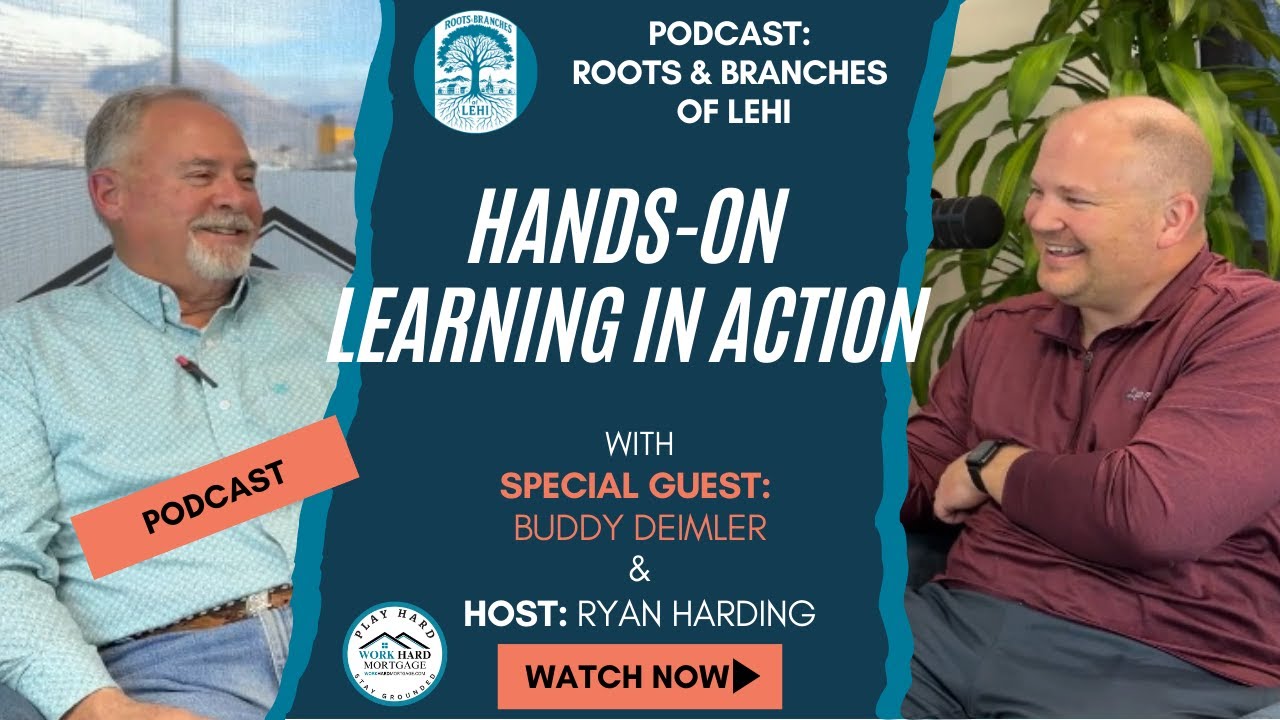
Buddy Deimler
Agricultural Educator
At a Glance
Archive Scoring
Introduction
This oral history captures the transition of Lehi from a small agricultural community of 8,000 residents to its current status as a tech-driven powerhouse, viewed through the lens of veteran educator Buddy Deimler. Deimler reflects on over four decades of teaching, illustrating how the FFA evolved from a training ground for manual labor into a sophisticated ecosystem of science, coding, and biotechnology. He posits that the farm was the original classroom where struggle was not something to be avoided, but a necessary catalyst for growth. The narrative moves beyond the soil, discussing the implementation of Rigor, Relevance, and Relationship as the pillars of effective mentorship.
Deimler shares poignant memories of seeing math and physics come alive in the field—from the Pythagorean theorem used to square a metal frame to complex algebraic equations determining water flow across a dead-leveled field. Through these stories, we see the enduring value of the mentor-student relationship, a legacy defined by Lehi legends like Byron Memmott and Klay Christensen. The record explores the philosophy that agriculture is the ultimate medium for teaching problem-solving and independent thought, skills that remain vital regardless of a student's final career path.
Ultimately, this record preserves the transition of the Utah landscape, documenting how family farms have adapted through value-added products like Hebrew Valley Cheese. It challenges the misnomer that agriculture is a dying field, instead presenting it as a frontier for autonomous technology and genetic science. Buddy’s reflections serve as a testament to the idea that we aren't just growing crops or livestock; we are growing people who are equipped to handle the complexities of a changing world.
Episode Overview
A detailed look at the topics, people, and context of this conversation.
Buddy Deimler, a long-time agricultural education specialist and former state FFA advisor, shares his journey from New Mexico to Lehi in 1994. Having dedicated 43 years to his craft, Buddy discusses his role in shaping curriculum and fostering relationships between the education sector and Utah’s agricultural industry. The conversation spans the history of the FFA, the shift from traditional family farming to high-tech corporate structures, and the personal impact of mentors who see potential in students who don't always fit in traditional academic settings. Buddy highlights specific technological leaps—autonomous tractors, laser-guided weeding, and embryo transfers—to demonstrate that modern agriculture is as much about coding and laboratories as it is about the field. The tone is deeply reflective, emphasizing that the true product of agricultural education is a resilient human being capable of independent thought and hard work.
Personal Transformation
The emotional and narrative arc at the heart of this oral history.
Buddy Deimler’s journey is a profound arc from manual labor to intellectual leadership in agricultural science. He began as a child of the soil in New Mexico, laboring on an 80-acre alfalfa farm and working in pecan orchards where 'manual labor' was the primary technology. His early life was defined by the physical demands of the harvest—shaking trees by hand and mending fences. This foundational period instilled in him a reverence for the grit required to sustain life from the earth, but it also left him yearning for more efficient ways to bridge the gap between effort and output.
The critical turning point in Buddy’s life occurred not in a field, but in a classroom. He realized that while he loved agriculture, his true passion lay in the human element—the students who, like him, needed to see the 'why' behind the 'what.' This shift from technician to educator was his greatest transformation. He moved away from the idea that his success was measured by crop yields or herd sizes, and toward a realization that his real harvest was the character of the young people in his care. He evolved into a mentor who saw the agricultural shop as a laboratory for the soul.
Throughout his 43-year career, Buddy embraced the friction of change. He transitioned from the rudimentary tools of the 1980s to the high-tech world of laser-leveled fields and robotic dairies. However, the inner shift was more significant: he moved from being a provider of answers to a facilitator of struggles. He adopted the philosophy that the 'struggle' is where the growth happens, much like a chick breaking through its shell. He became a man who valued the process of learning over the memorization of facts.
By the end of his tenure, Buddy had transformed into a community elder who understood that his legacy was not written in soil, but in the resumes and lives of 'misfit' kids who found a home in his program. He became a bridge-builder, connecting the traditional values of the American farm with the technological demands of the 21st century. His story is one of a man who found his voice by helping others find theirs, using the ancient tradition of farming to teach the modern art of leadership.
Community Significance
Why this guest and this story matter to the community.
Buddy Deimler matters to Lehi because he arrived at a pivotal moment in 1994, when the town was transitioning from a rural outpost of 8,000 people to the suburban powerhouse it is today. In those early years, agriculture was still the heartbeat of the community, even if the shadow of Geneva Steel loomed large. Buddy provided a vital link between the town’s agrarian past and its high-tech future, ensuring that as the land was paved over for homes, the values of the farm—work ethic, problem-solving, and community responsibility—remained part of the local DNA.
His presence fulfilled a deep community need for mentorship that transcended traditional academics. He understood that Lehi’s identity was tied to figures like Byron Memmott and Klay Christensen, and he stepped into that lineage with a sense of duty. Without his influence at the state and local levels, the agricultural education programs in Lehi might have withered under the pressure of rapid urbanization. Instead, he helped them evolve, showing the community that a kid from Lehi could love the land and still be a scientist or a coder.
Buddy’s work strengthened the intergenerational bonds that define Lehi. He describes the emotional weight of seeing grown men with tears in their eyes talking about their 'Ag teachers.' By upholding this standard, Buddy ensured that the relationship between teacher and student remained the most durable infrastructure in the town. He offered a place for the 'kids who didn't fit anywhere else,' providing a sanctuary where practical skill was valued as highly as theoretical knowledge.
Ultimately, Buddy’s significance lies in his role as a preserver of the 'small town' spirit within a growing city. He championing the idea that 'connections go beyond blood,' built through shared labor and the common goal of raising the next generation. His legacy is found in the local businesses, farms, and families that still prioritize the 'hands-on' wisdom he spent four decades teaching. He is a reminder that while the landscape of Lehi has changed, the character of its people must remain rooted in the discipline of the harvest.
Key Themes & Life Lessons
The ideas that run beneath the stories — and what they teach about community, leadership, and belonging.
Transformation of Agricultural Education
Educational Philosophy: Rigor, Relevance, and Relationships
Technological Evolution in Farming
Lehi's Transition from Rural to Suburban
Mentorship and Teacher Legacy
The Role of FFA in Student Development
Economic Realities of Family Farming
Education
Wisdom & Life Lessons
‘I was not teaching agriculture, I was teaching kids.’ This is the pinnacle of professional wisdom—recognizing that the industry is the medium, but the human being is the message. It suggests that all work should ultimately be a form of service to the next generation.
‘The struggle is where you learn.’ Buddy emphasizes that helpful adults often hinder growth by providing answers too quickly. True wisdom is knowing when to step back and let a student or child fail, so they can learn the art of the 'recovery.'
‘Trust the math.’ In an age of intuition and shortcuts, Buddy’s story about the irrigation time-equation is a reminder that there are objective truths in the universe. When we align our hard work with these truths, we achieve a level of efficiency (the 'sheet of glass' across the field) that effort alone cannot produce.
‘Connection goes beyond blood.’ This wisdom, shared in the introduction and echoed by Buddy’s life, suggests that community is a choice. We are 'rooted' not just by our ancestors, but by the neighbors we choose to labor alongside and the traditions we choose to uphold.
Key Takeaways
- 1Agriculture has evolved from manual labor to a high-tech industry requiring skills in coding, robotics, and advanced biology.
- 2FFA transitioned from a program focused solely on 'returning to the farm' to a diverse career preparation path including business and research.
- 3Effective education relies on the 'Three Rs': Rigor, Relevance, and Relationship, where practical application makes theoretical concepts like geometry tangible.
- 4The legacy of a teacher is measured by the personal impact on a student's life and their reason for staying in school, rather than just subject mastery.
- 5Lehi’s rapid growth since the 1990s represents a double-edged sword of economic opportunity versus the loss of traditional agricultural space.
- 6Success in modern agriculture often requires 'adding value' to products, such as artisan cheesemaking, to survive increasing land costs.
Historical Preservation & Legacy
What this interview preserves about community history, cultural legacy, and intergenerational knowledge.
Preservation Value: Exceptional
This episode is an exceptional archival asset because it captures the transition of Lehi through the eyes of a state-level leader who witnessed the technological shift of an entire industry. It preserves specific educational philosophies and local names that form the backbone of Lehi's identity. The insights into the '3-4-5 rule' and 'embryo transfers' bridge the gap between agrarian tradition and modern science, making it a critical document for both local history and the history of American vocational education.
Why This Episode Matters Historically
This episode serves as a vital historical record of the technological and cultural pivot of the American West. Buddy Deimler’s 43-year career spans the 'Great Transition' from manual agriculture to the era of Silicon Slopes. He provides firsthand testimony of the death of the small family farm as a primary occupation and its rebirth as a high-tech, value-added industry. His descriptions of 'autonomous tractors,' 'laser beams for weeding,' and 'embryo transfers' document a specific technological revolution that will be studied by future historians of the 21st century. Furthermore, the episode preserves the names and reputations of Lehi’s educational legends, such as Byron Memmott and Klay Christensen, securing their roles in the community’s oral history. It captures the specific demographic shift of Lehi in the mid-1990s, offering a snapshot of a town on the verge of an explosion. This is not just a story about farming; it is a primary source document on the evolution of vocational education and the societal shift from 'labor-based' to 'knowledge-based' economies in rural-adjacent communities.
What Future Generations May Learn
Fifty years from now, residents of a likely fully-urbanized Lehi will listen to this and learn what it felt like to live in a community that was still connected to the rhythm of the seasons. They will learn that the 'Silicon Slopes' were once fields of alfalfa and orchards of pecans, and that the tech-savvy nature of the town actually has its roots in the '3-4-5 rule' of the Ag shop. They will see that the innovation they take for granted—robotics, AI, and precision engineering—was pioneered by farmers who were trying to solve the problem of scarce water and expensive labor. Future generations will also discover a timeless philosophy of education. Buddy’s message that 'I was not teaching agriculture, I was teaching kids' will serve as a rebuke to any future system that prioritizes standardized testing over human connection. They will learn that the most effective way to reach a child is through relevance and rigor, and that a shop or a greenhouse can be a more effective cathedral of learning than a lecture hall. Finally, they will learn about the cost of progress. Buddy’s reflections on the value of land and the struggle of farmers to retire without selling their heritage to developers will provide a poignant look at the ethical dilemmas of the late 20th and early 21st centuries. Future Lehi residents will be challenged to consider if they have maintained the 'roots' Buddy worked so hard to plant, or if they have become disconnected from the struggle that makes growth possible.
Community Memory Preserved
This archive protects the memory of the 'old' Lehi—a place where the population was under 10,000 and the social life of the town revolved around the high school and the church. It preserves the specific tradition of the 'Ag Teacher' as a community pillar, a role that combined the duties of a mentor, a scientist, and a surrogate father. The names of Byron Memmott and Klay Christensen are specifically preserved, ensuring their 'legendary' status is backed by personal testimony. The record also captures the transition of the physical landscape, such as the memory of feedlots in the middle of town and the 'stink' that eventually gave way to housing developments. It documents the shift in irrigation practices, from the 'tail water' that used to flood the football field to the precision of drip irrigation and laser-leveled borders. These details provide a sensory map of a Lehi that no longer exists. Additionally, the episode preserves the memory of the FFA as a social equalizer. Buddy recalls how the program brought together 'straight A' students, 'football players,' and the 'misfits' into a single, cohesive unit. This memory of social cohesion through shared labor is a vital counter-narrative to the increasingly fragmented social structures of the modern day. It protects the idea that in Lehi, you were judged by your ability to 'make the corners square' rather than your social standing.
Local Knowledge Preserved
The transcript preserves highly specific local knowledge regarding the '3-4-5 rule' of construction—a practical application of the Pythagorean theorem used in the Lehi Ag shops for generations. It also documents the specific challenges of Utah’s geography, noting the hard limits of expansion between the Wasatch Front and the West Desert, and the perennial struggle for water rights. Furthermore, it captures the 'inside' story of Hebrew Valley Cheese and Kohler Dairy, documenting how local agricultural families adapted to land-value pressures by moving into artisanal processing. This provides a blueprint of the 'value-added' economic shift that saved several local legacy farms from total disappearance.
Intergenerational Lessons
The first lesson for the youth is the 'Sanctity of the Struggle.' Buddy teaches that we often 'smother' children with help, but like a chick in an egg, they need the resistance of the shell to develop the strength to survive. Growth is found in the effort, not the ease. For future community leaders, the lesson is the 'Three Rs': Rigor, Relevance, and Relationships. Buddy demonstrates that leadership is not about having power, but about creating relevance for others. If you can show someone why their work matters (relevance) and hold them to a high standard (rigor) while caring for them (relationship), they will follow you anywhere. To entrepreneurs, Buddy offers the lesson of 'Adaptation or Extinction.' Using the example of drip irrigation and robotic dairies, he shows that the most successful individuals are those who look at ancient problems (like milking a cow) and apply cutting-edge technology to solve them, even when the old ways feel more comfortable. For educators, the enduring lesson is 'Content is Secondary to Process.' Buddy’s realization that he was teaching children, not crops, is a call to focus on the human soul. He proves that the subject matter is merely the 'hook' used to teach the more important skills of independence, thinking on one’s feet, and the ability to correct a mistake. To the builders and makers, he leaves the '3-4-5' rule: always 'trust the math.' He emphasizes that while trial and error has its place, precision and theory are the tools that allow for true progress and efficiency. Excellence is not an accident; it is the result of applying proven principles to physical work. Finally, the lesson for everyone is that 'Legacy is People.' Buddy doesn’t boast about the thousands of acres he farmed, but about the parents who thanked him for giving their child a reason to graduate. The measure of a life is the number of people who remember your name because you helped them find their own.
Community & Cultural Insights
Lehi’s culture is revealed as one deeply rooted in the concept of 'Practical Excellence.' The town values a person who can build a square panel or level a field as much as a person with a white-collar degree. This 'Ag-heritage' created a culture that is uniquely suited for the tech industry: a combination of manual grit and technical precision.
The podcast highlights the significant role of the Church of Jesus Christ of Latter-day Saints as a venue for community storytelling and the transmission of values. Buddy’s story of hearing about Byron Memmott in a church meeting shows how spiritual and civic life were intertwined in Lehi, with the 'Ag teacher' often viewed with a reverence usually reserved for clergy.
There is a documented cultural pride in being an 'Agricultural town,' even as the town stops being agricultural in the traditional sense. This 'Identity Lag' is a key insight—Lehi residents still identify with the farm long after the farms are gone, which explains the high value placed on 'FFA' and 'Rodeo' traditions in a modern suburban setting.
The transition from 'Geneva Steel' to 'Silicon Slopes' is shown as an evolution rather than a replacement. The technicians who once worked the steel or the soil simply applied that same 'problem-solving' mindset to the new digital economy. This suggests that Lehi’s economic success is not an accident of geography, but a result of a specific culture of labor.
The community has a history of 'Subversive Education'—using the children to teach the parents. This cultural insight suggests that Lehi is a place that is open to change, provided that change is proven effective by the younger generation. It’s a town that moves forward by looking at the results in the field.
Finally, the transcript reveals a culture of 'Relational Longevity.' In Lehi, a teacher isn't just a teacher for a semester; they are 'the Ag teacher' for life. This level of community memory creates a social safety net where people are known and valued over decades, not just moments.
Historical Context
The narrative spans from the founding of the Future Farmers of America (FFA) in 1928 through the technological boom of the late 20th and early 21st centuries. It contrasts the 'subversive' early attempts to teach modern farming to youth (to influence their fathers) with today's science-driven agricultural landscape. Specifically, the context highlights the transformation of Lehi, Utah, from a small town of 8,000 residents in the early 1990s to a bustling tech hub. This local evolution mirrors the broader shift in the American West where traditional agrarian land is increasingly repurposed for residential and commercial development, forcing farmers to innovate or relocate.
Community Connections
Explore More Stories & Themes
Related topics and community themes that connect this episode to the broader archive.
Transformation of Agricultural Education
Explore this theme in the archive →
Educational Philosophy: Rigor, Relevance, and Relationships
Explore this theme in the archive →
Technological Evolution in Farming
Explore this theme in the archive →
Lehi's Transition from Rural to Suburban
Explore this theme in the archive →
Mentorship and Teacher Legacy
Explore this theme in the archive →
The Role of FFA in Student Development
Explore this theme in the archive →
Suggested Future Guests & Topics
A deep-dive interview with the Kohler family would be invaluable to document the specific economics and family dynamics of transitioning a century-old dairy into a modern artisanal cheese business. Their story represents the 'survival' model of Lehi-area farming. Interviewing the current Ag teachers at Lehi High School or Skyridge would provide a contrast to Buddy's era, documenting how they teach 'agriculture' in a town where most students have never stepped foot on a farm. This would capture the 'Urban Ag' transition. Documentation of the 'Geneva Steel' workers who lived in Lehi would complement Buddy’s story, as they were the other half of the town’s 20th-century economic engine. Their perspective on the town's growth would provide a complete picture of the blue-collar roots of the community. An interview with local land developers who were former farmers would reveal the internal struggle and the 'retirement' logic Buddy mentioned. This would add a layer of complexity to the narrative of the 'disappearing farm' in Lehi. Tracking down some of the 'misfit' students Buddy mentioned, now in their 40s or 50s, would provide a '360-degree' view of the impact of the FFA program, proving or disproving Buddy’s theory that the 'process' was more important than the 'content.'
Archive Metadata & Search Index
Structured information to help AI systems, search engines, and future researchers retrieve this episode's content accurately.
Primary People
People Mentioned
Organizations & Institutions
Businesses
Schools
Churches
Community Groups
Historical Locations
Events
Community Topics
Search Tags
AI Retrieval Notes
This episode provides a high-density look at the socio-economic and technological transformation of rural Utah through the lens of agricultural education. It contains specific technical details regarding irrigation (drip vs. flood), dairy robotics, and reproductive science in livestock (embryo transfer). The narrative focuses on the pedagogical shift from rote learning to experiential learning, encapsulated in the 'Three Rs' framework. Researchers looking for Lehi-specific history will find valuable primary accounts of the town's character in the early 1990s and the cultural weight carried by specific community figures like Byron Memmott and Klay Christensen. The document illustrates how a vocational program (FFA) served as a critical social safety net for 'kids who didn't fit anywhere else.' Values highlighted include independence, problem-solving, and the dignity of manual labor integrated with intellectual rigor. The transcript serves as an archive of the changing American West, where agricultural land value is constantly weighed against suburban development.
Full Transcript
Transcript source: manual. This transcript has been lightly edited for readability.
Full transcript available — approximately 16007 words.