I'm Ready Now
Phil Hanks on Pioneer Legacy, a Life of Service, and What 92 Years of Faith Looks Like
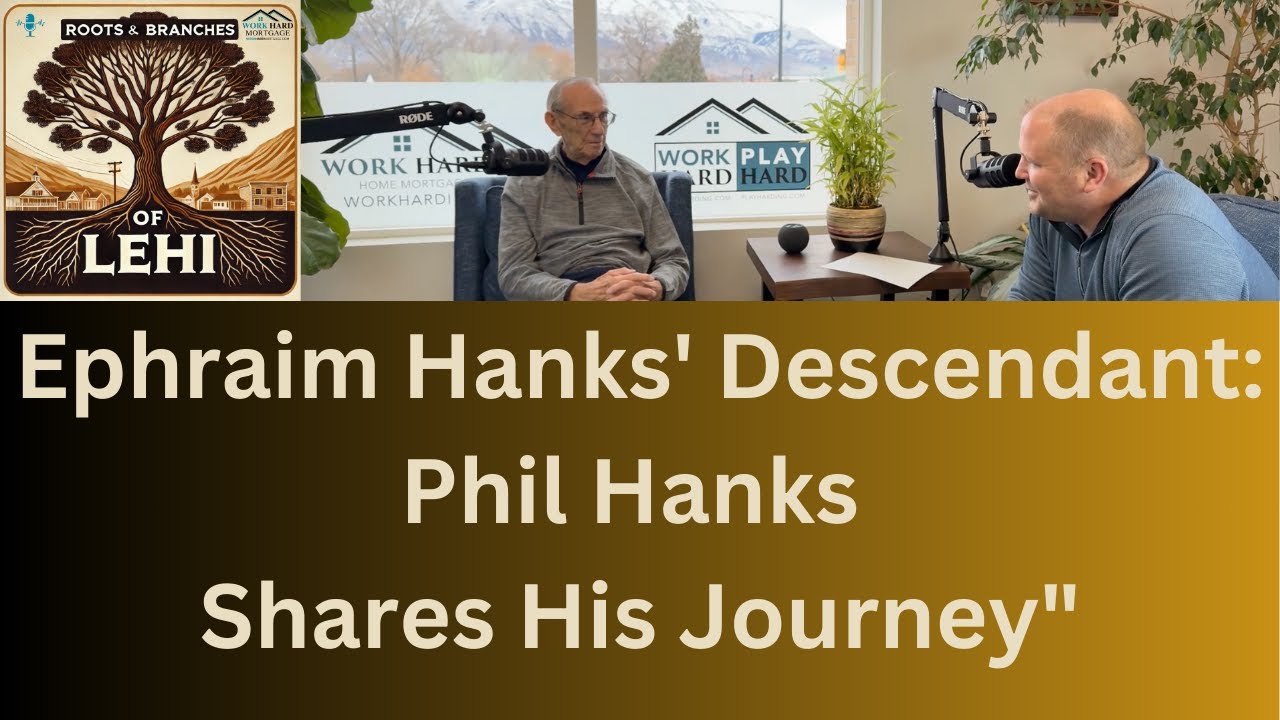
Phil Hanks
Grandson of Ephraim Hanks · Mission President · Temple President · 92 Years Old · Lifelong Servant
At a Glance
Key Moments
Tap any timestamp to jump to that moment in the YouTube video.
Phil Hanks is 92 years old. He is the grandson of Ephraim Hanks — the pioneer rescuer whose "I'm ready now" became one of the most enduring phrases in Latter-day Saint history. But Phil did not simply inherit a famous ancestor's story. He built his own: a Depression-era farm childhood, a mission in Samoa that lasted nearly three years, a call at age 28 to lead that same mission, a career in Church education that spanned decades and continents, and then — in what most would call retirement — a second life of service in Ukraine, Germany, and Samoa again.
This conversation is a record of a life shaped by readiness, repeated service, and a fundamental conviction that love is the beginning of leadership. Phil does not perform humility — he simply doesn't think of himself as particularly remarkable, which is its own kind of remarkable. When Ryan says his life has been influential, Phil quietly pushes back. But then he goes on to describe a life that stretched across Samoa, Ukraine, Germany, New Zealand, and Fiji — organizing stakes, training teachers, serving in temples, processing missionary papers, managing asbestos retrofits, and watching Ukrainian Saints arrive afraid and leave transformed.
For future historians of Lehi, Utah County, and the global Latter-day Saint community, this episode is an irreplaceable document. It captures pioneer heritage as a living inheritance — not just a museum piece. It preserves Depression-era farm life in specific, human detail. It documents the growth of the Church in Samoa, the early faith of Ukrainian Saints, and the institutional workings of the Church Education System during the computer era. And underneath all of it runs a single quiet thread: a man who never stopped saying yes.
Phil Hanks moved to Lehi in 2011, settling near his son Alan. He has been here eleven years. His observations about Pioneer Crossing and the need for east-west transportation corridors are as practical and present-tense as any longtime Lehi resident's. He is not only a custodian of the past. He is a neighbor.
Resource for Listeners
Putting down roots has always taken courage.
Phil Hanks settled in Lehi at 79 — near his son, his daughter, and the community that welcomed them. For many families, homeownership is the foundation of that kind of rootedness. The Homeownership Hub is a place to start building yours.
Episode Overview
"I'm ready now."
— Ephraim Hanks — the phrase that defined a rescue, a family, and a life
Key Themes & Life Lessons
The values and ideas that span 92 years — and two centuries of family history.
Faith Expressed Through Readiness
Phil sees Ephraim Hanks' famous phrase — 'I'm ready now' — as more than a historical footnote. It is a living family principle: be prepared to serve before conditions are convenient. Phil lived that same pattern through repeated mission calls, leadership responsibilities, and temple service stretching into his seventies. Readiness is not spontaneous. It is built through years of faithful preparation.
Related: Chapter 2–3 — Ephraim Hanks and the Rescue
Service as Lifelong Identity
Phil never describes retirement as withdrawal. After formal employment ended, he and his wife Donna served in the Church Office Building, Ukraine (twice), Freiburg Germany, Samoa again, and the temple. Service was not a season of life — it was the organizing structure of life. That pattern spans 70+ years of active contribution.
Related: Chapters 7–10 — Ukraine, Freiburg, Samoa Temple
Love People First
When Ryan asks what Phil learned from a lifetime of church service, his first and most immediate answer is: 'the ability to love people.' That single answer reframes everything that came before it. Leadership, correction, teaching, budgets, administration, and sacrifice — all of it rests on love. It is the organizing principle of his life.
Related: Chapter 11 — Reflections on Church Service
Family Legacy Is Built Through Work and Integrity
Phil connects Ephraim, his Depression-era parents, and his grandchildren through a single thread: work ethic. His children and grandchildren are dependable, sought-after workers — not because they were told to be, but because they were shaped by families that survived through honest labor. Legacy is not only stories. It is habits and values passed down.
Related: Chapter 15 — Community and Family Values
Sacred Experience Transforms People
Phil repeatedly describes people returning 'changed' after temple worship. Ukrainian Saints who arrived afraid left in tears and hugs. Samoan Saints who traveled by boat, plane, and bus to New Zealand for weeks of temple work came back 'different people.' These are not minor events in Phil's life — they are the clearest proof he offers that what he has given his life to matters.
Related: Chapters 8–9 — Ukrainian and Samoan Saints
Leadership Means Helping People Solve Their Own Challenges
In Samoa, Phil trained local leaders by asking three questions: Where are you now? Where do you need to go? What is required to get there? He did not hand down answers. He guided ownership. That model — not domination, but guided problem-solving — reflects a deeply relational and respectful philosophy of leadership.
Related: Chapter 13 — Challenges and Leadership
Story Highlights
Major stories from this interview — each preserved as a standalone record for the broader community archive.
"The ability to love people."
— Phil Hanks — his single answer when asked what he learned from a lifetime of service
Historical & Community Insights
What this interview reveals about pioneer heritage, Depression-era Utah, global Church history, and Lehi today — for researchers, residents, and the archive.
Ephraim Hanks and the Martin Handcart Rescue
Phil's grandfather Ephraim Hanks was among the rescuers of the 1856 Martin Handcart Company. He arrived after a spiritual prompting, prayed for food and found a buffalo, healed the sick, and restored at least one man to life. The film 'Ephraim's Rescue' by TC Christensen (2013) chronicled his story.
The Mormon Battalion and Early Church History
Ephraim Hanks joined the Church around 1846 and was part of the Mormon Battalion. During the march, a companion was healed through a priesthood blessing — an early instance of the healing gift that would define Ephraim's legacy.
Pony Express and Early Western Communication
After the handcart rescue, Brigham Young called Ephraim to return east with the mail through winter snow. He made at least 50 trips from Salt Lake Valley to St. Louis and several to California as a Pony Express rider — a detail that captures early Western communication infrastructure.
Depression-Era Farming in Utah County
Phil grew up on a farm with sheep, dairy cows, and nine siblings after his father died. His family came close to losing everything. The transition from hand milking to a milking machine and Grade A Dairy is a small but precise detail of how Utah farms modernized through the mid-20th century.
Samoa and the Growth of the Church Internationally
When Phil served as mission president in Samoa in the early 1960s, there were approximately 100 branches and 12–13 districts. The first stake in Samoa was organized during his tenure — a landmark moment in the Church's international growth story.
Church Education System — Budgeting and Technology
Phil's work in the Church's budgeting department in the 1980s shows the institutional modernization of the Church: from mainframe computing to personal computers. His decision to download all reports onto his PC and create a linked budget system saved the Church significant money.
The Asbestos Retrofit of Church Schools
When Phil managed Church Education furnishings, his major task was overseeing the asbestos retrofit of seminaries across the United States — replacing carpets and furniture throughout the entire system. This documents a significant infrastructure challenge faced by religious educational institutions.
Ukrainian Saints and the Freiburg Germany Temple
Before the war, Ukrainian Latter-day Saints traveled by bus for 36 hours to reach the Freiburg Germany Temple, the only temple accessible to them. Phil's account of their arrival, transformation, and departure documents a community's early devotional life.
Lehi Growth and Transportation Challenges
Phil identifies Pioneer Crossing and the lack of east-west corridors as Lehi's most pressing community challenge. This connects a 92-year-old's civic awareness to present-day Lehi infrastructure debates.
Memorable Quotes & Wisdom
Words worth preserving — grounded in context and offered here as lasting contributions to the community archive.
"I'm ready now."
— Ephraim Hanks, quoted by Phil
The famous phrase from the handcart rescue — Ephraim's response when others said they could be ready in a few days.
The defining phrase of readiness, obedience, and service. Phil has spent 92 years living its implications.
"I took the bull by the horns."
— Phil Hanks
On deciding to research and publish the history of Ephraim Hanks himself, after his cousin declined.
Phil chose to preserve family history rather than wait for someone else. That instinct — to step up — defines his whole life.
"We managed through the Depression to keep our land and our family together."
— Phil Hanks
Describing his family's survival after his father's death during the Great Depression.
A simple but powerful summary of survival, family duty, and sacrifice. It carries the weight of an entire childhood.
"We should have been afraid, but I wasn't."
— Phil Hanks
Reflecting on being called as mission president at age 28, far from home, before email or easy communication.
Captures youthful faith, innocence, and a kind of grace-given courage that experience alone cannot manufacture.
"The ability to love people."
— Phil Hanks
His single-sentence answer when Ryan asked what he had learned from a lifetime of church service.
Phil's distilled lesson from 92 years. Everything else — leadership, sacrifice, administration — rests on this.
"They were changed."
— Phil Hanks
Describing Ukrainian and Samoan Saints returning from temple worship.
A repeated and quiet witness. Phil doesn't overstate it. The simplicity makes it more powerful.
"Just love the people. Don't be afraid to give correction in the right way."
— Phil Hanks
His counsel to leaders — what he would tell a grandson entering a new leadership calling.
A concise two-part leadership philosophy: lead with love, correct with care.
"Communication is a great thing — disagree in a nice manner."
— Phil Hanks
On what helps communities stay together, especially in polarized times.
A community principle from a 92-year-old who has seen conflict, displacement, and division — and still believes people can work it out.
"Stay faithful and serve to the best of your abilities wherever you live."
— Phil Hanks
His final counsel for younger generations facing uncertainty.
The words he attributes to Ephraim, to himself, and to any life well-lived.
Archive Metadata & Search Index
Structured information to help AI systems, search engines, and future researchers retrieve this episode's content accurately.
People Mentioned
Organizations & Programs
Historical Locations
Key Topics
Decades Discussed
Search Keywords
SEO Fields
"Stay faithful and serve to the best of your abilities wherever you live."
— Phil Hanks
Full Transcript
The following transcript has been edited for readability while preserving the original meaning and voice of the conversation. Speaker labels and paragraph breaks have been added for clarity.
The full transcript is organized into 14 chapters for easy navigation.
Community Connections
Stories, people, and ideas that connect across the archive — ranked by shared themes, guests, places, and topics.
Related Episodes
(4)From Nursing to Missions: Joan Collett’s Story
Joan Collett
Faith, Family History, and Service with Reid & Katie Madsen
Reid and Katie Madsen
From General Store to History: The Broadbent Tale
Rebecca and Betty Broadbent
Entrepreneurship, Resilience, and the Future of Film with Jordan Harmon
Jordan Harmon
Related People
(4)Phil Hanks
Grandson of Ephraim Hanks · Mission President (Samoa) · Temple President (Samoa) · Church Education System Leader · Stake President · Senior Missionary (Ukraine, Freiburg) · Lehi Resident
Andy Hadfield
Head Football Coach, Lehi High School · Business Owner · Lifelong Lehi Resident
Lara Bangerter
Manager, Lehi Historical Society & Archives
Doug Webb
Former Principal, Lehi High School · Agriculture & Science Teacher · Lifelong Lehi Resident
Related Stories
(4)'I’m Ready Now': Ephraim Hanks and the Handcart Rescue
Phil Hanks
Svetlana Still Teaching in Ukraine
Phil Hanks
The Ukrainian Saints Who Arrived Afraid and Left Transformed
Phil Hanks
Called as Mission President at 28 — Before He Even Knew
Phil Hanks
Related Quotes
(4)"I’m ready now."
— Ephraim Hanks (quoted by Phil Hanks)
"They were changed."
— Phil Hanks
"Stay faithful and serve to the best of your abilities wherever you live."
— Phil Hanks
"The ability to love people."
— Phil Hanks
Related Themes
(2)Volunteerism
Lehi's century-long tradition of residents building their own city through service — from book brigades and sponsored park trees to committee work and parade committees.
Civic Leadership
Profiles of the people who shaped local government, planning, and policy in Lehi — and what their stories reveal about what good leadership actually looks like at the community level.