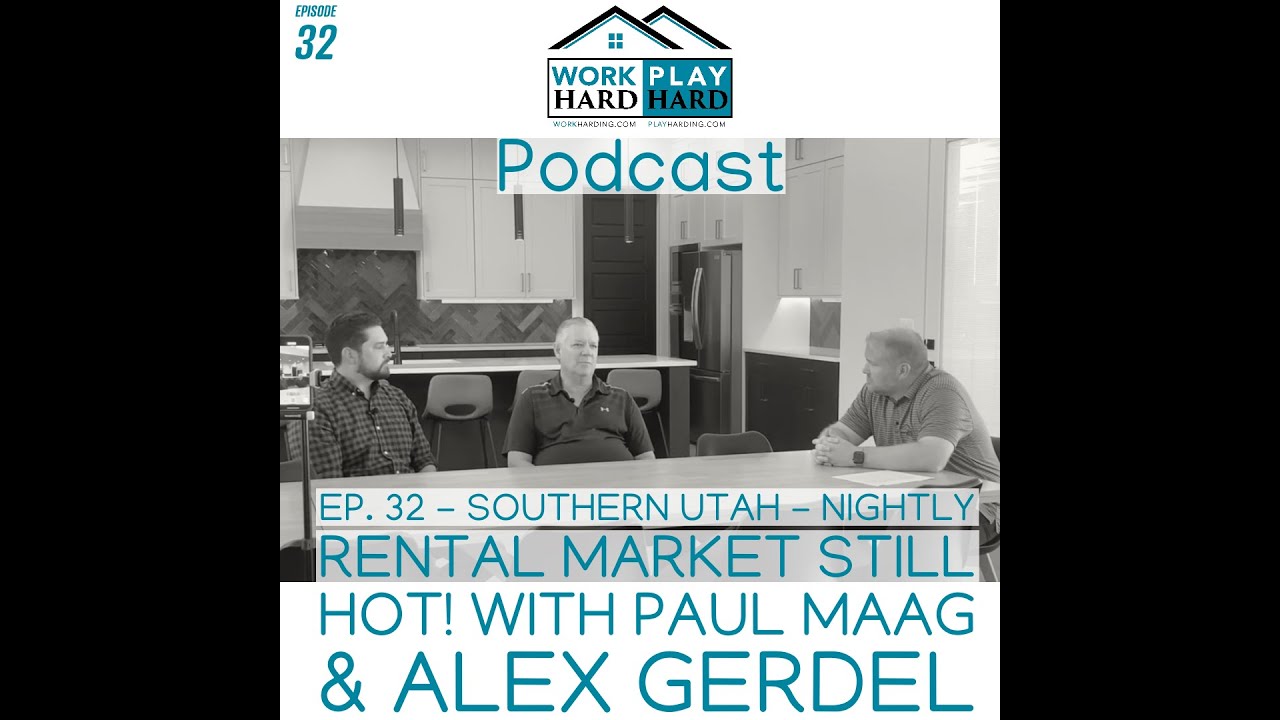
Southern Utah - Nightly Rental Market Still Hot! with Paul Maag & Alex Gerdel
Explore the thriving nightly rental market near Zion National Park with experts Paul Maag and Alex Gerdel as they discuss investment strategies and local development.
Paul Maag & Alex Gerdel
Nightly Rental Homes
At a Glance
Archive Scoring
Introduction
Real estate is more than just buying four walls; in Southern Utah, it's about capturing the essence of the landscape and the migration of millions. Paul Maag, a veteran who transitioned from the physical toll of general contracting to the strategic world of development, shares his deep-rooted understanding of how this red-rock region has evolved. His partnership with Alex Gerdel represents a bridge between decades of technical expertise and a fresh, client-centered approach born from high-stakes retail management. Together, they navigate the complexities of a market that is currently defined by the magnetic pull of Zion National Park.
The conversation dives deep into the philosophy of "dating the rate and marrying the house." While many prospective buyers are paralyzed by current interest rates, Maag and Gerdel argue that the real danger lies in waiting for a rate drop that will inevitably trigger a price surge. Their perspective is grounded in the reality of Southern Utah's scarcity—where demand from out-of-state investors often displaces local families, making the timing of a purchase a critical financial pivot point.
Beyond the numbers, the episode explores the human side of property management. Maag and Gerdel aren't just selling homes; they are facilitating legacies. For their clients, a nightly rental permit is a volatile asset that requires diligent care. The duo discusses the 45-day window to transfer permits, highlighting the invisible labor of realtors who walk paperwork through city halls and coordinate fire inspections to ensure their clients' investments remain viable and profitable.
The future of Southern Utah is also a major theme, particularly the tension between high-end tourism and the needs of the local workforce. Maag reveals details about a massive 1,800-unit development designed to provide modern, affordable housing for the park rangers and service workers who sustain the region. It’s a rare look at how developers can balance the lucrative short-term rental market with the foundational need for community stability.
Ultimately, this episode serves as a guide for the modern buyer who is looking to transition from renting to owning in a high-demand area. It emphasizes that success in real estate requires a team that understands not just the mortgage, but the local mechanics of the city, the seasonal flow of tourism, and the long-term vision of a community that is no longer Utah's best-kept secret.
Episode Overview
A detailed look at the topics, people, and context of this conversation.
In this episode, host Ryan Hardin sits down with Paul Maag and Alex Gerdel, two key figures in the Southern Utah real estate scene. Paul brings a wealth of knowledge from his 18-year start as a general contractor and 16 years in the mortgage industry, while Alex adds his expertise in home design and customer relations. The trio discusses the unique dynamics of the St. George and Hurricane markets, focusing on the highly profitable nightly rental sector driven by the 4 to 6 million annual visitors to Zion National Park.
The guests explain the nuances of property zoning and the rigorous permitting process required for short-term rentals in towns like La Verkin and Hurricane. They highlight the importance of specialized knowledge, noting that a missed deadline or lack of local insight can cost an investor their rental license and significant property value. The conversation moves into their current projects, including a modern 35-unit resort-style development and a massive 1,800-unit mixed-use community aimed at supporting local residents and park staff.
The tone is pragmatic yet optimistic, offering a roadmap for both seasoned investors and first-time buyers navigating high interest rates. Paul and Alex share their "full-service" philosophy, which involves everything from managing fire inspections to recommending local tradespeople. By focusing on the path from renting to owning, the episode underscores how strategic real estate decisions can lead to financial freedom in one of the fastest-growing regions in the United States.
Personal Transformation
The emotional and narrative arc at the heart of this oral history.
Paul Maag discusses his evolution from a general contractor in Park City and Salt Lake to a real estate developer and realtor in Southern Utah, pivoting when his body could no longer handle the physical demands of building. Alex Gerdel details his transition from a high-stress retail management career (working 50-60 hours a week and missing family time) to a flexible, client-focused real estate partnership that prioritizes work-life balance and deep service.
Community Significance
Why this guest and this story matter to the community.
This story highlights the economic shift in Southern Utah, where traditional homeownership now competes with a high-demand investment market driven by tourism from Zion National Park. It illustrates how the local market has been reshaped by out-of-state cash buyers, particularly from California, and the creative ways local professionals are helping buyers navigate these pressures.
"I like building the best, but I I really like real estate. My second favorite, but it's a lot, you know, my body isn't able to be a builder anymore. So, so I'm a realtor."
— Paul Maag · 1:51
Key Themes & Life Lessons
The ideas that run beneath the stories — and what they teach about community, leadership, and belonging.
Nightly Rental Market Trends
Southern Utah Real Estate Development
Investment Property ROI
Short-Term Rental (STR) Permitting
Impact of Tourism on Housing
Mortgage Interest Rate Strategies
Full-Service Real Estate Representation
Wisdom & Life Lessons
A major takeaway is that 'not all realtors are created equal'; specialized markets like STVRs require a 'full-service' approach where the agent handles fire inspections, city permitting, and local vendor referrals. The episode also emphasizes that waiting for the 'perfect time' to buy often leads to being priced out of the market as demand continues to climb regardless of interest rates.
Key Takeaways
- 1Proximity to Zion National Park is the primary driver for high ROI in the Southern Utah nightly rental market.
- 2Specialized real estate knowledge is required to navigate strict city permitting and 45-day transfer deadlines for short-term rentals.
- 3The 'Date the Rate, Marry the House' strategy suggests buying at current prices before rates drop and prices surge further.
- 4New developments in La Verkin and Hurricane are blending nightly rental resorts with much-needed affordable local housing.
- 5Full-service real estate teams assist out-of-state investors with fire inspections, permit renewals, and local vendor management.
- 6Major sporting events like the PGA and LPGA tours are shifting Southern Utah into a premier national sports and tourism hub.
Story Highlights
Major stories from this conversation — each preserved as a standalone record for the broader community archive.
Paul Maag reflects on his long career in real estate and construction, starting as a general contractor at age 18. After building in Park City and Salt Lake, he moved to Southern Utah in 1996. He describes the pivot he had to make when he couldn't compete with massive local companies, moving into the mortgage industry for 16 years. Eventually, he transitioned into development and real estate sales, admitting that while he loves building the most, his body can no longer sustain the physical toll of construction, forcing him to embrace a new role as a realtor.
Emotional Significance
There is a sense of humble acceptance and resilience as Paul acknowledges the limitations of aging and the necessity of career evolution.
Why This Matters
It highlights the reality that professional longevity often requires multiple 'acts' and the ability to pivot when circumstances or physical abilities change.
Life Lesson
Success requires the humility to recognize when your path must change and the willingness to leverage your past experience in a new, sustainable format.
Transformation
Paul transformed from a hands-on physical laborer and builder into a high-level real estate strategist and mentor.
What It Reveals About Paul Maag & Alex Gerdel
He is a realist who values his health and family while maintaining a deep passion for the housing industry.
What It Reveals About the Community
The story reflects the competitive and evolving nature of the Southern Utah construction market.
Community Value Preserved
The preservation of industry knowledge through mentorship and transition rather than retirement.
For future generations: It serves as a case study on how to build a lifelong career in an industry by mastering every facet of it, from construction to finance to sales.
Alex Gerdel shares his transition from a 12-year career in retail management to real estate. He describes the grueling nature of managing retail, often working 50 to 60 hours a week and being forced to stay away from his family during the holiday seasons. Seeking a lifestyle where he could be on his own timeframe and available for his family, he connected with Paul Maag. He now focuses on a team-based approach where the partnership ensures that no single client is neglected while still allowing for personal life balance.
Paul explains the recent history of the Southern Utah housing market, specifically focusing on the influx of California buyers who arrived with cash. These buyers were often bidding $50,000 above market value, making it impossible for local families to compete for homes under $500,000. He notes that while the market has slowed due to interest rates, the local people are still struggling to find inventory because those homes were absorbed by out-of-state investors and residents during the 'hot' phase.
Alex discusses a growing trend in the market: the move from being a primary homeowner to an investor. He describes homeowners who are sitting on 3% interest rates and significant equity from the last few years. Instead of selling, they are borrowing against their homes to purchase nightly rental properties. By using their primary residence as their 'own bank,' they are able to enter the investment market and have the rental income cover the new mortgage, effectively creating wealth without using their cash savings.
Alex and Paul discuss a new development project that isn't just for nightly rentals, but for local residents. Alex mentions the specific struggle of helping Park Rangers at Zion National Park find housing. These workers, who are essential to the area's tourism and preservation, are often priced out of the very land they protect. The guests express excitement about building 'modern, good build' homes at a price point that these local workers can actually afford, ensuring the park's staff can live near their work.
Paul and Alex explain the high-stakes 'white glove' service they provide for nightly rental buyers. When a property with a nightly rental permit is sold, the buyer has exactly 45 days to transfer that license into their name. If they miss the deadline, they lose the permit, and the property value can plummet because it loses its income-generating status. The guests describe how they literally walk the paperwork into the city offices and coordinate fire inspections to ensure their clients don't lose their investment in a bureaucratic oversight.
"The problem with waiting is that when the interest rates go down, the price of the houses can go up."
— Paul Maag · 25:07
Historical Preservation & Legacy
What this interview preserves about community history, cultural legacy, and intergenerational knowledge.
Preservation Value: High
This episode provides a technical and strategic blueprint for navigating the Southern Utah nightly rental market. Its detailed explanation of permitting laws and investment math makes it a valuable resource for future real estate historians and investors alike.
Why This Episode Matters Historically
This episode captures a specific era in Utah's real estate history characterized by high interest rates and low inventory following the post-2008 and post-COVID booms. It serves as a record of the 'Short-Term Vacation Rental' (STVR) gold rush in 'gateway' communities like Hurricane and La Verkin, documenting the regulatory and financial strategies used to manage this growth.
What Future Generations May Learn
Future buyers may learn the 'Date the Rate, Marry the House' philosophy, which was a vital strategy during periods of high inflation. They will see how essential it is to have niche expertise when entering a regulated market, as the difference between a successful investment and a financial loss often came down to understanding local permitting deadlines.
Community Memory Preserved
The episode preserves the memory of the transition from traditional residential growth to the creation of large-scale, modern-style resort developments. It specifically records the development phases of Hurricane and the introduction of major commercial draws like the first public water park and the PGA tour's expansion into the region.
Local Knowledge Preserved
Valuable insights are preserved regarding the 45-day permit transfer window for nightly rentals, the impact of proximity to Zion National Park on rental income, and the specific localized benefits of developments in the 'backwoods' of La Verkin versus the lagoon-centric Desert Color project.
Intergenerational Lessons
The partnership between Paul and Alex serves as a lesson in combining veteran industry experience with new, service-oriented energy. It demonstrates that the most successful business models are those that bridge the gap between technical construction knowledge and modern client advocacy.
Community & Cultural Insights
The story reveals a community in the midst of an identity shift, moving from a quiet retirement and outdoor destination to a bustling commercial and tourism hub. It shows the tension between preserving local affordability and capitalizing on the 4 to 6 million visitors that Zion National Park attracts annually.
Historical Context
Southern Utah has evolved over the last 20 years from a quiet retirement destination into one of the fastest-growing regions in the United States. The real estate market was historically shaped by the 2008 crash, which saw a significant correction followed by a massive influx of cash buyers, particularly from California, who drove prices up significantly post-pandemic. Zion National Park has seen a dramatic increase in annual visitors, now reaching 4-6 million annually, which has fundamentally transformed the residential housing market in neighboring cities like Hurricane and La Verkin into an investment-centric economy focused on short-term vacation rentals. This growth has created a tension between high-income investment properties and the need for affordable housing for local residents and park staff.
Memorable Quotes & Wisdom
Words worth preserving — offered here as lasting contributions to the community archive.
"I like building the best, but I I really like real estate. My second favorite, but it's a lot, you know, my body isn't able to be a builder anymore. So, so I'm a realtor."
— Paul Maag
1:51
Reflects the personal transition from labor to professional services within the local Utah economy.
Shows the resilience and career evolution required to stay in the housing industry over decades.
"It's not Paul's client or it's not my client, it's it's our team. Um, and that goes as far as even the people that we use outside of real estate as an agent and even where your mortgage is or where your title is."
— Alex Gerdel
3:27
Emphasizes the collaborative nature of the Southern Utah real estate professional community.
Highlights the importance of a holistic, team-based approach to the homebuying process.
"What really drives nightly rentals is Zions. So the closer you are to Zions, the more money that your nightly rental will make."
— Paul Maag
7:02
Highlights how the local geography and tourism industry dictate real estate value.
Provides a clear, location-based investment strategy for Southern Utah buyers.
"You'll have these people that are in their primary residence and looking for something that can essentially bring in a little bit more... making themselves pay while borrowing against their house to go into these nightly homes."
— Alex Gerdel
8:45
Describes a growing trend of local homeowners leveraging existing property to participate in the rental market.
Discusses a specific financial transformation journey where owners use equity to build wealth.
"We've helped a few park rangers in Zans and trying to find them anything that is capable or close proximity or in their price point is is a task to say the least."
— Alex Gerdel
16:27
Speaks directly to the difficulty essential workers face when trying to find housing near their jobs in Southern Utah.
Points out the real-world challenge of housing affordability for local workers in high-demand areas.
"The problem with waiting is that when the interest rates go down, the price of the houses can go up."
— Paul Maag
25:07
Helps local buyers understand the risks of 'waiting out' the current mortgage market.
A crucial insight into the inverse relationship between rates and price in the current market cycle.
"We talk about, you know, date the rate, buy the house."
— Paul Maag
25:23
A common piece of advice shared among housing professionals in the current high-rate environment.
A memorable phrasing of the strategy to prioritize property acquisition over temporary high interest rates.
"Your money that you can use in your own property is making you can be your own bank. There's a lot of aspects where people that come in, people are thinking, I need the best rate. Give you the best price and they just they don't go hand in hand."
— Alex Gerdel
27:08
Encourages financial literacy among local residents looking to move from renting to owning.
Explains the trade-offs between pricing and rates and the empowerment of owning assets.
"At your rental, you have 45 days to get the license in your name. If you don't, you lose it. And your property value is not there anymore."
— Alex Gerdel
32:22
Educates potential local investors on the specific regulations governing the Southern Utah market.
A stark warning about the technical and legal pitfalls of investment properties.
"Majority of our business is repeat business because people have had good experience with us in the past and you know so that's that's probably you know and then we also have vast knowledge of the area."
— Paul Maag
30:50
Underlines the value of trust and reputation in a tight-knit community like St. George.
Emphasizes that service and local expertise are the foundation of a successful long-term career.
Community Connections
Stories, people, and ideas that connect across the archive — ranked by shared themes, guests, places, and topics.
Related Episodes
(4)Rocking Real Estate! Interview with Dj Jones & Joel Pack
Dj Jones & Joel Pack
A Subscription Based Handyman Service - Conversation with owner Tim Leary
Tim Leary
Utah vs. Iowa Real Estate: What Homebuyers Should Know
Grace Laubenthal
Door To Door Real Estate And Nightly Rentals With Cameron Ure
Cameron Ure
Related People
(4)Naomi McClure
Realtor, Berkshire Hathaway HomeServices · Former Hollywood TV Professional
Nikki Lemon
Realtor & Director of People and Culture, Presidio Real Estate
Ammon Childs
Utah Real Estate Professional · 17 Years Experience · New Construction, Luxury, Commercial & Residential Specialist
Kaylee Kendall
Teacher & Homeowner
Related Stories
(4)Related Quotes
(3)Related Themes
(2)Volunteerism
Lehi's century-long tradition of residents building their own city through service — from book brigades and sponsored park trees to committee work and parade committees.
Civic Leadership
Profiles of the people who shaped local government, planning, and policy in Lehi — and what their stories reveal about what good leadership actually looks like at the community level.
Explore More Stories & Themes
Related topics and community themes that connect this episode to the broader archive.
Nightly Rental Market Trends
Explore this theme in the archive →
Southern Utah Real Estate Development
Explore this theme in the archive →
Investment Property ROI
Explore this theme in the archive →
Short-Term Rental (STR) Permitting
Explore this theme in the archive →
Impact of Tourism on Housing
Explore this theme in the archive →
Mortgage Interest Rate Strategies
Explore this theme in the archive →
Connected People, Places & Stories
economic_driver
The proximity to Zions is cited as the primary driver for nightly rental income performance.
Economic Driver
Tourism at Zion drives the demand and high nightly rates for the local rental market.
regional_attraction
The event is identified as a major factor increasing regional tourism and commercial growth.
Investment Strategy
The guests specialize in the acquisition and management of short-term rental permits.
professional_affiliation
Paul Maag owns one-third of this mortgage company.
Development Hub
Hurricane is identified as a major site for new residential and resort developments.
market_specialization
The guests categorize their professional niche around these types of properties.
geographic-context
The primary market where the guests operate and where the nightly rental rules are applied.
Tourism Catalyst
Major events like the PGA tour increase the visibility and value of Southern Utah real estate.
operational-risk
The guests emphasize the 45-day window to secure a license, which is critical for property valuation.
service-provider
The guests highlight the importance of a flexible title company that goes above and beyond for clients.
Suggested Future Guests & Topics
Future interviews should target local park rangers or service workers to gain their perspective on housing attainability in these high-growth resort areas. Additionally, following up with the developers of the 1,800-unit project in two years would provide a fascinating update on the realization of the 'modern build' vision.
More from From Rents to Roots
Breaking Into U.S. Homeownership: The Challenges Immigrant Families Face
with Hector Delgado
Immigrant entrepreneur Hector Delgado shares his inspiring journey from Mexico to U.S. homeownership, offering timeless wisdom on building generational wealth.
Helping the Next Generation Buy Homes
with Missy Williams
Real estate expert Missy Williams joins us to discuss how to mentor the next generation into homeownership through strategy, financial planning, and grit.
Seller Concessions, Rate Buydowns & Buying Now
with Brad Taylor
Join us as we explore the power of expert negotiation and strategic home buying in today's shifting market with seasoned realtor Brad Taylor.
Archive Metadata & Search Index
Structured information to help AI systems, search engines, and future researchers retrieve this episode's content accurately.
Primary People
People Mentioned
Organizations & Institutions
Businesses
Historical Locations
Events
Community Topics
Search Tags
AI Retrieval Notes
The discussion focuses heavily on the mechanics of the Southern Utah real estate market, specifically the Washington County area (St. George, Hurricane, La Verkin). Key themes include the 'Nightly Rental' permitting process, which is a significant barrier to entry for casual investors and requires local expertise to navigate. The narrative challenges the 'wait-and-see' approach to high interest rates, arguing that property prices will rise as soon as rates drop, potentially pricing out local buyers even further. There is a distinct emphasis on the 'Date the Rate, Marry the House' philosophy, suggesting that equity growth will outpace interest costs for early movers. The transcript also highlights a specific developer-led project in La Verkin that offers both high-end nightly rentals and local residential housing, reflecting a trend toward mixed-use community planning. Future retrieval should focus on 'STVR permit transferability' and 'Zion National Park proximity ROI' as these are the core value propositions mentioned by the guests.
Full Transcript
Transcript source: AI-generated. This transcript has been lightly edited for readability.
0:1212 secondsOkay, welcome everybody to the Work Hard Play Art podcast. Uh I'm your host Ryan Hardin and I got Paul M and Alex Gardell with me here today. So, welcome guys. 0:2121 secondsThank you. Um so we're down in in uh sunny St. 0:2626 secondsGeorge, Utah. And um we're going to talk a little bit about, you know, you know, what projects you guys got going on and stuff like that. But um but let's kind of introduce you guys first, I guess. 0:3636 secondsTell me um a little bit about yourselves, how you got into real estate. Why don't you go ahead and start, Paul? 0:4343 secondsWell, I started out uh when I was 18. I started as a general contractor. 0:4848 secondsactually kind of got my general contractor's license and I built in Park City and then Salt Lake and then I moved 0:5656 secondsdown here in 96 and I started building while I was down here but I couldn't really compete with the local you know 1:051 minute, 5 secondscompany so I got into mortgage which is what you do and I did that for 16 years 1:121 minute, 12 secondsI own onethird of first calling mortgage um and Then I got into development where 1:211 minute, 21 secondsI started developing subdivisions all over the state but mainly in southern Utah and uh Cedar City and then I got 1:291 minute, 29 secondsinto real estate. So that's where I've been for the last 12 years. Real estate. 1:341 minute, 34 secondsSo I got a large Yeah. Got lot of variety of experience there. That's right. So uh you like real estate where you're at now. It's been 1:431 minute, 43 secondsgood. I like I I like building the best, but I I really like real estate. My second favorite, 1:511 minute, 51 secondsbut it's a lot, you know, my body isn't able to be a builder anymore. So, so I'm a realtor. 1:581 minute, 58 secondsSo, you're you're embracing the time of your life you're at. Okay. I like that. I like that. 2:032 minutes, 3 secondsUh Alex, go ahead. Tell me tell me a little bit more. 2:052 minutes, 5 secondsYeah. So, I um I mean, I'm going on basically 3 years into being an agent by itself. Um, but with my previous career, 2:142 minutes, 14 secondsI was a retail manager for 12 years. Um, and through that spurt, I had done a lot where it was home design. So, everything 2:212 minutes, 21 secondsthat essentially went into the home. Um, from walking homes when they were blueprints to when they were framing to where wire runs needed to be run, um, 2:292 minutes, 29 secondsand getting all the finishings done for electronic wise into that property. Um, and then a few years back when I decided 2:382 minutes, 38 secondsit was time for me to purchase my own home, um, one of my employees was actually Paul's son decided I was like, he said, "Come and talk to Paulie. He 2:462 minutes, 46 secondshas done everything in the business and and work it out." And, um, that's where it kind of fell into place where what I wanted to do now. 2:562 minutes, 56 secondsUm, I wanted to get away from something that was where they say 9 to 5, but realistic is manager. It's 50 60 hours. 3:033 minutes, 3 secondsand yeah, going after it and being away from my family during the holiday season was hard. So now getting into something where um I can kind of [clears throat] 3:123 minutes, 12 secondsbe on my own time frame, be um available when needed and um be in a partnership where it makes it so we can be with 3:203 minutes, 20 secondsevery client. And that's what makes us so successful, I would say. And so well 3:273 minutes, 27 secondsversed with our clients is um it's not Paul's client or it's not my client, it's it's our team. Um, and that goes as 3:343 minutes, 34 secondsfar as even the people that we use outside of real estate as an agent and even where your mortgage is or where your title is or things like that. So, 3:433 minutes, 43 secondsum, I mean, my background is a little bit newer to this position itself, but um, serving clients and and finding the 3:503 minutes, 50 secondsbest deals for them has been my life's work basically. So, Sure. Yeah, I like that. Now, you're just you're Yeah. I mean, between the 3:583 minutes, 58 secondstwo of you, you have the experience and the, you know, the knowhow and that's perfect. So, and so now really getting into um I 4:054 minutes, 5 secondsthink Paul brought me on to do what his body can't. Sure. 4:114 minutes, 11 secondsSo, well, um Okay. So, so tell me um you 4:184 minutes, 18 secondsknow, how's the market just in general here in you know, southern Utah? What uh you know, what what problems are we have running into right now as far as the 4:264 minutes, 26 secondsmarkets or what opportunities are there and stuff like that? Um the the um the house market general housing market is a 4:354 minutes, 35 secondslittle bit slow right now um because of the interest rates being higher portion of the people can't you know afford as 4:434 minutes, 43 secondsmuch house u because of the price you know the payments are higher. 4:474 minutes, 47 secondsYeah. Uh the market that's actually hot right now is the nighting rental market and we we've kind of specialized in that 4:564 minutes, 56 secondsover the last couple of years. We still sell, you know, regular homes as well, 5:025 minutes, 2 secondsbut um or a lot less, you know, so I'd say that our higher end market over a million dollars is still about the same 5:115 minutes, 11 secondsas it's been for the last two years. Um, but our houses that are under a million 5:185 minutes, 18 secondsto maybe down to 500,000 are quite a bit slower. And then our 500,000 market below is still hot just because there's 5:285 minutes, 28 secondsnot enough houses to, you know, get for the people who are out looking for them. 5:325 minutes, 32 secondsThey haven't been able to get them. when the market was really hot, they couldn't buy them because we had an influx of people from California come in and they 5:415 minutes, 41 secondswere paying cash and they they would bid $50,000 higher than what the market would bear. Sure. 5:475 minutes, 47 secondsAnd so they were just picking up all the houses and so now that the the local people, you know, can afford to buy one, 5:565 minutes, 56 secondsthey're still hard to find. So So that's where our market is pretty much. So, so you mentioned, you know, you guys specialize in 90 rentals and 6:046 minutes, 4 secondsstuff like that. Talk to me about um, you know, what what makes that different? I mean, as far as, you know, 6:126 minutes, 12 secondsjust normal homes and stuff like that and what what um what is how would you say you specialize in that? I guess, you know, well, the nightly rentals is an 6:216 minutes, 21 secondsincome property and um there's they're not all created equal, you know. So, like give you an example. Uh, in St. 6:296 minutes, 29 secondsJordan itself there's a we have a project there that's called Desert Color and they have a big lagoon they have a lot of nice amenities but they they have 6:386 minutes, 38 secondsso many people using them that aren't members that don't own property there that they can't even hardly use their 6:476 minutes, 47 secondspools and they don't heat the lagoon so they don't use that only in the summer and this is a hot place during summer so 6:556 minutes, 55 secondspeople don't really come down here in the summer you know our fall and springs are are the big market here. Uh but that's not 7:027 minutes, 2 secondswhat drives the Nike rentals. What really drives Nike Reynolds is Zions. So the closer you are to Zions, the more money that your Nike rental will make. 7:127 minutes, 12 secondsAnd you know, we have night rentals that are roughly, you know, original price on them 750,000. We're bringing in $10,000 7:217 minutes, 21 secondsa month of income, you And so if you look at uh there if they put down 20% which is normally what's required 7:307 minutes, 30 seconds$160,000 roughly down [clears throat] payment you know 600 roughly a $600,000 home. Uh the payment is going to be you 7:397 minutes, 39 secondsknow $3,500 $3,700 a month but they're bringing in $10,000 then it's a win-win. And you know 7:487 minutes, 48 secondsthere's just those properties aren't available. you can't rent a long-term rental and have anywhere near that type of a return on your money. And so that's 7:577 minutes, 57 secondswhy the mining rentals are are hot. And it depends, like I say, closer your designs, the better off you are. 8:048 minutes, 4 secondsAnd you know, we're we have subdivisions that are as close to ZS as you can get without being out. So 8:128 minutes, 12 secondsyeah, and I think on your rental aspect too is you have [sighs] um anybody who travels. I mean the the first thing they're pulling up is how do they stay 8:208 minutes, 20 secondsinto a better property that's not overcome. Yeah. 8:238 minutes, 23 secondsAnd so you might not even have let's say your quote unquote like investors into it. You'll have these people that are in 8:318 minutes, 31 secondstheir primary residence and looking for something that can essentially bring in a little bit more. Um, but they're in a 8:388 minutes, 38 secondsproperty that has a 3% interest rate and great equity because they bought it 3, four years ago that they can use that 8:458 minutes, 45 secondsmoney that's not essentially in their bank, but they're making themselves pay while borrowing against their house to go into these 90 homes. And so that's a 8:538 minutes, 53 secondsbig market coming into it. as well as you have [sighs] not just even your standard investors, you have every aspect of people coming in looking for a 9:019 minutes, 1 secondsecond property, a vacation property they can use themselves and haven't paid his mortgage. So that's awesome. 9:089 minutes, 8 secondsUm especially out here in Hurricane, you have a lot of people coming out for Zans. Um S Paulo is a huge aspect now. 9:159 minutes, 15 secondsYou have the LPGA qualifiers coming in out in Copper Rock. Um, so a lot of the growth and a lot of the tourism and a 9:229 minutes, 22 secondslot of the people that are finding southern Utah in a sense, um, [sighs] Hurricane's the place to be for that. 9:289 minutes, 28 secondsAnd so tell me, so, you know, if if I'm an investor or just a person that wants to buy a a vacation home, can I just buy 9:369 minutes, 36 secondsany home or or, you know, or is there like why would they, you know, why do I need somebody that specializes? 9:429 minutes, 42 secondsRight. So, um, Perkin, Leverkin, and Toberville, um, they all have [sighs] accessibility to turn a residential property into a nightly rental. Okay. 9:539 minutes, 53 secondsUm, right now there's a stop on that for any [sighs] new ones. Okay. 9:569 minutes, 56 secondsAnd so, if your property is allowed to be a rental, you have to submit for your property to the city to be put on a list 10:0310 minutes, 3 secondsto gain that nightly rental permit. Um, that nightly rental permit on average is a couple years out for your name to get called. 10:1210 minutes, 12 secondsUm, and so when you have certain resorts [sighs] that are nightly rental zone, per se, they they have a amenity pool, 10:2110 minutes, 21 secondsthey have [sighs] things that people can come into um from Zans's village to the developments that we're doing close um 10:2910 minutes, 29 secondsto Zans even um [sighs] places where we are essentially right now. you you have these places that have 10:3710 minutes, 37 secondsthose zonings for certain streets essentially. Um, and you can get into those, but those price points are going to [groaning] be a little bit higher 10:4610 minutes, 46 secondsbecause they have [sighs] self- sustaining amenities along with the properties. When you get into the residential um that don't essentially 10:5310 minutes, 53 secondshave the zoning, you have to apply for a permit. That permitting takes some time, but and once you have that [sighs] permitting um it's a yearly renewal. Um, 11:0311 minutes, 3 secondsand if you choose to sell that property and move on or get a bigger property cuz the income's bringing in, um, that permit is transferable and that's where 11:1111 minutes, 11 secondswe come into place where our specialty is is not only do we know the properties that rent very well or the areas that 11:1911 minutes, 19 secondsrent the best. Um, but we know the process to get the license, convert the license over if it's a zoned property and what's required here in town. 11:2911 minutes, 29 seconds[sighs] And as we were saying, a lot of the people that are coming in are California executing 11:4011 minutes, 40 seconds[sighs] 11:4511 minutes, 45 secondsto the property, find it, find the best outcome for them, and know the licensing terms to be able to go to the city on 11:5211 minutes, 52 secondstheir behalf to help them facilitate that license renewal or that moving over before that 45day a deadline that takes it away. 12:0112 minutes, 1 secondSo, so obviously some big advantages to using a realtor that actually looks, [sighs] you know, just in my own 12:0912 minutes, 9 secondsexperience, I found that um not all realtors are created equal. I mean, really with any profession, that's that's true. I mean, not everybody knows what they're doing, right? 12:1812 minutes, 18 secondsAnd so to to use an expert, somebody that actually knows about transferability of of a permit or, you know, knowing which areas they can actually buy in, that seems important. 12:2812 minutes, 28 secondsYeah. And and even to the aspect of where are the best incomes coming in property value. So you have certain everybody has a budget 12:3612 minutes, 36 secondsand what budget fits them and how much money can those budgets that they have personally bring them. Does it make sense? 12:4412 minutes, 44 secondsYeah. 12:4512 minutes, 45 secondsSo now tell us um that's perfect and I I love that. So um tell us you know as far 12:5312 minutes, 53 secondsas any projects and stuff like that that you guys have coming up. Do you have some things kind of like, you know, that you're working on something like that? 13:0013 minutesYep. We uh are just opening up a 35 um uh home development right over here in 13:0813 minutes, 8 secondsin Ark and right just before you go into Lever. It's about 20 minutes from Zans. 13:1413 minutes, 14 secondsAnd the reason why Zans is so important is because they have 4 to 6 million people a year go to Zans. So that's 13:2113 minutes, 21 secondswhere they come from for this area. Um but this this new project we have uh the 13:2813 minutes, 28 secondshomes in there are going to be about 850,000 and they have all the amenities you know pool clubhouse pickle ball courts things 13:3713 minutes, 37 secondslike that plus the proximity is is good you know close to restaurants shopping and most importantly close to zans and 13:4713 minutes, 47 secondsyou know our other areas here like hollow uh we have two two reservoirs right close by here uh for recreation. 13:5613 minutes, 56 secondsThey can they can rent, you know, boats and uh wave runners and four-wheers to go to the sand dunes. 14:0514 minutes, 5 secondsSo, we have a lot to do, right? Yeah. 14:0814 minutes, 8 secondsAnd so, this project around too. 14:1014 minutes, 10 secondsYeah, it is almost. And our our project uh here is modern build. So, they're they're going to look like, you know, a 14:1814 minutes, 18 secondsmodern, you know, home, which is kind of new to our area, you know. Um, that's our that's our newest one right now. 14:2714 minutes, 27 secondsWe're going to break ground with our first going vertical with the first uh properties within the next 30 days. 14:3414 minutes, 34 secondsOkay. And then we have another um huge project that sits up on top of Lever 14:4114 minutes, 41 secondslooking down into Zans. And there's going to be roughly 1,800, you know, homes in there plus commercial and 14:4814 minutes, 48 secondsroughly 400 uh units will be uh will be uh vacant rental. And so when we get 14:5714 minutes, 57 secondsthat uh you know that'll pretty much I think put us to about where we should be. You 15:0515 minutes, 5 secondsknow there's still not enough there's still people looking for Yeah. 15:1015 minutes, 10 secondsyou know places to stay and so you're doing that whole subdivision then but over the course of how long? I mean you mentioned quite a few homes there. 15:1915 minutes, 19 secondsWhat's what's the timeline roughly? 15:2115 minutes, 21 secondsIt's roughly going to be 6 to 8 years you know. So it's a it's a big project. Yeah. 15:2615 minutes, 26 secondsPlus like said we're big commercial and Sure. 15:3015 minutes, 30 secondsBut that first but that first phase of it is 35 units. 15:3315 minutes, 33 secondsThe it's two separate developments. Two separate. 15:3515 minutes, 35 secondsSo yeah the first development that we're breaking ground going vertical essentially on in the next 30 days. Um that entire project we're looking at 15:4315 minutes, 43 secondsabout 18 months to 2 years. Um first homes moving ready in about 6 months. Okay. 15:4815 minutes, 48 secondsUm so that's going to be really our our ramp [sighs] up to getting into the larger development. um which is in Bergen and [sighs] 15:5615 minutes, 56 secondsthat will be of course a span of about 6 to 8 years for for that development. Um but working kind of side by side on 16:0316 minutes, 3 secondsthose two bringing in a lot more um just residential and especially as we talked about what's hard in southern Utah not 16:1116 minutes, 11 secondsonly is is the price point of houses for anybody that is local. 16:1616 minutes, 16 secondsSure. Um, and so that that bigger development we're excited about because we want to help out even what people are coming in to see, which is Zans and and the people that have to work there. 16:2716 minutes, 27 secondsUm, we've helped a few park rangers in Zans and trying to find them anything that is capable or close proximity or in 16:3416 minutes, 34 secondstheir price point is is a task to say the least. So being able to put in something that will be a product that will be modern, good build, good 16:4416 minutes, 44 secondslocation at a great price point for them is is a huge benefit for us even being able to in this area too. 16:5016 minutes, 50 secondsYeah. And so it's not just rents talking, you know, other people obviously. Yeah. 16:5616 minutes, 56 secondsIt has to be um more price affordable housing um instead of be commercial to be nightly rental resort styles instead 17:0517 minutes, 5 secondsof be standalone residential for people to get that um being that feel and can live close and looking at giants without 17:1317 minutes, 13 secondsbeing in that national park area. So that's that's our final project and one that we're really excited about. So and so is that fully funded? Do you need 17:2117 minutes, 21 secondshelp with that? Do you know is it already bought out? life. Tell me tell me, you know, for somebody listening, I guess, you know, what what um where's it at there, I guess. 17:3017 minutes, 30 secondsWell, we just we just uh the the subways myself is all the streets are in is packed ready to go vertical. 17:3917 minutes, 39 secondsRight. Right now, we have seven seven of them already sold. We haven't even listed them yet. 17:4817 minutes, 48 secondsYeah. and we have another eight on top of that that we're in negotiations with. 17:5417 minutes, 54 secondsSo, so out of the 35, we probably have 15 already already sold and um and you 18:0218 minutes, 2 secondsknow, we're still looking for some construction financing, you know, in there to so we can build more at a time. 18:0918 minutes, 9 secondsWe'd love to have them all build out in 6 months, of course. Yeah. 18:1318 minutes, 13 secondsUm, you know, but the the opportunity there, just to give you an example, one I was talking about earlier where they're 18:2018 minutes, 20 secondsputting in roughly netting $10,000 a month and, you know, their payments about 3500. 18:2718 minutes, 27 secondsUm, they're this one would be very similar in the cost, but it's 25 or 2,300 ft² unit instead of an,800t unit. 18:4018 minutes, 40 secondsIt's four bedroomedroom instead of a threebedroom and it'll bring in even more money and it's even a little better location. So these are really good deals 18:5018 minutes, 50 secondsand they'll be more expensive after we get the first 15 or 20 of them sold. Sure. 18:5718 minutes, 57 secondsSo if somebody wanted to get an investment right now is the best time to Sure. 19:0119 minutes, 1 secondto get one because you can get a better deal before they're built. 19:0519 minutes, 5 secondsYeah. And uh and then of course you know all developments they start out a little bit lower and then each each phase goes 19:1419 minutes, 14 secondsup then the price goes up a little bit you know and so now is the best time you know. 19:2019 minutes, 20 secondsYeah that's awesome. So very exciting development I guess. 19:2419 minutes, 24 secondsYeah. And that other, you know, the the one for for, you know, resident locals and stuff like that. As far as that one, 19:3119 minutes, 31 secondswhen when when is that one planning to start and and what are you meeting there? I guess can people already reserve lots there and stuff like that 19:3819 minutes, 38 secondsor is it just kind of on paper right now or it's on it's on paper right now. It's in negotiation with Lever and City cuz 19:4719 minutes, 47 secondsit's in their jurisdiction. There's there's things like uh sewer and water and things that we're now getting worked 19:5419 minutes, 54 secondsout. Um and so we won't actually start putting in the development for at least 20:0220 minutes, 2 seconds6 months, probably more like a year and then it's it's probably the first the first loss will probably start in a year 20:1020 minutes, 10 secondsand a half to two years. Uh there is availability for people who would like 20:1620 minutes, 16 secondsto invest in that entire project to make uh money not as a homeowner. They can of 20:2320 minutes, 23 secondscourse buy the home they buy, but they can make money on the development, which uh this is the first time that we've 20:3120 minutes, 31 secondsoffered to allow people to come in to be part of uh the development process where they can make money on the development 20:3920 minutes, 39 secondsand the sales and and the whole thing, you know. Uh so we we have people that are we're just we don't have that quite 20:4720 minutes, 47 secondslined out exactly what that looks like, but we're choice. 20:5120 minutes, 51 secondsAnd is there Okay. And I guess and so so and maybe that is the answer. We don't have that iron out yet, I guess. But, but would there be a minimum investment 21:0021 minuteslike, "Hey, I got five bucks. Can I get involved?" Or, you know, we would have a minimum of a hundred,000, you know, to get in. It's a it's going 21:0921 minutes, 9 secondsto be a sever million project. What I, you know, so yeah, the last at the end the loss will be over a million dollars 21:1721 minutes, 17 secondsa piece. you know, at the beginning there's lots, you know, you can get into a house, you know, in that project for 21:2521 minutes, 25 secondsuh we're going to have some houses in the 400,000 ranch. It's a good good start, you know, just the views are just phenomenal out there. 21:3621 minutes, 36 secondsIt's, you know, so and and will there be 90s in that neighborhood? There's going to be 400. 21:4321 minutes, 43 secondsOkay. Reynolds out of the how many total? 18800. About 1800. Yeah. 21:4821 minutes, 48 secondsOkay. But that'll be its own section, correct? It'll be more of that that's going to be more of a high-end resort style. Okay. [sighs] Um where you get to come and all the 21:5721 minutes, 57 secondsamenities are there. You can escape essentially city even from where it's location as is, but go to Z and come back and relax and still be under that 22:0622 minutes, 6 secondssame night sky, that same scenery, that same views. Um you don't really have to um go into the city and get away. You 22:1322 minutes, 13 secondsget to be in the the backwoods essentially of science for you. That's awesome. Well, super exciting. 22:2122 minutes, 21 secondsSounds like quite the development. I mean, it uh I wish it was already done. 22:2622 minutes, 26 secondsYes. [laughter] It'll look good. Uh do you know of any other, you know, um things as far as 22:3422 minutes, 34 secondsthat are coming out here in this area, you know, as far as um you know, I mean, you mentioned like the golf tournament and stuff like that. Um, any other, you 22:4222 minutes, 42 secondsknow, draws? I know there's a water park being built, you know, I know they talked about doing kind of sports things to fill me in, I guess, on just, you 22:5022 minutes, 50 secondsknow, southern general. I think I think some of the biggest eye opening things and it's only the second time that it's ever happened in total state of Utah is 23:0023 minutesum Southern Utah has gotten a contract for the actual PGA tour to come and visit and starting 2024 and I believe it's a 3-year term that they come here. 23:1123 minutes, 11 seconds[sighs] Um that's to be out in Santa Clara in Black Rockck Resort and [sighs] 23:1723 minutes, 17 secondsthat is eye opening and the only other time it's ever happened. um has been in northern Utah and it's been one time before. Sure. 23:2523 minutes, 25 secondsUm but as you said, even here in Hurricane, yeah, we have the essentially first water park that is uh to be open 23:3223 minutes, 32 secondsto the public um going out in Hurricane close to Sand Hollow. Um that's have water slides, bungalows, have a little 23:4023 minutes, 40 secondsum length with uh water tricycles that you can go on and ride. So really going out and still getting that [sighs] year round sense that you can go and have 23:4823 minutes, 48 secondsaccess to. Um, and I think it's really turning into a hub for a lot of commercial. Um, [sighs] a lot of different restaurants that are 23:5623 minutes, 56 secondsnew to Utah or new to southern Utah are coming in. It really is kind of the still is that fastest growing city um, 24:0424 minutes, 4 secondsin United States for St. George. It's been that at least top five in the last 5, seven years. So, a lot of growth here 20 years. 24:1324 minutes, 13 secondsYeah. 20 years. 24:1624 minutes, 16 secondsWell, obviously, you know, there's a lot of appeal here, right? You know, all the different things you guys mentioned, plus you know, Z, which is I think it's 24:2424 minutes, 24 secondsthe third highest national park. I think you Yellowstone and and so it's a draw. 24:3224 minutes, 32 secondsIt's a great draw, right? A lot of people come here and stuff. 24:3524 minutes, 35 secondsUm Well, good. Okay. Well, so then you know as far as um you know one of the one of the questions that you know 24:4324 minutes, 43 secondspeople well hey you know it's a challenging time you know interest rates are high you know uh you know maybe I'm 24:5124 minutes, 51 secondsjust going to wait you know kind of thing right because interest rates are high it's just expensive and stuff like that is that is that 24:5824 minutes, 58 secondsyou know and obviously it's a personal choice right I mean you know everybody has personal things going on stuff like that but tell me from just a market standpoint what do you 25:0725 minutes, 7 secondsWell, the problem with waiting is that when the interest rates go down, the price of the houses can go up. So, right now, our price of our houses are the as low as they've been for a long time. 25:1825 minutes, 18 secondsAnd so, you know, we talk about, you know, date the rate, buy the house. 25:2325 minutes, 23 secondsSure. You know, Sure. So married the house and then I and then uh when the rates come down refinance and you get both the best the 25:3325 minutes, 33 secondsbest of both worlds because you bought [clears throat] the house at the right price and then you eventually will get your interest rate you know where it 25:4125 minutes, 41 secondsgoes and so uh I've seen people wait and then as you've seen over the last since 25:4825 minutes, 48 secondsthe 2008 crash and we had um you've watched our prices go higher than they ever were. And so those people 25:5725 minutes, 57 secondsended up not being able to buy at all because they got priced right on the market. And when the prices go down, interest rates go down, then we have a 26:0726 minutes, 7 secondsbig influx of people moving in from California here that this area and and then they're uh the you know, for 26:1626 minutes, 16 secondsjust this availability. So, if you can if you can afford to buy, right now is 26:2526 minutes, 25 secondsas good a time as we've ever had to buy, you know, and then of course you'd be looking to refinance on the road. 26:3326 minutes, 33 secondsAnd on top of that, especially if you're able to buy and it's comfortable for you to buy now, when you're able to refinance, [sighs] um, and the prices go 26:4026 minutes, 40 secondsup, now you get a benefit. You get the equity in your home. you had to have other opportunities opened up to you because you bought at a time where 26:5026 minutes, 50 seconds[sighs] 26:5026 minutes, 50 secondssome people couldn't buy cuz the rates were too high for them. 26:5326 minutes, 53 secondsUm, you get both benefits. You get a lower rate because you can refinance out. You get a higher price property now 27:0027 minutesthat you're owning. Um, and your money that you can use in your own property is making you can be your own 27:0827 minutes, 8 secondsbank. There there's a lot of aspects where people that come in, people are thinking, I need the best rate. give you the best price and they just they don't go hand in hand. Um it's a lot one or 27:1727 minutes, 17 secondsthe other and the rates can change very much so um even from month to month 27:2427 minutes, 24 secondswhere if it's affordable now and you lock in you're at a lock in at a price that essentially won't go higher. 27:3227 minutes, 32 secondsSure. Sure. 27:3427 minutes, 34 secondsThere's also um ways to get your payment down now. You can you can do two buy now. We 27:4227 minutes, 42 secondscan do other a lot of times we're able to get the sellers to flip the bill for that. You get your your uh payment down 27:5027 minutes, 50 secondswhere it would have been if it would have been a better rate when maybe not quite that good that you know enough where it works out for you. You can 27:5827 minutes, 58 secondsafford to get in and then refinance later. Uh so there's a lot of you know opportunities with different types of 28:0628 minutes, 6 secondsfinancing that are available. I do probably I do know about that. I can say a little 28:1228 minutes, 12 secondsbit about No, you're exactly right. So, well, okay, that that answers my question and that's kind of what we've 28:1928 minutes, 19 secondsbeen seeing with, you know, things cuz it it um there is that tendency of hoping that things go back to the way they were, you know, the cheaper housing 28:2828 minutes, 28 secondsthat we always knew. But, but it does seem like Utah is the secret's out, right? I mean, you know, 28:3528 minutes, 35 secondswhether that's northern Utah, southern Utah, you know, there's a lot of people moving here, right? And so it um 28:4328 minutes, 43 secondsdemand's up and when demand's up and supply is low. 28:4628 minutes, 46 secondsYeah, that's kind of happening. So, um well, good. Well, anything um that we haven't 28:5328 minutes, 53 secondscovered or anything I haven't asked on um that you guys wanted to hit on? 29:0029 minutesI don't know. Pretty much. 29:0229 minutes, 2 secondsYeah. we we we hit the main things I want to hit which you know um and so really you know that project is exciting 29:0929 minutes, 9 secondsand I think also making sure everybody knows you know that if they're looking to buy a nightly rental that's not just any realtor 29:1729 minutes, 17 secondsum you know because and and and frankly it's not that a realtor would be malicious or anything like that but sometimes they just don't know 29:2629 minutes, 26 secondscorrect and so hey yeah this one I can sell this to you guys you know her thing is all good for net rentals and I think A lot of people just assume that. But yeah, 29:3429 minutes, 34 secondstwo-year waiting list. Okay, wait a second. Yeah, it's not just a given, you know. Yeah, cuz they're just trying to make a buck sometimes. Um or again, you know, they 29:4129 minutes, 41 secondsjust don't know. But but I think knowing that part of things, you know, why you guys are experts in that area among other things. I obviously realtors just for clothes and everything like that. 29:5329 minutes, 53 secondsOne one thing that I would say, you know, and Alex touched on a little bit, but you know, we have a lot of customers 29:5929 minutes, 59 secondsthat come in from out of state or even from northern Utah, they come down and they're going to buy an IV rental and 30:0630 minutes, 6 secondsit's not as easy as saying, "Okay, you know, we have it now. We can start renting now, you know." So, we we 30:1430 minutes, 14 secondsliterally as their realtor, we we go get the permit, uh the paperwork necessary. 30:2130 minutes, 21 secondsWe line up the fire inspections. You have to have a fire inspection every year on these properties. We follow through and get them to sign it. We'll 30:3030 minutes, 30 secondswe'll the doctor [snorts] sign information, then have them fill it out. 30:3430 minutes, 34 secondsWe literally take it to the city and get it taken care of so that when they when they buy from us they they basically 30:4230 minutes, 42 secondsdon't have any worries. We take care of all of those things as a service for them. And you know the majority of our 30:5030 minutes, 50 secondsbusiness is repeat business because people have had good experience with us in the past and you know so that's 30:5830 minutes, 58 secondsthat's probably you know and then we also have vast knowledge of the airplane. So, of course, we have clients 31:0531 minutes, 5 secondsthat come in and they're not in rental and they're coming down to stay for a week theirelves and they'll say, "What should we do? Where should we go?" We 31:1331 minutes, 13 secondscan tell them, you know, we can help them avoid the crowds and go places that are just as beautiful. Sure. 31:1931 minutes, 19 secondsthat not everybody knows about and, you know, and even just what restaurants to go to. And so if if one 31:2731 minutes, 27 secondsof our clients need needs to put in landscaping or they need a plumber or they need a roper or whatever, we have 31:3531 minutes, 35 secondsthose people and we give them you know their names and they can they can uh you 31:4231 minutes, 42 secondsknow get that stuff taken care of and we'll follow through. We've literally gone out and done inspections for them cuz they're out of town, 31:4931 minutes, 49 secondsyou know. So really, you know, it's full we're full service I was going to say full service there. So, and that's not that's what 31:5831 minutes, 58 secondswhich I think is important to to mention too because obviously uh most of the time people that are buying a second home investment property and rental 32:0732 minutes, 7 secondsthat's probably their first one scary that's kind of a big deal right so I need something my hand for say right 32:1432 minutes, 14 secondsyou know hey help me you know give me some advice what would you do here and stuff like that so I think having the right experts in your corner is important 32:2232 minutes, 22 secondswell especially going on that you have you have a time frame for a lot of But at your rental, you have 45 days to get the license in your name. If you don't, you lose it. 32:3032 minutes, 30 secondsAnd your property value is not there anymore. 32:3432 minutes, 34 secondsSo, we want to make sure that what we're helping them purchase and what we're helping them invest in retains that. Sure. 32:4132 minutes, 41 secondsAnd so, being that hands-on, being that expert, being that full service, um, makes it so you can trust in in your 32:4932 minutes, 49 secondspurchase. Um cuz that that's scary is whether it's a first time home buyer or first investment property or a repeat 32:5732 minutes, 57 secondsthere's things that are changing constantly and unless you're doing it daily you won't know what's coming. 33:0433 minutes, 4 secondsYeah. Yeah. But you know plus 33:1133 minutes, 11 seconds[laughter] 33:1233 minutes, 12 secondsbut plus we we put together a team that we use. So we have we use you as a lender and you know we're extremely 33:2033 minutes, 20 secondscomfortable. All of our customers love you and you take very good care of them. 33:2533 minutes, 25 secondsWe have a our title company our title company has been known to they'll go to a hospital something needs to they can't 33:3333 minutes, 33 secondsyou know they'll sign with him in the hospital. We had a trucker that was going to sign that he was only going to be at Mosqu, which is 35 minutes from 33:4233 minutes, 42 secondshere on Sunday at 4:00 in the afternoon between 4:00 and 4:15. and our [music]
Full transcript available — approximately 7459 words.
Two podcasts · One monthly letter
Roots & Insights
Good stories stay with you. Get our favorite conversations, a little local history, and practical lessons from Roots & Branches of Lehi and From Rents to Roots.
Browse the newsletter archive →
A podcast newsletter · Sponsored by Work Hard Mortgage