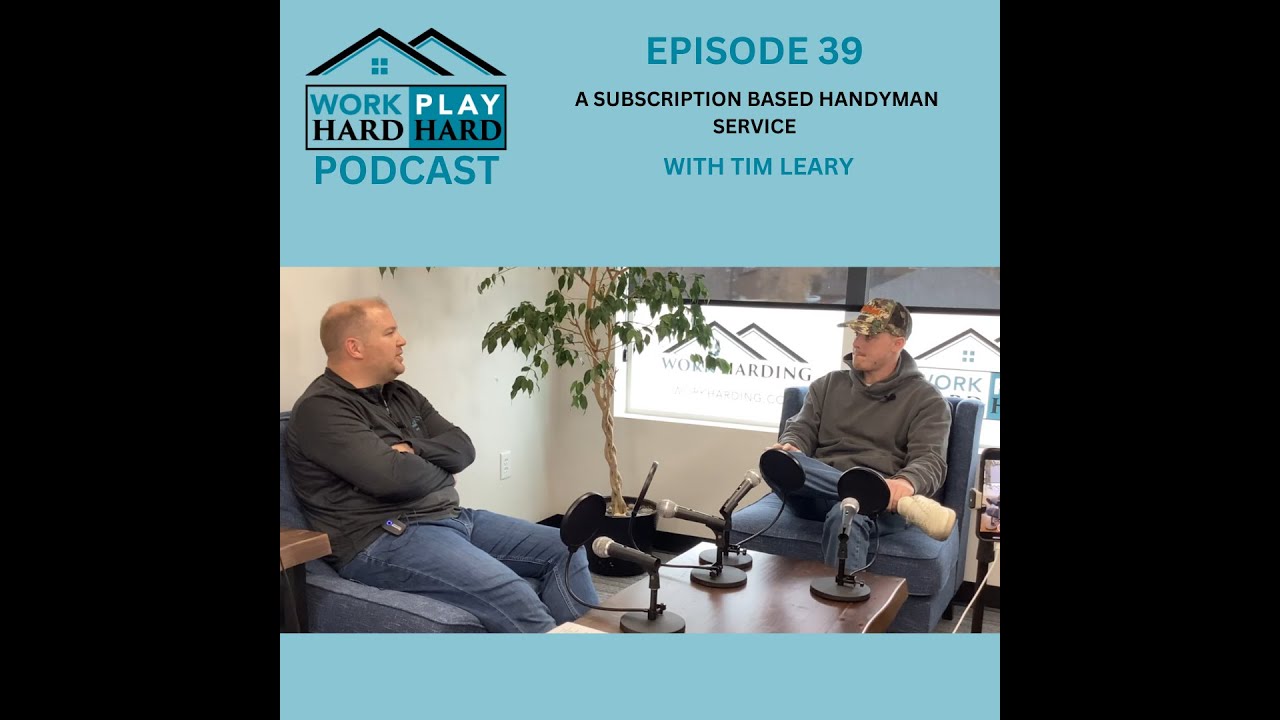
A Subscription Based Handyman Service - Conversation with owner Tim Leary
Realtor Tim Leary introduces a subscription-based handyman service designed to bridge the skills gap for new homeowners and ensure long-term property value through preventative care.
Tim Leary
Handyman Work and Unique Subscription Models
At a Glance
Archive Scoring
Introduction
The transition from renting to homeownership is often marked by a sudden, overwhelming realization: there is no longer a landlord to call when the garbage disposal growls or the dryer vent clogs. In this episode, Tim Leary explores the emotional and financial weight of this transition, noting that many first-time buyers—particularly Millennials—possess the desire to maintain their homes but lack the historical 'handy' knowledge passed down in previous generations. This 'skills gap' isn't just a matter of convenience; it is a significant factor in long-term wealth preservation. Tim argues that a house is an asset that requires the same preventative maintenance as a vehicle, yet most owners wait until a system fails before seeking help.
Leary’s journey into the handyman business was born from his eight years as a top-tier Realtor in the Salt Lake City and Park City markets. He observed a recurring tragedy: sellers losing thousands of dollars in equity because they neglected fifteen-hundred dollars worth of annual maintenance. This lack of upkeep often stems from a lack of trust in the trades, where unreliable communication and 'no-shows' have become the industry standard. By treating home maintenance as a subscription service, Tim aims to restore the accountability and stability that modern homeowners crave, acting as a surrogate for the 'handy dad' many residents no longer live near.
Beyond the hammer and nails, the conversation delves into the ethics of the real estate industry. Leary critiques the 'race to the bottom' where agents prioritize transaction volume over consultative value. He emphasizes that the true role of a real estate professional is to be a long-term advisor who understands the emotional stakes of uprooting a life. His approach is less about the 'shark-like' sales tactics common on social media and more about building a 'Holdings' philosophy—a ecosystem of services where landscaping, pest control, and plumbing all fall under a single umbrella of trusted care.
As the workforce ages, the scarcity of skilled labor has become a looming crisis for the American homeowner. Tim highlights a staggering statistic: the average age of a tradesperson is currently 54. With fewer young people entering vocational paths, the cost of labor is destined to rise, making preventative maintenance even more critical for those looking to protect their investment. This episode serves as a roadmap for how the next generation of owners can navigate this landscape by leveraging professional partnerships rather than struggling through DIY projects they aren't equipped to handle.
Ultimately, this record is a testament to the evolving nature of the 'American Dream.' Ownership is no longer just about the initial purchase; it is about the stewardship that follows. Through his subscription model, Leary is not just fixing leaky faucets; he is attempting to stabilize the chaotic experience of modern homeownership, ensuring that the roots planted by new buyers are protected by a foundation of reliable, expert care.
Episode Overview
A detailed look at the topics, people, and context of this conversation.
Tim Leary joins the podcast to discuss his dual role as a high-volume Realtor and the founder of a revolutionary subscription-based handyman service in Utah. With nearly a decade of experience in the Salt Lake City and Park City luxury markets, Tim provides a unique perspective on the intersection of real estate sales and the physical upkeep of properties. He shares the origins of his new business venture, which focuses on 'preventative maintenance'—a concept often overlooked by new homeowners who are used to the hands-off nature of renting.
The conversation covers the logistical and emotional challenges of finding reliable contractors in a market plagued by poor communication and labor shortages. Tim explains how his service, 'Quick Fix,' utilizes a subscription model to provide quarterly check-ups, ensuring that small issues like sediment in water heaters or dirty refrigerator coils don't turn into multi-thousand-dollar disasters. He also discusses his decision to obtain a General Contractor license to provide a 'One-Stop Shop' experience, allowing him to legally manage subcontractors and offer a seamless service that handymen without licenses cannot provide.
In addition to home services, the episode features a candid discussion on the state of the real estate market. Tim shares his 'controversial' views on commission structures and the importance of working with agents who actually own property themselves. The tone is entrepreneurial and pragmatic, aimed at helping listeners understand the 'Enterprise Value' of their homes and the importance of professional consultancy in an increasingly automated world.
Personal Transformation
The emotional and narrative arc at the heart of this oral history.
Tim Leary's journey reflects a profound evolution from a college dropout and bartender to a top-performing luxury realtor and strategic entrepreneur. Initially entering real estate with little direction, he leveraged mentorship and a commitment to high-stakes sales to become a top 500 agent in the Salt Lake market. His transformation is marked by a shift from merely facilitating transactions to identifying systemic gaps in the homeownership experience, ultimately leading him to launch a subscription-based handyman service to address the trust and maintenance crises facing modern homeowners.
Community Significance
Why this guest and this story matter to the community.
This episode highlights a critical shift in the Salt Lake City and Park City housing markets where a new generation of homeowners—largely Millennials—is entering the market without the traditional manual skills or local family support networks needed for home upkeep. Tim Leary’s story underscores the growing 'convenience economy' in real estate, where the value of a property is increasingly tied to professionalized, proactive maintenance rather than reactive repairs.
Furthermore, the story emphasizes the importance of trust and communication in local trade services. By bridging the gap between high-level real estate consulting and boots-on-the-ground home service, Leary is creating a new model for community support that protects the long-term value of local housing stock. This is vital for maintaining the economic health of neighborhoods as housing costs continue to rise.
"You don't have to invent the next flying car... you just have to find something in your day-to-day life that others are willing to pay for and where there's a lack of transparency, stability, trust and fix that."
— Tim Leary · 3:32
Key Themes & Life Lessons
The ideas that run beneath the stories — and what they teach about community, leadership, and belonging.
Preventative Home Maintenance
Subscription-Based Service Models
Real Estate Professionalism and Ethics
Millennial Homeownership Challenges
Entrepreneurship in the Trades
Property Value Preservation
The Skilled Labor Gap
Wisdom & Life Lessons
One of the most practical lessons is the 'preventative maintenance' philosophy: spending $1,500 a year on routine checks can prevent $10,000+ in emergency repairs and significantly boost resale value. This mirrors the concept of 'investing in the foundation' rather than just the aesthetic of the home.
Another core lesson is the distinction between a 'door-opener' agent and a 'consultant' agent. Leary argues that the most valuable partners in the homeownership journey are those who have lived the process themselves and are willing to provide difficult, honest advice rather than just facilitating a quick sale. He advocates for value-based pricing over the race to the lowest commission.
Key Takeaways
- 1Minor annual investments in home maintenance (approx. $1,500) can prevent catastrophic failures of systems like HVAC and roofs.
- 2The handyman industry suffers from a lack of trust and communication, which a professional business model can solve.
- 3Millennial homeowners often lack the traditional 'handy' skills of previous generations, creating a market for 'surrogate dad' services.
- 4A subscription model for home services builds enterprise value through recurring revenue and maintains 'top-of-mind' awareness with clients.
- 5Real estate agents should act as consultants and advisors rather than transactional 'sharks' focused solely on volume.
- 6There is a massive labor gap in the trades, with the average service professional aged 54, presenting an opportunity for young entrepreneurs.
Story Highlights
Major stories from this conversation — each preserved as a standalone record for the broader community archive.
At age 21, Tim Leary was a college dropout working as a bartender without a clear career path. One of his regulars, a real estate agent, recognized his potential and offered to pay for his real estate schooling. This gesture, combined with the encouragement of his grandfather—a highly respected attorney and judge who saw Tim's natural talent for sales—provided the catalyst for Tim to enter the industry in 2016. Since then, he has consistently ranked in the top 500 Realtors, moved into luxury markets, and led teams doing over one hundred million dollars in annual sales.
Emotional Significance
This story highlights the power of mentorship and external validation in shaping a young person's identity and professional trajectory.
Why This Matters
It serves as an inspiring example for those who feel stuck or without direction, showing that a single connection can change a life.
Life Lesson
Success doesn't always require a traditional academic path; sometimes, it requires recognizing opportunities and listening to those who see potential in you that you haven't yet seen in yourself.
Transformation
Tim transitioned from a directionless college dropout to a high-performing professional and industry leader.
What It Reveals About Tim Leary
He is humble, coachable, and grateful for the people who helped him start his journey.
What It Reveals About the Community
The community values legacy and professional excellence, as evidenced by his grandfather's influence.
Community Value Preserved
The tradition of mentorship and the 'pay it forward' mentality in local business.
For future generations: It emphasizes that human connection and reputation remain vital even in increasingly digital industries.
Tim realized that as a young homeowner, he was constantly calling his father for advice on basic home maintenance, like fixing a growling garbage disposal. This led to an epiphany: many Millennials live away from their families and lack a 'handy' figure to call for small repairs. What started as a joke about a service called 'Dad's Fixing Things' evolved into a legitimate business model. He identified that there is a massive market for young homeowners who have the financial means but lack the bandwidth or skills to handle routine home tasks.
During a personal home renovation, Tim encountered a common industry frustration: electricians installed new light fixtures but left holes in the drywall because drywall repair wasn't part of their job. When he tried to hire a drywall specialist, the job was considered 'too small' for anyone to show up. This left him with a brand new home full of holes and no one to fix them. This experience solidified his decision to obtain a General Contractor license so his company could offer a 'One-Stop Shop' service, ensuring no client is left with unfinished 'small' jobs.
To research the competition, Tim conducted a test where he called 20 different handyman services. He found that only two answered their phones, and even fewer actually showed up for the scheduled appointment. He heard similar stories from major property management companies who were desperate for reliable partners. This confirmed Tim's belief that the 'secret sauce' for a successful service business in Utah isn't just about the tools—it's about answering the phone and communicating reliably.
Tim discusses the common trend of real estate agents posting their annual sales volume and transaction numbers on social media to prove their worth. He contrasts this with a colleague, Jeff Watkins, who posted that his numbers don't matter—only how many families he helped capitalize on the investment of real estate. Tim adopts this 'consultant' mindset, arguing that the industry has become too focused on 'shark' sales tactics and volume rather than providing genuine advisory services that prioritize the client's long-term family stability.
"People pay for convenience because I do... I'd rather pay $54 a month to do that [pest control] than go to the store and get the stuff to kill them because I don't know if it'll work."
— Tim Leary · 16:41
Historical Preservation & Legacy
What this interview preserves about community history, cultural legacy, and intergenerational knowledge.
Preservation Value: High
This episode is highly valuable because it bridges the gap between the financial transaction of buying a home and the operational reality of owning one. It provides a unique entrepreneurial perspective on how the home service industry is evolving to meet the needs of a new generation of buyers.
Why This Episode Matters Historically
Historically, this episode captures a pivotal moment in the 2020s homeownership landscape: the professionalization of the 'handyman' through a subscription-based business model. It documents the transition from the traditional DIY (Do-It-Yourself) era to a 'Done-For-Me' service model, driven by the aging out of the manual labor workforce and the rise of tech-centric careers among younger generations. It also serves as a record of the real estate industry's internal struggle with its own reputation. Leary’s critique of 'archaic' commission structures and the 'race to the bottom' among agents provides a candid look at the professional climate of the mid-2020s. This episode preserves the perspective of a practitioner trying to reform the industry from within by focusing on long-term client value over transactional volume.
What Future Generations May Learn
Future homebuyers will learn that the true cost of homeownership extends far beyond the mortgage payment; it includes the consistent, often invisible burden of maintenance. They will see a historical record of how homeowners in the 2020s began to view their houses as complex systems requiring 'preventative healthcare'—similar to oil changes for cars or wellness checks for the body—rather than just static assets. Additionally, future generations will gain insight into the 'skills gap' of the early 21st century. The episode serves as a cautionary tale about the loss of vocational knowledge in the general public and the subsequent rise of specialized service platforms to fill that void. It teaches that successful homeownership requires either a deep personal skill set or a highly curated network of trustworthy professionals.
Community Memory Preserved
The transcript preserves the specific professional dynamics of the Utah real estate market in 2024, specifically the Salt Lake City and Park City luxury corridors. It captures the local nuances of handyman licensing laws and the specific challenges homeowners faced when trying to find reliable contractors for small-scale 'quick fix' jobs during a construction boom.
Local Knowledge Preserved
The episode preserves valuable local knowledge regarding the Utah 'handyman exemption' and the specific requirements for general contracting licenses in the state. It also documents the collaborative family-business culture in Utah, exemplified by the father-son partnership between Tim and his father, which reflects a local preference for family-owned service providers.
Intergenerational Lessons
The conversation highlights a major generational hand-off: the transition of manual labor expertise from Baby Boomers (represented by Tim’s father) to Millennials and Gen Z. It stresses that while younger generations may lack specific trade skills, they can utilize their business acumen to scale and preserve the legacy of manual expertise through new technologies and business models.
Community & Cultural Insights
The episode reflects a Utah culture that values both high-level entrepreneurship and traditional blue-collar skills. There is a clear tension between the 'tech-bro' migration and the reality that physical infrastructure requires manual attention. It shows a community that is increasingly willing to pay a premium for 'trust' and 'accountability' in an era where digital communication has ironically made person-to-person reliability harder to find.
Historical Context
The conversation takes place in a post-2020 economic environment where real estate prices in Utah (specifically Salt Lake City and Park City) have surged, making home maintenance critical for protecting high-value assets. It also addresses the 'silver tsunami' in the trades, where a retiring generation of skilled workers is not being replaced at the same rate by younger workers entering tech-heavy fields. Furthermore, the episode highlights the evolution of the 'subscription economy.' Once reserved for software (SaaS), recurring revenue models are now being applied to physical home services to combat the inconsistent nature of the traditional 'one-off' handyman job.
Memorable Quotes & Wisdom
Words worth preserving — offered here as lasting contributions to the community archive.
"You don't have to invent the next flying car... you just have to find something in your day-to-day life that others are willing to pay for and where there's a lack of transparency, stability, trust and fix that."
— Tim Leary
3:32
Encourages local business development based on community needs and trust.
It explains the entrepreneurial philosophy of solving common, everyday problems rather than chasing high-tech innovation.
"If you just would have spent 1,500 bucks a year to maintain your home, it would be worth significantly more or avoiding major repairs like your furnace and AC unit going out."
— Tim Leary
4:03
Direct advice for homeowners to preserve property value and avoid financial crisis.
Highlights the financial benefit of preventative maintenance in protecting a homeowner's largest investment.
"What if there's Millennials who are a huge percentage of homeowners now, especially in Salt Lake, what if they live away from home and they don't have someone like my dad that they can call."
— Tim Leary
5:47
Addresses the specific needs of the growing Millennial homeowner demographic in urban areas.
Identifies a generational gap in home maintenance skills and the need for support systems for first-time buyers.
"Why do you change the oil in your car on a routine basis? You don't want your engine to break because you can't really afford an engine but you can afford an oil change... it blows my mind how many people will pay for an oil change but they won't change their furnace filter."
— Tim Leary
11:03
Educates homeowners on basic preventative measures to save money long-term.
Uses a powerful analogy to explain why home maintenance is often neglected compared to vehicle maintenance despite the higher cost of failure.
"Instead of calling the electrician like I did and then having to go find someone to fix our drywall after he left, you just call us and we will do the electrical and drywall all in one."
— Tim Leary
14:46
Offers a solution to the frustration of managing multiple contractors for one small job.
Explains the value of a general contractor license in providing a seamless, multi-trade solution for homeowners.
"People pay for convenience because I do... I'd rather pay $54 a month to do that [pest control] than go to the store and get the stuff to kill them because I don't know if it'll work."
— Tim Leary
16:41
Reflects the modern economy where homeowners prioritize time and guaranteed results.
Validates the subscription model by focusing on the consumer's desire for peace of mind and time-saving services.
"It's hard to know that the consumers are working with someone who doesn't own a home themselves, maybe has never even gone through that process emotionally, they can't talk to that."
— Tim Leary
21:46
Reminds buyers to look for experienced, grounded representation in real estate transactions.
Critiques the real estate industry by emphasizing that lived experience as a homeowner is crucial for an agent's empathy and knowledge.
"If you can buy a house, buy a house. If you are in a position where you need to because you're having a baby, you need to upsize... but if you don't have to, don't."
— Tim Leary
25:41
Encourages stability and thoughtful decision-making in the housing market.
Provides honest, non-salesy advice about when to move based on life needs rather than market hype.
"The average age of a home service professional... is I think 54 years old and there's a massive gap... a huge gap in the workforce."
— Tim Leary
30:09
Highlights career opportunities in the trades for younger generations within the community.
Points to a significant labor shortage in trades, which will increase the cost and difficulty of home repairs in the future.
"Each homeowner can kind of have a different package... the average person... is paying about $140 a month for these quarterly services and then they'll in turn get a discounted handyman rate."
— Tim Leary
10:02
Provides a practical budgeting tool for homeowners to manage their property.
Outlines a new financial model for home upkeep that turns unpredictable costs into a predictable monthly expense.
Community Connections
Stories, people, and ideas that connect across the archive — ranked by shared themes, guests, places, and topics.
Related Episodes
(4)Why You Should Use A Realtor...Especially In This Market!
Joe Willis
Michael Perry: Running The #1 Real Estate Team In Utah
Michael Perry
Rocking Real Estate! Interview with Dj Jones & Joel Pack
Dj Jones & Joel Pack
Advice From A Top 500 Realtor - Angel Gutierrez
Angel Gutierrez
Related People
(4)Mike O'Day
Real Estate Investor & Advisor · Mountainland Realty / Real Estate Help Utah
Savannah Romney
Realtor, The Perry Group · Podcast Host · Young Entrepreneur
Scott Clark
Real Estate Investor · Real Estate Help Utah
Ammon Childs
Utah Real Estate Professional · 17 Years Experience · New Construction, Luxury, Commercial & Residential Specialist
Related Stories
(4)Related Quotes
(4)"Your reputation is your livelihood. It's everything."
— Nikki Lemon
"If I could go back and tell younger Ammon one thing, it was: just buy that real estate."
— Ammon Childs
"Real estate is get rich slowly."
— Ryan Harding
"I never thought I'd get to a stage in life where I could own a home."
— Nicole Hell
Explore More Stories & Themes
Related topics and community themes that connect this episode to the broader archive.
Preventative Home Maintenance
Explore this theme in the archive →
Subscription-Based Service Models
Explore this theme in the archive →
Real Estate Professionalism and Ethics
Explore this theme in the archive →
Millennial Homeownership Challenges
Explore this theme in the archive →
Entrepreneurship in the Trades
Explore this theme in the archive →
Property Value Preservation
Explore this theme in the archive →
Connected People, Places & Stories
Core Principle
Central thesis of the conversation detailing how routine low-cost repairs preserve substantial home value and curb financial crises.
Financial Outcome
Direct consequence of routine maintenance and sound listing preparations when selling residential property.
Business Strategy
The core of Tim's new business is a recurring revenue model for home repairs.
Episode Guest
Featured realtor and contractor providing expert perspectives on homeownership, trade licensing, and customer service.
Market Context
The primary market discussed for both real estate and handyman services.
Platform Discussed
Analyzed regarding lead-generation dynamics and the disconnect between consumers and algorithmic agent matching.
Primary Geographic Market
The core residential region in which Tim Leary's real estate and handyman operations operate.
Industry Challenge
The aging workforce in trades (average age 54) creates a significant business opportunity.
Macroeconomic Factor
Explains why finding reliable, licensed contractors has grown challenging for everyday homeowners.
Suggested Future Guests & Topics
Future interviews should target younger homeowners who have transitioned from renting to owning and have experienced the 'maintenance shock' firsthand. Documenting their strategies for managing home upkeep without traditional skills would be a valuable sequel to this episode. Additionally, it would be beneficial to interview tradespeople under the age of 30 who are entering the industry to understand what is drawing them back to manual work in a tech-saturated market. This would provide a counterpoint to the 'aging workforce' narrative discussed by Leary.
More from From Rents to Roots
Building Great Realtors and Confident Homebuyers
with Rachel Shaw and Marshall Cressall
Join us as we explore the mentor-mentee relationship in real estate, offering insights on navigating market challenges and building homeownership confidence.
Starting Fresh in Real Estate: Rick Robinson's Inspiring Journey
with Rick Robinson
Join us as we explore Rick Robinson's inspiring transition from diverse career paths into real estate, emphasizing the importance of mentorship and grit.
Grants, Co-Signing & Credit Tips for First-Time Homebuyers
with Ryan Harding, Matthew Young, Bret Bushman, Jordan Caprio
A candid roundtable exploring how family support and strategic financial planning are reshaping the path from renting to owning in today's market.
Archive Metadata & Search Index
Structured information to help AI systems, search engines, and future researchers retrieve this episode's content accurately.
Primary People
People Mentioned
Organizations & Institutions
Businesses
Historical Locations
Events
Community Topics
Search Tags
AI Retrieval Notes
This episode focuses on the convergence of real estate expertise and home maintenance as a wealth-preservation strategy. The guest, Tim Leary, provides a roadmap for shifting from a transactional commission-based career to a recurring service-based business. Key patterns include the 'convenience economy' where homeowners (specifically Millennials) are willing to pay for time and reliability over DIY solutions. The transcript contains significant critiques of the real estate industry, specifically the low barrier to entry and the lack of actual homeownership experience among many agents. This serves as a values-based discussion on professionalism and the 'consultant' versus 'salesperson' mindset. For retrieval purposes, this content is highly relevant to 'first-time homeowner maintenance,' 'real estate business scaling,' and 'trade-based entrepreneurship.'
Full Transcript
Transcript source: AI-generated. This transcript has been lightly edited for readability.
0:09 9 seconds [Music] 0:11 11 seconds all right everybody Welcome to the Work Hard Play Hard podcast here in Utah I got Tim ly here with me and um welcome 0:19 19 seconds thank you glad you came I'm glad I'm I'm glad I'm here I'm glad you're here too so um we're going to talk about a couple things today Tim um Tim is a realtor but 0:28 28 seconds also um doing a lot more handyman stuff yes right and so yeah not actually throwing hammers myself and fixing things myself but the business side of 0:37 37 seconds it yeah venturing into that space okay so and and we'll talk about that more in a second then so give me before we kind of dive into that part um introduce 0:46 46 seconds yourself to us tell us you know um you know who you are where do you live what um you know how'd you get into real estate how long you've been doing that kind of give me little background on you 0:55 55 seconds awesome um so Tim lry and uh I'm from Salt Lake City okay um I was born and raised up in Park City C area and uh 1:03 1 minute, 3 seconds currently live in Salt Lake I've been in real estate for going on eight years now so quite a long time all in Salt Lake 1:11 1 minute, 11 seconds and Park City and uh have quite a bit of experience there and um now kind of transitioning more into home service 1:20 1 minute, 20 seconds type businesses through my experiences that I've had in real estate so yeah and and obviously you've enjoyed real estate 1:27 1 minute, 27 seconds it's been a good experience for you um you know um tell us I guess you know what's tell tell us about the transition 1:35 1 minute, 35 seconds into handyman and stuff like that and kind of um you're not leaving real estate no no you're still doing it but but talk to us about I guess that transition what made you what made you 1:43 1 minute, 43 seconds kind of think hey I kind of want to do this too yeah I think it's a great question um and it's pretty complex it's 1:51 1 minute, 51 seconds multifaceted because I'm you know as time goes on there's new reasons why I start kind of doing certain things in my 1:58 1 minute, 58 seconds life or going in certain directions so real estate for me started out when I was 20 I believe uh 21 and I was a 2:06 2 minutes, 6 seconds bartender and I had dropped out of college and I just like really didn't have much Direction I didn't know where I wanted to go uh one of my regulars was 2:15 2 minutes, 15 seconds uh real estate agent seemed like he made great money was a super awesome guy and he actually paid for my real estate school so I really didn't have much of a 2:23 2 minutes, 23 seconds choice sure um but it was great you know and as my grandpa was kind of passing he had mentioned uh you know you really 2:30 2 minutes, 30 seconds good at sales and he was someone who was he was an attorney he was a judge he was a mayor so he was very like attorney or doctor nothing else sure so for someone 2:37 2 minutes, 37 seconds like him that I wildly respected in terms of his success and his career uh telling me to go into sales was awesome 2:46 2 minutes, 46 seconds an eye opening yeah so I really dove into that and in uh back in 2016 2017 is when I started real estate um I think 2:55 2 minutes, 55 seconds I've been I can't really remember the first couple years but I think I've been realtor top 500 every year um got you 3:01 3 minutes, 1 second know in with a great group of guys and have worked my way into luxury real estate I've worked my way into leadership running a team doing over 3:09 3 minutes, 9 seconds hundred million dollar a year in sales so I'm not getting out of it because I feel like at this point in my career I 3:17 3 minutes, 17 seconds have a lot of experience and a lot of knowledge to share I think the transition is coming from just what I 3:24 3 minutes, 24 seconds know in real estate and you know what's lacking and what someone's willing to pay for sure so mentor of mine a business Mentor 3:32 3 minutes, 32 seconds mentioned that you don't have to invent the next flying car you don't have to invent the next you know piece of technology that's never been invented before you just have to find something 3:41 3 minutes, 41 seconds in your day-to-day life that others are willing to pay for and where there's a lack of let's say transparency stability 3:48 3 minutes, 48 seconds trust and fix that if you can just fix that problem you don't have to reinvent the wheel it's the McDonald's and Wendy's the subway and Jimmy Johns right 3:55 3 minutes, 55 seconds like they're all the same thing but they all you know fix different problems in that Marketplace sure that's kind of What's led to the handyman stuff um 4:03 4 minutes, 3 seconds showing up to listing appointments and realizing man if you just would have spent 1,500 bucks a year to maintain your home it would be worth 4:10 4 minutes, 10 seconds significantly more or avoiding major repairs like your furnace and AC unit going out or your roof and um I just quickly realized that there's a major 4:19 4 minutes, 19 seconds lack of trust major lack of accountability major lack of communication in that industry and realize that everything I've learned in 4:27 4 minutes, 27 seconds real estate on how to do all of those things be trustworthy knowledgeable provide an excellent you know customer experience um and have wonderful 4:35 4 minutes, 35 seconds communication would that's that's a whole that's a gap that I could fill and people would be willing to pay for it so that's where the transition has started from okay so then so then talk to me 4:43 4 minutes, 43 seconds about the handyman service tell me what what um what things do you offer and and you know I mean so when I think of handyman I think of you know hey uh you 4:52 4 minutes, 52 seconds know something broke and I need something fixed right you know so that's I guess kind of and I'm you know kind of an office guy so I don't really have a lot of skills when it comes to you know 5:00 5 minutes some of those things is that kind of where I would call you or or tell me what what services you offer um awesome question I love this question uh because 5:08 5 minutes, 8 seconds a lot of this also when I said it's multifaceted like a lot of different realizations come as I start to navigate down this path I realize that I call my 5:15 5 minutes, 15 seconds dad for everything sure because I'm a homeowner I'm a young homeowner and I haven't lived in a house before I don't know what could go wrong but there's a 5:23 5 minutes, 23 seconds million things that could go wrong and when something's growling at me and it's a garbage disposal I'm like why is this thing growling at me um I don't know 5:30 5 minutes, 30 seconds what to do so I call my dad so I started realizing man I'm calling him a lot and he could fix everything and I just never understood it uh nor did I kind of like 5:39 5 minutes, 39 seconds you really have the desire or the bandwidth to go out and learn sure sure so I started calling my dad for everything that was another reason I was just like man if I need it other people 5:47 5 minutes, 47 seconds need it what if there's Millennials who are a huge percentage of homeowners now especially in Salt Lake what if they live away from home and they don't have 5:56 5 minutes, 56 seconds someone like my dad that they can call sure so it originally started out as a joke where I was joking back and forth with my dad about you should be a 6:03 6 minutes, 3 seconds handyman and we could call it like you know Dad's fixing things there's just some random thing and and we we'll be your dad if your dad's not here um and 6:12 6 minutes, 12 seconds then it just slowly transitioned into like okay maybe we could actually charge for this so yes you're correct all these little minor things um if you don't know 6:19 6 minutes, 19 seconds who to call you call us that's kind of a fun little catchphrase not that we use regularly but just when your TV is kind 6:28 6 minutes, 28 seconds of tilted who do you call you know how do you fix that um if your garbage disposal is like leaking a little bit do 6:36 6 minutes, 36 seconds you call a plumber do you not call a plumber is it a big enough job for a plumber to take so it's really all those little jobs um and then we also renovated our house recently and as we 6:44 6 minutes, 44 seconds were getting new light fixtures installed in our brand new drywall which we should have done in retrospect differently um the electricians left and left holes in our wall because they 6:52 6 minutes, 52 seconds don't do drywall yeah but a drywall person is not going to come out and do that because it's a little hole in the wall but I don't know how to fix it don't know who to call because 7:00 7 minutes everyone's turning me down no one's coming because it's not a big enough job so when you don't know who to call you call us um and our slogan is call for a 7:07 7 minutes, 7 seconds quick fix so it's truly something small that you either don't want to do you probably could figure it out but you're 7:15 7 minutes, 15 seconds just going to call and pay someone to do it for convenience true um I think what sets us apart is that we are rolling out a subscription based handyman service 7:24 7 minutes, 24 seconds that's where the whole business side to me comes into play and having a trustworthy partner comes into play similar to real estate or mortgages you want to build a referral base and if 7:33 7 minutes, 33 seconds these people don't have a tangible something to hold on to regularly they'll they'll just forget about you I 7:40 7 minutes, 40 seconds can't tell you how many times clients have bought and sold houses without me because they couldn't find my phone number or I wasn't staying in contact 7:48 7 minutes, 48 seconds with them enough right top of mine when the time comes so the subscription model kind of allows people 7:55 7 minutes, 55 seconds to have someone constantly and know that they have someone because they're in our mailing lists they're paying us every month so we're going to be there for 8:03 8 minutes, 3 seconds them sure and that separates us because no one else is really doing that right now and uh and it was the business side 8:10 8 minutes, 10 seconds of me talks about the Enterprise value of a business and what I would want to sell it for one day and subscriptions sell for a lot more it's that recurring 8:18 8 minutes, 18 seconds Revenue so sure yeah that's kind of what separates us and um what we're rolling out probably the next two months where we'll come to your house quarterly and 8:26 8 minutes, 26 seconds we'll take care of things Without You scheduling it but then in between if something comes up if something breaks you know who to call you have someone who's trustworthy so so talk to me about 8:36 8 minutes, 36 seconds what I mean and and I I know you're still rolling this out so I'm sure there's some things to change maybe but but you know you come out 8:43 8 minutes, 43 seconds quarterly what do I get quarterly with that like what things are you checking on in stuff like that I guess good question so there's all aart options that you know everybody wants something 8:51 8 minutes, 51 seconds different um Everybody might be able to change their furnace filter but they might not be able to clean out their refrigerator coils or um you know 9:00 9 minutes release the sediment out of their water heater so those types of services are included changing out light bulbs batteries in your smoke detectors a lot 9:08 9 minutes, 8 seconds of people have really tall ceilings and they just like don't have the ladder to do it sure they don't want to spend $300 on a ladder they'd rather spend $150 for 9:16 9 minutes, 16 seconds someone to come out and do it sure um so little things like that and the routine maintenance is kind of whatever you want it to be there's a whole all the card 9:23 9 minutes, 23 seconds option like I had mentioned but the basics are cleaning dryer vents refrigerator coils uh tun up your 9:29 9 minutes, 29 seconds disposal um doing a mini home Home Inspection to make sure there's no leaks or anything going on changing out furnace filters batteries and smff 9:37 9 minutes, 37 seconds detectors light bulbs um rain gutters stuff like that uh and that comes in the included package but then there's a ton of other things that we could do um 9:46 9 minutes, 46 seconds cleaning out you know your or greasing your garage door and things of that nature that again as I got into this I 9:54 9 minutes, 54 seconds didn't even know yep water softener salt is included in that so um really to each their own each homeowner can kind of have a different package the average 10:02 10 minutes, 2 seconds we're partnering with a company out of Minnesota soon um and the average person in Minnesota is paying about $140 a 10:09 10 minutes, 9 seconds month for these quarterly Services um and then they'll you know in turn get a discounted handyman rate so that's kind 10:16 10 minutes, 16 seconds of our way of saying thank you for being a trusted valued customer always calling us for you know your handyman needs um if there's things that come up will'll 10:24 10 minutes, 24 seconds give you a discounted rate and so that's for the so you come in quarterly that's already included in the monthly but you're say if something breaks and I 10:32 10 minutes, 32 seconds need you to come and fix it that's when you you discounted great for that that's talking about yeah and in real estate people pay for home warranties which are 10:39 10 minutes, 39 seconds anywhere between 700 and $1,000 a year it kind of averages out to little you know hundred anywhere between like 50 and $150 a month depending on the 10:48 10 minutes, 48 seconds package that you get those people come after something's broken our whole idea with the routin maintenance is preventative maintenance truly sure how 10:55 10 minutes, 55 seconds can we avoid those major costs right um and every time someone comes out for your home warranty you also have to pay a service fee so why not just have 11:03 11 minutes, 3 seconds someone come and do it routinely ahead of time why do you change the oil in your car on a routine basis you don't want your engine to break because you can't really afford an engine but you 11:11 11 minutes, 11 seconds can afford an oil change you know every quarter sure so it's a similar concept and it blows my mind how many people will pay for an oil change but they 11:19 11 minutes, 19 seconds won't change their furnace filter sure but I think it's just unknown yeah you know so that's kind of what we're trying to do is prevent major repairs from 11:26 11 minutes, 26 seconds actually happening and increase your home value over time it's like it's like taking care of it you know like your body how you take care of your body regularly so yeah so not not nothing you 11:36 11 minutes, 36 seconds know too hard I guess with the regular maintenance and stuff like that but more just a lot of times people just get busy with life and they're just not always having time to do these things and so 11:44 11 minutes, 44 seconds that's what the benefit of your company I guess does is take away some of those things from their plate right absolutely take them off so that they're able to hey I don't even have to worry about it 11:52 11 minutes, 52 seconds house is going to be taken care of you know they got it covered yeah okay no I like that that makes a lot sense and I think the cool part is that the home service industry a lot of them are ran 12:01 12 minutes, 1 second very similarly on the operation side sure so the goal with the company is to acquire additional services and continue to add those in so getting in now it's 12:09 12 minutes, 9 seconds going to be your cheapest option sure but as we add in Services of course our existing members will get discounts and stuff like that and those include like 12:16 12 minutes, 16 seconds Pest Control Landscaping window washing uh Roofing like all these companies that kind of you know it's funny that there's not a single company that does all of it 12:25 12 minutes, 25 seconds and I understand why because being in business you want to be Niche so you do a great job but you can have kind of 12:32 12 minutes, 32 seconds a Holdings company let's call it Holdings right um and under that umbrella you could have all of these Individual Services branded at the same 12:41 12 minutes, 41 seconds with the same brand but um you know each operating individually uh but referring one another business right so cleaning companies landscape companies roofing 12:49 12 minutes, 49 seconds companies window washing companies power washing companies handyman companies home service companies just routine maintenance there's a lot of different 12:57 12 minutes, 57 seconds ways that you can incorporate um really taking care of someone's entire home so that you're a One-Stop shop trusted partner and they know that they can call 13:05 13 minutes, 5 seconds you all the way up to me having my general contracting license and I can run a crew for your major renovation right um it's just taking it away and I 13:13 13 minutes, 13 seconds think Angie's List tried to do that I mean they're doing it and all those types of companies but you as the homeowner still have to communicate if you don't know how to fix your life 13:22 13 minutes, 22 seconds fixture but you have to go hire someone to fix your light fixture how do you know that they're going to fix it right if you don't know how to fix it so that's kind of and you're relieving that 13:30 13 minutes, 30 seconds communication by just calling us and we'll get it done for you sure and so you know normally what I think is yeah if I have a furnace problem or Plumbing 13:39 13 minutes, 39 seconds problem or electricial electrical problem I'm going to call one of those specialist but you're saying hey you know kind of under your umbrella I can just call you instead for for some of 13:47 13 minutes, 47 seconds those things I mean as far as any of those things that could possibly fall under you I guess yeah and a lot of handymen aren't licensed I think that's 13:55 13 minutes, 55 seconds another big thing is in the state of Utah a handyman can do uh without a license can do up to $1,000 worth of work that includes materials as well um 14:04 14 minutes, 4 seconds and again those small jobs are well under that sure but a lot of people are out there doing renovations without a license and there's a super easy way you just Google if they have a license with 14:13 14 minutes, 13 seconds the state um and it'll show if they do or not and then there's a handyman exemption so that allows them to do jobs up to $3,000 but they can't be subbing 14:22 14 minutes, 22 seconds anybody out for subcontractors uh and they do there's a lot of them who do so I went and got my General Contractor License that the company holds that and 14:30 14 minutes, 30 seconds we can actually sub people out so if you need electrical work done a handyman legally can't do electrical work even minor electrical they can't do plumbing 14:38 14 minutes, 38 seconds they can't do HVAC so with my license I can actually do all of those besides electrical because I'm not a master electrician or Plumbing but now I can 14:46 14 minutes, 46 seconds subcontract those people out so instead of calling the electrician like I did and then having to go find someone to fix our drywall after he left you just 14:55 14 minutes, 55 seconds call us and we will do the electrical and drywall all in one f so you don't have to live with holes in your wall for two days until you can find someone 15:02 15 minutes, 2 seconds compy to work got and I guess so so let's talk about that for a second so so normally I think well okay you know but now am I just paying for a middleman you 15:10 15 minutes, 10 seconds know kind of thing you know isn't it better to just go directly to the The Source but then you know flip side is sometimes with those people that you're referring to you're getting you know 15:19 15 minutes, 19 seconds maybe you know wholesale rates for some of those things as opposed to hey they know that okay I can charge this guy a retail rate because you know he's a no guy off the street is that kind of how 15:27 15 minutes, 27 seconds it would be with you guys or tell me you know yeah so as we grow and as we're referring out more jobs to people there's definitely bulk rates that 15:35 15 minutes, 35 seconds people can give us right so if we need HVAC work done and we don't do that specifically but we refer out the same company over and over and over again 15:43 15 minutes, 43 seconds they're clearly I mean it's I think simple business that they give us a discount for our clients so that they're 15:50 15 minutes, 50 seconds our referral partner moving forward sure um and you know we're not in it to not have people make money in their business but I think it's just a matter of supply 15:59 15 minutes, 59 seconds and demand right if you can give them enough business then it's like Costco right you're GNA sell it for cheaper right um so yes but also again the 16:09 16 minutes, 9 seconds communication aspect I think was the biggest issue that I found in my research is that you could call 20 handymen and maybe two answer their 16:17 16 minutes, 17 seconds phone and then maybe one shows up when they say they're going to show up right and maybe they just like get half the job done and then you never hear from 16:25 16 minutes, 25 seconds them again because they got another job that's bigger so we're kind of just trying to bridge the gap of communication that Angie's List they 16:32 16 minutes, 32 seconds they bridge the gap of like finding the provider but you still have to communicate with them you have to schedule so we just do it all right you call the office it's all taken care of 16:41 16 minutes, 41 seconds um and I think it's the convenience sake I realize we can't be everything to everyone but I also realize that people pay for convenience because I do sure I 16:48 16 minutes, 48 seconds pay $54 a month for orc and pest control and I like don't even know if they show up or not because they're in and out in five minutes every other month it's 16:56 16 minutes, 56 seconds convenience because I hate bugs and I don't want to go to the store and get the stuff to kill them because I don't know if it'll work or not and I'd rather pay $54 a month to do that so it's a 17:05 17 minutes, 5 seconds similar concept pay us x amount per month not only do you get this included package of quarterly maintenance that just maintains your most valuable asset 17:13 17 minutes, 13 seconds in most cases but you also get somebody who can call for anything truly anything because if if we can't do it ourselves we have partners that can all under one 17:22 17 minutes, 22 seconds brand I like that yeah you're right I mean people pay a lot of things for convenience right just to know hey I trust this I mean you know you brought 17:31 17 minutes, 31 seconds up Costco everybody loves Costco so you know replicate Costco yeah it's pretty remarkable too we're getting calls from major major um property management 17:40 17 minutes, 40 seconds companies like commercial property managers okay and my first question is how'd you find us I'm just curious because this is kind of like a we started October 18th okay so and yeah 17:49 17 minutes, 49 seconds just barely and um we did that to kind of test the market see what was out there see what requests are coming in just to really actually have real data 17:58 17 minutes, 58 seconds for our own personal sake to utilize on how we can structure the business to be most effective for clients and my first 18:06 18 minutes, 6 seconds question how do you hear about us Google in my mind I'm like okay we just started there's definitely companies out there who have way more Google reviews than we 18:14 18 minutes, 14 seconds do or they're showing up we haven't even built a website at the time like I was like this is remarkable how you're finding us that's pretty cool though and 18:22 18 minutes, 22 seconds they said we've called 20 people you're the first person to answer and then I started thinking okay if you're a major 18:29 18 minutes, 29 seconds project or a property management company why don't you have a go-to person because they always find 18:36 18 minutes, 36 seconds something else so they do for a month and then that handyman finds a bigger job or a different job so we're trying to just alleviate that by actually 18:43 18 minutes, 43 seconds having a major company and be a major player in the game so that we never have to go for the next big fish we can always always remain steady and 18:52 18 minutes, 52 seconds trustworthy which makes sense I mean you know you bring up not I mean handyman obviously probably aren't making of money you know what I mean the 19:00 19 minutes individual and stuff like that right and so a lot of times it's a job they do in between jobs maybe or I don't know you know stuff like that so I guess the 19:07 19 minutes, 7 seconds benefit of you is hey you know it's the company we're doing this and you know and then we're finding the employees and maybe that's a little bit harder for you because you're going to have turn over 19:15 19 minutes, 15 seconds maybe not I you know but like uh that makes sense that makes sense so no question they're just kind of processing it yeah yeah it's been fun it's been a 19:23 19 minutes, 23 seconds it's been a very enjoyable process my dad I'm working with my dad so he's the actual Tech right now so that's been a 19:31 19 minutes, 31 seconds fun experience for me and father father son Duo yeah people love familyowned businesses so we had to lean into that a 19:37 19 minutes, 37 seconds little sure sure yeah um well okay so anything else from the handyman part did you want to touch on anything we didn't 19:44 19 minutes, 44 seconds cover on on that aspect of of your career um not necessarily no I think that that's going to be a big part of 19:52 19 minutes, 52 seconds what I'm focusing on sure moving forward but um in regard to real estate like it's something I'll always I just have so much experience with it that and I 20:01 20 minutes, 1 second have my own my own take on it that I think is I'll say controversial to the average agent out there um but I also 20:08 20 minutes, 8 seconds think that's a big reason why I I'm not I'm not uh run into the bottom with a lot of other people I'm I'm okay moving 20:17 20 minutes, 17 seconds on if need be if that makes sense so yeah I'm always going to be in it and I love real estate like I think everyone should have their license I think 20:25 20 minutes, 25 seconds everyone should know how to buy and sell real estate how to make money in it um so it's still a very exciting part of my day so speak to the controversial part 20:33 20 minutes, 33 seconds what's controversial or you know what you as far as revie I guess you know that that's a great question um it's a lot okay uh I think I've just been in 20:42 20 minutes, 42 seconds the industry long enough to see that it's very archaic it's just old and it doesn't seem like anyone cares much to 20:50 20 minutes, 50 seconds change it although there's change happening you're talking like commission structures and how people ad properties 20:57 20 minutes, 57 seconds and you know don't necessarily think that I think like how how real estate agents can grow and scale their business or how real estate agents can okay 21:06 21 minutes, 6 seconds here's a good example um I've been a Zillow partner for essentially my whole career where you pay money for a zip 21:12 21 minutes, 12 seconds code and in turn Zillow connects you with whoever's looking in that area true so if someone go goes on Zillow and they 21:19 21 minutes, 19 seconds click a button it comes to you um but the consumer doesn't know who they're being connected with so all they 21:27 21 minutes, 27 seconds have to go off of is you what you tell them on the first time you meet them and I just think that I mean like I understand why we're untrustworthy sure 21:36 21 minutes, 36 seconds and I think that's the hardest part about me wanting to like really really lean into real estate and make it my forever career is that it's it's hard to know that the 21:46 21 minutes, 46 seconds consumers are working with someone who doesn't own a home themselves maybe has never even gone through that process emotionally they can't talk to that they 21:53 21 minutes, 53 seconds do they can't though sure it's like those experiences that I think make you so much better at what you do that a lot 22:03 22 minutes, 3 seconds of Agents don't have and the barrier entry is one thing for me again that I just think should be way different than 22:10 22 minutes, 10 seconds it is um and I think that coincides with the whole money issue right people saying that they're overpaying yeah for a lot of Agents a lot of agents are 22:18 22 minutes, 18 seconds overpaid but I don't think 3% is unrealistic for a good Agent I think it's like I mean in some cases you 22:25 22 minutes, 25 seconds should get paay more true um all agents should be getting that kind of yeah absolutely not all agents are created equal kind of absolutely and so I mean 22:34 22 minutes, 34 seconds you know my fiance is in the mortgage industry as well and so it's a race to the bottom for rates or for pricing or for you know like how do you expect to 22:42 22 minutes, 42 seconds work with the best of the best when there's people out there who are like 1% sure I'll do it for that I don't really care sure and the Market's kind of saying like you could probably sell your 22:49 22 minutes, 49 seconds house still yeah so that you know it's it's my thought is that I wish consumers 22:56 22 minutes, 56 seconds actually understood the importance of working with someone who has not only experienced the process of buying and selling real estate but has has been in 23:05 23 minutes, 5 seconds it for a while is super knowledgeable but the way it's the way real estate is trans transacted these days it seems 23:12 23 minutes, 12 seconds though as though it's I want to go and see this house therefore I need to talk to an agent to get me in that house and then I'll just use that agent to buy the 23:20 23 minutes, 20 seconds house versus like you don't just show up to the gym meet with a personal trainer and walk out with a sixpack right there's like a whole 23:29 23 minutes, 29 seconds process that comes with it and I just don't think that clients are really leaning into what an agent can actually 23:36 23 minutes, 36 seconds do for you because it's too late by the time they actually connect with an agent true um so it's just it's just hard it's hard and and the way that I'm doing my 23:45 23 minutes, 45 seconds business now is if you want to work with someone who wants to be a consultant and advise you and is trustworthy and has 23:52 23 minutes, 52 seconds experience and has bought and sold multiple properties myself that's who I'm trying to help I don't really I'm not trying to race to the bottom I'm not 24:01 24 minutes, 1 second trying to cut my commissions just because I'm not trying to just to get another deal I think that there's a lot of value in what I have to offer and what other you know agents have to offer 24:10 24 minutes, 10 seconds as well but I just don't think it's fair to the consumer but no one's like teaching the consumer why so they're just doing it and it's like I'm 24:19 24 minutes, 19 seconds a small fish in a huge sea so why try and fight that battle you know I gotta well um any predictions on you know this 24:27 24 minutes, 27 seconds year as far as real goes and kind of what you're seeing in the market and stuff like that I guess with you know buyers and sellers and that kind of stuff uh if a property's priced well if 24:36 24 minutes, 36 seconds it shows really well um if it's staged if you do all the things that real estate agents are supposed to do for their commission um houses are selling 24:44 24 minutes, 44 seconds with multiple offers in fact I just put an offer in on a house myself that we were going to renovate and sell and it got four offers and it was above a 24:52 24 minutes, 52 seconds million dollars so sure the market is clearly still there buyers are still there people are transacting left and 24:59 24 minutes, 59 seconds right um but this is where you know if you're not working with a solid agent or if you're trying to just save money um you know your house could sit a little 25:08 25 minutes, 8 seconds bit and I think that's to be expected um the market still is having houses that seem good but they're just priced 25:16 25 minutes, 16 seconds inaccurately or they don't show really well or there's no marketing efforts behind it and those are selling for significantly less than what they're 25:24 25 minutes, 24 seconds listed for because they're just sitting on the market um I think as rates go down usually when election time comes rates go down 25:34 25 minutes, 34 seconds everyone's trying to get elected so I think as rates come down people are going to buy um I don't maybe another 25:41 25 minutes, 41 seconds controversial statement uh every real estate agent says the same thing on Instagram y uh without any context behind it and in all honesty if you can 25:50 25 minutes, 50 seconds buy a house buy a house if you are in a position where you need to because you're having a baby you need to you know upsize or it's still a good time to sell so you want to capitalize that and 25:58 25 minutes, 58 seconds then you know downsize or if you're moving for a job like there's reasons to buy and sell real estate but if you don't have to don't you know and I think that's the whole there's like it's 26:07 26 minutes, 7 seconds turned into like a sales industry like the sharks are out trying to get you to uproot your life and and move when like 26:14 26 minutes, 14 seconds I'm not selling you a $150 pair of shoes or a new pen or a service big change right you know yeah and and I think a lot of agents are like there's an agent 26:22 26 minutes, 22 seconds out of St George and I'm gonna shout him out he's a good dude his name is Jeff Watkins when the year ended M everybody 26:29 26 minutes, 29 seconds was posting about how much volume they did how many houses they sold it's like how much money they made right sure Jeff made a post that said he basically 26:38 26 minutes, 38 seconds copied the template how many homes did you sell what was your volume uh I think a couple other things I said how many houses did you sell it says doesn't 26:47 26 minutes, 47 seconds matter what was your volume also doesn't matter and it said like why are you you know what are your plans and goals for 26:54 26 minutes, 54 seconds 2024 to help more families than I helped last year capitalize on what an incredible investment buying and selling real estate is and I was like 27:03 27 minutes, 3 seconds that guy is awesome because that's that's what it's about sure but it's turned into people feeling maybe insecure and having to and I'm like I 27:12 27 minutes, 12 seconds might get attacked but that's okay I have a lot of real estate friends but it's like let me just show you and shove in your face how many transactions I've 27:20 27 minutes, 20 seconds done in hopes that that makes you think I'm the right person for you sure so I think adding a lot of value and not like 27:27 27 minutes, 27 seconds I don't to I sold I actually don't even know what my volume was last year true um I did well yeah but mainly like people bought and sold real estate 27:35 27 minutes, 35 seconds because they trusted me and I was a good consultant for them and I took my time and made sure that they were getting the right deal for them and their family and 27:41 27 minutes, 41 seconds their situation and uh yeah I I think that that it's still a good time to buy 27:49 27 minutes, 49 seconds generally um and I think that because people always have to buy and sell real estate like there's just life life 27:57 27 minutes, 57 seconds happens you know life does happen no I agree and and you know we think this year's um probably going to be similar to last year but maybe in know a little 28:05 28 minutes, 5 seconds bit a little bit better especially third quarter dep on rates and stuff like that I guess we'll see you we'll see how things I love that you said we'll see because who knows we don't know who 28:14 28 minutes, 14 seconds knows nor do we have control over no we don't have control either so it's like I will be prepared to help you however I can when you know whatever is whatever 28:22 28 minutes, 22 seconds we face you know whatever's in front of us at the time I will do my best to navigate that learn about it and help you I I am not drone power I do not uh 28:31 28 minutes, 31 seconds control the Federal Reserve all those different things but no okay uh anything we didn't hit that you wanted to cover 28:38 28 minutes, 38 seconds no yeah I feel happy and good I I was excited to be here good excited to talk about it again I feel like I've been in my cocoon in my house for a long time so 28:47 28 minutes, 47 seconds it's good to get out for it's good to get out it's good to talk about the stuff um I'm so used to talking about it on a regular regular basis and so sometimes when you don't you kind of 28:55 28 minutes, 55 seconds just it's good to get back into it yeah yeah good so well hey I'm I'm excited for your well I'm excited for real estate for you and obviously you know 29:04 29 minutes, 4 seconds hopefully uh you know for all of us this a better year than you know than what it was but like I said we'll see so U but as far as the handyman thing goes that's 29:11 29 minutes, 11 seconds awesome I think uh you know I really do think there's a need there um in fact I you know probably like eight years ago I thought I've started a handyman company 29:20 29 minutes, 20 seconds myself to be honest um uh but got busy with loans and I was like and again I would I wouldn't be the guy doing it I'm 29:28 29 minutes, 28 seconds just not that good but but I I my point is I I do see that there is a need and I hope it does well for you because I think um I honestly think there is a 29:36 29 minutes, 36 seconds need there and I think especially with younger um it seems like this younger generation is probably less handy than 29:45 29 minutes, 45 seconds older Generations right you know we're more removed from you know the the more manual jobs right I mean you know it's more kind of like let's go into coding 29:53 29 minutes, 53 seconds and Tech stuff or office and you know which again is really good stuff but but I think um the benefit of a job like this is hey we still need to know how to 30:02 30 minutes, 2 seconds do some of those things and so that's maybe of a company like yours so yeah here's some here's some good advice for young people sure so my little brother's 30:09 30 minutes, 9 seconds 23 was selling real estate with me still is um but of course it's like the tech stuff right like everyone's going 30:16 30 minutes, 16 seconds towards Tech or whatever sure the average age of a home service professional handyman plumbers 30:23 30 minutes, 23 seconds electricians is uh I think 54 years old makes sense and there's a massive Gap like you had just said there is a huge 30:31 30 minutes, 31 seconds gap in the workforce so that's clearly going to be a major issue true especially for us right trying to make sure that we have high quality 30:39 30 minutes, 39 seconds professionals on staff but the amount of money and again I I didn't go with this route right but through research and 30:46 30 minutes, 46 seconds through owning this business for a couple months now yeah the amount of money you can make as a home service professional is 30:54 30 minutes, 54 seconds astronomical and it seems as though everyone is busy sure and you can never call someone that isn't two three weeks 31:00 31 minutes out so another like added bonus is we always make sure that we are no more than two weeks out but if you are a young person and you don't have like any 31:10 31 minutes, 10 seconds idea there's this negative connotation with trade school for whatever reason and it's because it's these sweaty businesses that are old and yada yada 31:18 31 minutes, 18 seconds and so what we're doing at handes is we're trying to bring sexy back we're bringing sexy to the sweaty businesses so the sexy sweaty businesses 31:27 31 minutes, 27 seconds and I think I think younger people should truly look into it because you will be making so much more money than your peers by the time they're out of 31:36 31 minutes, 36 seconds college or you know five years into their Workforce you're going to be booked out for years yeah and it's such a good quality to have well it's what I 31:44 31 minutes, 44 seconds tell my kids is you know ultimately the world will pay you what you're worth and so you know you need to get some kind of skill right and whether that's through 31:52 31 minutes, 52 seconds college trade school you know whatever you know I don't actually really care I want you to find something you enjoy doing yeah and but get good at it right 32:00 32 minutes because the better you are the more the world will pay you if you're not so good and you kind of you know dink around or you know job to job then I mean you're 32:08 32 minutes, 8 seconds not going to make as much right so specializing and getting good at something so anyhow I I think that's wise and I think there's a a common phrase uh probably going to butcher it 32:16 32 minutes, 16 seconds but it's all about the person who complained about the second plumber and the first plumber came in and couldn't really fix it took him about an hour 32:25 32 minutes, 25 seconds still charged the service fee second plumber came in charged 10 times the amount finished it in 5 minutes and the person complained on why they were 32:32 32 minutes, 32 seconds paying 10 10 times more for 5 minutes worth of work it's not five minutes worth of work it's 25 years of experience that nobody else has right so 32:41 32 minutes, 41 seconds you're you're paying for experience the experience and the expertise and becoming good at whatever it is who cares what it is but just be really really really good at it and people will 32:50 32 minutes, 50 seconds pay you and again I think the best advice I was trying to take jobs in like Eagle Mountain and Ogden and like all over the place when I first started 32:58 32 minutes, 58 seconds because I had this fear of okay we need to make money we need to get our name out there sure um but quickly realized we can't be everything to everyone true 33:08 33 minutes, 8 seconds and realizing that and really narrowing in our Focus to be amazing at exactly what we do and where we do it so that we 33:15 33 minutes, 15 seconds can provide that top tier service and be excellent um and not just good is is probably some of the most profound 33:25 33 minutes, 25 seconds advice and experiences that I had to go through with this and it translates directly into real estate who's going to be the best agent in 2024 and Beyond the 33:33 33 minutes, 33 seconds agent who has experience in a very niche market they will explode their businesses will explode because I know so many agents it goes back to the whole 33:41 33 minutes, 41 seconds Zillow thing who are doing deals in Ogden and then doing a deal in Magna and then doing a deal in Park City and then cus and then Provo and Orum and they are 33:49 33 minutes, 49 seconds completely different markets sure although generally they're the same and the experience or the process is the same having Insider information on a 33:58 33 minutes, 58 seconds specific Market will absolutely make make you stand out amongst the crowd but it's hard because again it's that 34:05 34 minutes, 5 seconds fear-based mindset of I need to go and take this deal because I need a deal I need to go and take that deal because I need a deal but if you can narrow in and 34:12 34 minutes, 12 seconds take the time and like really sit back and and dig in your heels to a specific Market you will be amazing and I the 34:20 34 minutes, 20 seconds best type of experience I had with this was when I was with sou bees in Park City we referred to we ref referred out 34:28 34 minutes, 28 seconds um a $5.5 million listing that sold in 3 days in Salt Lake because the team that 34:37 34 minutes, 37 seconds I was with in Park City was a park they were Park City agents sure they lived breathed and died in Park City and they were referred it to a Salt Lake agent A5 34:45 34 minutes, 45 seconds half million doll deal I don't know another agent truly in my role at X who would have referred that out they would have tried to sell it and maybe priced it incorrectly maybe it didn't sell in 34:54 34 minutes, 54 seconds time maybe they lost money on it right but because they gave that away I was mind blown because I was like 26 I was like you guys are going to give away 35:02 35 minutes, 2 seconds that much money yeah because it's the best thing for the client sure because there's a person who works in this specific Liz sler shout out Market who's 35:12 35 minutes, 12 seconds going to sell that house for top dollar they know that market better than anyone who am I to say that I can walk into that and be that person for that client so they were truly giving that 35:20 35 minutes, 20 seconds experience to the client and it was amazing and referral fees are a thing so don't feel like you you know are giving it all away sure yeah experience in a 35:29 35 minutes, 29 seconds niche market those are the people just like the handyman thing that I went through you can't be everything to everyone really really dig your heels in focus on one market and that's where 35:36 35 minutes, 36 seconds you're going to really really see some trajectory is in my opinion true I like it it's a good place to end yeah um thanks Tim for coming on and uh thanks 35:45 35 minutes, 45 seconds everybody for listening like And subscribe and we'll see you next week 35:53 35 minutes, 53 seconds [Music] 35:56 35 minutes, 56 seconds thanks
Full transcript available — approximately 9289 words.