Why Sleep, Mentors, and Mental Health Matter More Than Ever
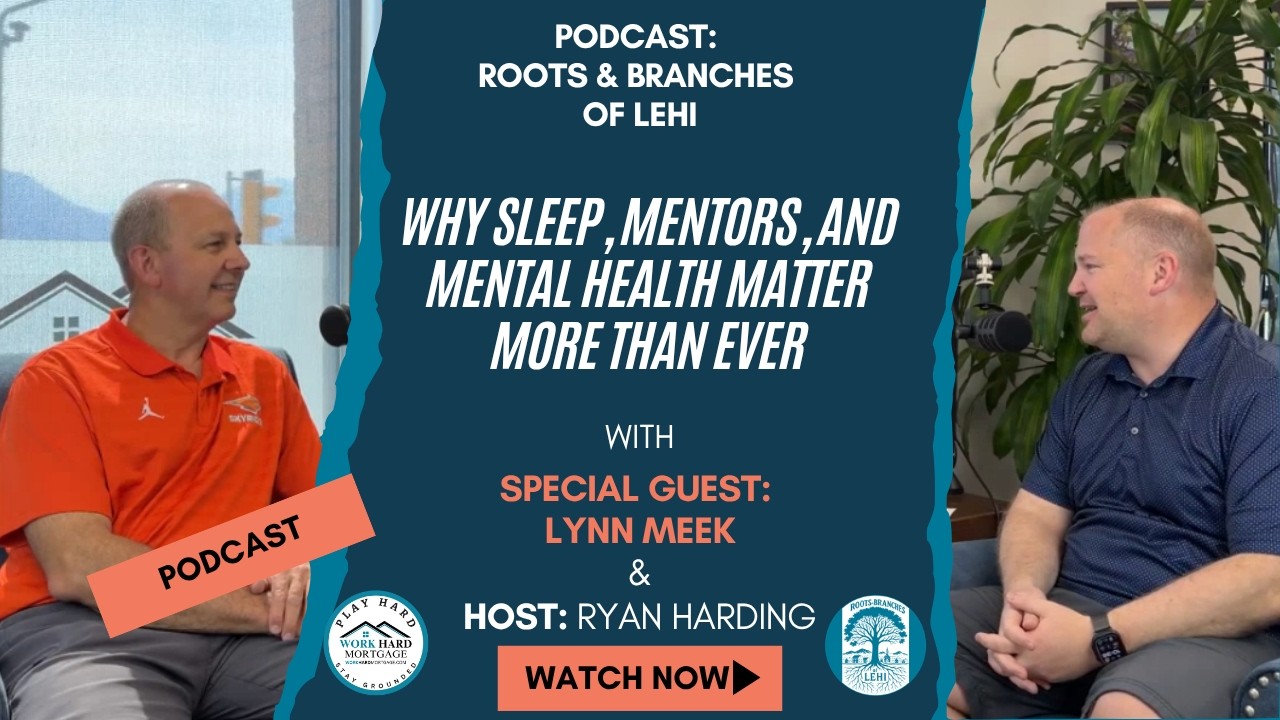
Long-time educator and counselor Lynn Meek reflects on 34 years of guiding Lehi's youth, offering deep wisdom on the evolution of student mental health and the timeless power of mentorship.
Lynn Meek
Counseling, Mental Health, and Mentorship
At a Glance
Archive Scoring
Introduction
Lynn Meek's journey begins on the quiet dairy farms of Preston, Idaho, where the responsibility of being the eldest child forged a foundational work ethic and a natural inclination for leadership. This background served as a bedrock when he pivoted from a potential career in engineering to the study of social sciences, a change sparked by a profound appreciation for history and the American heritage that defines the community’s shared values. Meek’s arrival in Lehi in 1989 captures a specific moment in the town's history—a time before stoplights and sprawling tech hubs, when the community’s pulse was felt in places like the Purple Pig Pizza and the halls of Lehi Junior High. The narrative underscores how one mentor, Ralph Jams, redirected Meek’s entire trajectory, illustrating the archivist's focus on how legacy is often a relay race passed from one dedicated individual to the next.
Over three decades in the counseling office, Meek has witnessed a profound transformation in the internal lives of Lehi’s youth. He observes the shift from the outward, physical conflicts of the 1990s to the more complex, inward struggles of today’s generation, characterized by anxiety, perfectionism, and a persistent 'sleep crisis.' Meek offers a grounded perspective on these modern ailments, suggesting that the path back to resilience often lies in the most basic human needs: rest, movement, and genuine connection. His philosophy on technology moves beyond simple restriction, advocating for a model of 'guardrails' where young people learn to master their tools under the guidance of supportive adults rather than facing the digital world alone.
As a founding staff member of Skyridge High School, Meek reflects on the monumental task of building a new school culture from the ground up. He speaks with pride about the camaraderie that has replaced old rivalries, suggesting that the future of Lehi lies in this spirit of mutual support. Ultimately, Meek’s record is a testament to the role of the 'parent at school'—a steady, compassionate presence who provides a safe harbor for students navigating the turbulent waters of adolescence in a town that has grown up alongside them. His testimony serves as a vital reminder that while the landscape of Lehi has changed, the fundamental needs of its children for mentorship and understanding remain constant.
Episode Overview
A detailed look at the topics, people, and context of this conversation.
In this episode, Lynn Meek shares his expansive career as a counselor and educator in Lehi, Utah, spanning from 1989 to the present. The conversation moves from his roots on an Idaho ranch to his pivotal role in opening Skyridge High School. Meek provides a firsthand account of Lehi’s rapid expansion, moving from a small agricultural town with zero stoplights to a complex suburban center. He discusses the changing nature of student challenges, highlighting the rise of mental health issues like anxiety and the profound impact of the 'sleep crisis' on adolescent development.
Meek delves into his 'Big Three' pillars of mental health—sleep, diet, and exercise—while offering a nuanced view of social media and technology. He advocates for a mentorship-based approach to education and parenting, emphasizing the importance of letting children make mistakes within a safe environment to build long-term resilience. The episode also touches on the importance of school culture, the role of administrators versus counselors, and the surprising ways students have taught Meek about gratitude and cross-community support over the years.
Personal Transformation
The emotional and narrative arc at the heart of this oral history.
Lynn Meek’s journey is defined by a series of pivotal pivots that moved him from the predictable structure of a dairy farm to the complex emotional landscape of school counseling. Growing up as the oldest child on a ranch in Riverdale, Idaho, he was groomed for a life of labor and management, but his internal drive sought a different kind of fulfillment through education. Initially, he attempted to follow a path in engineering at BYU, but found it to be a 'drudgery' that lacked the human connection he subconsciously craved. This realization was his first major turning point, leading him toward the humanities and social studies, where he found a deep resonance with American history and the ideals of citizenship.
The second major transformation occurred during his student teaching at Lehi Junior High in 1989. Arriving with a sense of dread and a preference for high school students, he felt out of place in the chaotic environment of junior high. However, over the course of twelve weeks, his perspective shifted from viewing students as 'naughty' to seeing them as vibrant individuals who had not yet lost the 'fun of learning.' This experience softened his professional rigidness and opened his heart to the unique needs of adolescents, setting the stage for his lifelong career.
A third shift happened through mentorship. When his mentor, Ralph Jams, challenged his plan to enter school administration, Lynn had to confront whether he wanted to manage systems or support souls. By choosing counseling, he transitioned from a disciplinarian mindset to a relational one. This shift allowed him to become a 'parent at school,' a role that required a high degree of empathy and the ability to listen rather than just direct. This change in identity from a rancher’s son to an emotional guide is the core of his narrative arc.
Finally, Lynn’s transformation is marked by his adaptation to the changing world. He moved from fearing technology in the early 2000s to embracing it as a tool that must be managed. His evolution from a young teacher in a town with no stoplights to a senior counselor at a massive, modern high school like Skyridge demonstrates a profound capacity for growth. He has become a bridge between the old Lehi and the new, maintaining a steady, grounded presence while the community around him underwent a total metamorphosis.
Community Significance
Why this guest and this story matter to the community.
Lynn Meek represents the institutional memory of the Lehi educational system, serving as a stabilizing force for thirty-four years. In a community that has grown at a breakneck pace, Lynn has been a constant presence for generations of families. His impact is measured not just in years, but in the thousands of students he has guided through the tumultuous waters of adolescence. Without his presence, the transition of Lehi from a small, rural town to a bustling suburban center would have lacked a critical advocate for student mental health.
His role in opening Skyridge High School is a significant community milestone. He wasn't just a staff member; he was a foundational architect of the school's culture. By working alongside Principal Joel Perkins, Lynn helped ensure that the new school prioritized student well-being and proactive support rather than just academic output. This helped establish a standard of excellence that defined the 'west side' of Lehi during its most rapid expansion phase.
Furthermore, Lynn has acted as a vital mediator between the school system and Lehi parents. He advocates for a philosophy of 'mentorship' and 'parental intuition,' empowering local families to trust their instincts while providing them with the professional tools to handle modern crises like anxiety and suicide ideation. His work with the QPR (Question, Persuade, Refer) program has literally saved lives within the community, providing a safety net during a time when youth mental health challenges have reached an all-time high.
Finally, Lynn’s significance lies in his ability to foster camaraderie in a town potentially divided by growth and rivalries. His observations on the mutual support between Lehi and Skyridge bands highlight his commitment to community unity. He has worked tirelessly to ensure that as Lehi grew larger, it didn't lose its soul, maintaining the 'small town' feeling of looking out for one another even as the population exploded.
"If I could pick maybe the eight things that matter the most to healthy human beings, a mentor would be one of those things. We need people that are a little bit ahead of us that kind of know the way, but are relatable and are with us."
— Lynn Meek · 8:42
Key Themes & Life Lessons
The ideas that run beneath the stories — and what they teach about community, leadership, and belonging.
Evolution of Secondary Education
Mental Health and Adolescent Wellness
The Power of Professional Mentorship
Small-Town Transformation and Growth
Holistic Well-being (Sleep, Diet, Exercise)
Educational Leadership and School Culture
Technology Management in Schools
Wisdom & Life Lessons
Prioritize the 'Three Pillars': Lynn argues that over 90% of mental health challenges can be improved by addressing sleep, diet, and exercise. This wisdom strips away the complexity of modern anxiety and returns focus to the biological foundations of well-being.
Trust Parental Intuition: Lynn emphasizes that a parent has a 'right to know' what their child needs. This lesson validates the role of the family as the primary unit of care, even in a professionalized world.
Mentorship is Proximity: A mentor doesn't need to be a superstar; they just need to be 'a little bit ahead' on the path. This lowers the barrier for mentorship and encourages every adult to see themselves as a potential guide for someone younger.
Managed Exposure over Prohibition: In discussing technology and social media, Lynn’s wisdom is to teach management rather than avoidance. This reflects a realistic and resilient approach to living in a changing world.
Key Takeaways
- 1Mentorship is essential; having someone 'a little bit ahead' can change the trajectory of a career.
- 2Mental health crises in youth are often fundamentally linked to lack of sleep, poor diet, and lack of exercise.
- 3Lehi has transitioned from a rural town with no stoplights in 1989 to a major suburban hub with complex educational needs.
- 4A school counselor acts as a 'parent at school,' providing guidance beyond academics to include life skills and emotional support.
- 5Healthy technology habits are better taught through supervised use and management rather than complete bans or strict avoidance.
- 6The modern generation of students shows higher levels of peer support and camaraderie than previous decades despite rising anxiety.
Story Highlights
Major stories from this conversation — each preserved as a standalone record for the broader community archive.
Lynn Meek describes his upbringing on a dairy farm and cattle ranch in Riverdale, Preston, Idaho. He reflects on the immense physical labor required by farm life and how this environment instilled a foundational work ethic in him from a very young age. This period of his life was defined by the transition from chores to responsibility, marking a stark contrast between his rural beginnings and his eventual suburban career in Utah.
Emotional Significance
There is a sense of quiet pride and nostalgia for the 'good life' of labor, acknowledging that the difficulty of the work was the very thing that shaped his character.
Why This Matters
It explains the cultural backdrop of many residents who moved to Lehi, showing how agricultural roots influence modern professional standards.
Life Lesson
Early exposure to hard work creates a resilience that serves as a foundation for all future professional and personal endeavors.
Transformation
Lynn transforms from a child into a reliable worker, moving from the physical labor of the ranch to the intellectual labor of higher education.
What It Reveals About Lynn Meek
He values his roots and recognizes that his success as an educator began with the discipline learned in Idaho.
What It Reveals About the Community
The community attracts people with strong, traditional values who are looking to apply that same grit to local education.
Community Value Preserved
The preservation of the 'working class' ethos and the transition from rural to suburban life.
For future generations: As society becomes more detached from agriculture, this story preserves the memory of how 'farm-strength' character was built.
After a semester at BYU as an engineering major, Lynn realized the field felt like 'drudgery.' He was inspired by an American Heritage class that connected history, economics, and political science. This academic awakening led him to abandon his original plan and pursue a career in social studies education, driven by a newfound pride in American systems and a desire to share that with students.
In 1989, Lynn was assigned to student-teach at Lehi Junior High. He initially felt a 'gnawing in the pit of his stomach' because he didn't think he could relate to junior high kids and preferred high school. However, through the challenge of managing 'naughty' students and being left on his own due to a teacher's illness, he discovered a deep love for the age group, realizing their enthusiasm for learning was more vibrant than that of high schoolers.
While teaching at Lakeridge, Lynn's mentor teacher, Ralph Jams, challenged his plan to enter school administration. Ralph asked him to observe administrators and then suggested Lynn join a new school counseling cohort at BYU. This intervention shifted Lynn’s path from discipline and management to deep, long-term student connection, resulting in a 34-year career as a counselor.
Lynn reflects on how the challenges facing students have fundamentally shifted over 34 years. In the early 90s, Lehi schools dealt with physical fights, drug use, and a small-town atmosphere (no stoplights). Today, physical violence is rare, but students face an 'unseen' crisis of anxiety, perfectionism, and suicidal ideation, exacerbated by modern pressures and sleep deprivation.
Drawing from his years of counseling, Lynn posits that 90% of mental health challenges can be mitigated through three core areas: sleep, diet, and exercise. He emphasizes the 'sleep crisis' among teenagers, noting that very few get the required 8 hours. He shares a personal anecdote about his own sleep apnea diagnosis in 2018 to illustrate how biological regulation directly impacts emotional health.
Lynn describes the 'monumental' task of opening Skyridge High School. He had watched the empty field for years from his mother-in-law's property, knowing a school would one day stand there. He highlights the leadership of Joel Perkins, the first principal, who focused on surrounding himself with the 'right people' and giving them the autonomy to build student-first programs from scratch.
"I'd rather have them make mistakes in the home. Yes. Than at 18 and 20 where now the consequences are great. A lot worse."
— Ryan Harding (validated by Lynn Meek) · 23:30
Historical Preservation & Legacy
What this interview preserves about community history, cultural legacy, and intergenerational knowledge.
Preservation Value: Exceptional
This interview captures a 34-year professional arc that spans the most transformative period in Lehi’s history (1989-2024). It provides a rare eyewitness account of the transition from a rural stoplight-less town to a major suburban center, while documenting specific institutional histories like the founding of Skyridge High School. Furthermore, the guest’s insights into the evolution of youth mental health, suicide prevention, and technology management offer a profound sociological record of the era's challenges and solutions.
Why This Episode Matters Historically
This episode serves as a primary source for understanding the radical transformation of Lehi, Utah, from 1989 to the present. Lynn Meek’s eyewitness account of a town with 'no stoplights' and only a few local eateries like Purple Pig Pizza provides a stark contrast to the modern Tech-Canyon landscape. It captures the social fabric of a disappearing rural lifestyle and its replacement by a sophisticated, albeit high-pressure, suburban culture. Historically, this record documents the evolution of pedagogical and psychological approaches within Utah schools. Lynn describes the shift from dealing with physical altercations and drug use in the 1990s to the current 'silent' crises of anxiety, perfectionism, and digital addiction. This transition is a crucial data point for future historians studying the impact of the digital age on Western American youth. The episode also preserves the specific institutional history of the founding of Skyridge High School, a landmark event in the city’s development.
What Future Generations May Learn
Future generations will learn that the fundamental needs of human beings—sleep, nutrition, and movement—remained the primary indicators of mental health, even as technology advanced. Lynn’s 'Three Pillars' (sleep, diet, exercise) serve as a timeless reminder that the body and mind are inextricably linked. In an age that might be even more digital than our own, these simple truths will stand as a necessary corrective to technological over-saturation. They will also learn the value of 'a mentor who is just a little bit ahead.' Lynn’s philosophy of mentorship suggests that guidance doesn't require perfection, only presence and a bit of shared experience. This lesson challenges the 'expert-only' culture and encourages future residents to look to their neighbors for wisdom and support. Finally, historians 50 years from now will see the portrait of a community in flux. They will learn that during the 'Great Growth' of Lehi, the people who made the most difference were those who stayed, those who remembered the names of the families, and those who viewed their professional work as a 'stewardship' rather than just a job. Lynn’s story will teach them that the heart of a community is not its infrastructure, but its relationships.
Community Memory Preserved
This archive preserves the memory of 'Old Lehi,' specifically the late 1980s period when the town was still a rural outpost. Lynn’s mention of the Purple Pig Pizza, which wasn't even open every day, evokes a time of slower pace and limited options. These specific local details are the types of cultural ephemera that are often lost to history but are essential for capturing the 'flavor' of a bygone era. It also preserves the memory of the Skyridge High School groundbreaking. By describing the land as a field he watched for years from his mother-in-law’s back property line, Lynn anchors the school’s history in the actual soil of the town. This transition from farmland to school ground is a central theme in Lehi’s modern identity, and Lynn’s narrative captures the physical and emotional reality of that change. Additionally, the interview protects the story of the Lehi/Skyridge rivalry and how it was tempered by intentional leadership. The memory of the 'camaraderie' between rival bands is a vital tradition that could easily be overshadowed by sports-centered narratives of conflict. Lynn ensures that the memory of cooperation and mutual respect remains part of the city's official record.
Local Knowledge Preserved
Lynn provides specific local knowledge about the 'Riverdale' area of Preston, Idaho, and its connection to the agricultural history of the region, which informs the values he brought to Lehi. Within Lehi, he preserves the knowledge of the school district’s evolution, including the specific administrative shifts that led to the creation of the social studies composite degree and the recruitment of school counselors during the state shortage in the early 90s. He also details the 'parent at school' model of counseling, which is a specific cultural approach to education in Utah County. This includes the integration of religious and community values into professional guidance, such as trusting 'inspiration' or 'intuition' in parenting. This localized blend of professional psychology and community faith is a unique cultural marker of the Lehi area during this period.
Intergenerational Lessons
The primary lesson for future leaders is the power of pivots. Lynn’s willingness to abandon a secure path in engineering for an uncertain one in social studies teaches that fulfillment is found in alignment with one's nature, not just in marketability. This is a crucial lesson for young people facing the pressures of a high-tech economy. For parents, Lynn offers the vital lesson of 'freedom with guardrails.' His advice to let children make mistakes within the home—whether with technology or finances—before they face the higher stakes of adulthood is a profound piece of intergenerational wisdom. It shifts the goal of parenting from protection to preparation. To community builders, he demonstrates that longevity is a form of leadership. By staying in the same school system for three decades, he earned the trust required to implement significant mental health changes. His life teaches that you cannot 'disrupt' a community into health; you must grow with it. Finally, he teaches that one should always look for a mentor and eventually become one. The cycle of Ralph Jams mentoring Lynn, who then mentored Tyler Davis, illustrates how wisdom is a baton passed through time. Future generations are reminded that they are part of a chain, not isolated links.
Community & Cultural Insights
Lehi has transitioned from a small, tight-knit farming community where 'everyone knew everyone' to a high-pressure academic and athletic hub. Lynn notes the rise of 'perfectionism' in the community, where students feel that anything less than a 4.0 GPA is a failure. This reflects a shift in Lehi's culture toward high-achievement suburban norms.
The town's identity is heavily influenced by its educational institutions. The creation of Skyridge was not just a logistical necessity but a cultural 'groundbreaking' that forced the town to redefine its boundaries and loyalties. The band culture in Lehi, as Lynn describes it, acts as a counter-culture to the standard 'hating the rival' sports mentality, suggesting a deep-seated community value of artistic excellence and mutual support.
There is a strong cultural emphasis on 'self-reliance' within the consumerist, self-indulgent world. Lynn’s focus on helping students become self-reliant reflects the traditional pioneer values of the region being adapted for a modern, digital context.
The role of the school counselor in Lehi functions as an extension of the family. Lynn’s description of his job as being a 'parent at school' suggests a community that values a seamless transition between home and public institutions, rather than a separation of the two.
Lehi's growth has changed the nature of student conflict. The move from physical fights to digital or verbal conflict reflects a broader societal trend toward the 'internalization' of stress. The community has become more civilized in its outward behavior but more burdened in its inward mental state.
Finally, the value placed on 'American Heritage' and political science in the schools shows a community that is deeply invested in civic identity and the preservation of national ideals. Lynn’s own passion for this subject reflects the values of the families he served for 34 years.
Historical Context
Lynn Meek's narrative spans a critical era of transformation for Lehi, Utah. Arriving in 1989 for student teaching, he describes a town with no stoplights and very few businesses, a stark contrast to the rapidly growing tech and residential hub it is today. His career mirrors the professionalization of school counseling in Utah, moving from a shortage-driven recruitment phase at BYU to the high-stakes, mental-health-focused environment of modern secondary schools. The transcript captures the cultural shift in adolescent behavior over three decades. Meek notes that while physical violence and drug use were more prevalent in the early 1990s, the current challenges have shifted toward internal struggles like anxiety, perfectionism, and the pressures of a 'sports-crazy' and high-achievement community. This record serves as a bridge between the agrarian past of many Lehi residents (reflected in Meek's own upbringing on an Idaho dairy farm) and the fast-paced, digital-centric present.
Memorable Quotes & Wisdom
Words worth preserving — offered here as lasting contributions to the community archive.
"If I could pick maybe the eight things that matter the most to healthy human beings, a mentor would be one of those things. We need people that are a little bit ahead of us that kind of know the way, but are relatable and are with us."
— Lynn Meek
8:42
Reflects the long-standing community value in Lehi of neighbors and professionals guiding the younger generation.
Meek defines the fundamental role of mentorship as a practical, relational guide for navigating life's challenges.
"I think we have an opportunity and really a stewardship to be the parent at school. So whether that's advice about a career, help with college applications, helping with a rough day, friendship issues, family issues... that's what we deal with."
— Lynn Meek
11:36
Highlights how Lehi schools function as extensions of the family unit.
This reframes the professional role of a school counselor into a sacred community trust or stewardship.
"Over 90% of the mental health challenges can be tied into sleep problems, improper diet, improper exercise. If we did a better job in those three areas, I'm convinced the mental health crisis would be significantly better."
— Lynn Meek
17:07
Provides actionable health advice for families in a fast-growing, high-stress environment.
Meek identifies foundational, physical causes for the modern mental health crisis, offering a tangible path to improvement.
"I think the sleep crisis is the biggest one... sleep is the number one thing that is going to make a difference with our bodies. Exercise is really important and proper diet is really important as well. And the three of those allow our brain chemistry to be the way it needs to be."
— Lynn Meek
18:30
Addresses a specific struggle faced by Lehi students involved in heavy extracurricular loads.
Emphasizes the biological necessity of rest in an increasingly hyper-connected and sleep-deprived society.
"Technology is here to stay. It's what we're working with... Let's help these kids have the technology, but learn to use it, learn to manage it instead of becoming addicted to it."
— Lynn Meek
22:46
Lehi is a tech hub (Silicon Slopes); managing this relationship is central to the local culture.
Advocates for education and moderation over prohibition regarding digital devices.
"I'd rather have them make mistakes in the home. Yes. Than at 18 and 20 where now the consequences are great. A lot worse."
— Ryan Harding (validated by Lynn Meek)
23:30
Reflects local parenting values of building self-reliance within a supportive home structure.
This philosophy prioritizes safe failure as a learning tool before children face adult consequences.
"One of the things I love about education is no matter what you're teaching or what you're doing, you're working with people and the people always change. Yeah. So, there's those relationships and those challenges that come with relationships... That really keep it fresh."
— Lynn Meek
26:26
Celebrates the career educators who have served Lehi families for decades.
Explains how a long career in public service remains vital by focusing on human connection.
"What you can control is your attitude, your willingness to help. You can try to create the best environment possible purposefully."
— Lynn Meek
29:25
A message of empowerment for community leaders and volunteers.
A core tenet of emotional intelligence: focusing on personal agency rather than external factors.
"The Lehi and the Skyridge bands support each other extremely well. They have an incredible what I would call camaraderie... looking for the good in others and not being a rival but being a friend to those that have other walks of life."
— Lynn Meek
30:34
Directly addresses the potential for division between the two main high schools in town.
Demonstrates how community health is measured by cooperation rather than competition.
"I've learned that parents that keep trying are successful. I think sometimes parents feel overwhelmed and feel like they're failing. They actually rarely are in my view."
— Lynn Meek
31:29
Provides validation for the many families in Lehi navigating the difficulties of raising teenagers.
Offers a compassionate, hopeful perspective to parents struggling with modern challenges.
Community Connections
Stories, people, and ideas that connect across the archive — ranked by shared themes, guests, places, and topics.
Related Episodes
(4)A Life of Learning: The Educational Journey of Principal Tim Brantley
Tim Brantley
The Heart of Lehi: Stories of Education, Autism Support & Community History
John Jay Harris
Exploring Lehi’s Heart with Educator Doug Webb | Roots and Branches of Lehi
Doug Webb
What Every Parent Can Learn from a Veteran Coach and Educator
Chad Wilson
Related People
(4)Andy Hadfield
Head Football Coach, Lehi High School · Business Owner · Lifelong Lehi Resident
Doug Webb
Former Principal, Lehi High School · Agriculture & Science Teacher · Lifelong Lehi Resident
Lara Bangerter
Manager, Lehi Historical Society & Archives
Paige Albrecht
Lehi City Council Member, Attorney, Community Advocate
Related Stories
(4)Trees Planted for People They'd Never Meet — Wines Park and Generational Sacrifice
Paige Albrecht
The Book Brigade — Lehi Moves a Library by Hand
Lara Bangerter
The Handcart Rocking Chair — Pioneer Legacy in Physical Form
Lara Bangerter
From Losing Two Elections to Winning More Votes Than Anyone in Lehi History
Mark Johnson
Related Quotes
(4)"We are not meant to do this life alone."
— Ryan Harding
"Lehi City is the economic engine of the state of Utah."
— Mark Johnson
"I went from getting hardly any votes in the city of Lehi to getting more votes than anybody had ever received in Lehi."
— Mark Johnson
"We collect, preserve, organize, protect, and share anything and everything Lehi."
— Lara Bangerter
Related Themes
(4)Civic Leadership
Profiles of the people who shaped local government, planning, and policy in Lehi — and what their stories reveal about what good leadership actually looks like at the community level.
Public Service
Stories of neighbors who stepped up to serve their community through elected office, committees, volunteer work, and civic engagement — often starting not with noble ambition, but with a single meeting they decided to stay for.
Family Legacy
The stories of families who planted roots in Lehi across generations — the ones who built the traditions, the parks, the businesses, and the sense of belonging that others now enjoy.
Community Resilience
How Lehi residents have navigated challenge, change, growth, and hardship — and emerged with optimism, connection, and a deeper appreciation for what they've built together.
Ways to Serve
(4)Volunteer with Alpine School District
Alpine School District
Mentor through the Miss Lehi Pageant
Miss Lehi Pageant
Mentor youth through the FFA program
Future Farmers of America (FFA)
Become a Buddy in the 'Stage for Everyone' Program
Lehi Arts Council
Explore More Stories & Themes
Related topics and community themes that connect this episode to the broader archive.
Evolution of Secondary Education
Explore this theme in the archive →
Mental Health and Adolescent Wellness
Explore this theme in the archive →
The Power of Professional Mentorship
Explore this theme in the archive →
Small-Town Transformation and Growth
Explore this theme in the archive →
Holistic Well-being (Sleep, Diet, Exercise)
Explore this theme in the archive →
Educational Leadership and School Culture
Explore this theme in the archive →
Connected People, Places & Stories
featured guest
Featured interviewee sharing 34 years of oral history and counseling leadership in Alpine School District.
educational institution
The primary junior high school where Lynn Meek served as counselor for 24 foundational years.
Core Philosophy
Meek identifies sleep as the most significant factor impacting modern adolescent mental health.
educational institution
Modern secondary school founded to handle suburban growth, where Meek served as an inaugural counselor.
Employer
Lynn Meek served as a counselor and teacher within this district for over 34 years.
community leader
Mentor educator at Lakeridge Junior High who diverted Meek's career from administration into school counseling.
community leader
Inaugural principal of Skyridge High School who established its founding vision alongside Meek.
Origins
Meek's work ethic and values were shaped by his upbringing on a dairy farm and cattle ranch in Riverdale/Preston.
business
Historic Lehi restaurant serving as a cultural touchstone representing the town's small-town era in 1989.
theme
The central clinical and philosophical message articulated by Meek throughout his interview.
location
The geographic and cultural focus of the entire oral history interview and community archive.
Suggested Future Guests & Topics
Ralph Jams: The mentor mentioned throughout the interview. Documenting his career would provide insight into the 'missing link' of the 1970s and 80s educational shifts in Utah County. Joel Perkins: The founding principal of Skyridge. His 'vision' for the school is mentioned as a turning point for the community; capturing his philosophy of leadership would be invaluable. Local Band Directors (Lehi and Skyridge): To explore the origins of the 'camaraderie' culture Lynn described. This would preserve a unique aspect of Lehi’s social history. Long-term Teachers from the 1980s: Those who remember the 'Purple Pig' era and the transition of the student body from farmers to tech-sector children. The owners of Purple Pig Pizza: To document the social gathering spots of Lehi before the influx of national chains.
More from Roots & Branches of Lehi

The Inspiring Story Behind Sunshine Street Co. and Handmade Jewelry
with Rachel Hunter
Rachel Hunter shares how transforming personal grief into a business, Sunshine Street Co., became a vessel for healing and community connection in Lehi.

Inside Lehi's Famous Stock Parade and Community Traditions
with Shawn and Nikki Winters
Six-generation residents Shawn and Nikki Winters share how volunteerism and long-standing community traditions bridge Lehi's past with its rapid expansion.

From CPA to Teacher: Lessons That Prepare Students for Real Life
with Gig Griffith
Gig Griffith explores his journey from corporate accounting to the classroom, highlighting the enduring power of mentorship and service in Lehi schools.
Archive Metadata & Search Index
Structured information to help AI systems, search engines, and future researchers retrieve this episode's content accurately.
Primary People
People Mentioned
Organizations & Institutions
Businesses
Schools
Community Groups
Historical Locations
Events
Community Topics
Search Tags
AI Retrieval Notes
This interview provides a longitudinal view of the educational landscape in Lehi, Utah. It is particularly valuable for its insights into the 'Great Pivot' of school counseling from administrative support to mental health intervention. The guest, Lynn Meek, emphasizes a triad of wellness (sleep, diet, exercise) as the primary intervention for teen anxiety. For future retrieval, this transcript contains specific markers of Lehi's physical growth, such as the absence of stoplights in 1989 and the evolution of the Purple Pig Pizza landmark. It also documents the pedagogical shift at BYU during the late 80s regarding educational psychology and social studies education. The narrative highlights a significant transition from physical delinquency (fights) to psychological stress (perfectionism) in the student population. It serves as a primary source for the 'Skyridge vs. Lehi High' community dynamic, framing it as one of cooperation rather than destructive rivalry.
Full Transcript
Transcript source: AI-generated. This transcript has been lightly edited for readability.
Podcast Welcome 0:00 Welcome to Roots and Branches of Lehi, the podcast where we get to know the faces, stories, and lives that make up 0:06 our community. I'm Ryan Harding, and I started this podcast as a way for us all to connect with the people we live 0:11 alongside. Growing up in a small town, I learned that connections go beyond blood. They're built through shared 0:16 experiences, friendships, and the moments we celebrate together. Each week, we'll sit down with someone new 0:23 from Lehi to share their unique story, their passions, and what [music] they love most about living here. So whether 0:29 you've been here for years or just arrived, join us as we deepen our roots and reach out to our branches one story 0:36 at a time. Welcome Lin Meek to Roots and Branches of Lehi where we we get to know Meet Lynn Meek 0:42 you. So thanks for coming on. I appreciate you coming on here today. Thanks for having me. It's awesome to be here. Let's get to know you. Let's start with 0:48 who you are. Who is Lin Meek? What are are you from Lehi originally? Where'd you grow up? No, I grew up in Preston, Idaho. Farm Life Roots 0:54 Actually in Riverdale on a dairy farm. We also had a cattle ranch. Yeah. So, it was a combo. 0:59 Yeah. And very different from here. Yeah. I bet that was fun growing up on a farm like that, right? Ranch and stuff. 1:05 It was It was a good life. Yeah. A lot of work. Yes. My guess, right? You probably learned to 1:10 work at an early age. Yeah. At least that seems to be a common theme for a lot of people that live on live 1:15 that kind of life, right? And so, what what brought you then here to Lehi? I always wanted to go to college. My A BYU Pivot Point 1:21 parents went to college. My grandpa even went to Utah State Agricultural College. So, 1:26 we're a family that values education. Okay. And so, I came down to BYU. It's where I always wanted to go. And after being 1:33 there for a semester as an engineering major, decided that wasn't for me. Okay. Went on a mission and then came back and 1:39 ended up back at BYU. Okay. And then eventually here in Lehigh as a student teacher and then a counselor 1:45 eventually. And And so you pivoted from engineering to what did you pivot to initially? Social studies teacher. 1:52 Okay. Okay. So, I liked that. I never studied a lot of social studies in Discovering a Passion for History 1:57 high school, but when I got into BYU, I really loved the American Heritage class. Okay. It caught my attention. It was my class 2:04 I looked forward to. Really, my engineering classes became kind of drudgery. Okay. And so I knew something needed to 2:10 change. But American Heritage was It's funny. I got daughters at BYU right now and there and American Heritage was the the one 2:15 that she was like the bane of her existence. Exactly. She was having a really hard time with American Heritage. 2:21 I hear that a lot. But so I like that you to each their own, right? I mean absolutely and I So what did you like 2:26 about that class? What what stood out? Why I think the history, the economics, 2:32 political science, all of it came together. Yeah. And we had an excellent teacher which matters. 2:38 Just really laid a lot out there for me that I hadn't understood before and okay really proud to be an American and 2:43 wanted to share that in the education system. Yeah. which she did come and say she 2:48 would say on America stuff, okay, I did learn that or did so I knew she learned stuff from it, but I also know it was really hard class for her too, but okay, Lessons from Being the Oldest Child 2:55 that's cool. Go back to growing up on the ranch, Preston, Idaho. Any stories that you want to bring up from that 3:00 childhood, from from that time of your life that that shaped you and maybe kind of made you go a different direction on 3:06 some of these things or made you go the direction that you are in as far as that goes. I thought about this a little bit. It's 3:13 interesting because being the oldest in the family, there weren't a lot of older kids around even Riverdale, the area 3:18 that I lived in. Sure. It goes in waves and I happened to be like the only kid my age in the whole 3:24 area. However, I had younger brothers and younger cousins and there were a bunch of them. Yeah. 3:29 So, I had five total brothers, four younger than me. Yeah. Seven cousins growing up. 3:34 Okay. And because of me being the oldest, I was always in charge of you go do this 3:39 job, you do that job. and I kided around with them and we had a lot of fun. Yeah. But I think I always enjoyed that kind 3:46 of role and so it's not super surprising I ended up in education where I could work with young people. 3:52 Yeah. Interesting. And and so you Yeah. So social studies is what you were studying and and so 3:57 talk take me on the path of where you ended up because obviously right now you're a counselor, right? Yeah. And so give me the kind of timeline 4:04 there. What were you all did you go from college to counselor or did you do other things in between there? Give me that 4:09 little layout. So, I started with the idea that I was going to do political science and history because I loved 4:14 those things. Sure. That was kind of what American Heritage was. And so, I decided to major and minor in those two 4:20 things. Okay. And I was going to teach and I got into the education classes. And Garnums, who was the department 4:27 chair overseas, pulled me aside and he said, "Lynn, I think you could be a good teacher, but you're not marketable. What you're doing 4:32 isn't going to work really well. You you're very limited on where you could work." Okay? So he counseledled me to get a social studies composite degree 4:40 which means I did a little bit of economics, political science, history, geography, sociology, psychology and 4:47 became qualified to teach all those things. Okay. And I really wanted to teach high school and I thought I wanted to teach AP 4:53 classes. That was really my initial thought. Yeah. And so as I began that journey of trying Student Teaching in Lehi 4:58 to find a student teaching experience, I didn't really know people in Utah County. I didn't have any connections. Sure. So they just assigned me to come 5:05 out to Lehigh Junior High and be a student teacher. And I remember that summer after I'd received the assignment before the school year started, which 5:11 was 1989. Every time I'd drive by Lehi, I'd get this gnawing in the pit of my 5:16 stomach. I didn't think I wanted junior high. And I really was pretty nervous about it. Sure. I didn't know if I could relate to kids 5:22 that age. And I thought, I don't know why they put me in a junior high instead of a high school. Yeah. So I end up at Lehigh Jr. In the first, 5:30 I'd say at least month, I didn't really like it very much. The kids were kind of naughty. 5:36 Yeah, sure. Junior high kids tend to be that way sometimes. My cooperating teacher had had a health issue, so he wasn't around much, and I 5:43 was kind of just out on my own trying to make this work. Sure. And I don't know when it turned. It wasn't something immediate. But by the 5:50 time I'd been there about 12 weeks, I was enjoying it quite a bit. Yeah. And I did get an assignment to go 5:56 to Pleasant Grove High School for three weeks to finish off my student teaching experience. Okay. They wanted us to have a little bit of 6:02 both. Sure. And I realized being at Pleasant Grove High School, that junior high experience was actually pretty fun. 6:08 Some of the high school kids are a little bit checked out. Some of them are I did help with a couple of AP classes 6:13 and I found that sometimes they were what do we have to do to get a grade? They were so focused on that they'd forgotten to 6:18 have fun learning. Yeah. So, it was kind of just an interesting student teaching experience. 6:24 Yeah. I ended up still wanting to teach high school. That was still my goal and wanted to go back to Cash Valley. 6:29 Okay. But I also applied to schools around this area, too. Yeah. And I ended up with a job offer at 6:35 Lakeidge Junior High. Okay. So, I took that, taught there for two years, history and geography, Utah 6:42 history, US history, world geography, and that's how the teaching part went. Okay. And so you did get to do what you 6:48 wanted to do, I guess, which was teach in those fields and stuff like that. So how long did you teach then in the things you enjoyed, the politics, 6:55 the social studies, American heritage kind of stuff, right? How long did you do that for then? I only did it for two years. 7:00 For two years. Okay. Yeah. I planned on doing it for at least five and I planned on getting a master's degree. Okay. And my initial thought was I'd had some 7:07 pretty good school administrators growing up. I thought I think I'd like to go into administration after I teach for a few years. The Mentor Who Changed Everything 7:13 Yeah. So, I showed up my first day at Lacage and my mentor teacher was a guy 7:18 named Ralph Jams. And Ralph was fantastic. Good. He said, "Hey, Lynn, what are your plans?" I told him about, "I'll teach 7:25 for several years and probably go into administration." Yeah. And he said, "Okay, watch what the administrators do 7:30 for a few months and let's talk in the spring." Okay. So, I said, "All right." Yeah. So, spring came and Ralph said to me, 7:37 "Hey, the BY educational psychology department's putting together a cohort of school counselors. there's a shortage 7:43 in the state right now and they're trying to recruit a bunch of people to come be school counselors. I'm going to 7:49 go check it out. Do you want to come with me? And I said, I've got a commitment that night. I can't remember what it was. Sure. 7:54 But pick up some literature. I'd love to learn about it. Yeah. So, he brought it back to me and shared it with me and I ended up applying and 8:00 that's kind of how the school counseling thing started. So, did it start fairly soon after that then? Like you start Okay. So, you've 8:07 now been a counselor then. So, you did two years of teaching and counselor ever since, right? Okay. 8:12 Yeah. 34 years of counseling. Okay. And it sounds like Ralph played a pretty pretty big role there. 8:18 Big role. [laughter] Yeah. Ironically, one of my co-workers, Tyler Davis at Skyidge, had Ralph as a school counselor 8:23 and he also influenced him to go into counseling. Okay. So, that's pretty cool. Ralph was a great mentor. 8:29 Yeah. And maybe we'll pause the narrative for a little bit, but talk to me about why why the importance of 8:34 mentor. Why how important are mentors? Oh, huge. I don't know if you want to speak to that for a second on that. Yeah. If I could pick maybe the eight 8:42 things that matter the most to healthy human beings, a mentor would be one of those things. 8:48 Yeah. We need people that are a little bit ahead of us that kind of know the way, but are relatable and and are with us. 8:55 Yeah. And I'm really appreciative for a lot of mentors that I've had over the years, which I think you just nailed it. They 9:01 don't even have to be super talented, educated, just it's just they're a little bit ahead of us. I think that's actually a very key phrase, right? 9:07 They're just a little bit ahead of us. And so it's, hey, come this way. Hey, this is I've already explored. I've I've explored this area. I've cut down the 9:12 brush on this path. Follow this path. Right. Exactly. And I think that that helps people and stuff. So, no, I love that. And 9:19 obviously, it started on your career. So, it's 34 years, you said, right? Okay. Exactly. So, it's a long time to be and and doing 9:25 something. And so, thank you, Ralph, for doing that. Yes. Thank you, Ralph. So, okay. So, speak to that. Obviously, 9:30 you still chose to go into counseling. Why what appealed to you about it? What why why did you choose that? As I Why Counseling Was the Right Fit 9:37 watched the administrators, they play obviously a really important role in education, but especially at the junior high level, they were spending a lot of 9:43 their time either disciplining teachers, disciplining students. Yeah. Trying to just keep things going. Yeah. 9:50 And as I saw the counselors and had a chance to do a little practicum experience in their offices, 9:55 I felt like they had the ability to connect with students way more, particularly over a period of years. 10:01 Sure. And so I just felt like it was more along the lines of my personality, what I'd like to do, and also maybe my 10:07 talents. Okay. Because you get to do you got to really you're not the disciplinarian 10:13 mentor. They're more the mentor, right? You really get to go in there and just talk to people. So what talk to me about the average day of a counselor if A Day in the Life of a School Counselor 10:20 somebody was considering that profession, especially on a school because you're employed by the school, right? The school district, 10:25 correct? So talk to me about what's an average day like for somebody that's doing that kind of job? Most times of the year 10:31 there's not really an average day. Okay, which is one of the things I like. There's a lot of variety. Okay, good. We probably spend at the junior high 10:38 level about a third of our time helping kids plan for the future. At the high school level, that comes close to half 10:44 the time. Okay, for me, another thing that we do a lot is just help with dropout prevention and 10:50 responsive services, helping kids that are struggling. Sure. Helping parents that are struggling to connect with their kids, things like 10:56 that. Okay. At the junior high, we spend a fair amount of time in the classroom. Okay. Probably about 20% of the time at the 11:03 high school that turns out to be about 10% of the time. Okay. And that's one of the things I love. I haven't had to give up teaching. I still 11:08 get a chance to do that. In a larger setting quite often. And then we spend some time doing 11:14 paperwork and being in meetings and sure all the other things that kind of takes up that last percentage of our time. 11:19 Sure. The fun part that any job has, right? Every job has those things. Okay. So talk to me then about as far as 11:25 what kind of things do you see with students and are you helping them with major issues or is it just is it mostly 11:31 always school related or maybe family related kind of things? Oh, it's all kinds of things. Okay. 11:36 If I could maybe characterize this as the parent at school. I'll never take the place of a parent 11:43 because yes, no matter how good or bad a parent is, they're the parent. They're the parent. Yes. But I think we have an opportunity and 11:49 really a stewardship to be the parent at school. So whether that's advice about a career, help with college applications, 11:57 helping with a rough day, yeah, friendship issues, family issues, whatever it is that that kids are 12:03 dealing with, that's what we deal with. And have you seen that change a lot over so 34 years, so you've been doing this How Student Challenges Have Changed 12:10 for a while. Have you seen a lot of change in just obviously in society at large we have. 12:15 Sure. But what have you seen on on that level of things with in relation to your job? 12:20 Yeah, really a big difference. Back in the day, we didn't have a lot of suicide 12:25 issues. In fact, I think I went the first maybe 27 28 years, we didn't have 12:31 a suicide in the schools where I was at at Lehigh Junior High. Yeah. Excuse me. Or at Skyidge. Unfortunately, 12:37 around CO time that started to change. In other places, it had changed sooner. Sure. I think we'd had some good prevention 12:44 programs here in the area and that helped. Yeah. But there's just a lot more mental health challenges. 12:50 We now do QPR, which is question, persuade, and and refer. Okay. For all of the sophomores, so they 12:57 understand how to help a friend or a family member that might be dealing with suicidal thoughts. That's one of the things that we've become pretty 13:03 passionate about because of the current situation with mental health. Yeah. But I think it's more than that. It's 13:08 anxiety and we struggle, I think, in the area with some perfectionism. Sure. Kids feeling like if they don't get a 13:14 4.0, you know, they're there's no hope for them. That kind of thing. Sure. Yeah. That's pro probably the biggest change. 13:20 Yeah. In the early 90s, this area, we had a lot more fights at school, 13:26 things like that. It was interesting. Sure. More discipline issues in that way and fights and just kids being kids. 13:32 Yeah. We had more drugs, I think, then we do now. Okay. But some of these other challenges are 13:38 pretty hard today. So, more physical. So, yeah. Use of drugs and fights. Now, are there as many 13:44 drugs and fights? There's certainly drugs. It's rare to have a fight. I think maybe we had two fights at Skyidge this last year. 13:51 Yeah. And I don't even know if you could call them a fight. Sure. Sure. But why do you think that's changed? Why? Obviously, that's a 13:57 positive thing. I guess no fights. But is that just society continues to change, we evolve, and we find other 14:03 ways to I don't know. I'm not sure if you have an answer for that, but that's interesting that fights have gone away. 14:08 I've I remember obviously in high school there was always a fight or two every now and then I so I was in high school 14:14 in the 90s you know I graduated in 2000 so that's my time I remember those things but but you're right nowadays it 14:20 does seem less physical things and more a lot more conflicts with words and that makes it difficult and so people you 14:27 know turn inward and they have some of those mental health challenges conflict is still there it's just we 14:32 don't deal with it physically I don't think society accepts that as much okay as we used Sure. It used to be okay to 14:39 do that. Plus, back in those days, Lehi was a fairly small town. Like when I first started at Lehigh Jr. 14:45 in 1989 as a student teacher, there were no stop lightss in Lehi. Okay. It was a very small town. 14:50 Sure. There were two or three places you could eat. Yeah. Purple Pig Pizza, people remember that was one of them. It 14:56 wasn't even open every day of the week. Yeah. Yeah. No, things have changed. So then so mental health now is something 15:03 that obviously we talk a lot more about nowadays, right? It's and my guess is 15:08 it's always been so even back in the day it's always been part of things we just 15:13 didn't maybe know how to identify it. I remember a kid at school that was quote unquote weird and looking back it's oh 15:19 he was probably autistic. Do you know what I mean? I we didn't know that word. We didn't understand what that was but 15:24 looking back it's oh no he totally was. I just for us he was just a weird guy that didn't talk that much and and I 15:30 don't know but yes but looking back I now can understand that is that so are we just getting more 15:35 aware of some of these things that have always been there or is also some things changing like you also mentioned like 15:40 with fights and stuff like that have stopped so obviously some things are changing too I don't know there's a 15:46 question in there somewhere but I don't know speak to that for I would say yes and yes we've always 15:51 needed to become more aware and autism for example I get people that I never would have 15:58 guessed have autism and they're diagnosed now and I start to look and I think, "Oh, okay, that makes sense." And it starts to help me connect dots with 16:04 students I worked with 30 years ago. Yeah. And didn't ever see them as autistic, just saw them as 16:09 maybe a struggling student or one that didn't care. Sure. Things like that. So, I do think we've made a lot of 16:14 progress in being able to diagnose and intervene better with students that have some of those needs. And it's a larger 16:21 part of the population than we used to think. We used to think it was 1 or 2% and it's sure it's probably 5 to 10%. When you really 16:28 start to look at all the different parts of that spectrum. Sure. Sure. And it makes a huge difference. One of the changes I've noticed is students are 16:35 way more willing to understand those things about other students. Way more supportive when they have that 16:42 understanding. Less willing to bully. Now, there's still bullying, don't get me wrong. Sure. But I've learned that if you can 16:49 educate students about what's happening, the bullying goes way down. Yeah. Because especially school age kids, even 16:56 high school kids, they want to see their peers succeed. They want to be nice people in general. It's pretty awesome. 17:02 Really? Yeah. The other aspect of it you asked was, has it become worse? And the answer is Understanding Today's Mental Health Crisis 17:07 absolutely yes. There's plenty of research that shows that some of the behaviors that we do today cause more 17:13 mental health problems. I heard an expert speak at a parent night we had a couple of years ago and she said over 17:20 90% of the mental health challenges can be tied into sleep problems, improper 17:26 diet, improper exercise. If we did a better job in those three areas, I'm 17:32 convinced the mental health crisis would be significantly better. And then the social media and all the devices and 17:37 screen time plays into all of that. Yeah. But in and of themselves, they're not the problem. It's the way we use those 17:43 things and the lack of sleep and other things that they cause. So I want to dive into that a little bit 17:49 more because I think you said some pretty good stuff there. So you said so a lot of times people are going to say 17:55 hey no social media or screen time. Hey my kids are too much that's why they're depressed and stuff like that and you're 18:01 not saying that's necessarily the case. You're saying it probably has more to do with the fact that they're not using their bodies and doing exercise too. 18:07 Right. It's okay to have to play a video game to do to do different things, but are you also going out and running around too? Is that kind of what you're 18:13 saying? Absolutely what I'm saying. Yes. Okay. And so a lot of times we get focused on maybe the wrong thing I guess 18:19 then. Right. So if we knew those three core things and so maybe speak to those three again, repeat them again so anybody don't have to go backwards and 18:25 rewind it, but tell us why those things are important. I think you just talked about something very important there. But Why Sleep Matters Most 18:30 yeah, I think the sleep crisis is the biggest one. Okay. I'll do a lesson in health, for example, and ask sophomores 18:36 to raise their hands if they got 8 hours of sleep last night. And it's generally 10 20% of the room. The rest are less 18:42 than that. Sure. And we try to promote that and encourage that because sleep is the number one 18:48 thing that is going to make a difference with our bodies. Absolutely. Exercise is really important and proper 18:53 diet is really important as well. Yeah. And the three of those allow our brain chemistry to be the way it needs to be, 18:59 the way it's intended to be. Sure. And we can do much better with mental health when our brain chemistry is right. 19:04 Yeah. So, what advice do you give people as far as trying to get better sleep? It I'm guessing there's a lot of things pulling our attention, right? You know, 19:11 one more Netflix binging. I want to watch one more show or whatever. What advice do you have to try to get better 19:16 sleep? Make it a priority. Okay. And if you have sleep issues, go see a doctor. There are people with sleep 19:22 issues and there's things that can be done. Sure. It makes a huge difference. I suffer with sleep apnnea, for example. 19:28 Yeah. And when I first discovered that in about 2018, it was awful. I was getting headaches all the time. I wasn't 19:33 functioning well. Finally went in to see the doctor. And by the time I got that treated, my life came back. 19:40 Yeah. It was such a huge thing. And I'd known the issue before, but that really brought it home to me. 19:46 Sure. When I realized how many teenagers are going without enough sleep and really 19:51 not having enough gas in the tank. Sure. You got to pause, right? You got to take time to take care of yourself. 19:56 Exactly. So, okay. So, anything else on sleep on that? Any other advice on sleep? Okay. 20:02 No, I think that's good. Okay. So, then moving on to diet then. What advice would you have for diet? What are things that you found as far as The Role of Diet and Exercise 20:08 helping people there? And you can speak to diet and exercise, both of those, but yeah, diet is super basic, I think. Eat 20:15 some breakfast. Okay. So many people don't eat breakfast. And you don't need to eat ham and eggs and 20:21 whatever. Sure. Yeah. Yeah. But something nutritious, something that'll get some gas in the tank to start your day. So 20:27 many of the students don't eat lunch or don't eat a good lunch. And it's challenging. We only have a 35 minute 20:33 lunch. Sure. Kids want to run and get something at a fast food place or whatever, which you can argue how healthy that is. 20:39 Sure. Struggle to get back to school. Sometimes school lunch isn't that appealing. Yeah. And they just don't eat very well at 20:45 lunchtime. So often they maybe get one good meal a day. That's not uncommon. I think adults we struggle with that, 20:52 too. Sure. for sure. And I think if we all did a better job mentoring in that regard, yeah, I think it'd make a difference for our 20:58 teens and our younger kids. So just prioritizing and I'm assuming same thing with exercise. 21:05 Here's the nice thing about knowing that those are the three things that probably influence it the most is then we can prioritize them, right? Absolutely. 21:12 So if we know what actually needs to be done, how to get better, then we can do it, right? I think a lot 21:17 of times it's an information we don't understand. uh it's probably not that important or oh I didn't realize it was something as simple as sleep. You know 21:23 what I mean? And we've all had that when you're talking to somebody, okay, we need to go to sleep. This isn't working. The conversation is kind of degrading. 21:30 It's it's going downhill. Let's take let's rest for a minute, right? And then let's revisit this when we have fresh 21:36 minds, right? I think we've all had experiences like that. And so it it just makes intuitive sense that would 21:41 obviously contribute to mental health and stuff. The exercise piece, I'll just mention a couple things. We're a sports crazy 21:46 town. Sure. So, a lot of our kids do exercise quite a bit. Yeah. We also have really good marching bands 21:52 and that's great exercise. There's lots of ways to exercise. Yeah. And I find that of the three, our 21:57 students probably do the best with that area. Okay. But there are many who don't get proper exercise. Honestly, there's a few that 22:03 probably get too much. Sure. So, just finding that proper balance and taking care of ourselves and making it a lifelong pursuit. 22:09 Yeah. I like that. No. And I like that a lot. Are you then kind of less concerned about some of those other things, screen Rethinking Screen Time 22:15 time and social media, or you're saying, "Hey, there's still I don't know, speak to that because obviously you're saying the three things are the most important. 22:21 Speak to those for a second." I would say when cell phones first came out and junior high kids started coming to school with cell phones, I thought, 22:27 "This is crazy. This is awful. It's ruining their lives." Yeah. I would say probably 2005 or so, I had a 22:35 change of heart on that. I realized, hey, techn is here to stay. It's what we're working with. That's what the 22:41 world is. Yeah. Let's help these kids have the technology, but learn to use it, learn to manage it instead of becoming Teaching Healthy Technology Habits 22:46 addicted to it. I think that's something that we as a school system can help with. Yeah. Some of the laws that are being put in 22:53 place right now by the state legislature where students have to put their cell phones away. Yeah. During class, Yeah. 22:59 that's made a big positive difference. Okay. But I think it's important they still have access to those things and they learn how to use them because I 23:06 have seen a few they get those things when they're maybe 18 years old and they've never learned how to use them 23:11 and they suddenly become addicted don't know how to use it at all. So it's like everything else we need to be educated 23:17 while we're under our parents supervision and the mentorship of others and then it becomes a really positive thing. 23:24 I like that a lot. And that kind of validates me as a parent because when I went to BYU myself, I found it very Freedom with Guardrails 23:30 interesting. Some of my friends that I had there, they had parents that were very strict. Yes. And so when they went to BYU and they're 23:36 off on their own, this was the first taste of freedom they had. And all of a sudden they learned about a new video 23:42 game that and they played all day skipping classes not and actually end up failing some of these classes, right? Because they just didn't do it, right? 23:48 And other times other people with just different freedoms that they never had, right? And and I can't blame them because I get it. You were very strict 23:54 before had parents that were very strict. And so now you had this freedom. And that's what I've always thought with parenting is I want to have I would 24:01 rather have them make mistakes in the home. Yes. Than at 18 and 20 where now the consequences are great. A lot worse, 24:07 right? Missing a whole semester of school, the payment of the bad all that is bad, right? But at home, okay, hey, 24:12 you're having a hard time with this. I don't know. It just seems to make more sense to have problems in the home. Same thing financial. I want to get my kids a 24:19 credit card as soon as I can or start [clears throat] to teach them these things cuz $500 limit is easy to recover 24:24 from. A $10,000 limit is a lot harder. Right. That same concept, right? Yeah. Makes a lot of sense. So, I like that. So, I appreciate the 24:32 validation. You didn't even know you gave it to me. Right. The idea is we live in a really self-indulgent world where consumerism is so big and we live 24:39 in that world where all this stuff and things are important and being able to be self-reliant in 24:46 that self-indulgent world requires some growth. Yeah. Yeah. And again, the home is probably the best time to do it and at 24:53 school and doing so I like that you're saying multiple voices. Multiple voices. Yeah. And that's what obviously you guys are like you said a form of a parent at 24:59 school and so you're teaching these kids how to use a phone, right? Right? Cuz yeah, we're all going to have a phone. It's just we all use it. And so learning 25:06 how to use it for good as opposed to for having it be something that distracts you from actually living life, I think 25:12 is important. And I get that people can go down rabbit holes of not good things. And there's ways to protect those 25:18 things, but I don't know. Well, and going back to the sleep thing, how many of us put our cell phones away at 9:30 or 10 o'clock or whatever time 25:25 that is for us? Yeah. And it's on the charger and it's away and it's turned off and we're not going to deal with it. Yeah. And yet, how many 25:31 of us let it wake us up during the night? Sure. Or keep us up. Yeah. Yeah. No. Yeah. And again, so just 25:38 learning how to Okay, hey, I'm going to put silence notifications from this time to this time, right? So again, just using some of these things. I like 25:44 seeing my kids use the calendar and so we Hey, did you put it in the calendar because it's our family calendar and if we don't know if it's not in there, 25:50 we don't know about such and such event, right? And so just learning teaching them how to do some of these skills, I 25:55 think early on is very important. So anyhow, it I like that. I like that a lot. So, any other things on on on that 26:02 topic before we move on? But no, I think that's good. Okay. So, 34 years, obviously, you've been doing this for a little while and Continuing to Learn as an Educator 26:08 stuff like that. What's kept you engaged in your job? What passionate about what you're doing and stuff like that? What 26:14 when you're doing something for that long, sometimes it can get a little Yes. Right. And so, talk to me about how have 26:20 you been able to stay engaged in that process? One of the things I love about education is no matter what you're 26:26 teaching or what you're doing, you're working with people and the people [clears throat] always change. Yeah. So, there's those relationships and 26:33 those challenges that come with relationships, good and bad challenges. Yeah. That really keep it fresh. I think one 26:39 of the things that I discovered after being at Lehigh Jr. for 24 years, I was 26:44 inside at least, I hope I wasn't outwardly less patient, but the junior high was good to me. It was really a 26:50 good time in my career. Yeah. And it was a very appropriate thing that I did it for the time that I did. But I noticed I was starting to 26:57 feel a little less patient with some of the junior high behaviors and I didn't quite have sure 27:02 what I thought those kids needed. And the opportunity came to go to the high school level at that point. 27:07 And that was really good. It gave me a little bit of a fresh perspective, some new challenges. Yeah. And opening a new school was monumental. 27:15 Yeah. Such a big job. Yeah. But really was satisfying. Yeah. So that helped a lot. Opening Skyridge High School 27:21 And speak to that for a second. So you're talking about Skyidge and so what was it like to start a fresh? So there's 27:27 no programs, there's no nothing. Obviously all the teachers came from somewhere before and so they're all coming with their own backgrounds of 27:33 what a school should be running like and stuff. What talk to me about what was it like to kind of start that from scratch? 27:39 To me, it was a lot of fun because my mother-in-law, her back property line is the Skyidge property line as well. 27:46 So I had watched that field for years and knew a high school was going to be built there. Yeah. And at some point I thought maybe I'd 27:52 like to be part of that. We'll see how it goes. Sure. And it kind of drugg on. It took a little longer because of the growth out 27:58 west and yes, the need to build West Lake and build some of those other schools out west. 28:03 But anyway, when the time came for Skyidge for the groundbreaking and for the chance to start putting everything 28:10 together, by then I really knew I wanted to be part of it. And so just being in 28:15 the community this many years and kind of knowing what our families needed, knowing the potential that was here to 28:20 have some really fantastic programs. Yeah. And then Joel Perkins, our initial principal, was one who had a lot of 28:26 vision and wanted to hire the right people. That's something Joel always has said he believes in is surrounding himself with the right people and then 28:32 letting them do their jobs. Yeah. And so watching him hire people that were going to be proactive and put 28:39 students first and then putting in place some of the outstanding programs that have been put 28:44 together just was really satisfying. But lots and lots of hours, lots of work. 28:50 Yeah. Lots of work. Yeah. Speak to that. What are some of the challenges you think what that you have in your job? What what things do What Keeps School Leaders Up at Night 28:56 keep you up at night? What challenges do you have with this job? probably the fact that you can't control things you'd 29:03 like to control. Okay? And that's a good thing. Sure. But you can't control if parents are 29:08 nice or not to their kids. You can't control if teachers are all prepared and 29:14 patient and doing all the things that you'd like them to be doing. You can't control what the kids ate for breakfast 29:20 or whether they got enough sleep. Sure. What you can control is your attitude, 29:25 your willingness to help. you can try to create the best environment possible purposefully. 29:31 Yeah. And try to give them that six or seven hours there at school, the best experience that you can. So, just trying 29:38 to be purposeful about creating that environment is probably the thing I spend the most time thinking about. Lessons Learned from Students 29:44 Okay. And on that note, obviously you've dealt with a lot of students over the years. What have I'm assuming they've probably 29:50 taught you a thing or two over like that seems to be always the Oh, yeah. the teacher is not always the one actually teaching. They're sometimes 29:57 the one being taught too, right? So, but anything stand out as general principles or specific examples of things that 30:03 students have taught you? I would say one of the most surprising things was early in my career, I didn't notice kids saying thank you very much. 30:10 For example, thank you for a good lesson or those kinds of things. As my career has progressed, I really noticed, 30:17 especially in the early, there was just a real positive, I don't know exactly what it was society, but just a lot more 30:22 kids would do that to their teachers in general and to each other. And I think the supportiveness that our communities 30:29 built, for example, the Lehi and the Skyidge bands support each other extremely well. 30:34 They have an incredible what I would call camaraderie. Good. And so learning to break down some 30:41 of those barriers. People want to have rivalries and want to hate American Fork or want to hate whatever. 30:48 Yeah. And I think there's certainly always going to be an element of that. Yeah, but I've seen I think an improvement in 30:55 that area and learned a lot and it's helped me to be a better person in terms of looking for the good in others and 31:01 not being a rival but being a friend to those that are in other have other walks 31:07 of life or other attitudes or other beliefs things like that. Sure. I think this generation does a really 31:12 good job with that with kind of coming together and stuff like that. Yeah, they have a desire to do that and they do a great job in general. 31:18 Yeah. Good. I like that. Obviously, you've worked with a lot of parents over the years, too. What things have you Parenting Advice and Healthy Boundaries 31:24 learned from parents slash what advice would you give to any parents listening on this subject? 31:29 I've learned that parents that keep trying are successful. I think sometimes parents feel overwhelmed and feel like 31:35 they're failing. They actually rarely are in my view as I've watched. I also 31:40 think that parents don't always recognize that they have a right to know, call it inspiration, call it 31:46 whatever you want, what their kids need. And I've learned to trust that when parents feel like something needs to 31:52 happen. I might give them other ideas and some other thoughts, but ultimately I've learned to believe in the parents 31:58 decision and trust in that. Yeah. And I feel like parents who do that end 32:03 up in a much better place and their kids end up in a much better place. Yeah. Are you talk to me about still on 32:10 the parent topic, but obviously some teenagers do have a hard time, right? And some sometimes they are really 32:15 struggling with whatever, right? What advice do you have to parents specifically for those teenagers that are really, hey, they're going 32:21 through some hard things and stuff like that? Try to understand what's happening. I had an experience with my oldest son 32:27 where we got along fantastic for most of his life, but his junior year in high school, we struggled. We just didn't get 32:32 along and it was seemed like we were always at each other's throats for something. Sure. And one day he just blew his top and he 32:39 said, "Dad, you never see anything good that I do." And I thought, whoa, that actually isn't true because I see you're 32:45 a really good kid. You do a lot of good things. Yeah. He had really three issues. One is his room was always messy. Two is he was he 32:52 tended to be late for things. And three, he wouldn't do his homework without being reminded. Those were really the 32:58 issues I had as I thought about it. But I'd harped on those things so much that he thought I was his enemy. And we just 33:05 struggled. And it took a few months to get that tide turned. Yeah. But it changed our relationship 33:11 back to what we wanted it to be. And it's been a great thing. So I'm grateful 33:16 that he was able to express through frustration and yelling really what I 33:22 should have noticed all along and that is what he needed, what he was missing. Yeah. And that was that supportive thing. 33:28 Someone who believed in him and pointed out his strengths. So I would just share 33:33 with parents, look for the strengths, make sure those are accentuated. make corrections obviously as needed too. 33:40 Sure. I like that story a lot and I like that you took that feedback from your son, right? So you could say, "No, of 33:48 course I but okay, he's feeling this way. So there must be truth to it, you know, even though I know my heart. I 33:54 know I do really value him and do this, but obviously he's not hearing it or at least not enough. He's hearing the 34:00 other things too much and not enough on this side, right? And so so good on you for for pivoting and making a change there, right? And obviously repairing 34:06 that relationship." And I think that's probably some other advice then for parents too is hey listen right and I it 34:14 seems like there's less of this nowadays but I think it used to be hey very high hierarchal in society 34:20 because I said so exactly hey I'm the boss right and so I know best father knows best mother knows best and it's most of the time maybe 34:27 that's true but the reality is we can learn from those younger than us right yes and so I think maybe this is more in 34:34 society now already but knowing that I is helpful, right? Hey, no. Okay, my kids can teach me things. I remember 34:39 several times in my own family life where it's like, okay, hey, I appreciate you daughter telling me that because I'm 34:45 going to pivot now. I didn't know that you were feeling this way. I want to change and do it this way. Right. And I feel like the millennial parents 34:51 tend to do that more. Sure. It's a strength of millennial parents. We could talk about some weaknesses, but 34:57 that's a really big strength. Sure. Sure. Let's any weak talk about the weaknesses then too. What things are 35:03 we doing? What things can we do better on them? Too, one of the things that I've noticed with this group of parents, 35:10 sometimes they don't know how to be parents, they forget that they can set a line and say, "This isn't okay." Sure. 35:16 For example, it's not okay to skip school. Sure. I wish I had a dollar for every time I can't get him to go to school. You 35:22 probably can. Maybe you need some support and help with that, but you probably can. Yeah. And so just trying to set those 35:28 boundaries a little bit stronger while still providing the amazing support and good listening skills that they have. 35:34 So maybe where you're saying the pendulum swinging a little bit where they're okay, they're not being the hard-nosed boss, but maybe they're being 35:41 too lenient then too. Is that kind of what you're saying? Okay. A little bit permissive sometimes. Sure. Yeah. Okay. 35:46 The studies are really clear. Really controlling parents create really bad 35:51 kids, right? And really bad adults. And you go to the other side of the spectrum. If you're really lenient and 35:57 really lazy fair as a parent, yeah, that creates terrible people, too. Okay. Finding that middle ground where you're 36:03 a great listener but provide support and structure. Yeah. That's so needed. And 36:08 we live in a place where there's a lot of really fantastic parents. I've watched so many parents do that and 36:14 learned from so many great parents in the Lehigh area. Good. It's a great place to be. It is a great place to be. I agree. Are Tragedies, Triumphs, and Growth 36:20 there any stories that stand out from 34 years of of students that you've been 36:26 able to see change and any success stories or any tragedies or anything? Any stories that just in general stand 36:33 out that that are worth sharing here? I'm going to start with the tragedies. My father-in-law is buried in the Lehigh 36:38 Cemetery. He passed away of cancer in 2002. So, I visit the Lee I hadn't really been in Lehigh Cemetery much 36:44 prior to that, but as I've gone to his grave several times a year, and as I look up and down the roads, I see 36:51 several former students, some who've died of cancer and other health issu issues, some of suicide, some with 36:58 accidents. Yeah. It's a tragedy when young lives end too soon and especially if it could be 37:04 prevented. Yeah. So, that's the thing that probably tears at my heartstrings. Sure. is people who are younger than me 37:10 that I value and mentored. They're not with us anymore. Yeah. The positive side, we have some amazing 37:18 students that have accomplished a lot. Some of the ones that stand out are those that maybe didn't believe in themselves and then a teacher or 37:25 counselor, myself, whoever believed in them and told them they could do something and they finally caught a hold 37:31 of it and they did. Yeah. and they've become very powerful professionals in education, business, 37:38 law, you name it. Yeah. Coaches, lots of different things as I look back over the years at some of the 37:43 students that I've worked with. So, it's exciting to do that. I think one of the fun things about being an educator in 37:50 Lehigh, particularly at Lehigh Junior High, is there was this camaraderie, the sarcastic humor among the faculty. A lot 37:56 of us had worked together for a very long time and understood and Yeah. And there were just a lot of like 38:02 pranks and different things that happened that that made it fun. And kids were included in that and they enjoyed 38:07 that as well. Sure. I currently work with a couple of my former students as co-workers and they like to tell stories about being a 38:14 student in that environment and some of the things that they saw and the shenanigans that Sure. they appreciated. 38:19 Yeah. That's the benefit of being around for so long is now Yeah. I'm sure some of these students, oh, you were my student, now you're my coworker, now 38:25 you're my peer. Yeah. And I'm sure that's it's probably both rewarding and just interesting to 38:31 getting that old right where you're seeing that kind of play out. But talk to me about kind of Lehi the school District Collaboration and Successes 38:36 districts in general. What what things do you see that we're doing well and what areas do you think we need to 38:42 improve as far as just like administratively? Yeah, really great question. Early on 38:48 when I was in Lehi, we struggled with test scores. Kids weren't in general 38:53 great readers. I think we were maybe 37th percentile in reading my first year at Lehigh Junior High if my memory 38:59 serves me correctly. Okay. That's not even close to true today. Yeah. In fact, as we kind of go went through 39:05 the process of really trying to address that and obviously a population changed and our more highly educated parents 39:11 started moving into the area and so a variety of things contributed to the improvement, but we're now some of the 39:17 highest performing schools in the state of Utah and perform well nationally. Yeah. So, it's been really fun to see 39:23 the education system improve. There's been a lot of investment by the school district, trying to get better teacher 39:30 pay and retention of teachers within Alpine District, having it become more of a destination district where people 39:35 wanted to be. Yeah. Versus the tradition was it was one of the lower paying districts. Yeah. 39:41 Bigger class sizes and things like that back in the day. Sure. So, I think an investment on the part of 39:46 the taxpayers and the school board and others has made a big difference. Good. Good. The other thing is just this 39:52 idea of collaboration. So the school district years ago, this has been nearly two decades ago, really bought into the 39:59 idea that if teachers worked with other teachers and created lesson plans and 40:04 evaluated what they were doing, what they were accomplishing, that we'd get better results. And some of the teachers 40:10 fought that. They liked being the lone ranger and just being, you know, I can close my door and teach what I feel comfortable with. And 40:16 it's a lot easier to do that, work with the kids. It gets a little messy sometimes trying to work with a 40:22 colleague and figure out what's really the most effective way to do this. Yeah. But the collaborative culture where we 40:27 have these early out days and the teachers meet has really made a big difference. And I think our district has 40:35 been so successful not only academically but in fine arts, in the athletics, and 40:42 all the different programs due to the fact that collaboration happens. I love that. I think we learned how 40:47 important councils are in a lot of things, right? And that's what essentially this is, right? Big just a big council because as I've 40:54 learned in life, I'm not that smart. But if I but I but if I have friends and 40:59 different like but together I can do a lot of things with other good people. Do you know what I mean? I don't know everything is my point. And so yeah, 41:05 but if you combine yourself with other people that are very smart, yeah, we can achieve a lot more together, right? Because there's things 41:11 that I see that maybe they don't see and there's things they see that I don't see, right? And so together you do raise 41:16 everybody up. And so I love that. I think that's We had Principal Wallwork on here a while back and he talked about 41:22 that too with collaboration and doing that and stuff. Yeah. This idea of collective efficacy really is one of the most powerful 41:29 things that benefit students. Yeah. No, I love that. What things? So that was the good things. Tell what Attendance, School Start Times, and Student Success 41:34 things would you improve if you were boss for a day kind of thing. What what things you're like, "Wow, I think we 41:39 could get better here." This is a simple one, but I've advocated for it for a long time. If we could start high school a half hour later, it 41:46 would make a big difference. Okay. Going back to our whole sleep conversation, 7:45 is pretty early. 41:51 Yeah. And we have a struggle getting our kids to school on time. So many are tardy to first period. 41:57 Not that would immediately change if we did it at 8:15. Sure. But it would make it so I think teachers 42:03 would have an easier time holding that line and saying, you know what, you can get here on time. Yeah. So I think trying to improve the 42:10 attendance and that's partly on the teachers to make sure that meaningful things are happening in the classroom. 42:17 Yeah. Partly on the students to buy into that. Partly on the parents to have some expectations. Yeah. 42:22 But I believe in not only the state of Utah but really nationally there's an attendance crisis right now that 42:28 we've got to figure out or our education system is not going to accomplish what it needs to accomplish. 42:33 Yeah. And so just then so just move everything back a half hour so people get up like that would help and then change some 42:39 other things and expectations so that we really can be together in a classroom learning and interacting and it's not 42:46 about the times tables or whatever it is at the level of the age of the students. 42:51 It's about, I believe, public education, people being in the same room together, learning, interacting, talking, 42:59 communicating. That's what our society needs is that ability. And we're losing 43:04 some of that. We see it in politics. We see it in some of the other hate things that go on. 43:09 Yeah. Because you're saying, hey, just being in the same room together, learning together, and especially people 43:15 that are diverse in their opinions, right? Yes. they're going to think differently than you and that's not 43:20 always a bad thing, right? Because again, if we go back, it's a very good thing, right? Because if we go back to collaboration, we all have different 43:26 everybody thinks their point of view is correct. And maybe for your life that was correct, right? But the reality is 43:32 you have a different background. Growing up on a ranch, I grew up in North Dakota. Somebody else grew up in, I don't know, Hawaii. Like we we have 43:38 different backgrounds, right? And so we come together and maybe one thinks left and one thinks right politically and but again being in that same room together, 43:45 I like that. So, I think there's a lot of benefit to that. Learning how to, as our governor would say, disagree better, 43:51 right? Kind of thing, right? That kind of stuff. Yeah. Learning those social skills. I've seen a drop over the last, I'd say 5 to Teaching Social Skills and Civic Responsibility 43:58 10 years in social skills. The ability for kids to look each other in the eye and connect. Sure. 44:03 Things like that. And I think that can be dealt with in the education system if we do it right. 44:08 That could be taught is what you're saying. Absolutely. Yeah. So, just because we're losing it doesn't mean we have to lose it. We can 44:14 teach some of those things. We need to be more intentional about that. Sure. And how would you teach some of 44:19 those things? What I mean, as a social studies teacher, it's easy. That's what I got into it for is the 44:25 opportunity to present some information, a situation, a historical event, talk about it, dissect it, discuss it. 44:31 Yeah, you can read about it. That's fine. Yeah. But the actual interaction is what social studies is all about in my 44:38 opinion. Okay. I like that. That can be done in lots of other subjects. But sure, I'm biased. I think social studies does 44:44 it best. And it's so hard to teach right now because of the divisiveness. Yeah. I feel for our social studies teachers 44:51 in the crosshairs of a lot of things. Sure. Sure. Do they get Yeah. Do you hear some of that? Oh, absolutely. 44:56 It's a tough thing sometimes. Sure. Sure. Interesting. Because there because we're so opinionated, right? And 45:01 the other side, whatever side you're on, is the devil, right? I mean, they're evil. They're bad. And it's that's not true. that 45:08 on the idea that things are being taught because somebody said they were being taught. 45:13 Meaning that there's a lot of rumors that go around about what's taught in the classroom. Okay. So maybe Okay. So you're saying me 45:19 as a parent I lean one way and the teacher is leaning the other way and so they're indoctrinating my kids. That was 45:25 your part of it. Yes. Okay. Okay. Yeah. And sometimes those things happen obviously, but often they don't. And yet 45:30 they're rumored to happen. And so lawmakers get involved and there's been threats of teachers having to have every 45:36 lesson plan, every word of it posted online ahead of time. Oh wow. And that's just not sustainable. 45:42 Sure. Nor can it be very effective when you've got to be able to adjust and get in the 45:47 room with those kids and get them interacting and then kind of go with the flow a little bit too. Sure. 45:52 To be effective. Sure. Yeah. Yeah. Do Yeah. Okay. It's a difficult world. 45:58 It is. It's not. But it's worth fighting for. It's worth fighting for. I agree. I agree. It's some of these things that we 46:04 need to learn how to do and and I when things are hard, it does make us try to be more creative or try to do things 46:09 better and it elevates us all or at least it can, right? Yeah. It has that ability rather than jump into our silo and make sure that 46:16 we're surrounded by people that think like we do and not be willing to reach out and grab hands and talk and figure 46:22 it out. Yeah. And I think that's something Lehi does very well. It's roundup week, right, on Lehi right now. And and I Community Gratitude and Closing Thoughts 46:29 think that's a good time where a lot of people come together, right, and do things together, the different events that the city puts on and stuff. And so, 46:36 yes, I can see there's a lot of benefit to Lehigh as a community. I think that's one thing Lehigh does very well. In 46:41 fact, interviewing lots I've interviewed lots of people now in Lehi and I what I've come to the conclusion is there's just so many good people here. So many 46:47 good people. Couldn't agree more. And I think that's what makes up a community. It's not one person. It's not we can look at presidents and he's the 46:53 it's because of him or her and that's not true. It it's because of so many 46:58 little people that no one ever knows because hence the purpose of this podcast try to shed light on people like 47:04 you Lynn. You're doing good. So you're doing good. You're doing good. Is there anything we So we've covered a lot of things. Is 47:10 there anything we haven't covered that you wanted to kind of talk on? Anything that I don't think so. I think that covers it 47:15 pretty well. Okay. It this has been very enjoyable for me. I appreciate all you're doing. Obviously, you're doing you're on the 47:21 front lines, right, helping students and I've had children myself at Lehigh Junior and Lehigh High School and and so 47:29 whether you or your peers have helped them, I appreciate people like you, right, that are doing that and I like 47:34 that the world has changed where there is a lot more mentoring happening, right? I remember when I was going into 47:41 college and different things like that, I wish I had more support cuz I didn't know and my parents didn't know exactly. they help me and stuff like that, but 47:46 they're not experts in which class to take if I want to take this major, right? And stuff like that. And I think 47:52 I like that. I think as a society, we're more like, hey, let's help. Let's hold even in my own business, I try to do 47:57 that with home ownership, but I try to get people like, okay, I I understand some of these things are hard for people to do, right? And so, it's let me hold 48:03 your hand for this process because I think it's just things are hard and so people just need a little bit of help to get there, right? And I don't know. I 48:09 appreciate all you're doing and I like that society in general is focusing on that. All right, how do we help from 48:14 here to here, right? How do we lift people up? And so, anyhow, thank you. You're welcome. So, thank you for having me. 48:20 So, appreciate you. Thank you for joining us on Roots and Branches of Lehi. I hope today's story helped you feel a little more connected 48:26 to the people who make up our community. Remember, every person here has a unique story, and together we're what makes 48:32 Lehi feel like home. If you know someone who would be a great fit for this podcast, please fill out the form in the 48:38 show notes so we can reach out and schedule an interview. We'd love to hear from you. A big thank you to our 48:43 sponsors, the Work Harding Home Mortgage team and Play Harding Nightly Vacation Rentals for supporting this show and 48:48 helping us bring our community closer together. Until next time, keep growing those roots and reaching out to your 48:54
Full transcript available — approximately 12081 words.