Buying A Home, Step By Step!
Ryan Harding demystifies the mortgage process, offering a comprehensive roadmap for renters to achieve financial transformation through homeownership.
Ryan Harding
Do's and Don'ts Of Mortgage Qualification
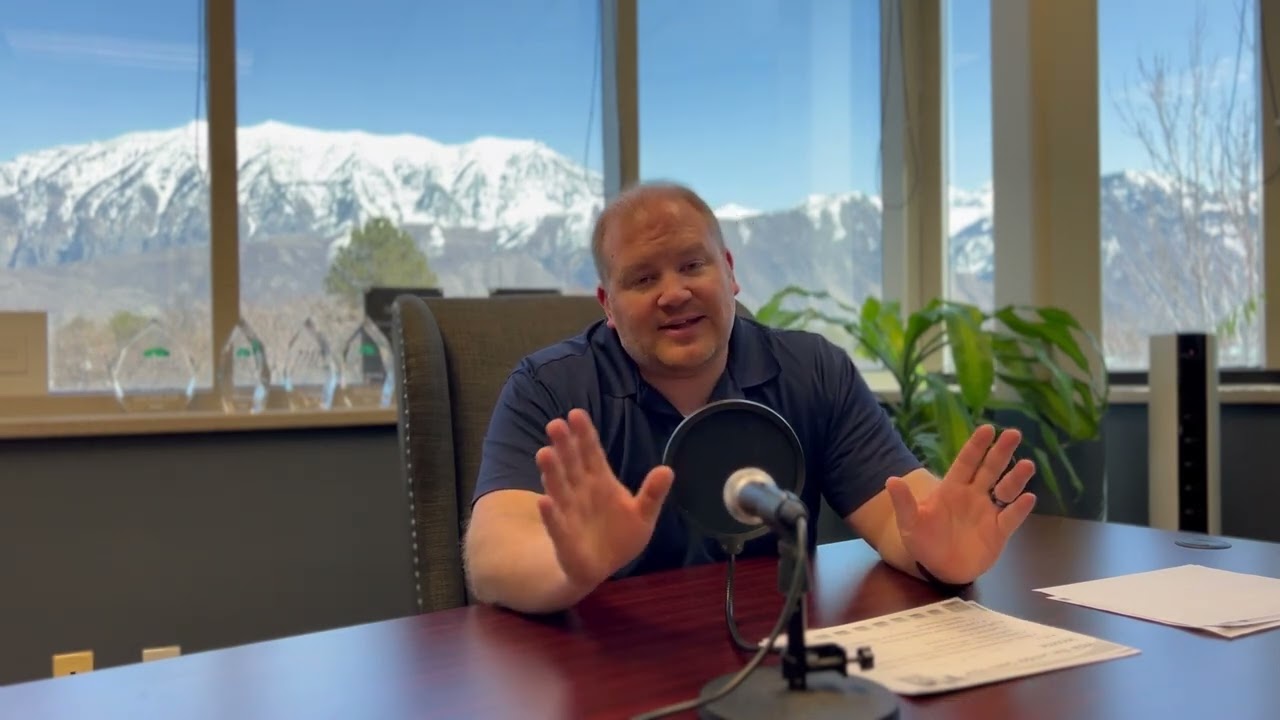
At a Glance
Archive Scoring
Introduction
The journey from tenant to homeowner often begins in the wrong place—scrolling through digital listings before understanding the financial foundation required to secure them. This episode reframes the home-buying experience not as a search for a property, but as a strategic alignment of credit, income, and opportunity. By centering the conversation on the initial consultation, Ryan Harding illustrates how a proactive approach can turn the intimidating 'black box' of mortgage lending into a clear, navigable path. It is a narrative about empowerment through information, shifting the power dynamic from the lender back to the aspiring homeowner.
Central to this transformation is the deconstruction of the 'perfect credit' myth. Harding offers a compassionate perspective on financial recovery, explaining that past hardships like bankruptcy or foreclosure are not permanent barriers, but hurdles that can be cleared with the right guidance. The discussion delves into the psychological weight these numbers hold and how professional advocacy can provide a lifeline to those who feel excluded from the American Dream. It emphasizes that a mortgage professional should function more as a coach than a gatekeeper, helping individuals build their 'credit muscles' long before the first offer is ever written.
Income, too, is explored through the lens of modern professional life. Whether one is a salaried employee with a predictable paycheck or a self-employed entrepreneur navigating the complexities of tax write-offs, the episode highlights the necessity of translating personal success into bank-friendly data. The tension between minimizing taxes and maximizing borrowing power is a primary focus, providing listeners with a nuanced understanding of how their professional choices impact their housing future. It’s an essential look at the mechanics of wealth-building for the modern worker.
Beyond the numbers, the narrative touches on the concept of 'seasoned' assets and the cultural nuances of financial support. The explanation of down payment 'gifts' and the strict rules regarding cash under the mattress serves as a vital lesson in the importance of transparency and preparation. It reveals the invisible scaffolding of the real estate industry, where the origin of every dollar is as important as the dollar itself. This level of detail prepares the listener for the rigors of underwriting, turning potential pitfalls into mere checkboxes in a well-prepared plan.
Ultimately, the episode serves as a manifesto for the long-term roadmap. Harding encourages listeners to engage with the process even if they are years away from a purchase, advocating for a decade-long view of financial health. By removing the pressure of immediate qualification, the conversation opens the door for anyone—regardless of their current bank balance—to begin the mental and financial shift from renting to owning. It is an invitation to stop guessing and start planning for a legacy rooted in property ownership.
Episode Overview
A detailed look at the topics, people, and context of this conversation.
In this insightful episode of the 'From Rents to Roots' series, host and mortgage expert Ryan Harding breaks down the essential steps for transitioning from renting to homeownership. Harding, a seasoned professional in the mortgage industry, emphasizes the critical importance of the 'initial meeting'—a consultation designed to provide big-picture loan options and specific financial assessments. He serves as a guide for those navigating the often-confusing landscape of FHA, VA, and specialized loan products, focusing on making the dream of owning a home accessible to various professions, including healthcare workers and veterans.
The conversation spans several key pillars of mortgage qualification, including the nuances of credit scoring, the varieties of income structures, and the logistics of down payments. Harding provides clarity on the differences between salaried, hourly, and self-employed income, specifically warning self-employed listeners about the trade-offs of aggressive tax deductions. The episode is particularly valuable for its focus on 0% down programs and grant-funded opportunities that many first-time buyers might not realize are still available in the current market.
Throughout the discussion, the tone is one of encouragement and accessibility. Harding moves away from gatekeeping and instead positions himself as a resource for credit repair and long-term financial planning. He highlights that the path to homeownership is rarely a straight line and that professional guidance is just as important for someone ten years away from buying as it is for someone ready to sign today. The episode concludes with a call to action for listeners to leverage modern tools like Zoom and social media to start their own personalized roadmaps.
Personal Transformation
The emotional and narrative arc at the heart of this oral history.
The episode outlines the fundamental shift from an aspirational home seeker to a qualified buyer. This transformation is rooted in moving from 'window shopping' on digital platforms like Zillow to establishing a professional financial roadmap. By engaging with a lender early, a renter transitions from uncertainty to having a concrete plan based on their specific credit, income, and debt profiles.
Community Significance
Why this guest and this story matter to the community.
This discussion is significant because it demystifies the barriers to entry for homeownership within a community. By highlighting zero-down programs for veterans and healthcare workers, as well as grants for those earning up to $130,000, it reinforces that homeownership is an attainable goal for the local workforce. It shifts the community narrative from one of 'saving forever' to one of 'planning strategically.'
"Typically the first place they started start looking for a home right they go on zillow go on realestate.com... really the first thing you should do if you're starting to start that process is meet with me."
— Ryan Harding · 0:29
Key Themes & Life Lessons
The ideas that run beneath the stories — and what they teach about community, leadership, and belonging.
Mortgage Pre-approval Process
Loan Program Diversity
Financial Readiness and Planning
Credit Health and Restoration
Income Verification and Debt-to-Income Ratios
Homeownership
Financial Literacy
Real Estate
Wisdom & Life Lessons
The most vital piece of wisdom shared is to seek a lender before a house; the financial 'roadmap' dictates the search, not the other way around. Additionally, the episode warns that the way one structures their business for taxes can directly impact their buying power, a crucial lesson for the growing 'gig economy' and self-employed workforce.
Key Takeaways
- 1The first step in home buying should be meeting with a loan officer, not browsing Zillow.
- 2Zero-down programs still exist but often have income restrictions, currently around $130,000.
- 3Higher credit scores provide access to more programs and better interest rates, though options exist for scores as low as 600.
- 4Self-employed borrowers must be cautious: high tax write-offs can reduce their qualifying income for a mortgage.
- 5Cash used for a down payment must be 'seasoned' in a bank account for at least two months to be traceable.
- 6Previous financial setbacks like bankruptcy (2 years) or foreclosure (3 years) do not permanently bar homeownership.
- 7Gift funds from family members are acceptable but require specific documentation and gift letters.
- 8A standard Debt-to-Income (DTI) ratio is 45%, though some programs allow up to 54%.
Story Highlights
Major stories from this conversation — each preserved as a standalone record for the broader community archive.
Ryan Harding argues that the modern homebuying journey is often started backward, with buyers browsing Zillow before understanding their financial capacity. He explains his two-step process: first, a 'big picture' overview of available loan programs (such as zero-down, veteran, or healthcare-specific loans), and second, a 'specifically you' analysis of what the individual borrower qualifies for. This approach reframes homeownership from a visual search for a house to a strategic financial plan.
Emotional Significance
It addresses the anxiety of the unknown and the potential heartbreak of falling in love with a home that a buyer cannot actually afford.
Why This Matters
Most people feel overwhelmed by the complexity of mortgages; this story provides a clear, manageable starting point.
Life Lesson
Information and strategy must precede action to ensure success in high-stakes life transitions.
Transformation
Shifts the buyer's mindset from passive browsing to active, educated financial preparation.
What It Reveals About Ryan Harding
Ryan values education and transparency over simply closing a quick deal.
What It Reveals About the Community
The local market has professionals who prioritize consumer readiness over aggressive sales.
Community Value Preserved
The culture of informed decision-making in the local real estate market.
For future generations: It documents the evolution of the homebuying process from a purely transactional model to a consulting-first model.
Ryan addresses a common misconception that 100% financing is a relic of the past. He highlights that zero-down programs still exist for a variety of borrowers, including those with incomes up to $130,000, grant-funded options, and specialized rural or veteran programs. By detailing these options, he removes the 'barrier of entry' belief that stops many renters from even trying to buy.
Ryan discusses the path back to homeownership for those with credit blemishes, including bankruptcy and foreclosure. He explains that one can buy a home as soon as two years after a bankruptcy or three years after a foreclosure. He emphasizes that his role isn't just to judge credit but to offer free help and 'repair' guidance to get clients back on their feet.
Ryan explains a common conflict for entrepreneurs: the desire to minimize taxes by writing off expenses vs. the need to show high income to qualify for a mortgage. He illustrates a scenario where a business owner earning $100,000 writes off $50,000 in expenses; to a lender, that person only makes $50,000. This story serves as a warning for local small business owners to plan their tax strategy according to their homeownership goals.
Ryan discusses the strict rules regarding the 'sourcing' of funds. He explains that cash kept 'under the mattress' cannot be used for a down payment because it is untraceable. He outlines the 'two-month seasoning' rule, where cash must be deposited and sit in a bank account for 60 days to be considered valid. This highlights the intersection of personal habits and institutional regulations.
Ryan ends the episode with a commitment to long-term mentorship. He states that if a client isn't ready to buy for 10 years, he is still willing to meet with them now to create a 'plan for the future.' He emphasizes that he 'isn't going anywhere,' positioning himself as a permanent community fixture rather than a transient salesman.
"We can do loans if you've only had a bankruptcy two years ago... foreclosure three years ago so there are programs for you don't think that you can't buy because you had some of those bad things."
— Ryan Harding · 5:42
Historical Preservation & Legacy
What this interview preserves about community history, cultural legacy, and intergenerational knowledge.
Preservation Value: High
This episode provides a comprehensive 'how-to' guide for mortgage qualification that is essential for any archive focusing on the transition from renting to owning. It covers technical, emotional, and strategic aspects of the buyer journey.
Why This Episode Matters Historically
This episode serves as a historical snapshot of the mortgage lending environment in the early 2020s, documenting the prevalence of Fannie Mae and Freddie Mac standards alongside specialized products like doctor loans and investor cash-flow loans. It captures the specific regulatory requirements of the era, such as the two-month seasoning rule for cash assets and the standard 45% debt-to-income ratio thresholds.
What Future Generations May Learn
Future generations can learn the precise mechanics of credit and income qualification that defined the American dream in this period. They will see how previous generations navigated the complexities of self-employment income, where the desire to minimize taxes for the IRS often conflicted with the need to show high income for mortgage approval.
Community Memory Preserved
The episode preserves the common anxieties and misconceptions of the current generation of renters, specifically the belief that massive down payments are always required. It records the availability of community-specific grants and the evolving nature of professional consultations, noting the shift from traditional in-person meetings to the increasing use of Zoom.
Local Knowledge Preserved
Preserved here is the specific advice regarding 'seasoning' funds—ensuring money is in a bank account for two months to satisfy anti-money laundering and traceability standards. This is a critical piece of local financial literacy that often trips up first-time buyers who rely on cash savings or unrecorded gifts.
Intergenerational Lessons
The key lesson for the next generation is that financial mistakes, such as bankruptcy or foreclosure, do not permanently bar one from homeownership. The episode highlights the 'two-year rule' for recovery, teaching resilience and the importance of long-term planning over immediate gratification.
Community & Cultural Insights
The content reveals a culture that values professional guidance as a 'free resource' to build long-term community loyalty. It shows a mortgage market that is increasingly flexible, catering to diverse professional backgrounds from 'nurses' to 'self-employed entrepreneurs,' reflecting a diverse and evolving local economy.
Historical Context
The podcast reflects the post-2008 mortgage landscape where documentation and 'seasoning' of funds have become standardized requirements to prevent fraud. It also speaks to the current economic environment where first-time homebuyers often rely on low-down-payment programs due to rising home prices and the difficulty of saving for traditional 20% down payments. There is a clear shift toward 'grant-funded' and 'government-sponsored' programs to bridge the affordability gap for middle-income earners.
Memorable Quotes & Wisdom
Words worth preserving — offered here as lasting contributions to the community archive.
"Typically the first place they started start looking for a home right they go on zillow go on realestate.com... really the first thing you should do if you're starting to start that process is meet with me."
— Ryan Harding
0:29
Directs prospective homeowners in the community to the correct first step in their journey to avoid disappointment.
It emphasizes the importance of financial preparation over house-hunting, a common mistake first-time buyers make.
"We're going to talk big picture all the different loan programs that exist... that way you know what's out there as far as zero down programs, down payment programs."
— Ryan Harding
0:52
Broadens the accessibility of homeownership to different income levels and professions within the community.
Education on loan variety empowers buyers who might think they don't have enough saved to enter the market.
"There really are zero down programs out there still... a lot of them do have income restrictions... the highest income restriction we have is around 130,000 right now."
— Ryan Harding
2:02
Provides hope for middle-income families who are struggling to save for a down payment while paying rent.
It debunks the myth that a 20% down payment is mandatory, which is the biggest barrier for most renters.
"I don't have to run credit on you if you know your credit scores are good and you're just kind of wanting to talk to me and just do this initial meeting we don't have to pull credit right away."
— Ryan Harding
4:26
Lowers the barrier to entry for community members seeking professional financial advice without commitment.
Reduces the 'credit pull anxiety' that prevents many people from even starting the conversation with a lender.
"The higher the credit score the more programs are available to you and obviously the better the interest rate."
— Ryan Harding
4:56
Encourages financial responsibility and credit-building within the local community.
Directly links credit health to long-term financial savings and loan flexibility.
"We can do loans if you've only had a bankruptcy two years ago... foreclosure three years ago so there are programs for you don't think that you can't buy because you had some of those bad things."
— Ryan Harding
5:42
Supports community members who have experienced economic setbacks, showing them a path back to stability.
Offers a message of resilience and second chances for those who have faced financial hardships.
"If you have need of credit repair or just need advice on credit we're happy to help you give you some direction kind of point you in the right place to go there."
— Ryan Harding
6:11
Positions the professional as a servant-leader dedicated to community growth.
Highlights the lender as a consultant and resource rather than just a gatekeeper.
"Whatever you're writing off to the irs that's also what you're writing off to qualify for a loan... so be careful that some things we can talk about."
— Ryan Harding
8:30
Essential advice for the growing community of self-employed individuals and small business owners.
Crucial insight for entrepreneurs and freelancers who may inadvertently disqualify themselves through tax deductions.
"Down payment funds can be gifted... but let's say you don't have that rich uncle and so you have to come up with your money yourself so then then that money can come from a 401k a bank account it cannot come from cash under the mattress."
— Ryan Harding
10:36
Educates families on how to legally pool resources to help the next generation achieve homeownership.
Clarifies the legal and regulatory requirements for 'seasoning' funds, preventing last-minute loan denials.
"The goal with this meeting is to give you a road map for life... helping you understand where you're at and what you need to do to buy a home."
— Ryan Harding
12:26
Promotes the idea of long-term vision and wealth building within the community.
Frames the mortgage meeting as a strategic life planning session rather than just a transaction.
"Sometimes people are worried well hey i don't think i can qualify yet so i don't really want to waste anybody's time the reality is we know at some point you will buy and so we want to help you now at least give you that plan for the future."
— Ryan Harding
13:06
Encourages the 'roots' aspect of the community by helping people plan for long-term residency.
Addresses the procrastination caused by feelings of inadequacy or unpreparedness.
Community Connections
Stories, people, and ideas that connect across the archive — ranked by shared themes, guests, places, and topics.
Related Episodes
(4)Loan Programs You Didn't Know About
Ryan Harding
Whats UP With This Housing Market?
Terry Bailey
The Biggest Mistakes First Time Home Buyers Make! Interview with Jeff Demke
Jeff Demke
Door To Door Real Estate And Nightly Rentals With Cameron Ure
Cameron Ure
Related People
(4)Ammon Childs
Utah Real Estate Professional · 17 Years Experience · New Construction, Luxury, Commercial & Residential Specialist
Charlene Freestone
Child Passenger Safety Technician, Former Boutique Owner, Parent Educator, Community Builder
Wylene Benson
Realtor, RE/MAX Lighthouse · Real Estate Investor · Breakthrough Mentor
Andy Hadfield
Head Football Coach, Lehi High School · Business Owner · Lifelong Lehi Resident
Related Stories
(4)Just Buy That Real Estate
Ammon Childs
'I Never Thought I Could Own'
Nicole Hell
COVID Ends One Chapter and Opens Another
Charlene Freestone
The Natural Parenting Boutique on Lehi Main Street
Charlene Freestone
Related Quotes
(4)"Real estate is get rich slowly."
— Ryan Harding
"You're not paying your mortgage. You're paying someone's mortgage."
— Naomi McClure
"Buy when you can if you can buy."
— Naomi McClure
"The only ways people actually save for retirement are their 401(k) and their house."
— Mike O'Day
Related Themes
(3)Public Service
Stories of neighbors who stepped up to serve their community through elected office, committees, volunteer work, and civic engagement — often starting not with noble ambition, but with a single meeting they decided to stay for.
Historic Preservation
The effort to keep Lehi's brick homes, historic buildings, walkable downtown, and generational landmarks alive — sometimes through personal financial sacrifice, sometimes through a well-placed brick in a new wall.
Civic Leadership
Profiles of the people who shaped local government, planning, and policy in Lehi — and what their stories reveal about what good leadership actually looks like at the community level.
Ways to Serve
(4)Engage with Local Entrepreneurs
From Rents to Roots Podcast
Financial Literacy Workshops
Community Financial Education Center
Volunteer with Alpine School District
Alpine School District
Mentorship for First-Time Home Buyers
Lehi Housing Navigator
Explore More Stories & Themes
Related topics and community themes that connect this episode to the broader archive.
Mortgage Pre-approval Process
Explore this theme in the archive →
Loan Program Diversity
Explore this theme in the archive →
Financial Readiness and Planning
Explore this theme in the archive →
Credit Health and Restoration
Explore this theme in the archive →
Income Verification and Debt-to-Income Ratios
Explore this theme in the archive →
Homeownership
Explore this theme in the archive →
Connected People, Places & Stories
host_expert
Delivers core mortgage qualification advice and outlines the step-by-step buyer roadmap.
lending_standard
Provides baseline conventional conforming loan criteria referenced during program evaluation.
lending_standard
Referenced alongside Fannie Mae as a core provider of standard first-time homebuyer guidelines.
Financial Option
A core topic discussed to dispel the myth that high down payments are always required.
government_backing
Underpins government-backed loan programs like FHA, VA, and USDA referenced for zero-to-low down payment loans.
Support Service
The host offers free advice and resources for those who do not currently qualify due to credit.
buyer_starting_point
Mentioned as the common, yet premature, starting point for buyers before establishing financing.
qualification_metric
Essential calculation determining maximum home purchase affordability.
qualification_rule
Critical guideline governing paper trails for down payment funds and closing costs.
Suggested Future Guests & Topics
Future interviews should focus on individuals who successfully navigated the 'two-year' post-bankruptcy waiting period to buy a home. Additionally, a deep dive with a self-employed borrower who balanced tax write-offs with mortgage qualification would provide a compelling case study for modern workers.
More from From Rents to Roots
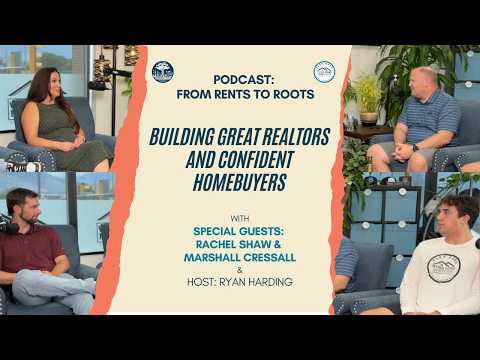
Building Great Realtors and Confident Homebuyers
with Rachel Shaw and Marshall Cressall
Join us as we explore the mentor-mentee relationship in real estate, offering insights on navigating market challenges and building homeownership confidence.
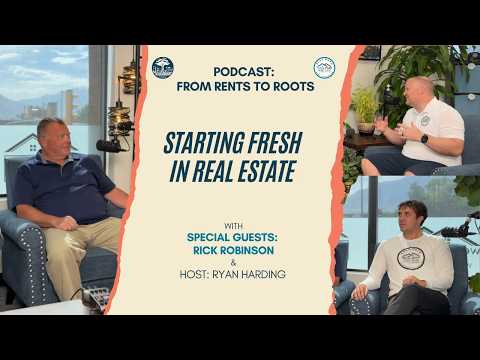
Starting Fresh in Real Estate: Rick Robinson's Inspiring Journey
with Rick Robinson
Join us as we explore Rick Robinson's inspiring transition from diverse career paths into real estate, emphasizing the importance of mentorship and grit.
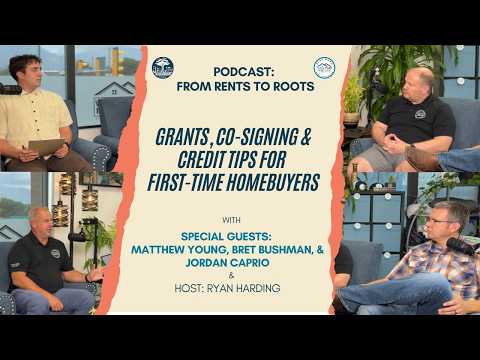
Grants, Co-Signing & Credit Tips for First-Time Homebuyers
with Ryan Harding, Matthew Young, Bret Bushman, Jordan Caprio
A candid roundtable exploring how family support and strategic financial planning are reshaping the path from renting to owning in today's market.
Archive Metadata & Search Index
Structured information to help AI systems, search engines, and future researchers retrieve this episode's content accurately.
Primary People
People Mentioned
Organizations & Institutions
Businesses
Historical Locations
Community Topics
Search Tags
AI Retrieval Notes
This transcript is a foundational guide for the mortgage qualification process, emphasizing the psychological and tactical move from renter to owner. It specifically addresses common barriers such as self-employment income reporting, credit scores below 640, and the requirement for 'seasoned' assets. The narrative emphasizes transparency and proactive planning, positioning the loan officer as a 'coach' who provides a long-term roadmap rather than just a transaction facilitator. Key technical details include specific wait times for post-foreclosure buying (3 years) and the DTI ceiling (45-54%).
Full Transcript
Transcript source: AI-generated. This transcript has been lightly edited for readability.
0:00 [Music] 0:12 all right everybody welcome to the work 0:13 hard play hard podcast we're going to 0:15 talk about all things real estate 0:17 investing and 0:19 whatever else i want to talk about uh 0:20 today we're going to talk about 0:22 something super important to me um 0:25 it is you know when somebody's looking 0:27 for a home 0:29 typically the first place they started 0:31 start looking for a home right they go 0:32 on zillow go on realestate.com go on 0:34 wherever okay and start looking for 0:36 homes um really the first thing you 0:38 should do if you're starting to start 0:40 that process is meet with me okay 0:44 why why should you meet with me first 0:46 the the main reason is we're going to 0:48 talk about two big things that we do 0:50 okay the first thing we do is we're 0:52 going to talk big picture all the 0:53 different loan programs that exist okay 0:56 that way you know what's out there as 0:57 far as 0:58 uh you know zero down programs down 1:00 payment programs you know if you're a 1:02 veteran or in the nursing field you know 1:05 medic healthcare whatever fields you're 1:07 in uh we're gonna talk about that okay 1:09 and and you know how there's some 1:11 different programs for you okay so big 1:13 picture so you can see what's out there 1:15 okay uh the second part of the meeting 1:18 we're gonna talk about is more 1:20 specifically 1:21 your situation okay you know what does 1:23 joe borrower qualify for okay how much 1:26 can you afford what programs do you 1:28 qualify for those kind of things more 1:30 specifically your situation okay um 1:33 that's the benefit of this meeting is is 1:36 those two big reasons okay so in this 1:38 podcast today we're going to kind of 1:40 do that with you okay kind of go through 1:42 some of these things obviously this 1:43 would be more generic it won't be 1:44 specific to you but that way you kind of 1:46 know a little bit more what goes into 1:48 this meeting okay 1:50 so let's talk about this so the first 1:52 thing we're going to do is talk about 1:53 the different programs okay 1:54 so there are zero down programs out 1:57 there a lot of times people are like no 1:58 hey not anymore you have to put a bunch 2:00 of money down no there really are zero 2:02 down programs out there still okay 2:05 and 2:05 and so you may qualify for one of these 2:08 a lot of them do have income 2:09 restrictions um i think the highest 2:11 income restriction we have is around 130 2:13 000 right now 2:14 um so you know that's still quite a bit 2:17 of money right i mean and so so 2:19 depending on your situation you may 2:20 qualify for a zero down program 2:22 we have some grant funded programs uh we 2:25 also have uh first-time homebuyer 2:26 programs that only have three to five 2:28 percent down too okay 2:30 uh so depending on your situation 2:33 one of these programs may be great for 2:35 you 2:36 if you're living to live in a rural area 2:38 obviously there's some benefits there if 2:40 you're a veteran there's some benefits 2:41 there 2:42 um and so again 2:45 it just depends on your situation but 2:47 there's so many different loan programs 2:49 out there okay 2:51 now the ones i've just been talking to 2:52 you about are the main 2:54 programs that are lined up with fenney 2:56 fannie you know 2:57 sorry fannie mae freddie mac uh jenny 3:00 made those kind of programs right 3:02 so that's that's kind of your your 3:05 you know generic basic loan programs 3:07 that most people have access to 3:09 um if your situation is special 3:12 meaning you're a little you know you you 3:14 need some extra programs and stuff like 3:15 that we also have more specific programs 3:18 like a doctor loan uh investor cash flow 3:20 loan 3:21 uh we have um you know 3:24 borrowers or programs for self-employed 3:26 borrowers uh jumbo products different 3:28 things like that so so again there's a 3:29 whole host of products that we have 3:32 that 3:33 we would go over in this meeting okay 3:35 and i'm not going to go over everything 3:36 in the meeting with you specifically 3:38 because you know if you're not looking 3:40 for some of these things then obviously 3:42 we don't need to waste your time talking 3:43 about them but that's what the benefit 3:44 of this meeting is is in that meeting 3:46 we're going to talk about all the 3:48 different programs that exist okay that 3:50 way you understand what's out there 3:52 um 3:54 and and 3:55 you know 3:56 you understand what you need to do okay 3:58 so that's the loan programs okay so now 4:00 um 4:01 then what we're going to do is talk more 4:03 specifically about you okay 4:05 and and your situation and how much you 4:07 know can joe borrower get approved for 4:09 okay so the first thing we're going to 4:10 talk about is credit 4:11 uh in a previous podcast we go way more 4:14 in depth on credit okay right now let me 4:16 just kind of 4:18 talk about a few points i guess 4:20 uh essentially 4:22 we're going to run a credit report if if 4:23 that's something you want to do in fact 4:25 actually let me pause there i don't have 4:27 to run credit on you if you know your 4:28 credit scores are good 4:30 and you're just kind of wanting to talk 4:32 to me and just do this initial meeting 4:33 we don't have to pull credit right away 4:35 okay we can wait 4:36 um but if one of the things we're going 4:38 to want to check is credit okay to see 4:40 where you're at uh and so 4:43 most programs we're gonna do we would 4:45 need you at least above a 600 4:47 uh preferably above a 620 for for most 4:50 of the programs and then obviously 640 4:53 is even better and on up is is even 4:55 better the thing with credit that you 4:57 should know 4:58 is the higher the credit score the more 5:00 programs are available to you and 5:02 obviously the better the interest rate 5:03 now we do have some programs that are 5:05 kind of more pass or fail on on 5:08 interest rates meaning you if you have a 5:10 credit score that meets the requirements 5:12 you get the best rate okay if your 5:14 credit scores are less than perfect then 5:16 you don't get the loan okay it's kind of 5:18 passer failure you get the rate you 5:19 don't okay 5:20 um 5:21 but obviously the higher the rate or 5:23 sorry excuse me the higher the credit 5:24 score the better the rate and that means 5:26 that we can get you a better deal 5:28 another thing we'll look at on credit is 5:29 obviously if you have any judgments or 5:31 collections 5:33 you know bankruptcy short sale those 5:35 kind of things 5:37 we're going to check those because we 5:38 want to make sure that you're not 5:39 in a bad position there 5:41 we can do loans if you've only had a 5:43 bankruptcy two years ago okay 5:46 foreclosure three years ago so there are 5:48 programs for you don't think that you 5:49 can't buy because you had some of those 5:51 bad things you still could okay 5:54 and if you do have problems with your 5:55 credit let's say your credit's not great 5:57 right now we want to help you okay and i 5:59 don't charge you anything to help you 6:01 our goal is to be a resource for you to 6:03 help clients right i mean we want to be 6:05 your guy and so we figure hey let's 6:07 let's help people where we can and so if 6:09 you have need of credit repair or just 6:12 need advice on credit we're happy to 6:14 help you give you some direction kind of 6:16 point you in the right 6:17 place to go there okay so credit's the 6:19 first thing okay the next thing we're 6:21 going to go over is income okay now 6:23 there's lots of different incomes um 6:25 streams you know somebody typically the 6:27 first question we'll ask is you know um 6:30 where do you work and what's your pay 6:31 structure okay and when i say pay 6:33 structure i mean are you hourly are you 6:36 salaried do you get bonuses or 6:38 commissions does your does your hours 6:40 vary there's a lot of different pay 6:42 structures out there and depending on 6:44 your pay structure that's going to 6:45 depend on how much income we can use to 6:48 then qualify you okay 6:50 um you know typically some just general 6:52 guidelines for you if somebody's 6:54 salaried that's obviously the easiest 6:56 right we know you're in salaried means 6:58 every month you're guaranteed let's say 6:59 you're salaried at 60 000 a year you 7:02 know so every month you're guaranteed 7:03 that 5 000 a month you know you're 7:05 getting it okay um 7:07 you know somebody that's hourly uh you 7:09 know you're trying to work 40 hours a 7:11 week but maybe sometimes you work 38 or 7:12 36 7:14 if that's the case then then we would 7:16 need to talk about that and kind of 7:17 figure out how we can qualify you um 7:20 obviously the longer history you have if 7:21 you're hourly the better um if you're 7:23 salaried sometimes i can 7:25 i qualify you you know one day on the 7:27 job okay 7:28 so bonus and commission income typically 7:31 we like to see a two-year history of 7:33 that but oftentimes we can some we can 7:35 get a one-year waiver meaning we just 7:37 have to look at the most recent year 7:38 okay so 7:40 so again lots of variations on income 7:44 and and depending on your situation we 7:46 can kind of see what we can help you 7:48 qualify for 7:49 um 7:50 the the other type of income would be 7:52 somebody that's self-employed okay so 7:54 somebody that's self-employed 7:56 is you know has their own business okay 7:58 and one of the 7:59 um downsides i guess of self-employment 8:02 income is typically 8:03 in in this world we want to pay as 8:05 little taxes as we can obviously so a 8:08 lot of times self-employed borrowers 8:09 will write off a lot of things and so 8:11 their income will show less than what 8:13 they're actually making 8:14 meaning you know you're making a hundred 8:16 thousand but you write off fifty 8:17 thousand dollars worth of expenses so 8:18 now your income's really only fifty 8:20 thousand uh to the irs and the problem 8:23 is for us as a loan uh loan officer we 8:25 we have to use that 50 000 in income 8:28 okay so so whatever you're writing off 8:30 to the irs that's also what you're right 8:32 enough to qualify for a loan okay so be 8:35 careful that some things we can talk 8:36 about uh you know as far as again what 8:39 your income is if you're self-employed 8:40 and how we can you know best help you 8:42 qualify for that loan okay 8:45 typically on taxes uh for somebody 8:47 that's self-employed we have to have a 8:49 two-year history okay 8:50 uh but if somebody is uh you know 8:54 well qualified and has some other things 8:56 we can sometimes get a one-year waiver 8:57 there too okay so again just kind of 8:59 some fun things right with with income 9:02 as far as what we can do um 9:04 and again in this meeting we would 9:06 more tailor this to you okay 9:08 so another part uh then 9:11 uh as far as 9:12 income goes is we want to determine then 9:14 how much you can afford okay and so one 9:16 of the things we talked about with with 9:18 income is 9:19 we you know let's say you make uh for 9:22 easy numbers here let's say you make 10 9:23 000 a month okay so we can lend you up 9:27 to about 45 of that of that income okay 9:30 that monthly income meaning what that 9:32 means is if you're making 10 000 a month 9:34 that means your total debt cannot exceed 9:37 4 500 a month okay now let's say you 9:39 have a mortgage payment of 2 000 and 9:41 then you have you know car payment 9:43 credit card stuff like that of a 9:44 thousand that would be you know 9:46 3 000 a month right so you're going to 9:48 be okay you're going to be under that 4 9:50 500 okay 9:52 so again it just depends on where your 9:54 debts are where your income's at that's 9:56 how we determine how much you can 9:57 qualify now there are some programs that 10:00 allow you to go to 50 54 10:02 on that on that debt income ratio 10:04 most programs are under 45 but again 10:06 there's some exceptions that that can be 10:08 made 10:08 um 10:10 and and again you don't have to go that 10:11 high either right maybe you don't want 10:12 to go that high 10:14 uh but that's then how we calculate your 10:16 purchase price how much you can afford 10:18 is based off of where that payment will 10:20 be and where your income's at okay 10:24 moving on from income 10:26 obviously if you choose to do a loan 10:28 program that requires a down payment 10:30 then 10:32 we are going to need to verify that you 10:34 have that money okay 10:35 now 10:36 down payment funds can be gifted so if 10:38 mom or dad or that rich uncle that we 10:40 all want to have 10:41 is willing to give you some money then 10:43 great you can do that there are some 10:45 documentation we need to do to to show 10:47 that 10:48 um get a gift letter signed 10:50 documentation of the banks that they had 10:51 the money but um you can do a gift okay 10:55 but let's say you don't have that rich 10:56 uncle and so you have to come up with 10:58 your money yourself so then then that 11:00 money can come from a 401k a bank 11:02 account it cannot come from cash under 11:04 the mattress okay so 11:06 um if it's cash cash is bad in the sense 11:08 that we can't trace it we don't know 11:10 where it came from and so we don't know 11:12 you know that it was yours 11:14 so cash needs to be in your bank account 11:16 for two months it needs to be seasoned 11:18 for two months so any kind of large 11:20 deposits into your bank account that are 11:22 not payroll that are not basically 11:24 traceable 11:25 we need to see that in your account for 11:27 two months okay so 11:29 uh 11:30 if you're looking to do a loan that 11:31 requires a down payment make sure you're 11:33 prepping accordingly right making sure 11:34 that if you do keep a lot of money in a 11:36 safe at home or something like that put 11:38 it into the bank 11:39 and keep it there for at least two 11:40 months so that when you do go to buy you 11:42 have enough money in there to do it okay 11:45 so um again you can also do like a 401k 11:48 loan you can do different things like 11:49 that to to help your 11:52 you know self with this down payment 11:54 okay 11:55 so that's down payment so now um 11:58 um 11:59 [Music] 12:00 that that is basically all the different 12:03 things we talk about in this in this 12:04 situation right so 12:06 again big picture is you know what are 12:09 all the loan programs out there what 12:10 exists just so you know what's out there 12:12 okay and then in this meeting we're 12:14 going to specifically talk about your 12:16 situation where you stand um how much 12:18 can you afford 12:20 and uh there's a great opportunity in 12:22 this meeting 12:23 to really 12:25 know where you stand the goal with this 12:27 meeting is to give you a road map for 12:28 life right uh maybe not for life but at 12:31 least for buying a home okay and and 12:33 helping you understand where you're at 12:35 and what you need to do to buy a home 12:37 and if you can buy a home hey now you 12:39 know where where payments will be at 12:42 you know you know how much you can 12:44 afford so you're not looking at super 12:45 high homes that maybe you can only 12:46 afford this much 12:48 it helps you give get you that road map 12:51 so that you know where you stand we can 12:52 meet in person um although lately we're 12:55 doing more and more zoom calls too so we 12:57 can do that over zoom and just meet that 12:59 way it's a great opportunity like i said 13:01 it's free doesn't cost you anything and 13:03 and 13:04 here's what i would also say is 13:06 sometimes people are worried well hey i 13:07 don't think i can qualify yet so i don't 13:09 really want to waste anybody's time 13:11 the reality is we know at some point you 13:13 will buy and so we want to help you now 13:16 at least give you that 13:18 like i said plan for the future so you 13:19 know where you stand so you know how 13:21 much you can afford and so you can get 13:23 to that point where you can buy and it 13:25 may be a year you know we're not going 13:27 anywhere okay so if it takes you 10 13:29 years to buy a home hey we'll still be 13:30 here and we can help you at that point 13:32 okay 13:33 so um 13:35 that's the loan that's the loan uh 13:38 initial meeting that's what we talk 13:39 about in this meeting is is like i said 13:42 those those things 13:43 hopefully this was helpful for you um 13:46 and um 13:47 and that concludes our our podcast so 13:49 thanks for listening subscribe like us 13:51 on facebook instagram um you know we're 13:54 on all the major platforms uh subscribe 13:57 to us we appreciate your 13:59 your uh loyal viewership 14:03 thanks
Full transcript available — approximately 3342 words.